Cat Blood Types: How to Find Out (Vet-Approved Guide)


In this article
If you’ve ever given blood before or had surgery, you probably know your blood type. Humans have four blood groups—A, B, AB, and O. These groups can be Rh positive or negative, which means you can have one of eight blood types. Have you ever wondered whether a cat has a blood type, too?
Do cats have different blood types, and if so, how many blood types do cats have? Felines do have blood types; the three main ones are A, B, and AB. However, a few differences exist between a human’s and feline’s blood types. Here’s what to know about cat blood types and how to discover what your cat’s is!

Cat Blood Types
Felines have three main blood types: A, B, and AB. Cats have no O blood type, and felines have no universal donors. (There is also a fourth blood type, mik, which has been discovered only in the past few decades and seems fairly rare.)1 Most felines (roughly 94-99% in the U.S.) will be Type A. Type B is found in up to 6% of U.S. cats. Some breeds have higher on average frequency of type B blood including the Devon Rex and Cornish Rex. Type AB is the rarest (it can be found in the Scottish Fold and Ragamuffin breeds).
What exactly does A, B, and AB mean, though? Antigens determine blood types. The presence or absence of certain antigens (a sugar or protein) found on the membrane of red blood cells, determines blood type. So, cats who have Type A would have the A antigen on the membranes of their red blood cells, while Type B would have the B antigen, and those with Type AB would have both.

How Does a Cat Get Their Blood Type?
Like a human’s blood type, a feline’s blood type is determined by genetics. A pair of genes determines a cat’s blood type; genes for Type A are always dominant to those for Type B. These genes can either be homozygous (or the same, such as two A genes) or heterozygous (different, such as an A and a B).
Because the genes for Type A are always dominant, a cat with blood Type B would have to have two B genes; a feline with an A and a B gene would still be Type A. The blood group AB is inherited separately as a third allele and the AB gene appears dominant to the B gene but recessive to the A gene.
So, a kitten’s genes that determine their blood type will be inherited from their parents. They receive one copy of the genes from each parent, so if there is a single or double copy of the A gene, they will be Type A. If they get two of the B gene, they’ll be Type B. To be Type AB, a kitten would need either two copies of the AB gene or one AB and one B gene.
How Can I Find Out My Cat’s Blood Type?
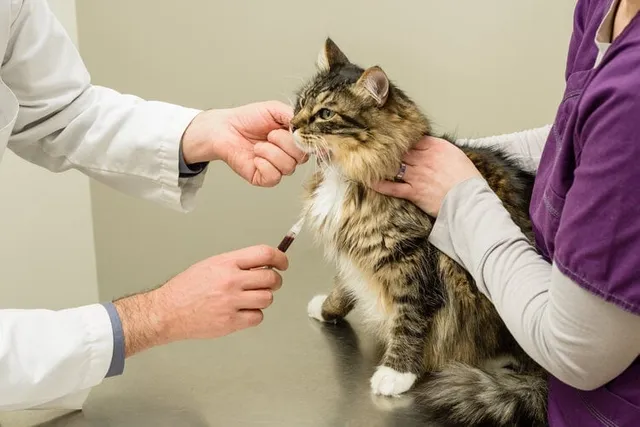
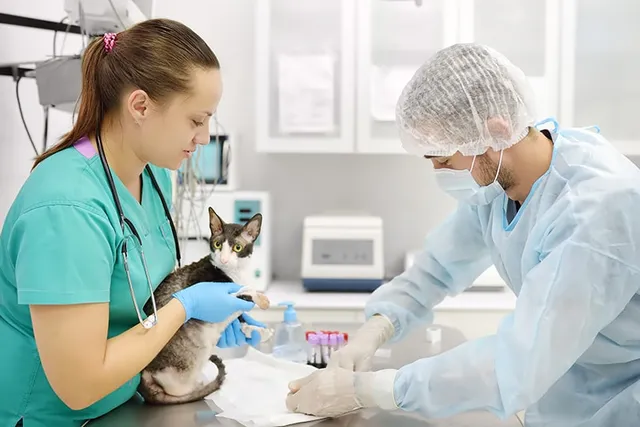
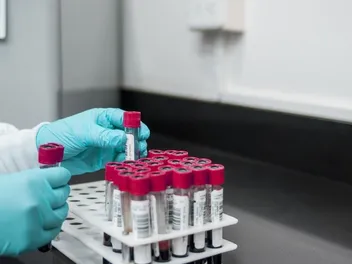
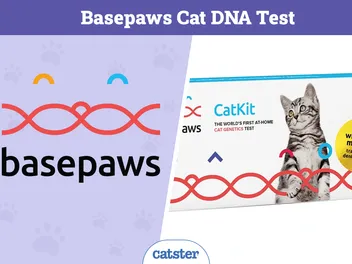
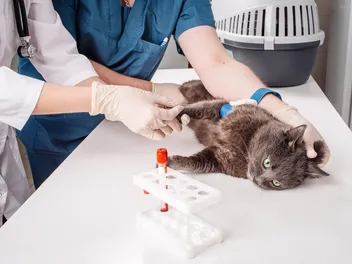
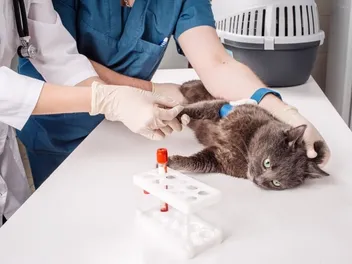
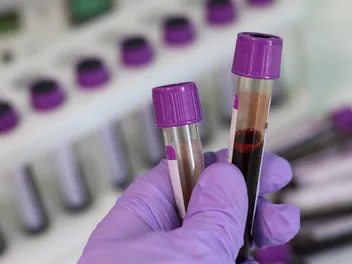
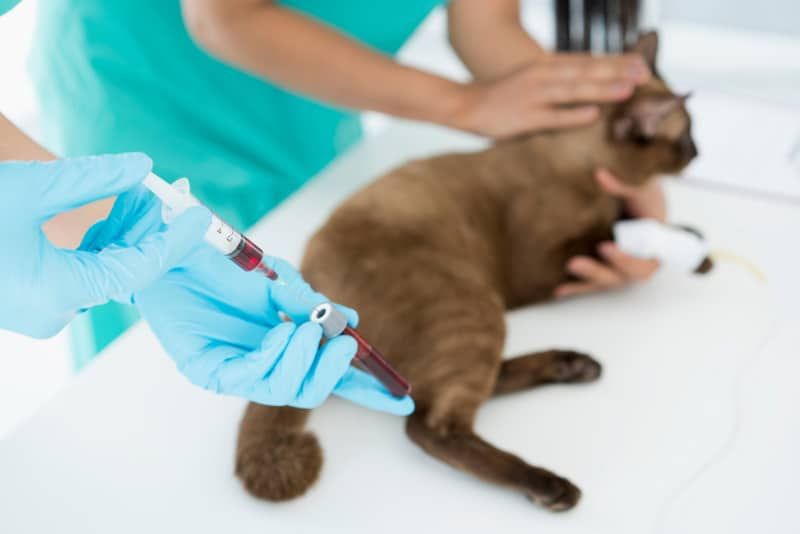
To figure out your feline’s blood type, you’ll need to have them tested. You can have this done at your vet’s office, or there are at-home tests that get sent off to a laboratory. Blood (serological) testing identifies the presence of the A and B red blood cell surface antigens. DNA tests are also available which identify mutations in the CMAH gene which is responsible for the ‘B’ allele. For this test cheek (buccal) swab samples or blood samples can be used, but it cannot differentiate between Type A and Type AB.
If your pet is in need of a transfusion and their blood type is unknown, a test known as “crossmatching” may be run. The purpose of this test is to detect the presence of antibodies in your cat’s blood against the red blood cells of the potential donor’s blood. If antibodies are present and they aren’t a match, there will be an adverse reaction resulting in the destruction of transfused cells.
Why Should I Know My Cat’s Blood Type?
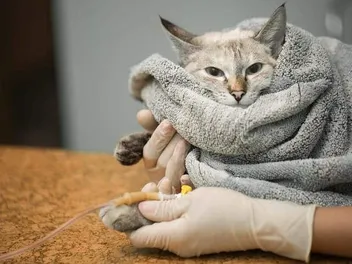
So, why should you know your cat’s blood type? The main reason is in case your pet ever requires a blood transfusion. When it comes to blood transfusions, the donor and recipient must be a match. We mentioned crossmatching above, which is used in cases where a cat’s blood type is unknown; remember the adverse reaction that can occur with cats who aren’t matches? If your cat receives a transfusion from a blood donor whose blood type doesn’t match their own, they could have an adverse reaction. The most serious risk is the rapid destruction of the transfused red blood cells called hemolysis. This reaction can be mild, but it can also prove fatal. Most often, truly negative reactions occur when felines with blood type B are given blood that is Type A (as Type B has strong naturally occurring antibodies against type A red blood cells, whereas cats with blood type A have weaker antibodies against type B cells). Type A cats must only receive type A blood and type B only type B blood. Type AB cats, which have no naturally occuring antibodies, may be transfused with blood of types AB or A.
If you’re a breeder of felines, you’ll also want to know the blood type of the cats you are using for breeding. Otherwise, you could end up with kittens affected by neonatal isoerythrolysis (NI). A newborn kitten’s intestine is designed to absorb antibodies from mama cat colostrum during the first 48 hours of nursing. This is generally excellent for the kitten as it helps protect them, but if a kitten has a blood type that is incompatible with mama cat (kittens of blood Type A or AB born to Type B mothers who have naturally occuring anti-A antibodies), they could be absorbing antibodies that end up destroying their red blood cells. The result is neonatal isoerythrolysis, which can be fatal.
Conclusion
Felines have three main blood types—A, B, and AB—though there is also the rarer mik blood type. The majority of felines in the U.S. have Type A blood, while Type AB is the rarest of the main three. Knowing your favorite feline’s blood type can be helpful; if your kitty ever needs a blood transfusion, you’ll want to ensure they’re receiving donor blood that is a match. If they’re not a match, the consequences could be deadly. Finding out your pet’s blood type shouldn’t be too difficult, though, as you can have your vet test them or do an at-home test to find out what it is.
Featured Image Credit: thirawatana phaisalratana, Shutterstock
Expert cat care, straight to your inbox
News, insights, and useful advice, delivered to you.

No spam — unsubscribe anytime.
By signing up, you agree to our Terms & Conditions and Privacy & Cookies Policy.
How useful was this post?
Click a star to rate. You can leave written feedback afterwards. (We read all feedback.)
Misty Layne lives out in the woods in small-town Alabama with her two Siamese cats —Serafina and Jasper. She also has an array of stray cats, raccoons, and opossums who like to call her front porch home. When she’s not writing about animals, you’ll find her writing poetry, stories, and film reviews (cats, by far, her favorite writing topic, though!). In her free time, Misty enjoys chilling with her cats, playing piano, watching indie and foreign films, photographing abandoned places, and catching up on her never-ending TBR list.