Why Do Cats Lay in the Sun When It’s Hot & Why They Should Stick to the Shade: Vet-Verified Facts


In this article
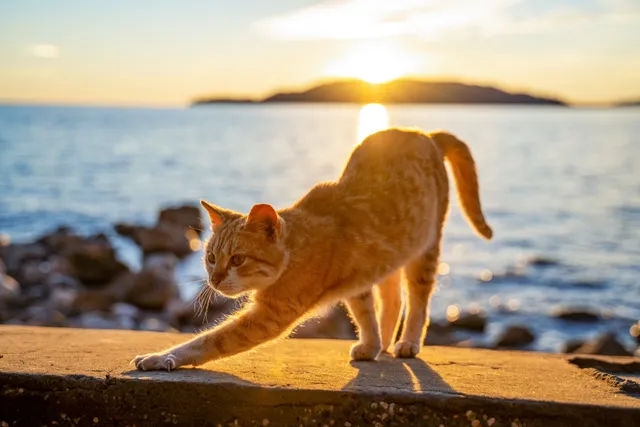
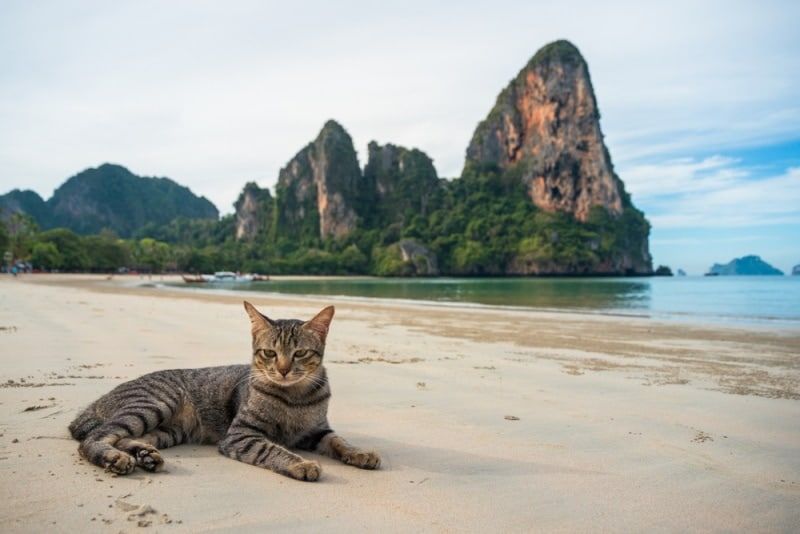
If your cat is like most, they probably take every chance they can get to snooze in the sun. You might be thinking that your cat sunbakes to get their vitamin D but, unlike people, they actually are unable to synthesize vitamin D with sun exposure. So why does your cat love to bask in the sun? Cats can tolerate laying in the sun when it’s hot because their body temperature and ideal environmental temperature are so much higher than ours.
In this article, we’ll go into more detail about why cats love hot weather so much, and why they should always have access to shade. We’ll also give you tips to keep your cat safe from sun and heat-related injuries.

Why Do Cats Love Hot Weather?
On hot summer days, most of us retreat to the shade with a cool beverage if we can. Your cat, on the other hand, usually won’t let the heat keep them out of the sun. Domestic cats are thought to have descended from wild felines who lived in hot climates.
A cat’s normal body temperature is between 99° and 102.5° Fahrenheit, which is much warmer than most homes’ average temperatures. If the temperature in your house feels cold, it’s no wonder your cat wants to lay in the sun despite the heat.
Staying warm gives your cat physical advantages, too. Research suggests external temperatures between 86° and 101° F are ideal for your cat’s thermoregulation.1 Your cat doesn’t have to waste energy staying warm or cooling off in these temperatures.

Why Your Cat Still Needs Shade
Your cat may thrive in hot temperatures, but they still need access to shade. Just like dogs, cats can develop heat stroke if their body temperature reaches 105° F or higher. To prevent a heat injury, you may need to limit your cat’s exercise time in the sun when it’s hot outside.
Always make sure your cat has access to cool, shaded areas and plenty of water when it’s hot outside. Outdoor cats are especially vulnerable to heat injuries and must be monitored carefully. Indoor cats kept in hot areas of the house, without any climate control, can also become too hot.
The 3 Possible Issues From Too Much Sun
We mentioned heat stroke can be life-threatening to your cat, but they can also get a sunburn and even skin cancers. Therefore, it’s vital to prevent your cat from spending too much time in the sun.

1. Heat Stroke
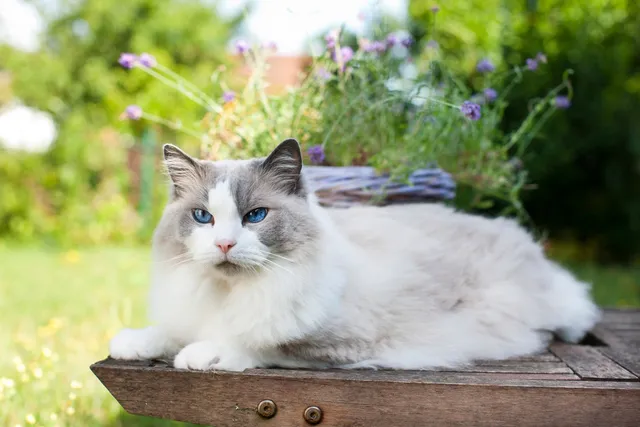
Cats can develop heat stroke when outdoor temperatures soar. Lack of water and shade and cats with long fur are additional risk factors that can worsen the danger. Cats can also suffer heat stroke if trapped in an enclosed location with poor airflow, such as a car or building.
If you have an indoor or outdoor cat, keep them inside during the hottest part of the day. Consider limiting their access to a shaded patio or porch and provide water.
If you have outdoor cats or know there are feral felines in your area, help keep them safe by checking sheds and garages frequently. You can also set up shade and water stations on your property.
Common signs of heat stroke in cats include:
- Panting
- Drooling
- Vomiting
- Lethargy/collapse
- Tremors or seizures
- Loss of balance
If you suspect your cat has a heat stroke, they’ll need to see a veterinarian immediately. Heat stroke is a severe and life threatening condition. In addition to actively cooling your cat veterinarians will have to be on the watch for brain injuries, sepsis, and organ damage.
2. Sunburn
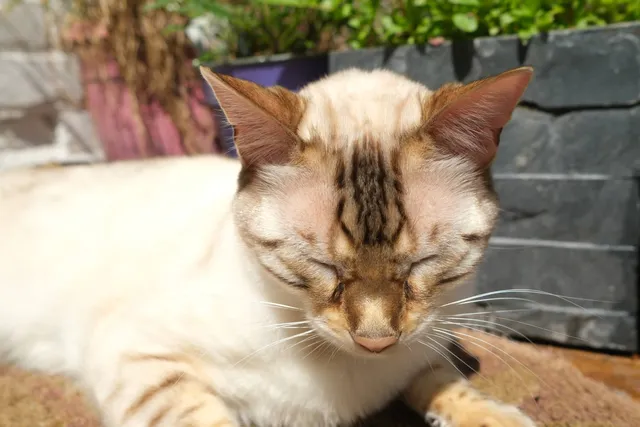
Cats can get sunburned from too much exposure. Every breed is vulnerable to sunburn, but hairless cats and those with light-colored fur are most at risk. Your cat will generally get sunburned on areas of their body with thin or no hair, like the ears, nose, and belly.
You can prevent sunburn by keeping your cat indoors during the hours with the strongest sunlight, generally 10 AM to 4 PM. Apply cat-safe sunscreen (not the type made for humans) to your kitty when they go outside. Access to shade and water is also essential.
Indoor kitties can also get sunburned because most windows don’t automatically block UV rays. However, you can install curtains or shades to block UV light and make sure your cat has space to escape the sun.
Signs of sunburn in cats include:
- Red, irritated, scaly skin
- Swollen eyes, ears, and nose
- Skin blisters
- Scratching and licking
Contact your veterinarian if you think your cat has a sunburn.
3. Skin Cancer
Just like people, cats are at risk of skin cancer when exposed to UV light. Squamous cell carcinomas (SCC) are common in cats and thought to arise from chronic exposure to UV light. Fur is usually a barrier that stops the UV rays, so the nose, tips of the ears, mouth, and eyelids are more susceptible to developing SCC. Cat’s with white markings and pink skin are more at risk. Preventing sun exposure will reduce the risk of this cancer. It appears at first as scabs that do not heal and get bigger over time. So, if you have a sunbathing cat with white markings, give them some extra protection, and be on the lookout for any skin changes, and seek veterinary advice if you suspect SCC.

Conclusion
Cats love to lay in the sun even when it’s hot, but you’ll still need to make sure they can escape to the shade if needed. Controlled outdoor access is a great way to provide enrichment for your indoor kitty. Just make sure to keep your cat safe from the heat and sun by applying sunscreen, avoiding the hottest part of the day, and making sure shade and water are always available.
Sources
Featured Image Credit: steph photographies, Shutterstock
Expert cat care, straight to your inbox
News, insights, and useful advice, delivered to you.

No spam — unsubscribe anytime.
By signing up, you agree to our Terms & Conditions and Privacy & Cookies Policy.
How useful was this post?
Click a star to rate. You can leave written feedback afterwards. (We read all feedback.)
Elizabeth Gray is a lifelong lover of all creatures great and small. She got her first cat at 5 years old and at 14, she started working for her local veterinarian. Elizabeth spent more than 20 years working as a veterinary nurse before stepping away to become a stay-at-home mom to her daughter. Now, she is excited to share her hard-earned knowledge (literally--she has scars) with our readers. Elizabeth lives in Iowa with her family, including her two fur kids, Linnard, a husky mix and Algernon, the worldʻs most patient cat. When not writing, she enjoys reading, watching all sports, and spending time outdoors with her family.