Get

In Your Inbox

Catster is reader-supported. When you buy via links on our site, we may earn an affiliate commission at no cost to you. Learn more.

Can Humans Get Lice From Cats & Vice-Versa? Vet-Approved Facts

Share

a white cat with collar scratching its ear

Nobody wants to deal with lice in their home, and when you find some on your cat, you can find yourself scratching and itching and feeling like they’re crawling all over you. The good news is that it’s all in your head and that they’re not actually on your head.

You don’t need to worry about your cat giving you lice, nor do you need to worry about giving your pets human-specific lice. But why is this the case, how do you know if your cat has lice, and how do you treat lice if they have them? We’ll break down everything you need to know here!

divider 2 cats

Can Humans Get Lice From Cats or Vice Versa?

Lice are a host-specific parasite, which means you don’t need to worry about your lice spreading to your pet or your cat’s lice spreading to you. Both humans and cats can get lice, but you never need to worry about lice jumping from species to species.

Additionally, if you have both dogs and cats in your home, you don’t need to worry about the lice from your dog or cat jumping to the other one either. Both species can get lice, but they are species-specific pests. Cat lice only affects cats, dog lice only affects dogs, and human lice only affects humans.

Cat Man Tattoo Sitting Owner
Image By: Africa Studio, Shutterstock

How Do Cats Get Lice?

Lice are pesky parasites, and while you don’t need to worry about passing your lice to your cat or vice versa, that doesn’t mean you don’t need to worry about them getting lice at all! Outdoor cats are more likely to contract lice, especially during the colder months in temperate regions.

However, if you’re bringing new cats into your home or your cat frequently spends time around other cats, it’s more likely for them to get lice too. Finally, unsanitary environments make it more likely for your cat to get lice, so keeping your home clean goes a long way in preventing lice for both you and your cats.

Identifying Lice in Cats

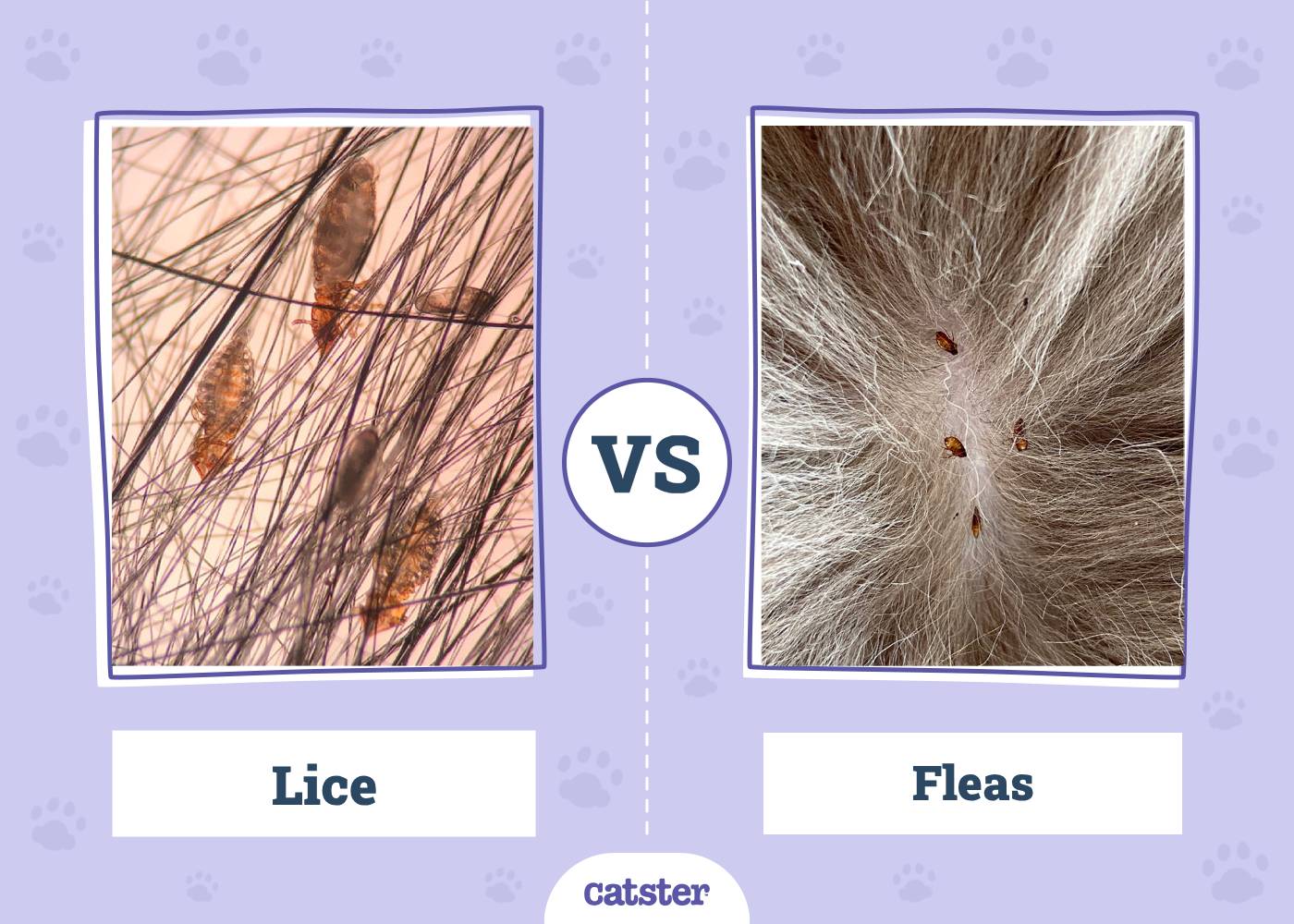
When you’re trying to determine if your cat has lice, there are three main ways to identify an infestation. The first is if you can visibly see the lice in their fur. There is one species of lice that infests cats, and they have six legs and are incredibly quick when climbing.

Another way to identify if your cat has lice is to find the lice eggs on their skin. Lice eggs are small, white, round objects, and you’ll find them close to your cat’s skin.

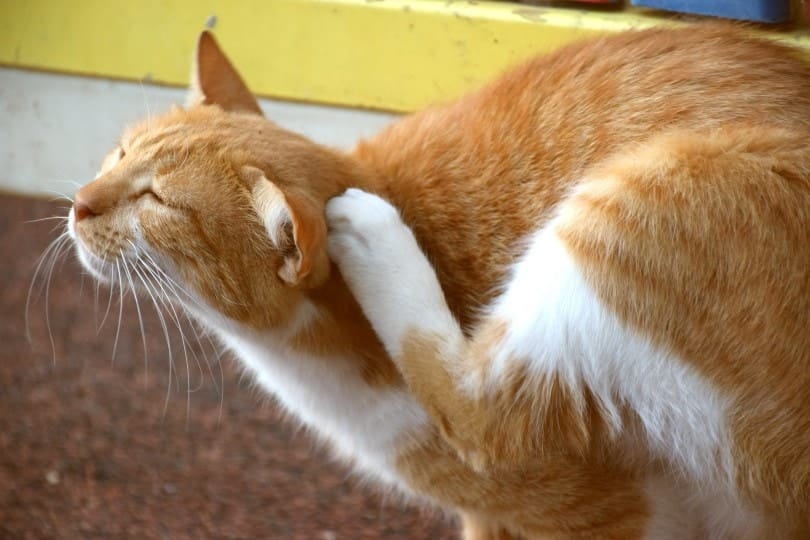
Finally, you can identify the signs of cat lice. Common signs include itching, scratching, rubbing, skin irritation, open wounds, infections, and restlessness. It’s also common to see matted hair or hair loss from where your cat is scratching and biting while trying to relieve the itchiness and irritation.

cat lice as seen on microscope
Image By: wimala namket, Shutterstock

Treating Cat Lice

While your cat can’t give you their lice, that doesn’t mean you want your cat to keep dealing with it. Treating lice can be a pain, but if you do it right the first time, you can put their lice problems behind you once and for all—with regular check-ups from your vet, of course.

Start by removing any visible lice with a fine-toothed comb. This is likely going to be the least enjoyable part of the process. Collect the louse and eggs and put them in a sealed container to kill them.

Next, visit your vet for an exam and lice treatment to use on your cat to kill any remaining lice and eggs you’ve likely missed. No matter how thorough you are, some of these pests are sure to slip through the cracks, and treatment is necessary to get the infestation under control.

Finally, finish cleaning all of your cat’s belongings, your furniture, and anywhere else your cat frequents. The lice and their eggs can fall off in those areas, and if you don’t clean these areas, the lice can come back even if you kill every single one on your cat.

divider 2 cats

Final Thoughts

While you might feel like things are crawling on you after you treat a lice infestation, since they’re species-specific, you don’t need to worry about them jumping onto you. Instead, focus all your time and energy on treating your cat so they can start feeling better and you can kick all the lice out of your home as soon as possible!


Featured Image Credit: socrates471, Shutterstock

Want content like this delivered to you?

Sign Up For Our Newsletter

News, insights, expert advice, and everything cat

* By submitting, you agree to our Terms & Conditions and Privacy & Cookies Policy.


How useful was this post?

Click on a star to rate (you can leave written feedback after clicking submit)

Help us improve Catster for pet parents!

Your feedback really matters.

What did you like about this post? Also how can we improve it?

Join the conversation

Leave a Reply

You’re very welcome to leave a comment or question. Please know that all comments must meet our community guidelines, and your email address will NOT be published. Let’s have a positive and constructive conversation.


Talk With A Vet Online

Peace of mind,
anywhere, anytime

Affordable vet advice

Why Chicken Bones Are More Dangerous for Cats Than Most Parents Realize

Chicken bones seem harmless enough, but for cats, they can cause serious damage quickly. Whether your cat swiped a piece off the counter...

Fantastic Pet Pantries and Where to Find Them

Let’s face it: times are really tough right now, and those of us in the 99% are struggling with the cost of just...

Ask Dr. Paola – Help! My Cat Refuses to Drink Water! (April 13, 2026)

Welcome to our “Ask Dr. Paola” series, where every Monday we bring expert advice straight from Dr. Paola Cuevas (MVZ) to help our...

Why Healthy Cats Still Vomit Sometimes (And How to Respond)

A cat that just vomited needs a specific kind of care, and the feeding decisions you make in the next few hours actually...

More related

Why Does My Cat Smell Like Maple Syrup? 3 Vet-Reviewed Reasons

A cat that smells like maple syrup may sound pleasant, but in reality, it could be an indicator of a medical issue. If...

9 Best Elevated Cat Beds in 2026 – Reviews & Top Picks

Cats love to be above the action, whether on the prowl, relaxing, or sleeping. They sleep for as much as 15 to 20...

Fur Goodness Sake – A Welcome, But Well-Overdue Change Fur Good

They say that a leopard cannot change its spots, but thanks to a landmark vote in Poland, they can feel a little more...

What Essential Oils Do Cats Hate – The 7 Worst Options (Vet Reviewed)

It’s generally recommended for cat owners to keep their cats away from essential oils. Essential oils can be extremely harmful to cats because...

Keep reading

Why Does My Cat Try to Climb Walls? 4 Vet Reviewed Causes & What To Do

Cats are mysterious creatures. Their independent and secretive nature makes them quite fascinating. They also have a unique set of behaviors that make them stand out from other domestic animals like dogs and horses. Cats are curious, agile animals with...

kitten trying to climb wall

Why Does My Cat Sleep Next to Me? 5 Vet-Reviewed Reasons for This Behavior

Cats are interesting animals. They are quite independent, yet they insist on regular attention from their human family members. They sleep frequently, but they can be playful while they are awake. They can be loud and annoying sometimes, while they...

woman-sleeping-with-her-cat

Can Cats Have Autism? Vet-Verified Facts & Science

One of the things that we love most about our cats is how much like us they often are. Whether it’s the need for affection and companionship or a deep desire to play, cats and humans have much in common....

cat playing alone

Can Cats Eat Tomato Sauce? Vet-Reviewed Nutrition & Safety Guide

It’s dinner time, and you’re serving up your signature dish of spaghetti with jarred tomato sauce because who has time to make tomato sauce from scratch? A dollop of sauce accidentally hits the floor, and your cat, waiting patiently by...

Can Cats Eat Tomato Sauce

Do Cats Eat Their Own Poop? Vet-Verified Facts & How to Stop It

Cats are curious creatures, and we may see them sampling various non-edible things, including houseplants, cardboard boxes, and our toes. Many animals eat their feces to digest maximum nutrients, but do cats eat their own poop too? Cats do not...

two-cats-looking-at-the-litter-box

Can Cats Eat Turkey? Vet-Reviewed Nutrition Facts & FAQ

Turkey is often touted as a fantastic low-fat protein source for people. It’s tasty and packed with nutrients, including magnesium, potassium, and tons of B vitamins. But is it safe for cats to eat? Turkey is safe for cats to...

Can Cats Eat Turkey

Why Do Cats Sometimes Eat Their Placenta? Vet Approved Facts & FAQ

Cats evolved to eat their placenta. It is normal behavior that most females will exhibit while giving birth. But that does not mean that all cats will eat every placenta. Both behaviors are normal and nothing to be worried about....

mother cat giving birth to a child

Colitis in Cats: Our Vet Explains Signs, Diagnosis & Treatment

Taking care of a cat experiencing gastrointestinal symptoms can be quite an ordeal and cause a significant amount of stress for both you and your cat. A gastrointestinal sign that may impact your cat and make them feel ill is...

A cat having a check up at a small animal vet clinic

Love Cats? So Do We! Join the Catster Community

Stay informed with expert pet care insights delivered straight to your inbox! Discover professional guidance on animal behavior, feeding tips, trusted product picks, and much more.


Sign up for the Catster Email Newsletter

Stay informed with expert pet care insights delivered straight to your inbox! Discover professional guidance on animal behavior, feeding tips, trusted product picks, and much more.