Get

In Your Inbox

Catster is reader-supported. When you buy via links on our site, we may earn an affiliate commission at no cost to you. Learn more.

10 Ways to Train Your Kitten: Vet-Approved Tips

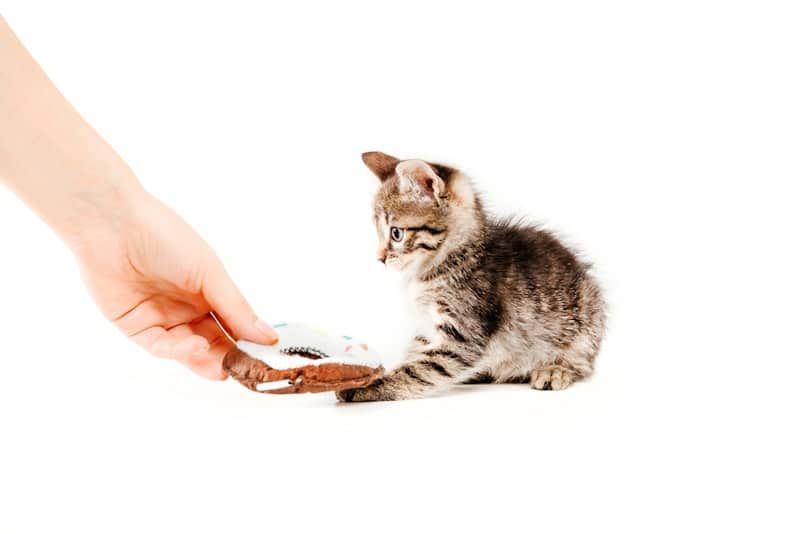
Tabby cat on white background

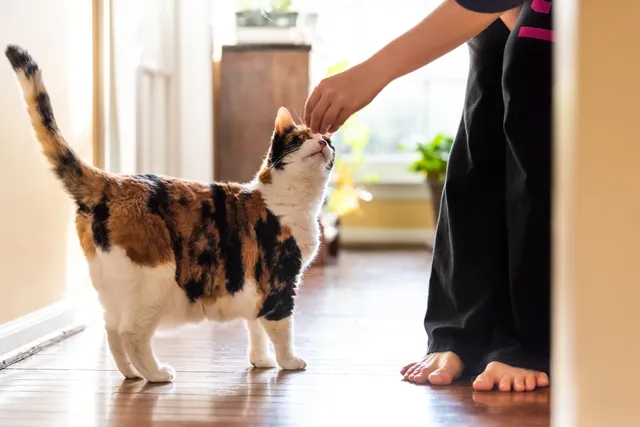
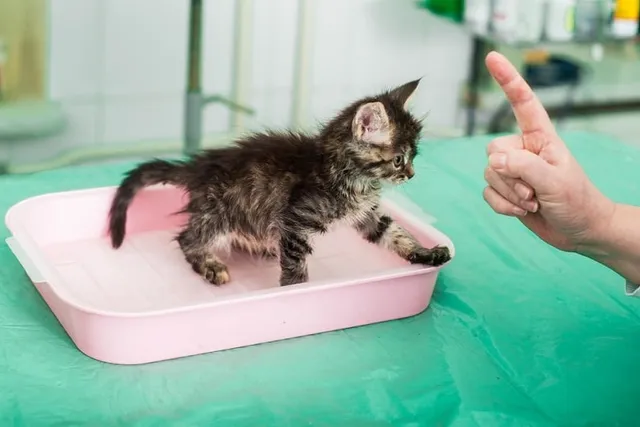
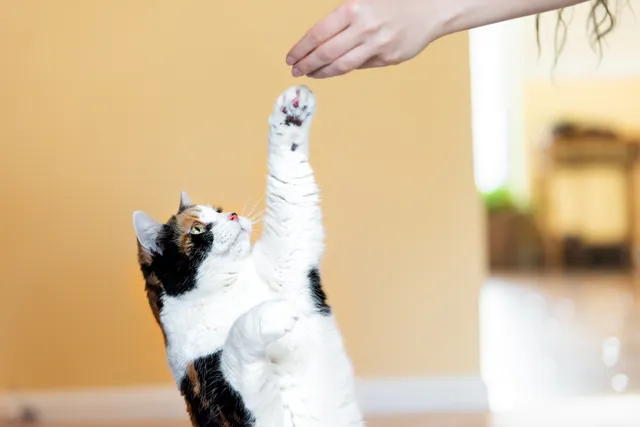
Cats might like us to think that they’re untrainable, but the truth is that most cats enjoy short training sessions! The best time for them to learn is when they are still young, so beginning when your pet is a kitten is a great idea.

Whether you’re hoping to persuade your kitten to stay off the kitchen counters or to teach them fun tricks to impress your friends,  check out this list of the top 10 ways to train a kitten.

divider cats oct 2024

The 10 Ways You Can Learn How to Train a Kitten

1. Stock Up on Treats

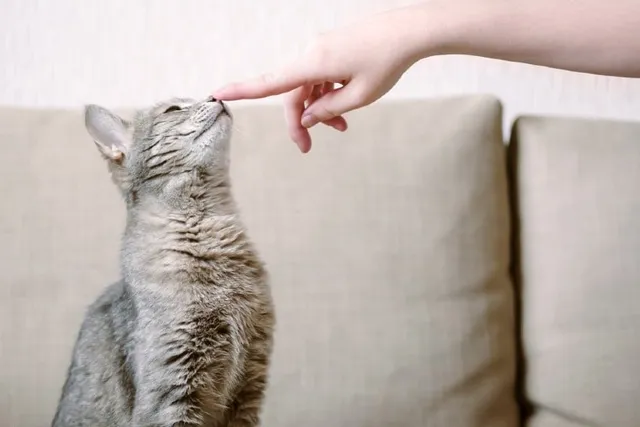
Kitten being given a treat
Image Credit: Vershinin89, Shutterstock

Kittens are often food-motivated, so using treats as a reward for positive behavior is an excellent way to capture your kitten’s attention. Make sure you always have plenty of treats at hand, and use verbal praise when your kitty gets something right.


2. Use Clicker Training

clicker_bmf-foto.de_Shutterstock
Image Credit: bmf-foto.de, Shutterstock

Positive reinforcement using praise and treats when your kitten gets something right is one of the most effective training methods. You can combine these treats with a clicker box, which makes a noise when you press it. This acts as a “bridge,” connecting the moment that your kitten does something right and the knowledge that they’re about to get a treat. The more you reinforce the good behavior by clicking and treating it, the quicker your kitten will learn what you’re asking them to do.


3. Keep Sessions Short

Kittens have a short attention span, so don’t expect them to be able to concentrate on a long training session without losing focus. Little and often is the best way to train your kitten, so try to keep your training sessions around 5 minutes long for the maximum effect.

If your kitten gets bored, they’re far more likely to wander off and give up on what you’re trying to train them. Kittens also need plenty of sleep, so they may be getting tired!


4. Remove Distractions

2 Grey Striped Kittens Playing on a Blanket with Toy
Image Credit: Pixabay

Don’t expect your kitten to concentrate on a training session if there are too many distractions around them. Other pets, the noise from the TV, or too many toys around for them to play with can all cause your kitten to lose focus.

Find a quiet place to train your kitten to help them succeed. Choose a room where you won’t be disturbed, or wait until the house is empty and free from distractions before starting a training session.


5. Train Before Mealtimes

kitten not eating_Happy monkey, Shutterstock
Image Credit: Happy Monkey, Shutterstock

If you’re using treats and positive reinforcement to train, your sessions will be most effective if you schedule them just before your kitten’s mealtime. Never let your kitten go hungry, but working in a short training session just as your kitten is starting to think about food means they will be focused on their treats and receptive to your training commands.


6. Consistency Is Key

Kittens will learn fastest and most effectively if you keep your training commands consistent. Switching between methods is likely to confuse them, and then it’s much easier for you both to get frustrated if they’re not picking something up as quickly as you might like. Using the same cues and signals during each training helps your kitten to know what to expect. It also makes it easier for you to build on commands—for instance, turning a “lie down” command into a “roll over.”

The one thing that you don’t need to be so consistent with is treats! Switching the type of treats that you use as rewards is a great way to maintain your kitten’s motivation and concentration. You can use a lower-value treat for easy commands and switch to a higher-value and tasty treat for new or more complex commands. You’ll soon figure out what treats your kitten will do anything for! However, remember that your kitty should only get about 10% of their daily calorie allowance in treats, so choose wisely, and look for low-calorie treats that can be offered in smaller pieces. A veterinarian can help you make the right choice.

Need veterinary advice but can't get to the clinic? Catster recommends PangoVet, our online veterinary service. Talk to a vet online and get the answers and advice you need for your cat without having to leave your living room — all at an affordable price!

PangoVet_Mention-in-Content for PangoVet2 save money


7. Focus on One Skill Only per Training Session

Kittens have short attention spans, so don’t expect them to easily be able to switch between different commands and skills. Overloading them mentally by asking them to learn different skills during one training session may make them feel stressed.

If you are keen to teach them multiple commands at the same time, use multiple short training sessions within the same day, and dedicate each training session to practicing that particular command.


8. Don’t Punish Your Kitten

sad cat in cage
Image Credit: Mimzy, Pixabay

Never punish your kitten using verbal or physical methods. This isn’t an effective way to teach them not to do something and may negatively impact your bond with your kitten. Instead of punishing negative behavior, keep an eye out for positive behavior, and actively reward that instead. If you’re trying to teach your kitten not to jump on the kitchen counter, look out for opportunities to reward them when they’re playing nicely on the floor instead of shouting when they’re on the counter.


9. Repeat, Repeat, Repeat

The more often that you ask your kitten for a particular behavior and then reward them when they get it right, the more capable they’ll become at performing that particular trick. As you’re starting to teach a new behavior, make sure your kitten gets plenty of treats, and praise whenever they do what you’ve asked. As they become more skilled at each behavior, you don’t necessarily have to give them a treat each and every time, but you can switch to verbal praise or a quick tickle on their favorite spot instead.


10. Train in Different Places

Gray tabby kitten in the grass
Image Credit: Maria Moroz, Shutterstock

As your kitten becomes more skilled at performing certain commands, start to challenge them by asking them to perform these in different environments and circumstances. When first starting training for a new command, using a quiet room free from distractions is vital. Once you’re confident your kitten has mastered a new skill, ask them to perform the same command in a noisy room, outside, or with additional distractions, like other cats or people.

divider cats oct 2024

Conclusion

Training your kitty has its challenges, but it’s easier than you might think. Also, the sessions can help with bonding, thus making your relationship stronger. After you bring home your new kitten, use these tips to start a daily training regimen.


Featured Image Credit: OlgaOvcharenko, Shutterstock

Want content like this delivered to you?

Sign Up For Our Newsletter

News, insights, expert advice, and everything cat

* By submitting, you agree to our Terms & Conditions and Privacy & Cookies Policy.

How useful was this post?

Click on a star to rate (you can leave written feedback after clicking submit)

Help us improve Catster for pet parents!

Your feedback really matters.

What did you like about this post? Also how can we improve it?

Join the conversation

4 Responses

    1. Hi Lyn,
      Thank you for your question. Cats don’t experience relationships with their mothers the way humans do. As more independent animals, the bond between a mother cat and her kittens is quite different from a human parent-child connection.

      Cats rely heavily on scent to identify one another. If a mother and her kittens are never separated, they may continue to recognize each other through smell. However, this doesn’t necessarily mean they will display affectionate behavior toward each other. By the time kittens are around 10 to 12 weeks old, the mother usually starts treating them like any other cat.

      For more details, you might find this article helpful:
      – https://www.catster.com/lifestyle/do-cats-remember-who-their-mother-is/

      Please feel free to reach out if you have any more questions. We’re happy to help!

  1. I have two 12 week old kittens. They were using the litter tray very well, then all of a sudden they are refusing to use it at all, I haven't changed anything at all, same litter, same trays, same place. I can't understand what has happened. How can I get them to use the trays again?

    1. Dear Lyn,

      Thank you for your question and sorry for a bit of a late answer. As kittens grow older, they become more independent and territorial. Cats usually don't like to share their litter box, and the rule of thumb is to have one per cat plus an extra one. Getting another litter tray could be a good way to start. If this won't help, try some of the tips and tricks mentioned in our other articles on this topic:

      – Is Your Cat Not Using the Litter Box? 6 Vet-Approved Causes – https://www.catster.com/cat-health-care/cat-not-using-the-litter-box/
      – Why is My Cat Peeing Everywhere All of a Sudden? 7 Vet-Reviewed Reasons – https://www.catster.com/cat-behavior/why-is-cat-peeing-everywhere-suddenly/
      – 8 Common Litter Box Issues & How to Fix Them – https://www.catster.com/cat-health-care/cat-litter-box-issues/
      – Cat Peeing in Front of the Litter Box? 14 Vet-Reviewed Solutions to Try – https://www.catster.com/cat-behavior/cat-peeing-in-front-of-the-litter-box/
      Just copy and paste the desired URL into your browser.

      If nothing mentioned works, we would recommend you schedule an appointment with one of our vets at www.PangoVet.com for personalized advice.

Leave a Reply

You’re very welcome to leave a comment or question. Please know that all comments must meet our community guidelines, and your email address will NOT be published. Let’s have a positive and constructive conversation.

Talk With A Vet Online

Peace of mind,
anywhere, anytime

Affordable vet advice

8 Amazing DIY Cat Wheelchair Plans You Can Build at Home (With Pictures)

Cat wheelchairs are extremely helpful for cats needing physical therapy or living with permanent disabilities. However, they can be pretty expensive, especially if...

I Found a Stray Kitten, What Do I Do? Vet-Reviewed Care & Feeding Tips

Deciding what to do when you find a stray kitten requires fast thinking and a cool head, and the first order of business...

The Harsh Reality of Life with 10 Pets Part 2: Hairballs, Cat Litter & Fur on EVERYTHING

Hi, I’m Dr. Karyn! Read my introduction to learn more about me and meet my five hilarious cats: Clutch, Cyril, Alex, Zelda, and...

Birman vs Siamese Cat: Main Differences (With Pictures)

There is something so elegant and beautiful about a faded cream to gray or brown shade on cat coats. On top of their...

More related

How to Foster Kittens: 9 Vet-Approved Tips

If you’re an animal lover, knowing the daunting statistics from animal shelters might break your heart. These poor kittens don’t ask to be...

Why Is My Cat Squeaking Instead of Meowing? Vet-Verified Info & Reasons

Cats make all kinds of noises to communicate with their owners and each other. Some cats have resounding meows that owners can hear...

10 DIY No Sew Cat Beds To Create at Home: Vet-Approved (With Pictures)

Do you have a feline friend who loves to curl up in a warm, soft place? If so, you may be looking for...

Can Cats Eat Hemp Seeds? Vet-Reviewed Facts & FAQ

Cats like to explore their surroundings, and their adventures often lead them to foods and items they should avoid. With cannabis products becoming...

Keep reading

6 Homemade Cat Food Recipes for Senior Cats (With Pictures)

We all know that a nutritionally balanced diet made up of high quality ingredients is vital to a long and healthy life. But with so many types of senior cat food on the market, how can you be sure that...

Homemade Cat Food Recipes for Senior Cats

6 Best Cat Foods for Outdoor Cats in 2026 – Reviews & Top Picks

People love to joke that cats domesticated us and not the other way around, owing to their exceptionally independent nature. In fact, even though we have been companions for over 4,000 years, research shows that about 50% of these small...

hungry Nebelung cat with kibbles in front

Why Did My Cat Throw Up? 8 Vet-Reviewed Likely Reasons

When your cat throws up, it can send your mind into overdrive: What’s going on? Do I need to take them to the vet? What can I do for them? The solution starts with identifying why your cat is vomiting...

a cat that feels sick and seems to vomit

How to Feed a Cat with a Cone: 5 Vet-Verified Tips

If your cat has just had surgery or is dealing with another medical condition, your vet may send you home with an Elizabethan collar or “cone” while they heal. Typically, the cones make your cat look like they’re wearing a...

British Shorthair cat with cone eating

Why Do People Hate Cats? What Science Tells Us (Vet-Reviewed)

Cat lovers think that their favorite animals can generally do no wrong. People who adore felines often find them loving, attentive, playful, and adaptable. They love cats’ independence and sweet companionship and feel honored that such self-sufficient and intelligent creatures...

red flame point siamese in the grass

I Found a Stray Kitten, What Do I Do? Vet-Reviewed Care & Feeding Tips

Deciding what to do when you find a stray kitten requires fast thinking and a cool head, and the first order of business is determining if they’ve been abandoned or not. Young kittens are always better off being raised by...

little stray kitten beside the car wheel

Why Do Cats Love String? 5 Vet-Reviewed Reasons for This Behavior

A ball of yarn and a cat is a somewhat clichéd image for a reason: Cats the world over find a string of almost any kind irresistible. Even specially-made toys are often no match for a plain old piece of...

cat playing with strings_Shutterstock_Noam Armonn

Why Is My Cat So Jumpy All of a Sudden? 8 Vet Reviewed Reasons 

It can be alarming to see your cat act jumpy all of a sudden, especially out of nowhere. Cats cannot tell us exactly how they feel, which is why cat owners should pay close attention to their cat’s body language....

scared British blue-point cat hiding under the bed