How Do Cats Show Affection? 12 Vet-Reviewed Body Language Cues


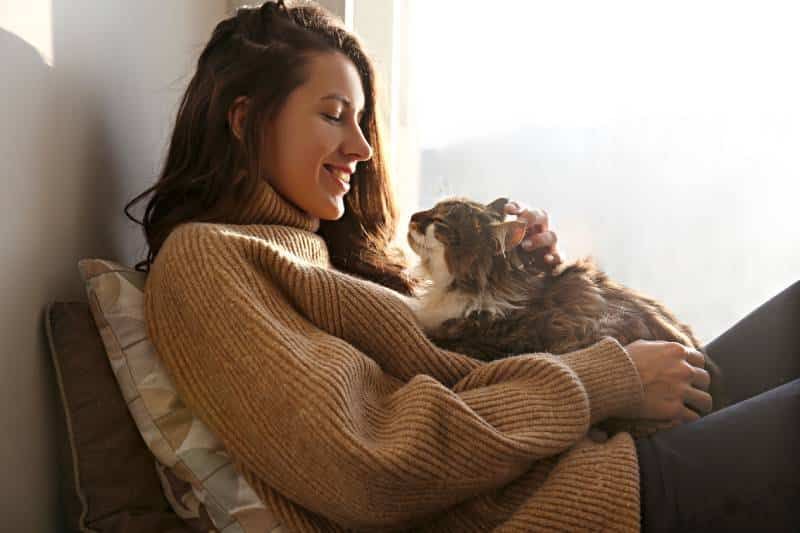
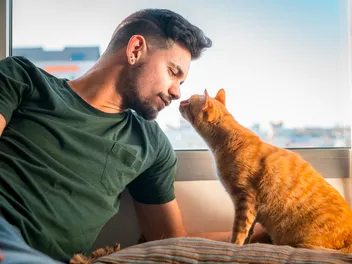
If you have a cat at home, you may wonder if your buddy loves you. And if so, how can you tell? Since cats can’t speak, it’s reasonable to wonder how they show affection. Cats show their love in several ways, from sleeping on your head to rubbing against your legs when you come home after being gone for a few hours.
Many cats deeply bond with their human companions, often relying on them for love, friendship, comfort, and fun. They even mourn the loss of humans they’ve spent several years with and have grown to love. Read on for more on the ways cats show affection.

Can Cats Show Affection?
Cats can definitely show affection and fondness, phenomena that have been well documented in both research and by the claims of pet owners who have cats. However, cats are very interesting from an emotional point of view.
Research shows that our feline friends are definitely capable of perceiving some human emotions and responding to them 1. They often rely on visual and auditory cues to come up with an appropriate action or response to convey their feelings.
Cats are also able to distinguish between our emotional cues and can read our body language to an extent. For example, cats have been known to spend more time with people that are depressed 2, and they tend to interact more with humans that seem excited or agitated 3.
However, cats don’t form emotions to elicit feelings. Instead, they elicit emotions to respond to their environment. Therefore, to ascertain whether a cat loves you is very much impossible by the limitations of current scientific methods. However, it is well known that cats do form bonds and are able to recognize their owners (you!), so, their ability to show appreciation and affection is definitely not imaginary.

The 12 Ways Your Cat Shows You Affection
A Note About Female Cats
1. Meowing
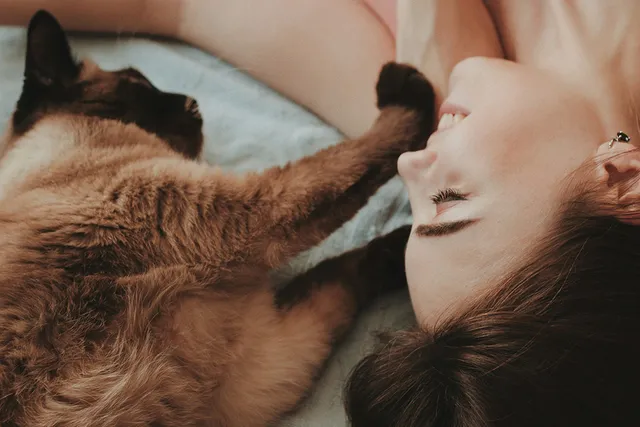
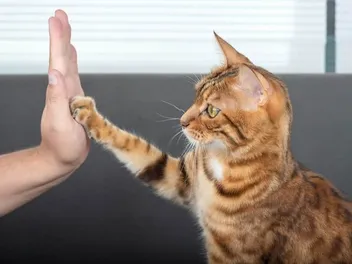
Adult cats typically only meow to communicate with people, as they often rely more on smell and body language when interacting with other kitties. Cats often meow to get their favorite people’s attention. Many meow to ask for playtime or food. Some accompany requests for cuddle time with sweet little paw pokes to make their wishes crystal clear.
2. Rubbing
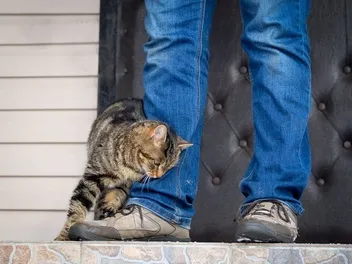
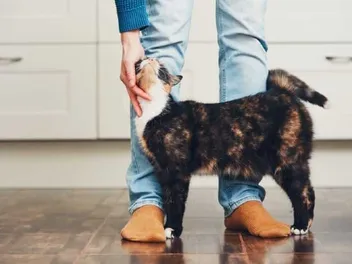
Cats often greet loved ones by rubbing against them. This often starts with a few head butts. Cats then move on to rubbing the lengths of their bodies against their favorite people. They have scent glands around their whiskers, ears, and chins. These glands produce scents that contain information cats use to communicate with each other.
When your cat rubs against you, they leave behind a scent marking and essentially claim you as “theirs”! This shows that your cat is appreciative of your presence.

3. Rolling
Some cats roll around on the ground excitedly around their favorite people. It often happens when loved human companions first come home after being away. Cats are often protective of their vulnerable bellies, so anecdotally, it’s a major sign of trust and affection when a cat is so happy to see you that they roll around and invite you to pet their tummy.
4. Body Language
Happy cats appear confident and relaxed, often walking with their tails held high and their ears relaxed when feeling comfortable and at home. If your cat greets you at the door with their tail held high and the tip slightly bent, it’s a sign of them being pleased to see you! Kittens often assume this posture with their mothers, so it shows your cat thinks of you as a loving, protective presence they’re happy to have around.

5. Purring
Cats often purr when happy, indicating they’re totally relaxed and blissed out, particularly when combined with kneading or snuggling. While cats often purr when content, it can sometimes indicate that a cat isn’t feeling terribly well, as some purr to control pain. Purring may help speed the healing of broken bones and expedite healing. If you suspect your cat is injured, please seek prompt veterinary care for your pet.
6. Giving Gifts
Some pets with access to the outdoors provide gifts to their human companions in the form of small, dead, or nearly dead critters. Some cats regularly catch and provide gifts, and others only leave occasional treats for their humans. It is thought that cats do this to mirror what their mothers do when they are kittens - bringing over prey to the den. Though this is often unappreciated by owners, it might be a sign that your cat is comfortable with their home and enjoys bringing over their caught prey to the location.
Please Note - Roaming Cats

7. Playing
Cats often have favorites, and many are happy to let everyone in the household know who is on and off the list. Some specifically seek out their best buddies when they want a bit of attention or playtime. Being playful in your presence is often a sign that your cat feels safe and content when you’re around.
8. Scratching
Cats have scent glands in their paws, which is one of the reasons they love to dig in and scratch things—it feels good, provides a nice stretch, and leaves a scent trail behind. Cats sometimes scratch places their favorite people often sit as it allows them to mark the area. Not only do these feline scents tell other critters to stay away, but they also create a comforting smell that reminds your cat of how much you love them. This shouldn’t be encouraged on your leg, though, as cats are more than capable of drawing blood when they scratch. Instead, consider investing in a cat scratcher for your pet.
We're quite fond of cardboard as a material in cat scratchers, which is why we love the Hepper Hi-Lo Cat Scratcher. Encased within a well-constructed, modern birch plywood frame, this scratcher is designed with both cats and their owners in mind. It offers three versatile configurations to keep your feline friend active and entertained while enticing them to fulfill their natural scratching instincts (and away from scratching things they shouldn't). For more details, click here!
At Catster, we’ve admired Hepper for many years, and decided to take a controlling ownership interest, so that we could benefit from the outstanding designs of this cool cat company!
9. Sleeping
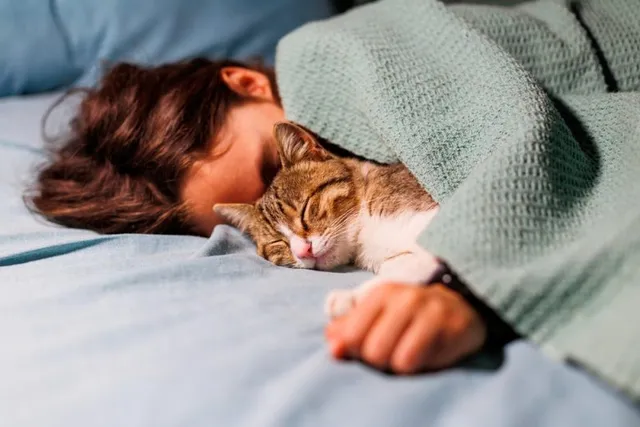
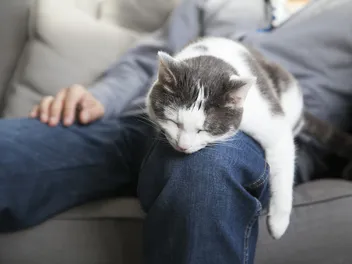
Cats can be particular about where they sleep. While they’re natural predators, they’re vulnerable to being pounced on by other animals while they sleep. As a result, most love to hang out high above it all, where they can keep an eye on things and see danger approaching while it’s nice and far away, allowing more time to escape. Cats prefer to sleep where they feel safe, leading many to nap on their humans. An owner’s head, legs, and feet are popular resting places.
10. Blinking
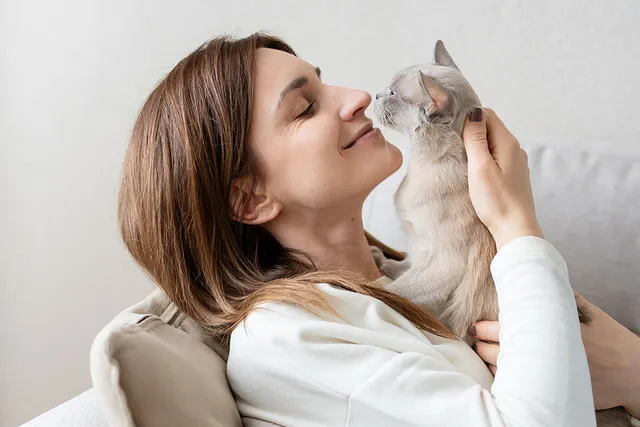
The slow blink is a sure sign that your cat loves you; it shows your buddy feels relaxed, content, and safe. It’s an invitation to respond with similar openness and love. Think of it as a sort of gentle feline kiss. Cats often slowly blink to let humans know that further contact will be tolerated.

11. Grooming
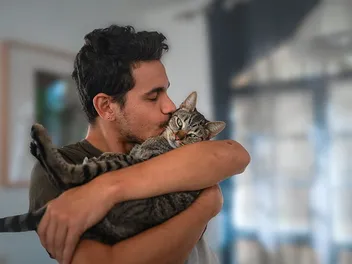
Cat moms regularly groom their kittens. It not only keeps tiny cats clean, but it also stimulates them to eat and go to the bathroom. Mother cats also use grooming to bond with their kittens. Cats sometimes show humans affection in the same way by gently licking their favorites while cuddling.
12. Kneading
Kittens knead when they suckle their mothers. Many adult cats keep the habit and enjoy a good knead involving their favorite person’s arm or lap. Some cats knead just before settling in for a snooze.
While some used to think the behavior was linked to cats being weaned too early, most people now believe it to be normal instinctual behavior, even in adult cats.


Conclusion
Most cats are sweet, friendly creatures that love spending time with their beloved humans. Many develop deep bonds of affection with their favorite people and can even become stressed when deprived of their favorite humans’ companionship.
Cats show affection in different ways, including rubbing against their loved ones and snuggling up next to their owners in bed. They also show love by following people around and sitting on their laps. Some demonstrate their contentment by providing gifts of small dead animals, and others enjoy kneading their owner’s stomach or legs.
Related Reads:
Featured Image Credit: evrymmnt, Shutterstock
Expert cat care, straight to your inbox
News, insights, and useful advice, delivered to you.

No spam — unsubscribe anytime.
By signing up, you agree to our Terms & Conditions and Privacy & Cookies Policy.
How useful was this post?
Click a star to rate. You can leave written feedback afterwards. (We read all feedback.)
Lorre Luther is a writer who is firmly convinced that cats are smarter than humans. She left her law career in the United States and moved to the Netherlands to follow her dream of becoming a writer. Lorre currently lives in Rotterdam, she enjoys traveling and greatly appreciates the beauty of nature. Lorre has a spot for animals and admires the intelligence of cats.