Will My Cat Get Diarrhea After Changing Food? Vet-Approved Nutritional Transition Facts & Advice


In this article
There are many reasons you might decide to change your cat's food. Maybe your vet recommends a special diet to address your kitty's health, or your pet store has stopped carrying your cat's favorite food.
Unfortunately, you can't suddenly stop feeding your cat one food brand and move on seamlessly to the next. There must be a slow and controlled introduction process to avoid tummy upset and diarrhea. Rushing a food transition can definitely lead to digestive problems for your cat, including diarrhea.
Diarrhea doesn't have to be a side effect of changing your cat's diet. Keep reading to learn more about diarrhea and how to properly switch your pet to a new food.

What Is Diarrhea?
Diarrhea refers to loose or unformed bowel movements with an increased amount and frequency. It happens because the fecal matter is moving fast through your cat's digestive system and your kitty's system isn't absorbing water, nutrients, and electrolytes as it should.
Diarrhea is not a disease itself, but it's a clinical sign of many different diseases. Most of these conditions involve inflammation in the gastrointestinal tract. Bacteria, viruses, and intestinal worms can cause inflammation and diarrhea, as can chemical toxins and exposure to poisonous plants. Of course, food intolerances and sudden changes in diet can also cause diarrhea.
Why Do Diet Changes Cause Diarrhea?
When your cat has been eating the same food for months or even years, their digestive tract adapts to this food. The vast amount of microbes in your cat’s intestines (known as their microbiome) adapt to a consistent diet. So, adverse side effects may occur if there are any sudden changes to the diet it is accustomed to. The new food can alter your cat's intestinal environment, leading to gastrointestinal issues. Vomiting and diarrhea are the most common signs that you've upset your kitty's digestive system after a sudden diet change.
Your cat may also refuse to eat altogether. This is called neophobia (a fear of new things) and when this occurs, your pet may be reluctant to try new food. Some believe that neophobia is a behavior cats engage in to protect themselves from ingesting toxic or tainted food.

How to Properly Change Your Cat's Diet
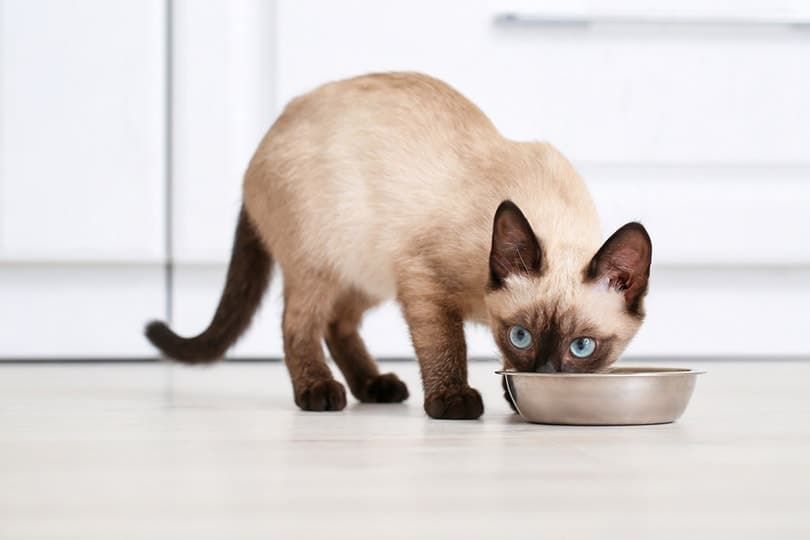
Transitioning your cat to a new food should be a multi-day process. It's not complicated, but there is a right and wrong way to introduce new food.
Let's look at some pointers.
- Add a small amount of the new food in with the old. On day one of your transition, put a small portion of your cat's new food in with their old food at mealtime. The new food should only comprise around 5-10% of the total meal, and their usual food should be the majority (90-95%) at this point.
- Watch for signs of gastrointestinal upset. Monitor your cat closely during the transition process for any signs of gastrointestinal upset. You should also take note of how much your kitty is eating. Fussy cats may take longer to adapt to a new food, so the transition will take longer.
- Add more new food to the old. Once you see how your kitty reacts to the new food, you can slowly increase your feeding portions. It’s best to do the increment every other day. During each increment, you can increase the new food by 5-15% (depending on how well your cat seems to be coping), and reduce their old food by the same amount. Expect the process to take around a week at minimum, but it could take much longer, depending on your kitty.
- Be patient. Avoid temptations to rush your kitty into this new food. Instead, let your kitty guide the speed of the transition and toss out all your ideas of how long the process should take.
- Do not force it. It's natural for your cat to be weary about their new diet, so don't force it. You should never starve your pet into eating a new diet. Cats are at risk of hepatic lipidosis, and a sudden cutback in caloric intake can be a trigger for this condition.
Since this process could be daunting, especially when done for the first time, if you are at any point unsure about how to proceed, the best thing you can do is reach out to a veterinarian and ask for their guidance.
When Should I Take My Cat to The Vet?

If you've transitioned to the new food as slowly as possible and your kitty is still experiencing diarrhea, it may be something other than their food causing the problem. If your kitty has diarrhea and other signs, an underlying health issue could be the culprit.
Signs to be on the lookout for include:
A visit to the vet is in order to get your pet evaluated to see what the issue could be.
Also, if your cat refuses to eat and doesn't take in calories for even just one day, you must get them to the vet as soon as possible. A few days of little food and inadequate daily calories can cause your kitty's body to send fat cells to their liver to convert to energy. Cats' bodies are not designed to metabolize fat efficiently, and their livers can then start to fail.
How Can I Clean Diarrhea?
Diarrhea is one of those pet messes that can be a real pain. Firmer poops are easy to pick up with a paper towel and buff out of the carpet with a stiff-bristled brush. Liquidy messes like diarrhea are a whole different ball game.
Clean up as much as you can with paper towels. Next, scrub the area with detergent and water. Let the detergent have at least 5 minutes of contact with the area. Rinse it, then blot it dry. You'll need to use a neutralizing product, such as an enzymatic cleaner, to remove the smell and stain.
Our Favorite Enzyme Cleaner
The Hepper Advanced Bio-Enzyme Pet Stain & Odor Eliminator Spray is our favorite enzyme cleaner out there. It permanently removes even the very worst kitty stains and smells, leaving your home fresh and clean! Click here to learn more about this amazing product and get yourself a bottle.

- ADVANCED ENZYMATIC CLEANER - Penetrates the most stubborn smells and stains at the deepest molecular levels to dissolve any pet mess you encounter and lift it away at the source.
- FOR ANY MESS, ON ANY SURFACE - This pet odor eliminator cleans your carpets, floors, furniture, fabrics, and more. Whether it's urine, feces, vomit, or drool, you can erase all foul spots and smells!
- FRESH, NATURAL ODOR - Our unique formulation doesn't rely on dangerous or unpleasant chemical fragrances to get the job done. We eradicate smells and stains, not just cover them up.
At Catster, we’ve admired Hepper for many years, and decided to take a controlling ownership interest so that we could benefit from the outstanding products of this cool cat company!
Conclusion
Not all cats will get diarrhea when transitioning to a new food. It is not a side effect you should expect to encounter during the process, but know that if it does happen, you may need to scale back a bit. Take your time introducing new food to your kitty to reduce the likelihood of any gastrointestinal upset.
If your cat is struggling with prolonged bouts of diarrhea, it's time to get them to the vet for evaluation. Diarrhea can quickly lead to dehydration which your vet can manage and treat.
Sources
Featured Image Credit: Pixel-Shot, Shutterstoc
Expert cat care, straight to your inbox
News, insights, and useful advice, delivered to you.

No spam — unsubscribe anytime.
By signing up, you agree to our Terms & Conditions and Privacy & Cookies Policy.
How useful was this post?
Click a star to rate. You can leave written feedback afterwards. (We read all feedback.)
For Chantelle, writing and animals are the two driving forces in her life. Growing up on the Canadian prairies surrounded by pets, she now shares her home with five cats, two guinea pigs, and a bearded dragon. Chantelle, her husband, and their child pride themselves on being dedicated pet parent, even spending a fortune on wall-mounted cat shelves to provide their cats with an indoor jungle gym. When she's not snuggling with her cats or photographing their humorous moments, Chantelle is exploring the Rocky Mountains, rewatching her favorite Netflix series, and reading up on various random subjects.