Why Is My Cat Squeaking Instead of Meowing? Vet-Verified Info & Reasons


In this article
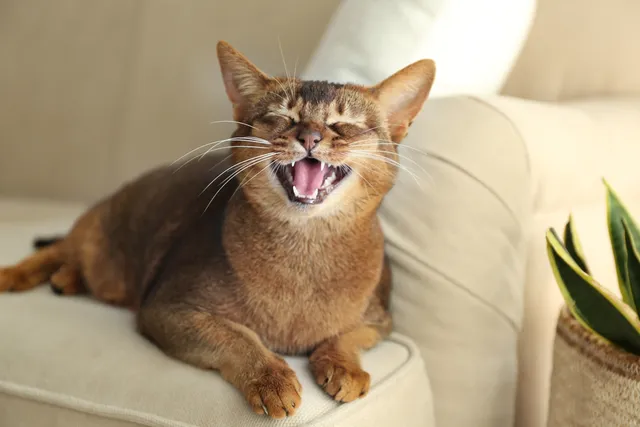
Cats make all kinds of noises to communicate with their owners and each other. Some cats have resounding meows that owners can hear from around the house, and others will softly chirp or squeak to “talk”. All these noises are normal for cats; even cats that have never meowed aren't abnormal unless something has changed.
If your cat used to meow and now can only issue a squeak, it could indicate ill health. You should take your cat to the vet if it has lost its voice or can only squeak instead of meowing. There are several reasons a cat can lose its voice and only squeak, including laryngitis, blockages, and occasionally cancer.

What If My Cat Has Never Meowed?
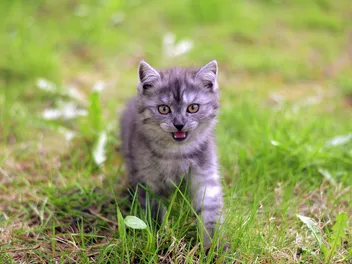
Some cats only squeak and have never meowed; if this is the case with your cat, it could be because their mother never taught them how to meow. Kittens are born knowing how to vocalize, but it is only a squeak. Kittens will squeak to their mothers to let them know where they are or to communicate a need to them, such as hunger.
The mother cat will chirp and chirrup back, but meowing isn't modeled until later. Usually, meowing is used to communicate solely to humans, so a cat will meow to its owners, and the kittens will learn this behavior. Cats tend to use body language to communicate primarily with other cats.
Cats that are feral or semi-feral and don't spend much time around humans may never learn to meow to elicit human attention.1


Why Is My Cat Suddenly Squeaking?
Something is wrong if your cat used to meow happily but is now only managing a squeak. It could be generalized or a specific problem with their throat, upper airways, or voice box (larynx). There are a few reasons why your cat might suddenly be squeaking:
1. Illness
Cats that used to be able to meow but are now struggling are most likely suffering from illness or injury to the tissues in the mouth, throat, or larynx. One of the most common causes of hoarseness or squeakiness in cats is laryngitis, which is inflammation of the larynx, otherwise known as the voice box.1 The larynx is located in the throat and comprises the vocal cords responsible for producing sound. An inflamed larynx will impact your cat’s meow, making it sound more hoarse, raspy, or squeaky. The most common causes of laryngitis are infections of the upper airways, such as a calicivirus or rhinotracheitis infection. These infections usually bring on other signs such as runny eyes and nose, fever, noisy breathing, sneezing, poor appetite, and lethargy.
In some cases, laryngitis can indicate a more serious underlying issue, such as growths or tumors in the throat, an enlarged thyroid gland as well as the presence of a foreign body. Any sudden and new changes in your cat's voice that don’t seem to go away, signs of respiratory difficulties, or a poor appetite should be brought to the attention of a veterinarian to rule out any serious conditions.
2. Hyperthyroidism
Another cause of voice changes in cats, particularly older ones. Cats with hyperthyroidism present several behavioral changes, such as more vocalization which could include squeaking.
3. Inhalation damage
Inhaling smoke, dust, or other irritating fumes, can cause inflammation of the throat and larynx and lead to laryngitis and squeaking.

4. Growths or cancer of the throat
These can partially block the throat or put pressure on the vocal cords, causing hoarseness and vocal changes.
5. Overuse
Some cats are just very talkative; although it's rare for a cat to lose its voice due to overuse, it is possible. Breeds, such as the Siamese, are well known for being very talkative and loud. This may be the case if they've been staying in a cattery and meowing more than usual.
Seek veterinary advice if you’re concerned about your pet’s well-being.
Non-Medical Reasons for Squeaking
Cats can also squeak for non-medical reasons. These are usually behavioral and are often used to communicate something specific, like between a kitten and the mother cat. The following points are all examples of squeaking for non-medical reasons:
- Chirping squeaks are learned in kittenhood, and mother cats will squeak at her kittens to get them to follow her. This behavior can stick; your cat might be squeaking at you to get your attention or to get you to look at something they find interesting.
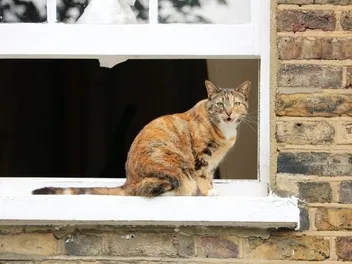
- Chattering squeaks are usually reserved for window-sill sessions. Cats that see wild animals or birds often chatter and squeak in excitement and apparent frustration.
- Cats might squeak in annoyance if picked up.
- Some cats will include squeaks in their cat-to-cat communication repertoire. If your cat often intersperses their meowing with squeaks and trills, they might just be communicating to their feline friend (or foe).


Final Thoughts
Cats make all kinds of sounds. If your cat has never been one to meow, their squeaking might be their way of getting your attention. For example, if they want you to follow or are imploring you to feed them, a squeak might be the most attention-grabbing noise they can make.
However, if your cat has a healthy meow normally, a suddenly hoarse or squeaking meow usually indicates a problem. Laryngitis is often the cause of squeaking meows, and taking your cat to the vet if you have any concerns about changes in its voice is strongly recommended.
“Sources”
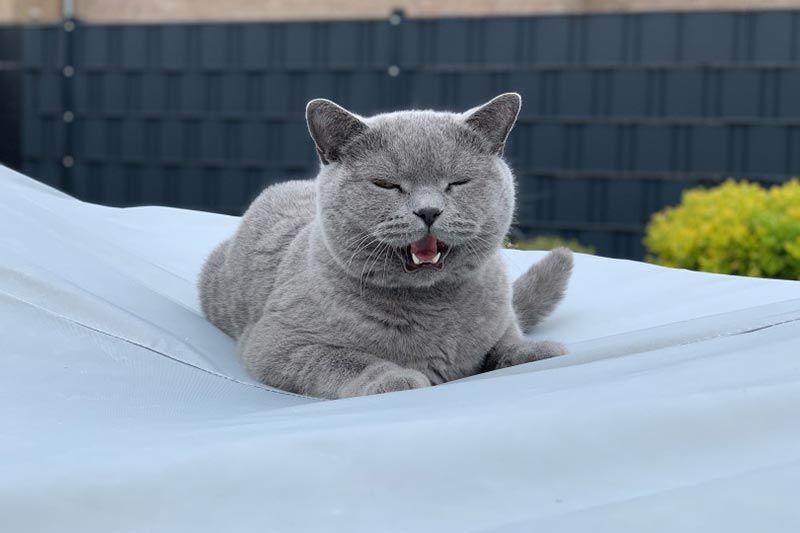
Featured Image Credit: Marvin Otto, Pixabay
Expert cat care, straight to your inbox
News, insights, and useful advice, delivered to you.

No spam — unsubscribe anytime.
By signing up, you agree to our Terms & Conditions and Privacy & Cookies Policy.
How useful was this post?
Click a star to rate. You can leave written feedback afterwards. (We read all feedback.)
Christian started writing for a local newspaper as a teenager, and he's been involved in the publishing industry for most of his adult life. Combining his love of writing with a passion for animals, he is currently the Director of Editorial at Pangolia and the Editor-in-Chief at Catster.
Christian lives in the Philippines with his wife, son, and four rescue cats: Trixie, Chloe, Sparky, and Chopper.