Get

In Your Inbox

Catster is reader-supported. When you buy via links on our site, we may earn an affiliate commission at no cost to you. Learn more.

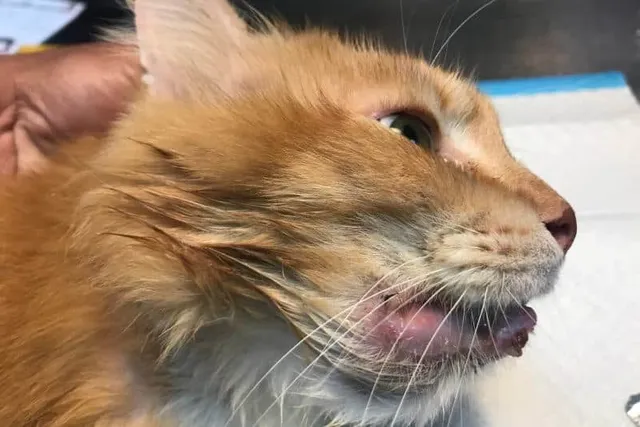
Why Is My Cat’s Bottom Lip Swollen? 9 Vet Reviewed Reasons & What to Do

Share

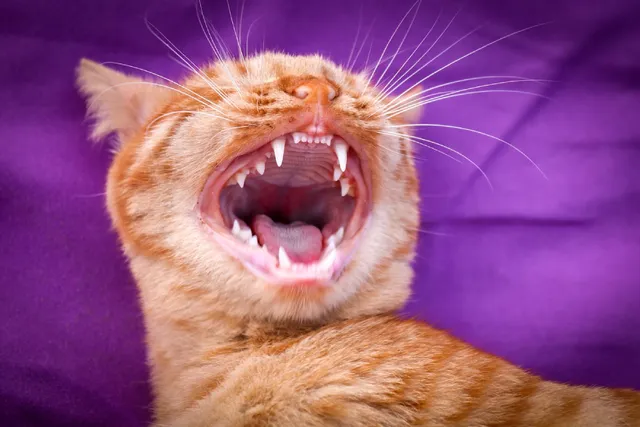
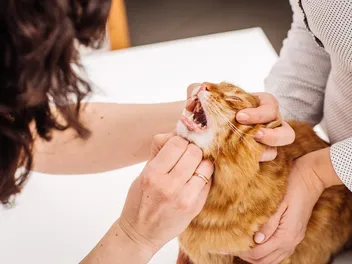
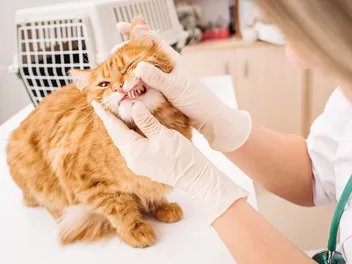
cat opening its mouth

Your cat’s health is your responsibility—but sometimes you might not be sure whether anything is wrong. If you notice your cat has a swollen bottom lip, should you be worried about it? Should you call an emergency vet? The truth is, there are many different causes of swollen lips. That can make it tricky to diagnose at home.

Luckily, it’s not a sign that you need to take emergency measures unless your cat is struggling to eat or breathe. Here are nine common reasons for cat’s having a swollen bottom lip.

divider 3 paws

The 9 Reasons Why Your Cat’s Bottom Lip is Swollen

1. Food or Contact Allergy

One of the most common causes of swelling is an allergic reaction to something that touches your cat’s mouth. Your cat may have a food allergy that is causing a reaction. The most common allergies in cats are to specific meat proteins, such as chicken, beef, or pork. Consider switching food to see if your cat reacts better to a different brand and flavor of food.

Another possibility is an allergy to something else your cat regularly touches, such as a toy or food dish.

If you are concerned about the health and well-being of your pet, seek veterinary advice for the best course of action.

If you have a question about your cat's health or behavior, why not Ask a Vet for Free with Catster. Our veterinary team answers reader questions and provides trusted advice to help you better understand your cat.

askavet on catster

2. Insect Bite or Sting

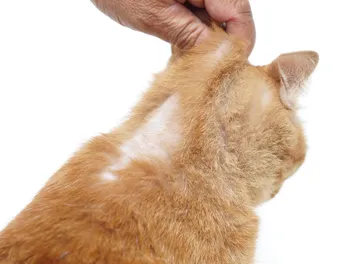
Another common reason for a cat’s swollen bottom lip is due to a reaction to an insect bite or sting. Fleas, ticks, and mosquitos can all cause swollen bites anywhere, including the lips. Demodex mites are another insect that can cause swelling, hair loss, and other issues. In fact, the lack of fur around your cat’s lips might leave them especially vulnerable.

Cats can also get bee stings around their mouth if they try to bite or pick up a bee. Insect bites and stings usually will heal on their own, but if you see recurring bites, it’s possible your cat is flea-infested.

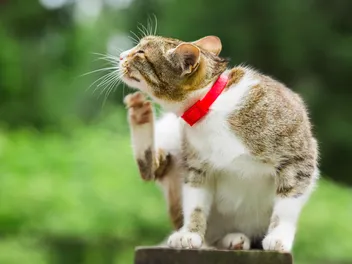
stray cat with skin disease scratching the ear
Image Credit: nu aom, Shutterstock

3. Toxin Exposure

Along with allergic reactions, your cat can also experience lip swelling from toxic reactions. This usually occurs when your cat eats something toxic to cats. One common culprit that often leads to swelling is the pothos plant—a beautiful and hardy houseplant with shiny, heart-shaped leaves that can come in a variety of green, yellow, and white patterns.

Look for other signs of poisoning, such as vomiting, bloody stools, diarrhea, and lethargy, to know if your cat is in serious danger.


4. Tumor

Oral or skin cancer is somewhat rare in cats, but it is not unheard of. Small tumors can develop around your cat’s mouth and lips. A vet assessment is needed to diagnose the tumor and decide if it’s benign or cancerous. Tumors are much more common in elderly cats than young cats.


5. Dental Disease

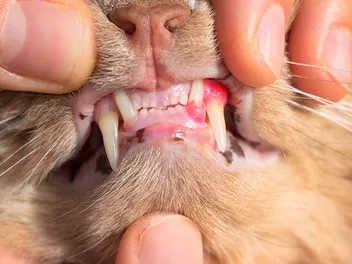
Your cat might also be facing swelling due to any number of dental issues—a broken tooth, an abscess, or tooth rot are all possible culprits. If this is the case, you may see other signs of disease when you open your cat’s mouth, and your cat will probably show signs of pain. Depending on the issue, a small surgery or medication might be needed.

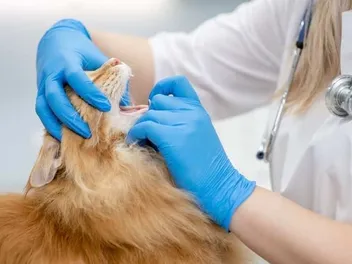
Vet checking on Russian Blue cats teeth
Image Credit: sirtravelalot, Shutterstock

6. Infection

Various types of infections can cause swelling around your cat’s bottom lip. This can include fungal infections such as ringworm or bacterial infections in a small cut or wound on your cat’s lip. Treatment generally involves antibiotics or antifungals to help kill the infection.


7. Immune System Disease

Pemphigus is an auto-immune disease that can affect your cat’s skin. It can cause swelling along with scabs, redness, and lesions anywhere on your cat’s skin, including the lower lip. It can be diagnosed with a skin biopsy. There are various treatment options available, but not all cats respond well to treatment.

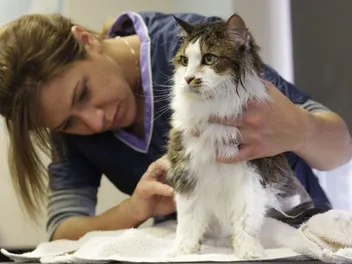
vet giving medicine to a cat
Image Credit: Prostock-studio, Shutterstock

8. Feline Acne

Feline acne often occurs in the hair follicles of the chin, causing pimples, swollen areas, and clogged pores. Treatment varies depending on the situation—sometimes a change of food dish and better cleaning is all that’s needed, but other cats need oral or topical medication. Usually, feline acne is a gross but ultimately minor problem.


9. Eosinophilic Granuloma Complex

Eosinophilic granuloma complex refers to a condition in which small swollen lumps called granulomas develop around your cat’s lips. Although this can sometimes be caused by allergies, at other times, the cause is unknown. Although we don’t always know what causes the eosinophilic granuloma complex, the good news is that it is generally easy to treat with anti-inflammatory drugs.

If you suspect that your cat is suffering from any of the above, it’s best to contact your vet for more information and to determine your next steps.

divider cat paws 2 oct 2024

Last Thoughts

As you can see, there are so many different reasons that your cat’s bottom lip might be swollen, . Although you can rule some of these reasons out at home, it’s really best to take your cat to the vet and get a proper diagnosis, especially if the swelling is persistent or recurring. And, of course, if your cat is having difficulty eating or breathing, you should seek treatment right away.

Every cause has a different treatment, and finding the right way to help your cat can be tricky. Luckily, swollen lips are usually treatable.


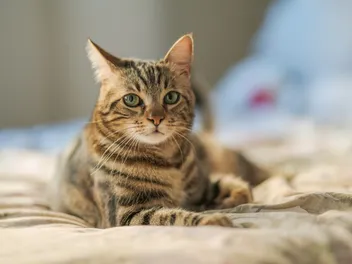
Featured Image Credit: dimitrisvetsikas1969, Pixabay

Want content like this delivered to you?

Sign Up For Our Newsletter

News, insights, expert advice, and everything cat

* By submitting, you agree to our Terms & Conditions and Privacy & Cookies Policy.


How useful was this post?

Click on a star to rate (you can leave written feedback after clicking submit)

Help us improve Catster for pet parents!

Your feedback really matters.

What did you like about this post? Also how can we improve it?

Join the conversation

2 Responses

  1. we have been taking care of a feral cat for the past 16 months the cat has become a family pet however the animal remains very friendly but we can't hold her and pet her.
    The animal has a notch in her ear so she
    has been spayed. Her lower jaw is
    swollen and the tongue is sticking out she can't eat or drink.How can I get her in a kennel to transport her to a vet

    1. Hi John,
      Thank you for taking care of this cat. You cant find helpful advice and tips in the following post:

      https://www.catster.com/lifestyle/how-to-trap-a-feral-cat-for-tnr/

      https://www.catster.com/lifestyle/how-to-get-a-feral-cat-into-a-carrier/

      https://www.catster.com/lifestyle/how-to-catch-a-stray-kitten/

      We hope this helps!

Leave a Reply

You’re very welcome to leave a comment or question. Please know that all comments must meet our community guidelines, and your email address will NOT be published. Let’s have a positive and constructive conversation.


Catster's Digital Magazine is Back!

Vet-approved health & behavior advice

Real cat stories & community features

The Original Space Invaders – Why Zero Respect for Personal Boundaries Is a Good Thing

Cats have a reputation for being independent, and in many ways they are. But anyone who has tried to work at a laptop...

How Cats Are Helping to Cure Cancer

When most people think about medical breakthroughs, they picture scientists in laboratories and clinical trials involving human patients. Few would imagine that the...

Ask Dr. Paola – My Cat Loves Eating Grass, But It Makes Her Vomit! (June 29, 2026)

Welcome to our “Ask Dr. Paola” series, where every Monday we bring expert advice straight from Dr. Paola Cuevas (MVZ) to help our...

Learning to Speak Cat with Anthony Smith

Many cat lovers know me through Learn to Speak Cat and Cattitude – Doggonit, cartoons that explore the often mysterious, occasionally mischievous, and...

More related

Traveling With Kittens: 9 Vet-Approved Tips

Getting ready to hit the road with kittens in tow requires planning, but traveling safely, happily, and comfortably with baby cats is possible....

How to Hike With a Cat: 10 Vet Approved Tips

The chances are that most of the nearly 32 million pet cats in the United States spend their lives indoors. Statistics show that...

Cat Preventive Care for Good Health & Longevity: 8 Fundamental Pillars

There is an aspect of veterinary medicine that is called preventive care; meaning preventing health problems through proactive measures. Preventative care means better...

How to Clean Up Cat Vomit: 9 Helpful Tips

When our cats get sick, we must take proper care of them, but a challenging part comes when they vomit inside the house....

Keep reading

Can Loud Music Harm a Cat? Vet-Reviewed Info

Ears, unfortunately, don’t have the handy ability to shut. If you enjoy listening to loud music, you’re forcing your cats to endure it, too. If you share your house with a cat, you might already be aware that loud noises...

cat lying between speakers

Can Cats Eat Granola Bars? Vet-Reviewed Health Facts & FAQ

Granola bars are a popular snack for kids and hikers alike. If your cat is a beggar, you might wonder if it’s okay to share as you munch. Unfortunately, cats shouldn’t eat granola bars because they aren’t healthy for them,...

Can Cats Eat Granola Bars

Can Cats Eat Cool Whip? Vet-Approved Nutritional Facts & Safety Tips

If your cat accidentally snacks on some cool whip, then they will likely be fine. Cool whip is not toxic for cats and will not cause problems in small amounts. Therefore, if your cat breaks into your pie, there is...

Can Cats Eat Cool Whip

How to Find an Affordable Vet for Your Cat: 11 Easy Ways

Despite your best intentions, you might not be in the same financial position when you first adopted your cat. Paying for your necessities might be difficult, never mind trying to cover medical care for your cat, especially in an emergency....

vet-and-cat-owner-having-a-consultation-at-the-clinic_H_Ko_Shutterstock

Why Does My Cat Hate Other Cats? 6 Vet-Verified Possible Reasons

Cats thrive in various environments and as long as some requirements are met, they can live happily with others in stray cat colonies, with one or more companions at home, or on their own. However, domestic cats are, by nature,...

two ginger cat fighting

Munchkin Cat Health Problems: 7 Vet-Reviewed Issues

Thanks to social media, Munchkin cats are becoming more widely known and well-loved by many people. These cute cats are instantly lovable because of their short legs, long bodies, and loving personalities. Although there are not many medical conditions that...

Catster_Health Problems of Munchkins

Can Cats Eat Cabbage? Vet-Reviewed Health and Nutrition Advice

With all of the health benefits that cabbage is said to have, you may wonder if it is safe to give some to your cats. Cats are obligate carnivores and thrive on a complete and balanced source of animal protein...

Can Cats Eat Cabbage

What Is Cat Middening? Vet-Reviewed Causes, Prevention & FAQ

Life is always interesting when you have a cat in your life. But one of the more trying issues for cat parents is when your cat urinates and/or defecates outside the litter box. When a cat poops outside of their...

cat-pooping-outside-the-litter-box

Love Cats? So Do We! Join the Catster Community

Stay informed with expert pet care insights delivered straight to your inbox! Discover professional guidance on animal behavior, feeding tips, trusted product picks, and much more.


Sign up for the Catster Email Newsletter

Stay informed with expert pet care insights delivered straight to your inbox! Discover professional guidance on animal behavior, feeding tips, trusted product picks, and much more.