Get

In Your Inbox

Catster is reader-supported. When you buy via links on our site, we may earn an affiliate commission at no cost to you. Learn more.

Why Do Cats Roll Around on Their Backs? 7 Vet-Reviewed Reasons (With Infographic)

Share

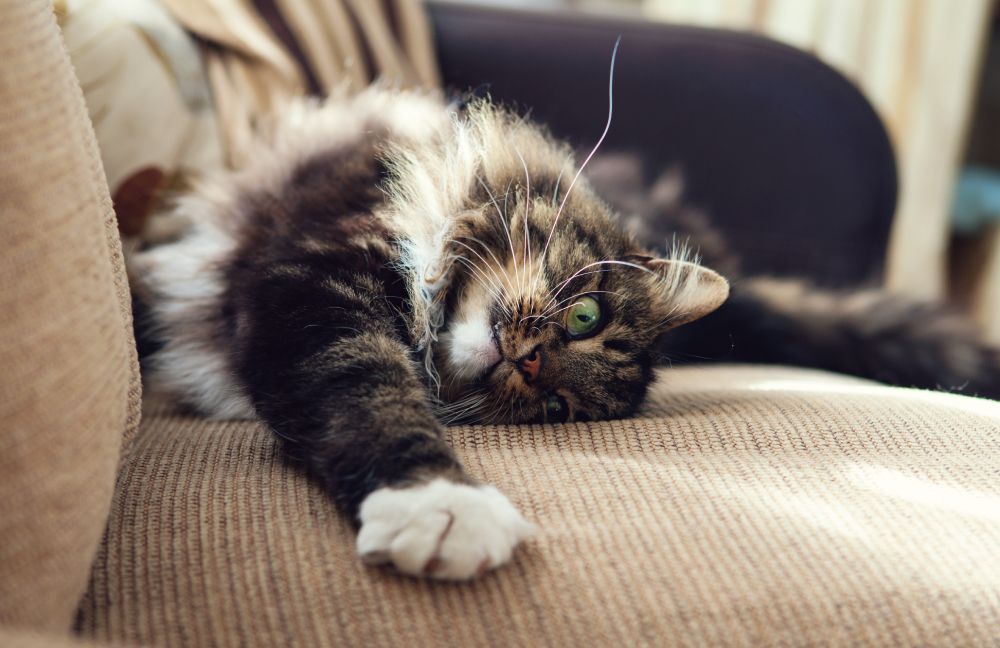
Fluffy domestic cat stretching on the sofa

Cats are peculiar creatures and usually march to the beat of their own drum. Unlike dogs, cats can be particular, especially regarding their bellies. When a dog rolls over on their back and exposes their belly, the dog likely wants you to rub it. Cats, however, are different. There are a few reasons why cats roll around on their backs, so stick around to find out why cats engage in this behavior.

divider cat faces 2 oct 2024

The 7 Reasons That Cats Roll Around on Their Backs

1. To Get Attention

Think about it, when your cat rolls on their back, you likely immediately say “Awww!” and then give them a pet. Rolling on their back can be your cat’s way of getting your attention. They may do it more often around meal times or when you just get home. They may also choose to roll on their back right in your path or outside of the bathroom door so that you’re sure not to miss it and then give them what they want.

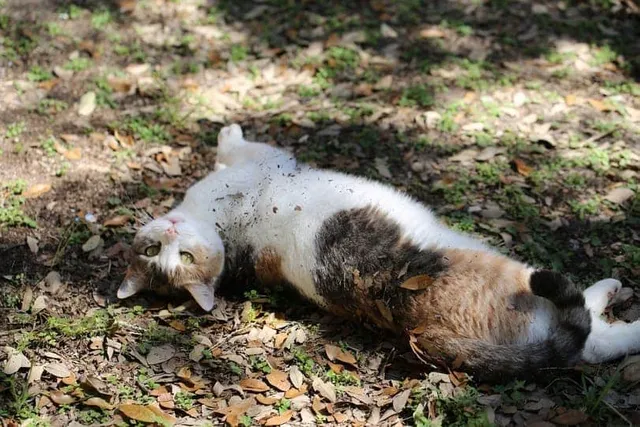
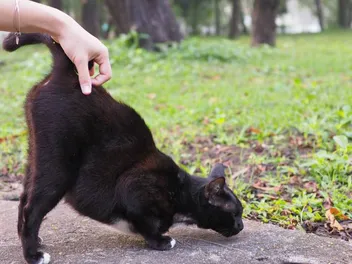
Black domestic cat rolling in the lawn
Image Credit: Nils Jacobi, Shutterstock

2. Your Cat Trusts You

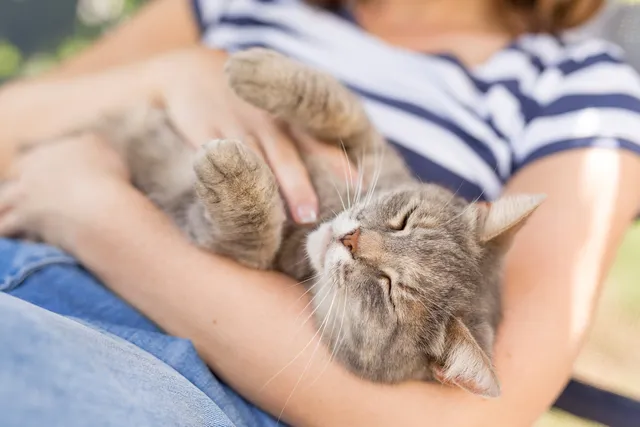
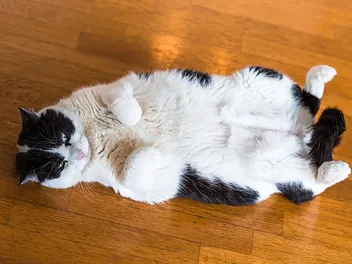
A cat’s belly is vulnerable and sensitive, and exposing it in the wild puts many vital organs in potential danger. So, showing such a vulnerable area to you shows ultimate trust. Allowing you to touch it further demonstrates their trust and respect for you. However, most cats still have boundaries, even with their owners, and while they may allow you to touch their belly, they may not allow you to rub it due to hypersensitivity of the hairs.


3. Invitation to Play

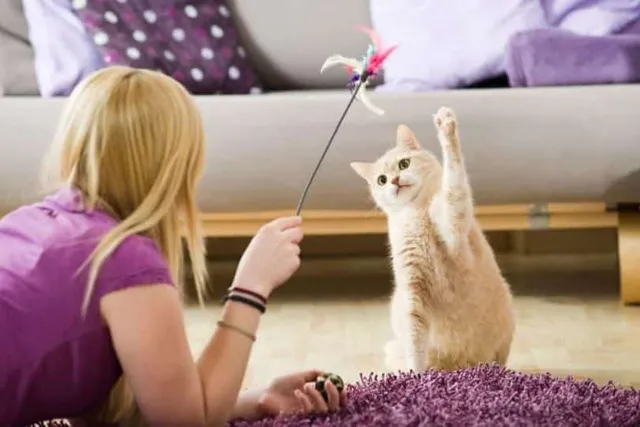
When a cat rolls onto their back, they’re sending signals, and one such signal could be an invitation to play. Your cat may extend such an invitation when they are relaxed, secure, and content with you or whomever they’re trying to interact with. Humans aren’t the only ones a cat may be comfortable with. If you have other pets in the home, and your cat rolls onto their back, it could mean they trust the other pet and want to play.

Snow bengal cat laying on their back playing with a ball
Image Credit: OlgaOzik, Shutterstock

4. A Sign of Submission

If you have other pets in the home and one cat rolls onto their back in their presence, it could mean they’re showing a sign of submission. Doing so tells the other cat that they don’t want to be a threat and that they know their position in the social hierarchy. Cats also show submission by lowering the tail, lowering their body to the ground, and avoiding eye contact.


5. To Scratch an Itch

It’s uncomfortable to have an itch in a place that’s hard to reach. For a cat, if an itch arises on the back, they may roll onto the back in an effort to relieve the itch. After all, a cat cannot reach around and scratch the itch with their paws. Carpet on some other similar material is the perfect cat scratcher, but your cat may do this on any surface. Instead, they may try to enlist the help of carpet or another similar material.

If you notice your cat rolls around like this regularly, it’s a good idea to check for fleas or skin irritation. Some cats have allergies, and you may need to call a vet to rule out medical issues.


6. Stretching the Muscles

There’s nothing like a good ole stretch, and it’s not unusual to see a cat roll onto the back to stretch the muscles, especially after a nice snooze. Rolling onto the back allows a cat to stretch the back, front and back legs, and neck. It’s best to let your cat be if you feel they’re stretching; otherwise, they may not be keen on the idea and show you their displeasure in the form of scratching or biting.

You are free to use this image but we do require you to link back to Catster for credit

7. A Sign of Heat

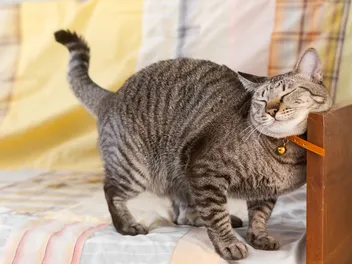
Do you have a female cat that hasn’t been spayed? If you’ve noticed your female rolling onto her back, she may be displaying signals to male cats that she is ready to mate. Intact females use pheromones, or “chemical messages” that they spread around, which are located on the head, back, tail, and paw pads. Males can smell these pheromones from miles away; however, humans cannot.

divider 1 paws

Conclusion

Cats roll around on their backs for a few reasons, and it can be a sign of comfort, trust, playfulness or submission, or it could be that they’re stretching or scratching an itchy back. If your cat rolls onto their back, exposing their belly to you, proceed with caution. It’s best to stick to the usually allowed spots your cats let you rub before going straight for the belly, as a belly rub isn’t likely what they’re asking for, and you could be met with a bite or a scratch instead.


Featured Image Credit: Magdanatka, Shutterstock

Want content like this delivered to you?

Sign Up For Our Newsletter

News, insights, expert advice, and everything cat

* By submitting, you agree to our Terms & Conditions and Privacy & Cookies Policy.


How useful was this post?

Click on a star to rate (you can leave written feedback after clicking submit)

Help us improve Catster for pet parents!

Your feedback really matters.

What did you like about this post? Also how can we improve it?

Join the conversation

Leave a Reply

You’re very welcome to leave a comment or question. Please know that all comments must meet our community guidelines, and your email address will NOT be published. Let’s have a positive and constructive conversation.


Catster's Digital Magazine is Back!

Vet-approved health & behavior advice

Real cat stories & community features

Your Cat Isn’t Picky – Their Nose Is Just Bored

If you’ve ever sighed while scraping uneaten cat food into the trash, you’re certainly not alone. Many cat owners know the routine: their...

Ask Dr. Paola – Help! My Kitten Won’t Use the Litter Box! (July 27, 2026)

Welcome to our “Ask Dr. Paola” series, where every Monday we bring expert advice straight from Dr. Paola Cuevas (MVZ) to help our...

Chatting with Petra Luna About CatCrazy, Cat Food Ingredients & The Secret of E-Beams | Chatty Cattys, Episode 28

In this episode of Catster’s Chatty Cattys podcast, Nicole and Dr. Karyn welcome back Petra Luna from CatCrazy to catch up on her...

According to Vets, Most Owners Miss These Signs That a Cat is Sick

Cats are famously good at hiding discomfort. It is not stubbornness or indifference; it’s a deeply ingrained survival instinct. In the wild, showing...

More related

Can Cats Eat Tortillas? Vet-Reviewed Diet Facts & FAQ

It’s Mexican night, and you’re in the kitchen fixing tacos when your cat brushes up against you and asks for a snack. You...

How Do Cats Run? The Amazingly Complex Details! (Vet-Verified)

Cats are impressive in a multitude of ways, not least in how they make feats like climbing and running look easy. Cat parents...

Why Is My Cat Purring After Giving Birth? 7 Vet-Reviewed Reasons

Cats are interesting creatures. They have a lot of quirks that make them unique. One of the most curious behaviors that cats exhibit...

Can Steroids Cause Diabetes in Cats? Our Vet Explains the Side Effects

Steroids are commonly used in veterinary medicine for various reasons but mainly as anti-inflammatories. While steroids may seem like miracle drugs that often...

Keep reading

Can Cats Eat Squid? Vet-Approved Nutrition Facts, Risks & Feeding Info

Squid isn’t common table fare in all locations, but depending on where you’re at, it might be a popular dish. In America, squid is most commonly served fried with a side of marinara sauce in a dish known as calamari....

Can Cats Eat Squid

How to Treat a Burned Cat Paw Pad: 6 Vet-Approved Tips

Given how curious, fearless, and agile they are, cats have a way of getting into things that they shouldn’t. Add the fact that cats love warmth but cannot distinguish dangerous hot surfaces from safe ones, and you have a recipe...

vet checking up tabby cat

7 Best Calming Aids for Cats in 2026 – Reviews & Top Picks

Cats can benefit from calming aids for a variety of reasons. If you have a cat that is particularly nervous, overly energetic, stressed, or frightened from external factors such as thunderstorms, then using a calming aid for your cat can...

Is Celosia Toxic to Cats? Vet-Approved Facts & Safety Guide

Celosia argentea var. plumosa is a plant that is commonly used as an ornamental flower. It is a part of the amaranth family, and while it is native to Asia, it can now be found in many parts of the...

Catster_Is Celosia Toxic to Cats

Why Do Cats Like Warm Things So Much? 6 Vet-Reviewed Reasons

You may have seen your cat cuddling with things like air vents or heaters. This may pique your interest, causing you to wonder why they like warm stuff so much. The answer is complicated, as cats love warm places for...

cat enjoying the warm spot

Why Does My Cat Cry When I Leave? Vet-Verified Reasons & Solutions

While cats are often considered not to be terribly interested in people, they’re actually sensitive, loving creatures that become deeply attached to those they share their lives with. Companion cats develop bonds with their people that resemble those formed between...

Cat meowing

Can Cats Eat Tortillas? Vet-Reviewed Diet Facts & FAQ

It’s Mexican night, and you’re in the kitchen fixing tacos when your cat brushes up against you and asks for a snack. You rip off a bit of tortilla to give him and then pause. Can cats eat tortillas? Is...

Can Cats Eat Tortillas

Can Cats Get High? Vet-Reviewed Facts on Effect and Safety

Marijuana may be legalized for recreational use throughout Canada, 23 U.S. states, and the Australian Capital Territory, but that doesn’t mean it’s something you can just leave lying around your home, especially if you have children or pets.1 While dogs...

marijuana

Love Cats? So Do We! Join the Catster Community

Stay informed with expert pet care insights delivered straight to your inbox! Discover professional guidance on animal behavior, feeding tips, trusted product picks, and much more.


Sign up for the Catster Email Newsletter

Stay informed with expert pet care insights delivered straight to your inbox! Discover professional guidance on animal behavior, feeding tips, trusted product picks, and much more.