Why Do Cats Live Longer Than Dogs? 5 Vet-Verified Facts & FAQ


Cats and dogs are the most popular pets around, but these animals are wildly different. There’s a reason we have “cat people” and “dog people”! While each animal has their various pros and cons when it comes to being a pet, one of the most significant differences between felines and canines is that cats usually live longer than dogs. But why is that?
Whether you’re a cat person, a dog person, or one who loves all furry critters, you may have wondered why cats, on average, live longer than their doggie counterparts. We’ll discuss the theories about why this is below, so keep reading to discover everything you ever wanted to know about why our feline friends stick around for so long!

The 5 Reasons Why Cats Live Longer Than Dogs
1. Size
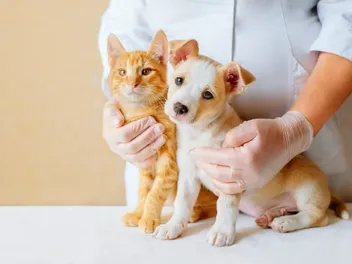
One of the major differences between many dogs and cats is their varying sizes. While there are certainly canines who are the size of cats (and even smaller!), many dog breeds are larger than kitties, and their size could be why they don’t live as long as felines. Even among dog breeds, smaller dogs live longer than larger ones. The belief about this is that larger dogs grow more quickly than smaller ones, and that the growth hormone that causes this growth may make them more likely to develop cancer and heart disease which leads to earlier deaths.
Because cats tend to be smaller than most dogs, they have less growth hormone, which may, in part, help to extend their lifespan.

2. Solitary Lifestyle
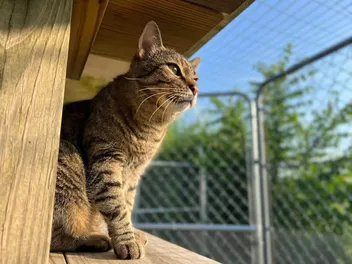
Let’s face it: felines are known for being standoffish and only interested in other animals and people when they want to be. And for many kitties, this isn’t an unfair stereotype (although many cats are perfectly sociable with others!). This tendency to be more solitary creatures—as opposed to dogs, who tend to be exceedingly friendly and willing to get up close and personal with others (though outliers do exist)—may be helping them live longer.
After all, being friendly with others, particularly cats or dogs, means encountering more communicable diseases and opportunities for conflict. But those felines who lean more towards independence and enjoy being out of the way of others will come into contact with these sorts of diseases far less often. That can lead to them experiencing sickness less frequently, which leads to better overall health outcomes and longer lifespans.
3. Selective Breeding
Selective breeding could also majorly affect how long cats and dogs live. Animals that are purebred are more likely to inherit genetic disorders from their parents due to complications caused by inbreeding. This goes for dogs and cats, but dogs tend to be selectively bred more often than cats (approximately 56% of U.S. dog owners have a purebred,1 while only about 17% of cat owners have a purebred).2 The shrinking gene pool, particularly in some breeds of dog, can make genetic problems more likely to occur.
Animals who are mixed breed rather than purebred tend to be much healthier because they have more genetic diversity. In fact, canines who are mixed breeds typically live about 1.2 years more than purebred canines and mixed breed felines live roughly 1.5 years longer than purebred kitties. Cat lovers know just how many randomly bred stray cats can show up in a place, so it’s no surprise that their genetic diversity leads to better health and longevity outcomes.

4. Survival Instincts
It turns out that evolution and survival instincts could very well play a part in why our kitties live longer than our dogs. Felines have naturally evolved to have some pretty nifty survival instincts and physical abilities. Take their righting reflex, which gives them the ability to land on their feet during a fall (depending on the height of the fall). This remarkable ability can help them avoid severe injury, which will mean a longer lifespan. Our feline friends also have those sharp claws and teeth for self-defense and as previously mentioned, a solitary nature that allows them to come into contact with communicable diseases less often. It’s all pretty nifty!
5. Indoor vs Outdoor Life
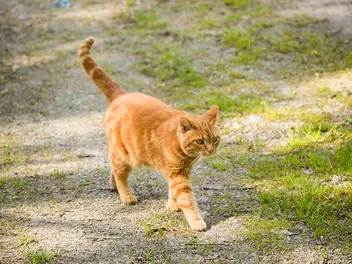
Finally, a factor to consider when it comes to the length of lifespans in cats and dogs is that most cats are inside only animals. On the other hand, dogs go outside every day, which leads them to encounter a host of things that could cause harm. Whether this is an unfortunate meeting with a car or another dog, eating a plant that makes them ill, or picking up parasites, being outside introduces a wealth of potential dangers that indoor cats don’t have to deal with. Even those cats who do spend time outdoors are destined for shorter lives, so this isn’t unique to dogs. The outside world is simply more dangerous for our four-legged friends!
FAQ
What is the longest-living cat breed?
Typically, mixed-breed cats live the longest, but when it comes to purebreds, the Burmese and Siamese top the charts.

What’s the oldest a cat’s ever lived to be?
The oldest cat ever known was Crème Puff. This fabulous feline lived for a whopping 38 years! Seeing as most kitties live between 12 and 20 years, this was quite the lifespan.
What pet lives the longest?
If you want a pet that will live as long as you (or even longer!), you’ll want to stick to certain parrot species or tortoises. Some parrot species can live for up to 60 years, while tortoises can live to over 100!
Conclusion
Cats live longer than dogs, which seems to be due to a variety of things. While a large part of it is likely due to their size and genetics, other factors, such as a feline’s solitary nature and tendency to live mostly indoors, may come into play. Whatever the reason, enjoy your favorite felines for as long as you have them!
Featured Image Credit: Pixel-Shot, Shutterstock
Expert cat care, straight to your inbox
News, insights, and useful advice, delivered to you.

No spam — unsubscribe anytime.
By signing up, you agree to our Terms & Conditions and Privacy & Cookies Policy.
How useful was this post?
Click a star to rate. You can leave written feedback afterwards. (We read all feedback.)
Misty Layne lives out in the woods in small-town Alabama with her two Siamese cats —Serafina and Jasper. She also has an array of stray cats, raccoons, and opossums who like to call her front porch home. When she’s not writing about animals, you’ll find her writing poetry, stories, and film reviews (cats, by far, her favorite writing topic, though!). In her free time, Misty enjoys chilling with her cats, playing piano, watching indie and foreign films, photographing abandoned places, and catching up on her never-ending TBR list.