Why Do Cats Lick Their Paws After Eating? Vet-Verified Feline Behavior Explanation


In this article
Cats take grooming seriously—so seriously that some cats spend up to 50% of their waking time grooming themselves, with their tools of trade being their tongue and paws.
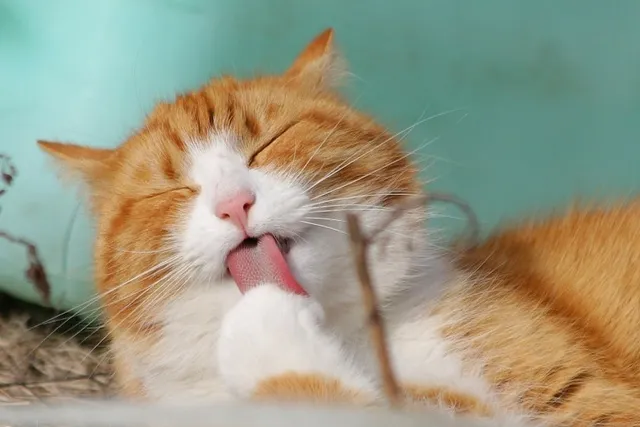
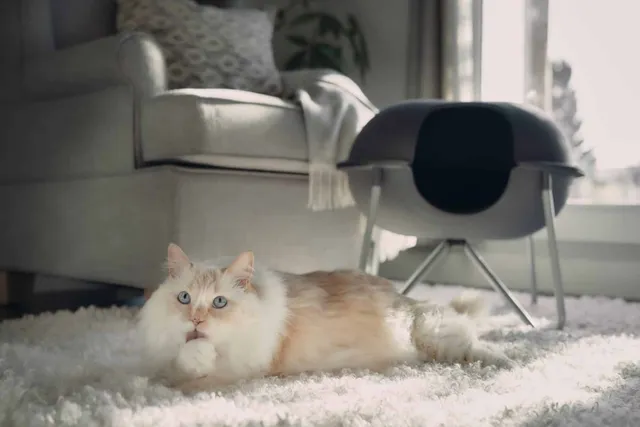
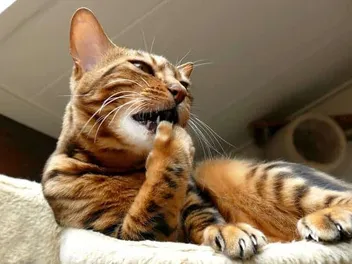
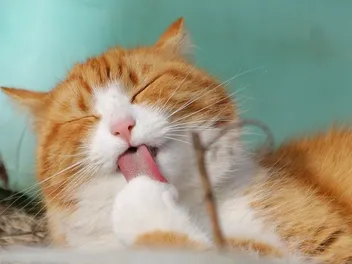
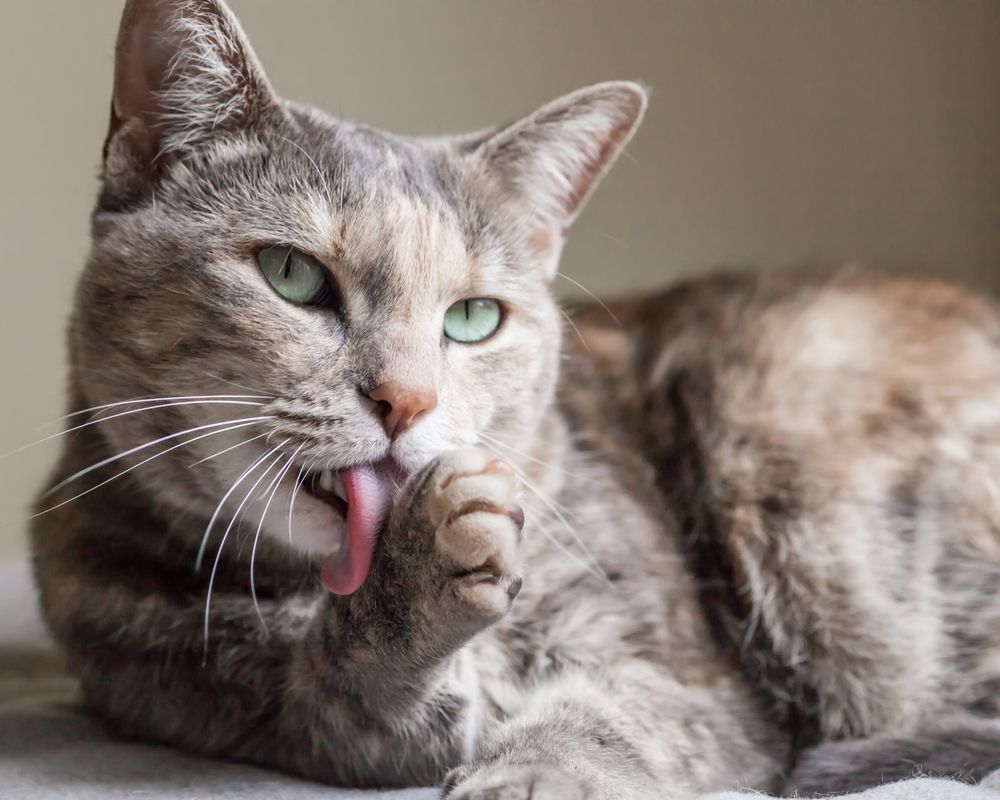
But why do cats lick their paws after eating, even though their feet do not typically touch their food?
You will notice that this action is usually followed up with the wiping of the face and head. Therefore, it is more or less another part of the grooming process. So, what is this after-feeding grooming ritual all about?
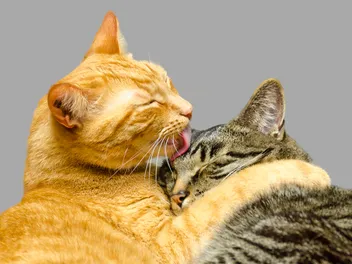
In the wild, grooming after eating allows cats to get rid of leftover food on their muzzle and face, keeping them clean. For cats that live in groups, post-meal grooming is an effective way to enhance their bond with each other.
Don’t you find it fascinating that your cuddly kitty is so keen on their hygiene? We do, and this is why we will attempt to break down this fascinating behavior, in addition to letting you in on everything else you need to know about cats and grooming.

Why Cats Lick Their Paws After Eating
As mentioned, many cats groom throughout their awake hours. However, when it comes to food-related grooming, you will observe that they usually do it after eating. Food-related grooming is engrained deeply in cats but not so much in kittens, indicating that a slight learning curve might be necessary. Additionally, other members of the cat family perform this ritual.
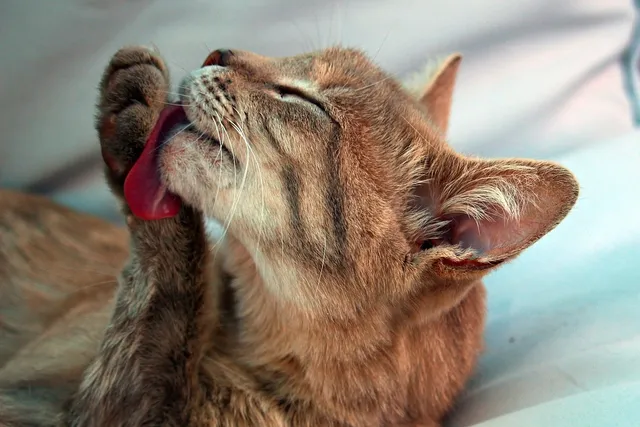
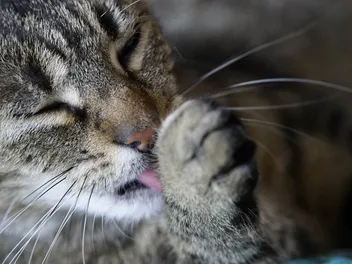
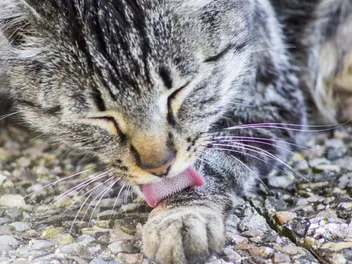
What is the purpose of licking their paws, considering that they typically use their tongues to groom themselves? Despite being renowned for their dexterity, there are areas cats cannot reach with their tongues, such as the face and back of the head. For those areas, cats use their front paws as “washcloths.”
The purpose of licking the paw is to dampen it with saliva and then use it to wipe themselves. This way, your kitty can remove leftover food from their mouth and muzzle. This takes practice; kittens are often messy eaters, and it can take them a while to learn how to clean up after themselves. Their mothers typically assist them with this.


Why Cats Love Grooming
Grooming is not just about keeping clean; it serves many other purposes. The following are some of them.
1. Parasite Control
In addition to removing dirt and debris from their fur, grooming helps to keep a cat’s coat well-kempt. Their barbed tongue functions as a comb and can even help cats catch some parasites that might be lingering in their coat.
However, if your cat is already infested with parasites, grooming will not be an effective way to remove them. Cats with a high parasite count may compulsively groom and scratch themselves, leading to more skin issues. Many parasites can also pass on other diseases to cats if they’re ingested by the cat during the grooming process. Contact a vet if your cat has parasites.
2. Thermoregulation
One of the most important functions of sweating in humans is thermoregulation, i.e., cooling down the body. Heat escapes through sweat as it evaporates from the body.
However, cats cannot sweat as much as humans because of their limited sweat glands. Instead, they spread their saliva all over their fur, which causes a cooling effect as it evaporates.
3. Natural Defense System
Although most of a cat’s saliva is water, it also contains various electrolytes, mucins, a few antiseptic substances, immunoglobulin, proteins, and other enzymes. These play a vital role in promoting oral health and even help with wound healing in some cases. This is why cats tend to instinctively lick their wounds.
Nevertheless, too much licking can be detrimental to the healing process because it can prevent the wound from closing. Additionally, the bacteria in a cat’s mouth have the potential to cause infection. Therefore, do not allow your cat to nurse their own wound. Instead, if your pet has an injury, have a veterinarian inspect them.

4. Soothing
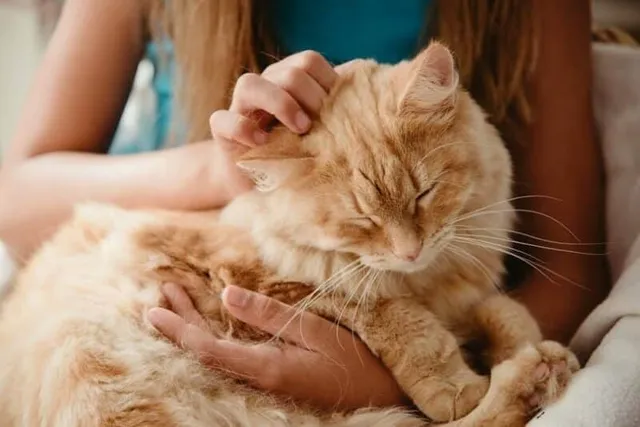
Grooming also has a psychological effect on cats. It stimulates the production of endorphins, which can relieve anxiety, stress, and pain and can elicit a sense of euphoria.
In a way, grooming is for cats as meditation is for humans. It allows them to unwind, calm themselves down, and relieve stress. This is the main reason that cats are impulsive groomers, halting any activity for an impromptu grooming session.
However, cats also use grooming as a type of displacement behavior, a seemingly inappropriate activity that humans or animals perform when in doubt or confused. This behavior is usually subconscious and typically arises when the individual has antagonistic urges. In humans, a common displacement activity is head-scratching when confused.
Cats use grooming as a displacement activity when they are uncertain about how to react to a situation. For example, if an unknown cat enters your cat’s territory, your pet might feel torn between fighting and running away.
Unable to make a decision, they may fall back to grooming as a displacement activity while contemplating their next move. It is a means of soothing themselves. Note that compulsive grooming can be detrimental to a cat’s health, so you’ll need to check if your cat is overgrooming due to stress (which should be managed accordingly). This often requires veterinary input.
Conclusion
It’s natural for cats to keep clean, which is why they are fastidious groomers. The main reason cats indulge in grooming after eating is to keep themselves clean. The reason they lick their paw is that it serves as a washcloth or loofah of sorts, which helps them clean their face.
This goes to show just how in tune domestic cats still are with their wild instincts. It’s why they still lick their paws after eating, as it allows them to keep themselves clean.
Featured Image Credit: SJ Allen, Shutterstock
Expert cat care, straight to your inbox
News, insights, and useful advice, delivered to you.

No spam — unsubscribe anytime.
By signing up, you agree to our Terms & Conditions and Privacy & Cookies Policy.
How useful was this post?
Click a star to rate. You can leave written feedback afterwards. (We read all feedback.)
Christian started writing for a local newspaper as a teenager, and he's been involved in the publishing industry for most of his adult life. Combining his love of writing with a passion for animals, he is currently the Director of Editorial at Pangolia and the Editor-in-Chief at Catster.
Christian lives in the Philippines with his wife, son, and four rescue cats: Trixie, Chloe, Sparky, and Chopper.