Why Are Cat Tongues Rough? 9 Vet-Approved Possible Reasons


In this article
If you belong to a cat, you have experienced a rough tongue licking at some point. Cats lick us as a way of showing affection; it is a form of social grooming. But why does his tongue have to be so rough? When a dog licks you, it might be uncomfortably slobbery, but it is otherwise a pleasant experience.
If you’ve been wondering about why your cat has a sandpaper-like tongue, then you’ve come to the right place. We will answer this question for you and provide you with a bunch of information about the cat tongue.

The 9 Possible Reasons Why Cats' Tongues Are Rough
1. Papillae of the Tongue
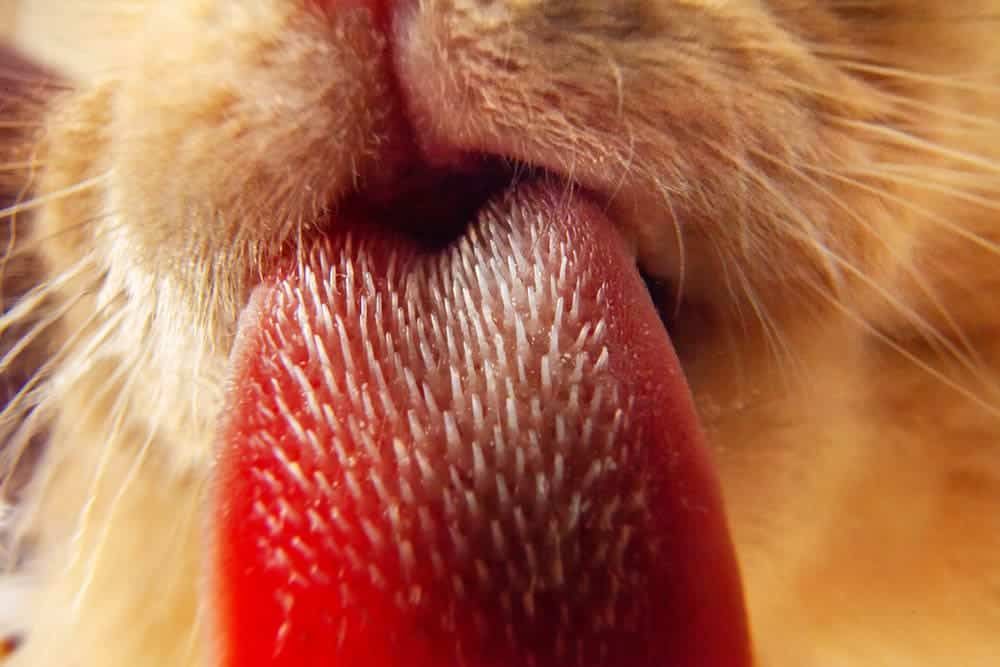
Every cat’s tongue is covered in tiny little spines that are called “papillae.” These small hook-like spines are made from keratin, which is the same material that fingernails, hair, and even feathers and hooves are made from. Each of these spines has a hollow tip and is curved and resembles a miniature cat’s claw. They are longer in the middle of the tongue and are progressively smaller towards the edges.
The papillae all point towards the back of the cat’s mouth and can rotate slightly when the cat encounters mats and knots while grooming. These hooks, or spines, are what make your cat’s tongue so rough.
2. Efficient Grooming
When your cat is not napping, eating, or playing, chances are he’s grooming himself. Most cats will groom themselves between 30-50% of the time every day. The spikes on your cat’s tongue are essentially a very effective comb that not only smooths the fur but will take on knots and snarls and loosen them up. Not only this, but the grooming can also remove dirt, parasites, and any eggs in their fur.
As mentioned earlier, the papillae on your cat’s tongue have the ability to rotate, which assists in removing tangled fur. If your cat widens his tongue, the papillae will spring up, which will spread the spines through the cat hair.
Grooming also helps the cat spread the natural oils throughout his fur, which assists with waterproofing and keeps the coat and skin healthy. This is why it’s not recommended to bathe cats too often, as water and soap will strip them of these protective oils, and cats already do a great job cleaning themselves.

3. Scent-Free Means Safety
Yet another benefit to your cat’s constant grooming is that it keeps him clean, which will disguise his scent from prey. It also works for the opposite reason – when the cat is potentially preyed himself. Whether catching a mouse for dinner or hiding from a larger predator, keeping himself scent-free is a great way to keep himself safe.
4. Cooling Down Effect
The act of grooming themselves can actually cool cats down. Because the spines on your cat’s tongue have hollow tips, they can absorb moisture, which includes saliva. As the cat grooms himself, the saliva is distributed throughout his fur, which eventually evaporates and cools the surface of the coat. There can be as much as a 30 °F difference between the outer hair and the skin as the moisture evaporates. In fact, your cat and his useful tongue will distribute approximately 1.3 ounces of water (or saliva) to his fur every day. Also, a study suggests that after grooming, evaporation can cause a temperature drop of up to 62°F.
This is the only way that the furry parts of your cat can cool off to help control their body temperature. The only other areas that can actually sweat are from their chins and paw pads.

5. Makes Eating a Breeze
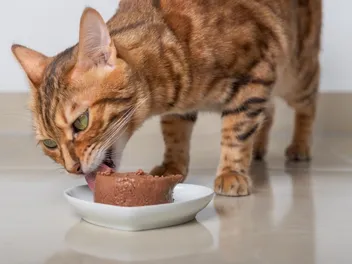
While eating, the cat can use his tongue to help shred the meat and to lift it up into the mouth. When a cat catches prey, the papillae can help the cat to pull the flesh from the bones and lick the bones clean.
6. Relaxing Times
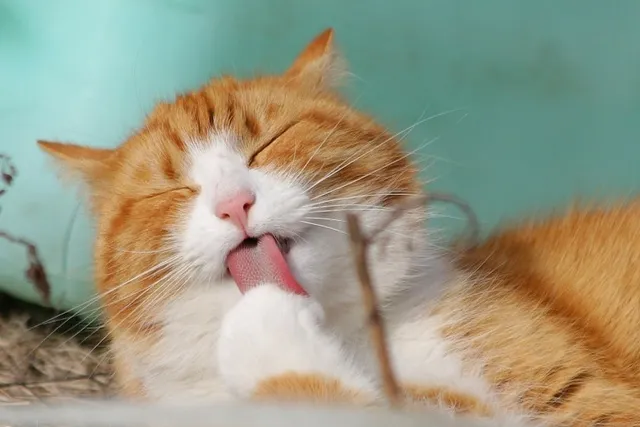
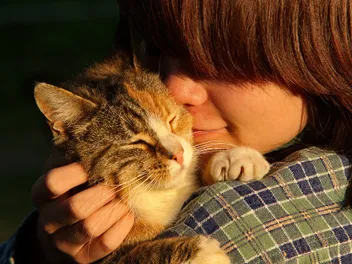
Sometimes cats just groom themselves as a means to relax as it feels good. The rough tongue works at stimulating circulation and can be an enjoyable activity overall. This also explains why cats will groom each other or when your cat decides to groom your hands or face as they're sharing a social and pleasurable experience.

7. Taking Care of Injuries
When a cat sustains an injury, he will spend a lot of time licking it clean, which can also help to prevent an infection from occurring. The papillae are also effective at removing dead skin cells.
8. Mom Needs Some Extra Help
Kittens are born deaf and blind, and therefore touch is one of the most essential senses at this time. Grooming their kittens with a rough tongue creates an intimacy between mother and kittens and helps to form a bond between them.
In addition to this, the papillae help the mother stimulate the kittens to defecate and urinate. Without vigorous stimulation of the genitals and rear end, the kittens will not be able to evacuate. The papillae on the mother’s tongue assist her in a significant number of ways.

9. Lapping Water
When a cat drinks water, he doesn’t accomplish it quite the same way dogs do. Again, the papillae play a role in how your cat laps up water. A cat never puts his mouth directly in the water but instead puts his tongue in the water and lifts it up very quickly. Because the papillae are hollow, they wick up the moisture, which creates a column that the cat then closes his mouth around. Once he has enough water in his mouth, he’ll swallow it down.
When It Goes Wrong
The spikes on your cat’s tongue are designed to direct food towards the back of the mouth. If your cat starts chewing on inedible objects, they can be accidentally swallowed, or they could get stuck. Material or rubber bands can become stuck in the papillae itself, wrap around his tongue, or stuck inside the throat.
Keep an eye on his tongue as the color can tell you something about the health of your cat. His tongue, gums, and mouth should be a healthy, bright pink color. If they are a very pale or bluish shade or there are any bumps or lumps, see your vet as soon as possible.
Conclusion
Did you know that the big cats also have rough tongues? I bet you did not know that giant anteaters, cows, and some birds (namely flamingos, penguins, and woodpeckers) also have barbs and spines on their tongues.
But now you know how vital a rough tongue is for a cat. Everything from assisting with eating, drinking, and bonding to controlling body temperature, grooming, and keeping themselves safe. Without those tongues, cats would undoubtedly have a much rougher time of things (sorry for the pun).
Related Reads:
Featured Image Credit: Ukki-Studio, Shutterstock
Expert cat care, straight to your inbox
News, insights, and useful advice, delivered to you.

No spam — unsubscribe anytime.
By signing up, you agree to our Terms & Conditions and Privacy & Cookies Policy.
How useful was this post?
Click a star to rate. You can leave written feedback afterwards. (We read all feedback.)
Christian started writing for a local newspaper as a teenager, and he's been involved in the publishing industry for most of his adult life. Combining his love of writing with a passion for animals, he is currently the Director of Editorial at Pangolia and the Editor-in-Chief at Catster.
Christian lives in the Philippines with his wife, son, and four rescue cats: Trixie, Chloe, Sparky, and Chopper.