You’re getting so sick of it. You are providing what you think your cat needs for bathroom time—and it’s never been a problem before—but all of a sudden, you’re finding piles of poo randomly throughout the home. You’ve tried to wrack your brain for reasons, but you’re coming up empty-handed—what gives?
Sometimes, answers are challenging. In this article, we aim to explore the main reasons cats start eliminating out of their designated area and how you can prevent it.

The 5 Reasons Cats Go Out of the Litter Box
Our cats can do some pretty off-the-wall things we might not initially understand. The good thing is, often going to the bathroom out of the box only has a handful of causes—and each is usually pretty fixable.
1. Infrequent Cleanings
Have you been extra busy lately? If you haven’t been scooping out the litter box as well as you normally do, your meticulous cat might not appreciate the extra dirty box much. After all, why do they want to soil their paws in their own poop when they can go on your freshly vacuumed carpet instead?
Commonly, cats resort to going other places in the home in these circumstances. Some are pickier about it than others. If you are worried that this is it, just set a reminder to clean the litter box once a day to see if the problem is resolved.
Combating tough cat litter smells is an ongoing battle for pet parents but luckily, there are products out there designed to help! Two products that significantly reduce odors are the Hepper Litter Additive and the Hepper Enzyme Spray. At Catster, we’ve admired Hepper for many years and decided to take a controlling ownership interest so that we could benefit from the outstanding designs of this cool cat company!
Image
Product
Details
Best Enzyme Cleaner

Hepper Advanced Bio-Enzyme Pet Stain & Odor Eliminator Spray
CHECK PRICE
Best Litter Additive
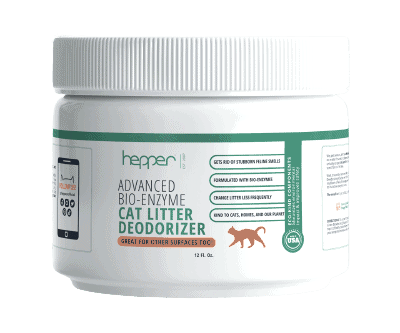
Advanced Bio-Enzyme Cat Litter Deodorizer
CHECK PRICE
2. Too Few Litter Boxes
If you have multiple cats in the home, there’s a possibility that there are simply too few litter boxes in the home to suit them. Cats often don’t like to use the bathroom on top of each other, which is why it is recommended to have multiple litter boxes in the home.
The general rule of thumb is to have one litter box per cat plus one extra. This way, they each have their own, and there’s still a community box in case they need to use it.
Many cats still continue to use whatever litter box is the closest and most convenient. However, this will give them more options and create less of a mess between cleanings and each box. You simply have to clean them equally to prevent future accidents or end competition soiling among cats.

3. Fear or Stress
If your cat is afraid for some reason, they might resort to using the bathroom in other areas of the home. This can be something that might not even strike you as being a trigger—like changing the furniture, having a new person move in, bringing home a baby, or even another pet.
Litter box aversions develop because there is something about the location or nature of the litter box that your cat doesn’t like. The litter box may be in a noisy area, or your cat may not like the cover on it, etc. Look at the litter box from your cat’s point of view; is there anything that could be scaring them off?
Another unfortunate thing that cats do is territorial scent marking in times of stress. If something in their life has changed and they feel threatened, territorial marking is a way of coping. This will mostly involve urine spraying, but can sometimes involve pooping outside the litter box.
If you think your cat is avoiding the litter box because of something else in the home, try changing locations. Also, your cat should be able to live at home in peace. If you know something is causing your cat stress, focus on helping them adjust. Give them their own space to hide if needed and try a calming product, such as Feliway, which replicates the feline facial pheromones’ calming effect on cats.

4. Issues with Litter
Have you changed the litter recently? Cats can be extremely sensitive to textures, dust, and smells. Quite simply, they each have their own preferences. So if you have changed the consistency of the litter box, you might try going back to the litter you were using previously to see if they start pooping back in the right spot.
If your cat is sensitive to the litter, you might also have noticed some physical discomfort if they are particularly irritated by the litter. These signs can include sneezing, watery eyes, hacking, wheezing, or other related signs of distress.
5. Health Issues
Certain health issues can cause your cat to eliminate outside of the litter box. Usually, this is because it makes it difficult for them to hold it. Typically, if this is the issue, they might have to go to the bathroom suddenly and unexpectedly. On the other hand, perhaps they have lost control of their bowels. Or maybe they have some physical difficulty getting into the litter and positioning themselves to relieve themselves.
If you suspect that it could be a health issue, keep your eyes peeled for additional signs and symptoms. Some health conditions that can cause pooping outside the litter box include:
- Diarrhea
- Constipation
- Spinal cord problems
- Injuries
- Arthritic pain
- Certain cancers
- Cognitive decline
Your vet can do an examination and further testing to determine the underlying cause.


Call Your Vet
Before you try any in-home methods, it’s best to call your vet. Sudden changes like this could indicate certain health issues or other problems that need attention. If you explain the situation to your vet, they will advise or recommend your next steps. They will probably ask about the consistency of your cat’s droppings; are they runny or hard and small? Constipation and diarrhea can lead to accidents in the house, which your cat can’t control. Your cat may also have fecal incontinence if they seem to have no control over their bowels. Arthritis can also lead to some troubles using the litter tray. These are medical problems that should be addressed with a veterinarian.
If you need to speak with a vet but can't get to one, head over to PangoVet. It's an online service where you can talk to a vet online and get the advice you need for your pet — all at an affordable price!

Cats & Litter Box Habits
Cats are naturally drawn to the litter box. It is thought to be instinctual for them to want to cover up their poop and pee to stave off their scent from potential predators. So, when you get a kitten, don’t be surprised if the first time you introduce them, they totally get the concept every time thereafter. Aside from liking the litter, they have probably watched their mother or other cats using the litter box, and used one themself before.
After all, most cats are looking for an easy place to cover poop instead of openly going on the floor of your home. If your cat has already been litter trained for quite some time, and they’re just now pooping outside of the litter box, you can bet that there is an underlying reason for this.
We aim to discuss some of the most common reasons, though it isn’t a one-size-fits-all situation.

Conclusion
Having your cat continuously going to the bathroom out of their litter box can be extremely frustrating. It can cause stains on your carpet, it can ruin furniture, and it can really stink up your home.
We understand how taxing this can be on pet parents, and we urge you to look for subtle cues as to what might really be happening under the surface. If you can pinpoint the reason, you can change it if it’s something within your realm of control. But if it’s not, visit your vet to get professional suggestions and potentially further testing.
See also:
- Can You Use Shredded Paper for Cat Litter? Vet-Approved Facts & Tips
- National Cat Lovers Month: When & What It Is
Featured Image Credit: Axel Bueckert, Shutterstock
 The 5 Reasons Cats Go Out of the Litter Box