14 Oriental Shorthair Colors & Patterns (With Vet-Reviewed Info & Pictures)


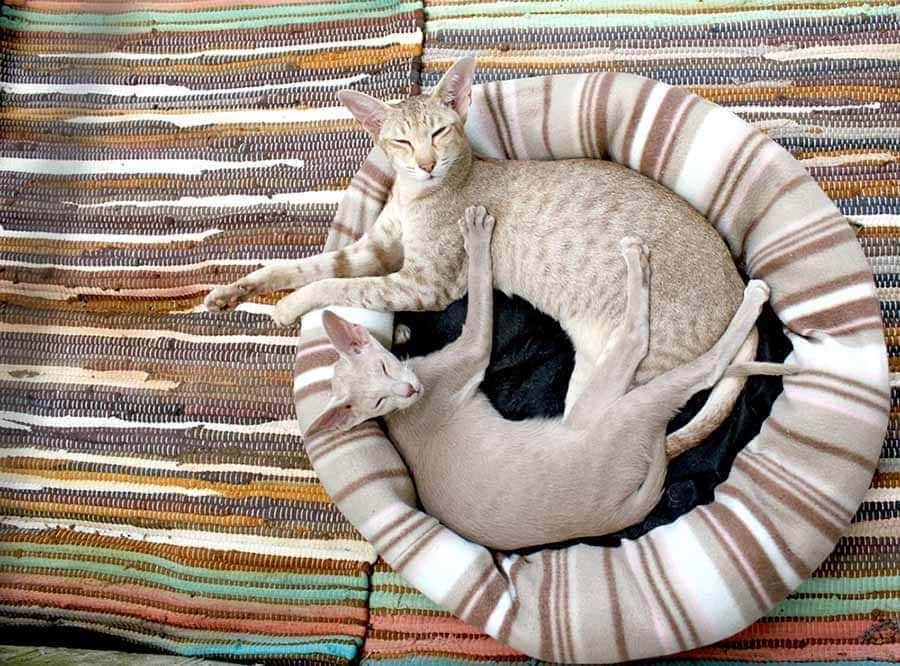
Oriental Shorthairs come in one of the widest ranges of colors and patterns. These felines were originally bred from Siamese-type cats, which only had a few available colors. However, as this breed was mixed with others, other colorations slowly became more common. Today, the breed is recognized in a very large number of color and pattern combinations, with some estimates suggesting well over 100 possible variations depending on classification.
Below, you’ll find an overview of the colors and patterns recognized by the Cat Fanciers’ Association, though exact groupings may vary by registry.
Commonly, we categorize them by:
Solid colors
Patterns
Please note that the colors and patterns described in this article cover the most commonly recognized variations of the breed. Oriental Shorthair cats can appear in additional, rare, or less commonly listed colors and patterns depending on genetics and different breed registries. The examples provided are not exhaustive.

9 Solid Oriental Shorthair Colors
The Oriental Shorthair comes in a wide range of solid coat colors. Solid colored cats have a uniform coat without tabby striping or other visible patterning, meaning the color appears consistent from root to tip. Oriental Shorthair cats are recognized in multiple solid color variations depending on the breed registry. Solid colors are generally classified separately from patterned coats, which are discussed below. We will look at the 9 most common colors.
1. Blue

Despite the name, these cats aren’t actually blue. Instead, they have a grayish color with matching noses and paw pads.
2. Chestnut

Simply put, these cats are dark brown. Oriental Shorthairs come in a range of brown colors, some lighter than this.
3. Cinnamon

Cinnamon Oriental Shorthairs are lighter than their chestnut cousins. This color is described as rich and redder than other brown tones.
4. Cream
Cream is in the same range as other browns, but it is much lighter in color. In cat shows, judges evaluate cream cats based on how well they match the breed standard.
5. Ebony

Ebony cats are black, though not necessarily the deep black you may associate with other cat breeds. They shouldn’t have any hints of red or pale undertones.
6. Fawn

Fawn is a dilute form of cinnamon. Oriental Shorthair fawn cats appear as a very light, warm beige or tan color. Their paw pads are typically pinkish in tone.
7. Lavender
Lavender felines have a frosty grey coat. They aren’t actually purple, despite their name. Lavender is typically lighter and warmer in tone compared to the cooler gray ‘blue’ coat color.
8. Red
Red felines are a deeper expression of the red pigment series compared to cream. Oriental Shorthair cats with red coloring can appear in both solid and patterned forms, depending on their genetics and registry classification
9. White

Rarely, you can find solid white Oriental Shorthair cats. This feline shouldn’t have any other markings, or it would fall into a different color category.
5 Oriental Shorthair Coat Patterns
All the colors above can appear in a range of different patterns, too. It’s the combination of all these patterns and all the available colors that gives the breed so many different possibilities. However, because many of these patterns are extremely similar across the different colors, we’re going to explain them briefly—not list out every possible combination.
10. Shaded

Some Oriental Shorthair cats may have a shaded or smoke-like appearance, where the coat appears darker on the tips and lighter toward the base of each hair. Oriental Shorthair cats with this pattern can appear in many different color combinations depending on genetics and registry classification. However, shaded cats are typically categorized based on their underlying tone, which is often described in terms such as silver or golden, depending on the specific classification system.
Golden
Cats with golden undertones can be tipped with any of the solid colors we mentioned above—almost, at least. White isn’t included in this, since white is not considered a pigment-based shade in this system.
The “gold” undertone can range from pale cream to warmer apricot tones. The tipping color can affect the paw pads and nose of the feline. The base color should slowly fade into the tipped color, giving the cat a smoky appearance.
Cats are categorized by their tipping and undertone color. For instance, a cat with a golden undertone and blue tipping would be called a “blue golden.”
Silver
Shaded cats can also have a silver undertone. A variety of solid colors can occur as the tipping, including blue, chestnut, cinnamon, ebony, and fawn. These are typically classified as combinations of base color and shading rather than entirely separate, standalone colors, depending on the breed registry. Cats with a silver undertone and cream tipping are often referred to as “cream silver,” while cats with the same undertone but ebony tipping are called “ebony silver”, depending on classification standards.
The tipped color will affect the paw pads. The silver undertone appears as a pale, silvery base caused by inhibited pigmentation rather than true white pigment. For this reason, this coloration cannot be tipped with white. (A white undertone with white tipping would make the cat solid white.)
11. Smoke
Cats with the smoke pattern are a bit like shaded cats. However, instead of having a completely different colored undertone, each hair has a lighter or white base near the root, which becomes visible when the coat is parted.
Every coat color but white can appear in this pattern. Therefore, you can have a blue smoke feline that looks solidly colored until you part the fur and see white roots. White cats cannot come in this color, since they would just be solid white.
There is one color combination that doesn’t appear as a solid-coat color.
Parti-Color Smoke
Parti-color smoke is a patterned variation rather than a solid coat color. In these cats, smoke coloration may appear in combination with different base colors, sometimes influenced by dilution genes. This creates a multi-toned appearance rather than a uniform coat.
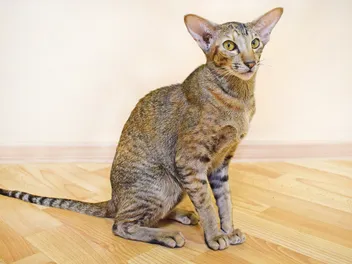
12. Tabby

Just about everyone knows what a tabby cat is. Oriental Shorthairs can also have tabby colorations of various types. There are five basic tabby patterns, and these cats can come in any of them.
- Classic: This pattern is probably what you think of when you imagine a tabby cat. There is a distinct “M” on the cat’s forehead that helps identify it as a tabby. The markings should be clear, with unbroken bars and stripes running across the cat’s body. There should be swirls on the cheek and unbroken dark stripes coming off of the eyes.
- Mackerel: These tabbies have dense, narrow markings. The forehead should have a clear “M” and the face markings should be similar to a regular tabby. The main difference is the width of the stripes and bars, which should be smaller.
- Spotted: Spotted tabbies have spots instead of stripes. However, these spots should follow the traditional stripe lines. The spots shouldn’t be connected, and the preference is for evenly spaced spots. The face and forehead have tabby markings that are not spotted, and the legs and tail should have bars.
- Ticked: These felines are free from spots or stripes, except for slight shading across the dorsal line. The pale underside may show markings, but this isn’t required. The cat’s face should also have traditional tabby markings.
- Patched: Patched tabbies combine tabby striping with patches of red or cream coloring, often creating a tortie-like appearance. These patterns can vary widely depending on genetics and dilution.
On top of the type of tabby pattern, cats can have any base color except white. The stripes can be silver or a different shade of the base coat. The tabby markings can appear as either a similar shade of the base color or be modified by the silver inhibitor gene. For example, blue tabbies can appear in both standard blue and silver variants, while cream tabbies show lighter variations of the base cream color.
Cats with markings at a slightly different shade are typically referred to by their base color, like “lavender tabby” or “blue tabby.” Cats with silver markings will have the word silver added, such as “lavender silver tabby”, depending on registry classification.
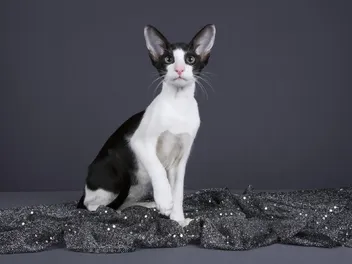
13. Bi-Color

As the name suggests, these Oriental Shorthair cats have two different colors. However, they are drawn from the base colors we described above. These felines have a white underside, feet, and legs. They will also have a “V” on their forehead. All solid colors combined with white are permitted—except, of course, white itself.
Pointed cats are not a form of bicolor. Instead, they represent a separate color pattern in which the body is lighter, and the color appears on the extremities, as seen in Siamese-type cats.
This coloration can also be combined with many of the patterns above. For instance, cats may have an undertone in their colored areas. Some cats may also have patches of white.
14. Parti-Colored

Parti-color cats are typically those that combine two or more distinct colors, often including white in the pattern. Oriental Shorthair spotted patterns are different from parti-color patterns and are usually based on tabby genetics.
Spotted tabbies can appear in a wide range of base colors, not just cream, depending on genetics and breed standards.
Tortoiseshell cats are a separate category. In tortoiseshell patterns, black is mixed with red or cream colors, creating a mottled appearance. These are classified independently from spotted or parti-color patterns.
Conclusion
Oriental Shorthair cats can come in just about any coat color and pattern. It’s all the different combinations of colors and patterns that allow them to come in so many different options. That leaves you with tons of different tabby options alone, not counting the different stripe variations and other patterns.
In the end, Oriental Shorthairs are considered one of the most color and pattern-diverse cat breeds, even though exact comparisons with other breeds can vary depending on classification systems.
Featured Image Credit: Pexels

Expert cat care, straight to your inbox
Vet-reviewed advice, behavior tips, and the best of Catster. Free, and you can unsubscribe anytime.
By signing up, you agree to our Terms & Conditions and Privacy & Cookies Policy.
Kristin is passionate about helping pet parents create a fulfilling life with their pets by informing them on the latest scientific research and helping them choose the best products for their pets. She currently resides in Tennessee with four dogs, three cats, two fish, and a lizard, though she has dreams of owning chickens one-day!
Join the conversation
Ask a question, share your story, or send private feedback.