Is Catnip Bad for Cats? Vet-Verified Facts to Know


In this article
If you have seen your cat go crazy for catnip and act as if they are “high” and you want to know if your cat’s reaction is normal, or perhaps you want to make sure this plant is safe before giving it to your cat, it is.
Catnip is completely safe for cats to smell and consume, and the Pet Poison Helpline deems it as not toxic to cats1. However, it can be bad for cats if they eat too much catnip, which is why it is important to monitor how much catnip your cat has access to.
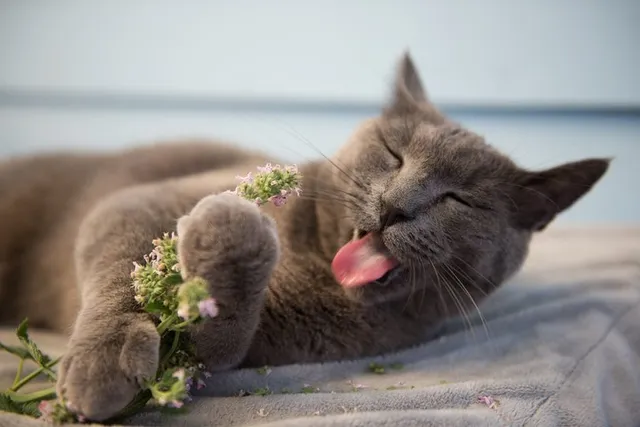
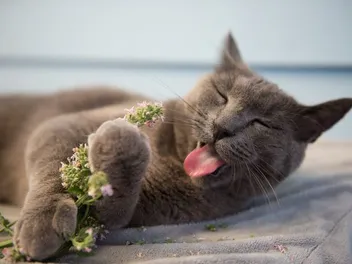
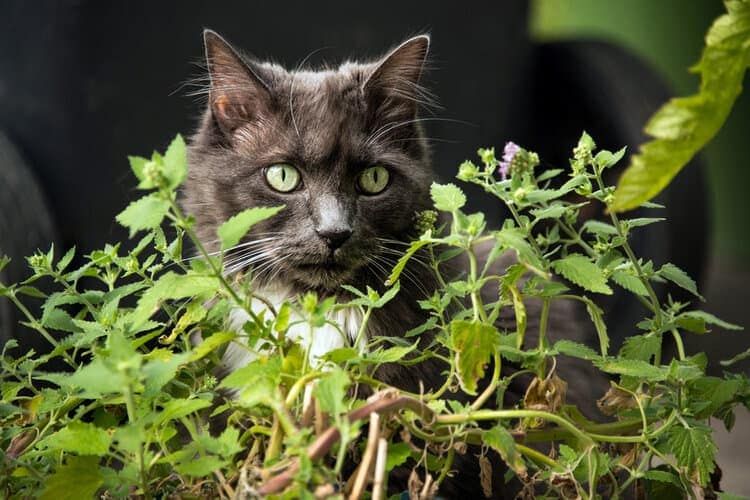
Most cats simply love the smell of catnip and will purr and rub themselves on the leaves to expose the natural substance that gives them a euphoric feeling.

Is Catnip Harmful to Cats?
Catnip is not bad for cats, and it is not toxic or poisonous, making it safe for many cats. The only way for catnip to be harmful to a cat is if they have an allergy to the plant or if they ingest too much at once. Catnip’s fibers are not easily digested, which in excess can cause gastrointestinal discomfort.
Catnip is considered harmless to cats. It is not an actual drug that causes negative side effects, as it contains a natural chemical called nepetalactone. Microscopic glands located on the underside of the leaf produce this substance, along with many of the plant’s oils and volatile chemicals. When these are touched or broken, the plant releases this natural chemical and gives cats a pleasurable feeling.
It can only become harmful or bad to cats that consume too much, as they will likely suffer from diarrhea and vomiting, according to the ASPCA.
The good news is that cats can recover from this, and the only risk of catnip “overdosing” is if a cat becomes constipated or dehydrated. It is more of a dietary indiscretion reaction, rather than true poisoning, as catnip does not contain toxic elements. Although some cats may become oversedated or overstimulated, this is not a life-threatening situation.
How Does Catnip Affect Cats?

Catnip (Nepeta cataria) is an herb from the mint plant family. It contains a natural chemical called nepetalactone that is released from the plant, and it only seems to affect members of the feline family, such as cats.
This plant gives cats almost a euphoric feeling once it has been ingested or inhaled, which might sound scary to some cat parents because we assume it is bad for our cats. However, these natural chemicals and plants are not harmful to cats, and the only bad side effects are from ingesting too much of this plant or from rare allergic cases.
When the chemical nepetalactone is inhaled, it passes through the cat’s vomeronasal organ at the root of their mouth. This organ is an accessory of the olfactory system found in several species of animals; its function is to detect pheromones. Nepetalactone binds to the receptors in the cat’s vomeronasal or Jacobson's organ. This works with the sensory neurons in the cat’s brain and mimics feline sex pheromones. Your cat will likely experience a euphoric effect and act as if they were high. This feeling only lasts for a few minutes, and not all cats will experience a high from catnip, around 60% will.
It is also important to know that cats under 6 months of age might not be affected by catnip when it is inhaled, but they could suffer from the negative side effects if they eat too much, which is why you should not give your cat more and more catnip if you see they are ingesting it.
After giving your cat catnip, you may see the following side effects:
Can Cats Eat Catnip?
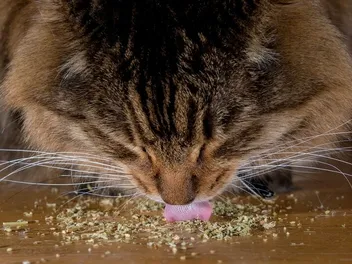
Catnip can be both inhaled and ingested to affect cats. The only issue with a cat consuming catnip is that too much can upset their stomach and cause unwanted side effects that can be uncomfortable for cats.
Some cat owners will use catnip oil to encourage sick or fussy cats to eat their food, while other owners will allow their cats to eat catnip as a form of entertainment for the cat. If you give your cat catnip, it is important to use moderation to avoid any issues.
Catnip is generally safe for cats to eat as it has no toxic properties that would harm your cat. However, cats are more likely to experience negative side effects by eating this herb in excess. The fibers in the plant are not easily digested, which can cause your cat's stomach to hurt if they eat catnip in large quantities, resulting in diarrhea and vomiting.
For more information on catnip and cats, we recommend you contact a vet.
Negative Reactions to Catnip in Cats
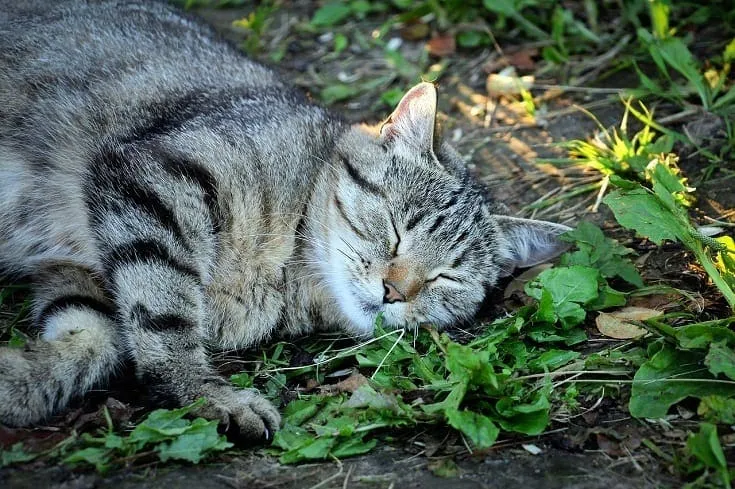
If your cat has eaten too much catnip, they might experience a negative reaction. This mimics what a cat would act like if they have been poisoned, such as vomiting, diarrhea, or constipation, which is why some people will refer to catnip overdose as a form of poisoning. However, it is unlikely that the cat was poisoned by the catnip, and they probably just ate too much.
If your cat has eaten too much catnip, they will suffer from a tummy upset that will present itself as diarrhea, vomiting, and stomach cramps. Other cats might feel dizzy and appear very disoriented as if they are afraid or feeling ill. Aside from feeling disoriented, catnip can also increase your cat’s activity levels, making them more prone to scratching and biting as a form of rough playtime. They may scratch and bite at you if you try to play with them or go for your furniture.
So, How Much Catnip Can I Safely Offer To My Cat?
Since catnip is not a lab-produced product, the amount of nepetalactone oil it contains will vary from plant to plant. A cat’s reaction to it will also vary depending on many factors; however, a general safe recommendation is to offer only a couple of leaves; four should be plentiful for a medium-sized cat. If you are offering dry catnip, your cat should be able to enjoy a sprinkle or pinch, and we recommend that this does not exceed a teaspoon for a medium-sized cat.
Final Thoughts
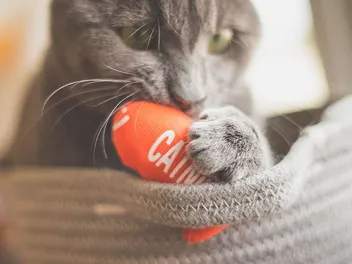
Catnip is generally harmless to cats, but you should monitor how much catnip they eat because large quantities can make them feel sick. Keep in mind that catnip is more potent when it is inhaled rather than when it is ingested, so it might be a better idea to place a small number of dried catnip leaves into your cat’s toys and encourage them to sniff it rather than eating it, but both can be safe methods if you are careful about how much catnip you give to your cat.
Related Reads:
Is Catnip Good for Cats’ Digestion? Vet-Reviewed Nutrition Facts & FAQ
Can Catnip Cause Seizures in Cats? Vet-Reviewed Facts & FAQs
Sources
Featured Image Credit By: Georgia Evans, Shutterstock
Expert cat care, straight to your inbox
News, insights, and useful advice, delivered to you.

No spam — unsubscribe anytime.
By signing up, you agree to our Terms & Conditions and Privacy & Cookies Policy.
How useful was this post?
Click a star to rate. You can leave written feedback afterwards. (We read all feedback.)
Sarah Psaradelis is an avid young writer with dual passions for literature and animals. She enjoys sharing knowledge of animal care and helping others. Sarah has over 8 years of writing experience and is currently studying veterinary science. She resides in South Africa where she takes care of fish, aquarium snails, dogs, and rodents. Sarah is a passionate vegan activist and animal rescuer pursuing her path to make the world a better place for humans and animals alike.