Get

In Your Inbox

Catster is reader-supported. When you buy via links on our site, we may earn an affiliate commission at no cost to you. Learn more.

How to Get a Cat to Stop Jumping on Kitchen Counters (7 Proven Methods)

Share

cat walks on the kitchen table

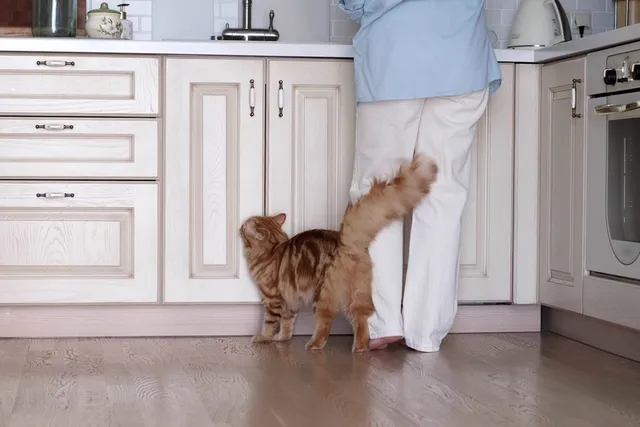
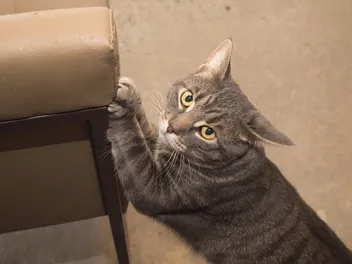
The affinity cats have for climbing things is well known. Many cats are constantly on the prowl for the highest perch in the house, as seeking elevated resting areas is a normal feline behavior linked to environmental monitoring and a sense of security. Often, this leads to cats climbing all over your furniture, including couches, bookcases, and kitchen counters.

It’s a bit unsanitary for your cat to be slinking around your countertops, not to mention the safety concerns. Nonetheless, it’s a behavior that many cat owners witness. So, what should you do to stop your cat from jumping up onto your kitchen counters? We’ve found seven great methods to prevent this behavior. Hopefully, one of them will be the right solution for your cat!

divider single cat paw oct 2024

Why Is This Behavior Unwanted?

In some households, cats might be allowed onto the kitchen counters. Some pet parents are so enamored with their pets that they just can’t tell them no! But it’s a bad idea to let your cat up onto your countertops, for at least these three reasons:

  • Your cat could easily end up creating an unsafe situation if it were to knock over a dish or glass and break it, creating many sharp shards that could harm you and your cat.
  • Not everything on your countertops is safe for cat consumption. While you probably don’t have anything poisonous to you on your counter, some things that are safe for humans can be toxic to cats, like garlic and onions.
  • If your cat puts its paws in your food or sheds some hair on the counter, it could contaminate your food, as cats may carry microorganisms or debris on their paws and fur from the litter box or environment.
Black and white domestic cat lying on modern kitchen
Image Credit: Sarah McGraw, Shutterstock

Why Your Cat Is Jumping Up on the Counter

Sometimes, understanding a problem gets you halfway to a solution. So, before we discuss the ways you can stop your cat from jumping up onto your kitchen counters, let’s go over the reasons why your cat is even exhibiting such behavior.

  • Your cat can smell food on the counter or cabinets that it wants to get to.
  • Your cat is just trying to climb up to a high point, such as the top of your cabinets. They may just want to relax or sleep there.
  • Your cat may be jumping onto the counter in an attempt to escape another pet.
  • If you’re cooking, your cat could just be attracted to the smell of your cooking and be jumping on the counter due to food-seeking behavior and curiosity.

divider cat paws 2 oct 2024

The 7 Ways to Stop Your Cat From Jumping on Kitchen Counters

Now that we understand some of the likely reasons your cat is jumping up onto the kitchen counters and why we want to prevent this behavior, it’s time to go over the specific actions you can take to discourage or redirect it. There are eight different options here for you to try. If you’re lucky, you’ll only need one!

1. Foil the Counter’s Edge

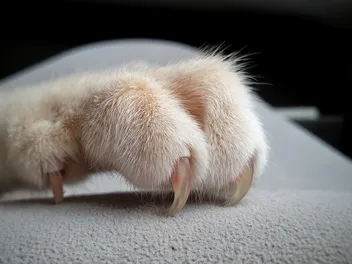
This one’s not our favorite option, but it’s definitely effective. You’ll have to tape a strip of aluminum foil along the edge of the counter. When your cat touches the foil, the sound and feel of the foil against their nails is a major deterrent for many cats. Granted, it’s not a very attractive look, but if you’re getting desperate, it’s an option you can turn to.

a roll of aluminum foil on countertop
Image Credit: FabrikaSimf, Shutterstock

2. Try Some Sticky Tape

Here’s another option that’s a bit inconvenient. It’s similar to putting foil on the counter’s edge, only this time, you’re just putting a strip of sticky tape there. Again, often find the sensation of sticky surfaces aversive, just like the aluminum foil, so it will discourage your cat from climbing up. Unfortunately, this method can damage your counters if you’re not careful with the tape, so don’t leave it on too long, or the adhesive might not come off easily.


3. Keep Your Cat in Another Room While Cooking

cat sleeping near salt lamp
Image Credit: Robert Hale, Shutterstock

Often, cats are simply attracted to the delicious smells of your cooking. If you find that your cat is jumping up onto the counter whenever you’re in the middle of making a meal, then it might be time to temporarily restrict your cat’s access to the kitchen during food preparation or redirect them to an alternative area with appropriate enrichment.


4. Positive Reinforcement Training

Cats don’t do too well with punishment, but they generally respond well to positive reinforcement. Rather than yelling at your cat for being on the counter, you can try redirecting them to an appropriate surface, such as a cat tree or perch. When your cat chooses to stay on or move to the appropriate area, then give them some positive reinforcement in the form of gentle attention or a calm, pleasant tone of voice.


5. Utilize Deterrents

Certain things will naturally deter your cat, such as citrus scents. If you use a citrus-scented spray on your countertop, it may help discourage your cat from approaching the area. Products should be safe for pets and food-contact surfaces. As a bonus, your kitchen will smell delicious.

citrus oil_Monfucos_Pixabay
Image Credit: Monfucos, Pixabay

6. Give Your Cat Other High Places to Go

Your cat may be just climbing up onto the countertop because they love to climb and are looking for a way to get to a high point in the room. If you want your cat to stop doing this, you can give them another high place to climb, such as a cat tower. Providing appropriate elevated resting areas can help redirect this natural behavior and reduce interest in countertops. Hopefully, they’ll decide that they like climbing this more than the counter.


7. Keep Your Countertops Clean

If you have food scraps and old dishes on the countertop, the smell could entice your cat into climbing up to try and get a taste. Clean off your countertops well and avoid leaving any food scraps out to reduce food-related motivation for this behavior.

divider cat paws oct 2024

Conclusion

If you’re starting to get frustrated by the fact that you’re always finding your cats on your kitchen counters, then one of these seven solutions might finally put an end to this behavior and help you take your kitchen back. Cats are curious creatures, and they love to climb, so kitchen counters are often targets of this natural exploratory behavior. You can put a stop to that by deterring your cat, using positive reinforcement training, ensuring there’s no food left out, keeping your cat out of the room while you cook, or one of the other ways we’ve covered. We’ve provided so many options in the hope that you’ll find the right fit for you and your feline, so don’t be afraid to experiment.

Related Reads:


Featured Image Credit: EkaterinaSid, Shutterstock

Want content like this delivered to you?

Sign Up For Our Newsletter

News, insights, expert advice, and everything cat

* By submitting, you agree to our Terms & Conditions and Privacy & Cookies Policy.


How useful was this post?

Click on a star to rate (you can leave written feedback after clicking submit)

Help us improve Catster for pet parents!

Your feedback really matters.

What did you like about this post? Also how can we improve it?

Join the conversation

Leave a Reply

You’re very welcome to leave a comment or question. Please know that all comments must meet our community guidelines, and your email address will NOT be published. Let’s have a positive and constructive conversation.


Catster's Digital Magazine is Back!

Vet-approved health & behavior advice

Real cat stories & community features

Chatting with Devin About Here! Have a Kitten, Fostering, & Why Two Are Better Than One | Chatty Cattys, Episode 29

In this episode of Catster’s Chatty Cattys podcast, Nicole & Dr. Karyn sit down with Devin, the founder and one-woman show behind “Here...

Decoding The Cat Loaf: What It Means and When to Worry

Few cat behaviors have captured the internet quite like the loaf. Paws tucked neatly beneath the body, tail wrapped in, perfectly rectangular. As...

Your Cat Isn’t Picky – Their Nose Is Just Bored

If you’ve ever sighed while scraping uneaten cat food into the trash, you’re certainly not alone. Many cat owners know the routine: their...

Ask Dr. Paola – Help! My Kitten Won’t Use the Litter Box! (July 27, 2026)

Welcome to our “Ask Dr. Paola” series, where every Monday we bring expert advice straight from Dr. Paola Cuevas (MVZ) to help our...

More related

Why Do Cats Curl Their Paws? Vet-Verified Reasons, Facts & FAQ

Cats have many adorable habits, one of which is their tendency to curl their paws underneath them and sit in a “loaf” shape....

Can Cats Eat Green Beans? Vet-Verified Nutritional Guide

Being a cat owner comes with a unique set of challenges. Not only are cats a bit high-strung at times, but their diets...

Why Do Cats Bunny Kick? 3 Vet-Reviewed Reasons

If you’ve owned a cat for at least 24 hours, you likely already understand the power of the bunny kick. It’s cute when...

9 Best Stainless Steel Cat Bowls in 2026 – Reviews & Top Picks

Stainless steel products are a no-brainer in a house full of animals. This material doesn’t stain or scratch. Better yet, it’s naturally resistant...

Keep reading

Can Cats Eat Okra? Vet Reviewed Nutrition Facts & Alternatives

If you love okra and would like to share some with your cat, you should know that cats can only eat okra in small amounts. Just remember that your cat is a carnivore that needs to get most of their...

Can Cats Eat Okra

Why Is My Cat’s Fur Matted on His Back? 10 Vet-Reviewed Reasons

Our feline friends spend a good amount of their time grooming themselves, but even with all that work and attention, they occasionally get mats in their fur. This is especially true when it comes to the back, as matted fur...

cat with matted fur

8 Health Benefits of Coconut Oil for Cats: Vet Approved Guide & Tips

Coconut oil is a versatile and natural product that has gained popularity in recent years. It is derived from the meat of mature coconuts and is known for its numerous health benefits for humans. But did you know that coconut...

a kitten playing with coconut

Why Do Cats Lick Themselves After You Pet Them? Deciphering Cat Behavior (Vet-Reviewed)

Cats engage in many behaviors that can leave us scratching our heads and wondering what’s going on. If you’ve found that your cat is doing something you can’t explain, it doesn’t necessarily mean that anything is wrong, though it could...

cat licking itself close up

What Causes Sudden Fever in Cats? Our Vet Explains Causes, Signs & FAQ

One of the most frustrating things we face as pet owners is when our furry family members don’t feel well, especially when we don’t know why. Fevers can be especially difficult to diagnose and treat because there often isn’t an...

digital thermometer showing a cat has a fever

Can You Put Baking Soda in Cat Litter? Vet Approved Facts & Safety Advice

Cat ownership changed forever when kitty litter was invented in 1947. You didn’t have to let the family pet outside to do their business anymore which was a relief for many pet owners. Absorbent clay did the job, but it...

woman in a yellow sweater with jar of baking soda

How Cold Is Too Cold for Cats? Vet-Reviewed Facts & FAQ

It’s easy to overestimate a cat’s tolerance for the cold. When they walk around sporting several inches of insulating fluff and act nonchalant in frigid outdoor weather, who can blame you? The outdoors is what many cats call home, and...

Neva Masquerade cat in the snow

Can Cats Get Addicted to Catnip? Vet Approved Facts & FAQ

If you have a cat or two, you’ve probably heard about catnip, which is a plant that cats seem to enjoy more than any other. Catnip has some rather interesting effects on cats, to say the least. When exposed to...

cat-eating-catnip

Love Cats? So Do We! Join the Catster Community

Stay informed with expert pet care insights delivered straight to your inbox! Discover professional guidance on animal behavior, feeding tips, trusted product picks, and much more.


Sign up for the Catster Email Newsletter

Stay informed with expert pet care insights delivered straight to your inbox! Discover professional guidance on animal behavior, feeding tips, trusted product picks, and much more.