How to Calm a Cat Down: 8 Vet-Approved Ways


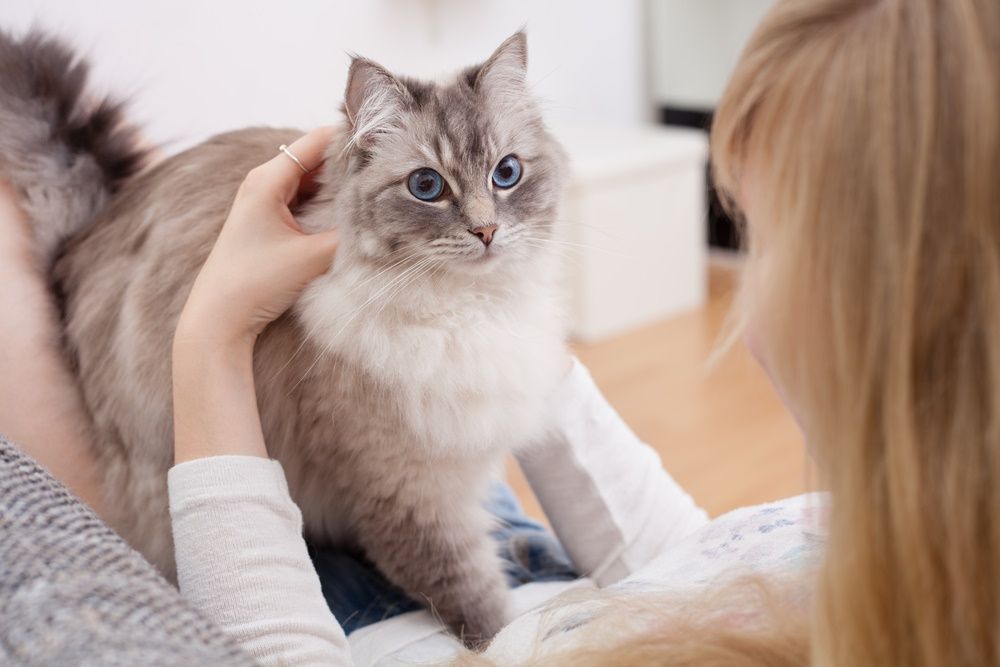
Anxiety or stress in cats is sometimes less apparent than in dogs. Cats can experience uncomfortable situations that bring about anxiety or hyperarousal, such as thunderstorms, fireworks, a move to a new home, a new family member, and other circumstances. Certain cats can even develop separation anxiety, despite being known for being independent.
Such unpleasant situations can cause unusual behaviors, such as urine marking and compulsive grooming. Sometimes your cat will act erratically or fearfully hide. If your cat has suddenly gone berserk, read on to learn eight steps to calm a cat down.

Before You Start
We’d like to emphasize that if your cat suddenly displays odd behaviors and there is no known cause, such as a move to a new home or the addition of a family member (two legs or four legs), we suggest taking your cat to the vet before trying the steps mentioned below. Certain medical conditions can cause unusual behaviors and aggression in cats, such as urinary tract infections or hyperthyroidism, and it’s vital to rule out medical conditions first.
Look for key signs that your cat is stressed, which could include:
- Hissing and increased vocalization
- Puffed up tail
- Flattened ears
- Increased pupil size
- Body tension
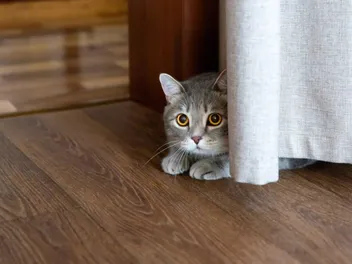
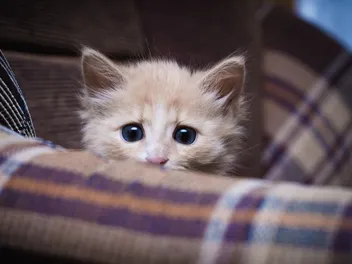
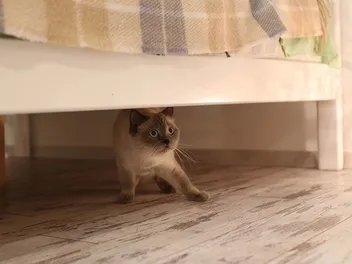
- Hiding
- Overgrooming
However you will need to see a veterinarian urgently if there are corresponding signs of illness, such as:
- Urinary problems
- Inappetence
- Limping
- Not moving
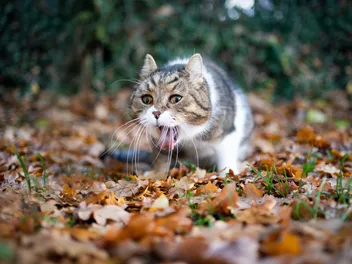
- Vomiting
- Diarrhea

The 8 Ways to Calm a Cat Down
1. Create a Relaxing, Safe Environment

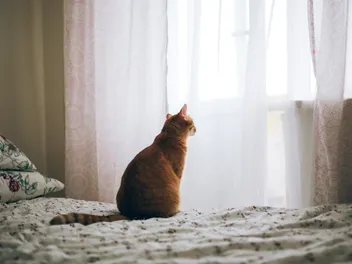
The first and most crucial step is to create a calm, soothing, and relaxing environment for your cat. Think about this: indoor cats still have the same natural behaviors as outdoor cats. What we mean is that indoor cats still have the urge to retreat to a place up high to avoid predators and observe their surroundings, and your indoor cat will still yearn for a place to retreat if he feels threatened indoors.
Cat trees and condos are an excellent way to provide your cat with a safe place to relax, which can help calm anxiety or stress. Ideally, they will have a choice between hidden and elevated positions. Keep this area in a quiet part of the house, away from guests. You can even add a gate to prevent small children or other pets from entering your cat’s safe haven. This will also prevent your cat from trying to hide in unsafe locations like inside reclining chairs or washers/dryers.
Scratching posts are also essential when owning a cat to relieve stress, keep the nails in shape, and provide enrichment.
Providing your cat with their own bed is also essential, preferably placed in a warm and sunny spot. If you don’t have an ideal place for bed placement in a sunny spot, you can always buy a heated bed for your cat. For even better results, place the bed in an elevated spot.
2. Play Soft Music/White Noise

With the tremendous advancements in technology, you can now use your television to play music or even nature sounds. For your anxious, stressed, or overexcited cat, try playing some soft, soothing music, like classical or even cat-specific music (yes, this is a thing). Studies have shown that cat-specific music can significantly reduce stress-related behaviors in cats during veterinary visits and even hospitalization, so why not try it at home?1
Cat-specific music focuses on frequency range and tempos similar to those used in natural cat communication rather than human music, which cats seem to have little interest in.2 For example, cats will find music with frequency ranges and tempos similar to a kitten purring or the sounds of birds more soothing.
Playing white noise is helpful because it drowns out other sounds that may be causing your cat stress or anxiety. Cats have much better hearing than humans and can hear frequencies up to 64,000 Hz, whereas humans hear 64 Hz—23,000 Hz.3 Thus, some sounds that are soothing to humans may irritate cats and vice versa.
3. Calm Your Own Stress or Overexcitement

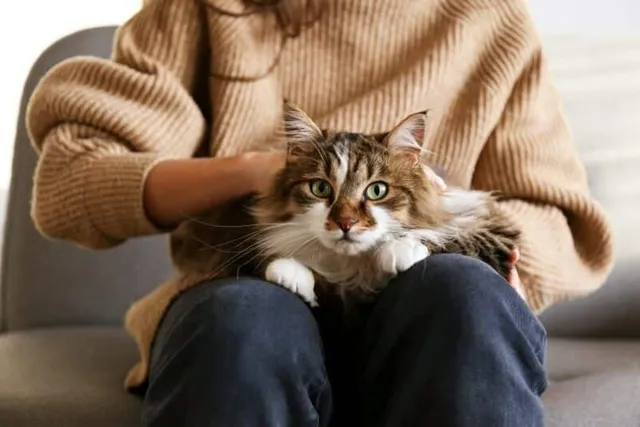
Cats are exceptionally skilled at reading human emotion.4 If you’re wound up and stressed, your cat can pick up the tension, which can add to your cat’s own tension and stress. It’s important to be calm around your cat, especially if your cat is displaying stress and overexcitement. Do not make sudden movements, and speak in a calm, soothing voice—your calm demeanor can help your cat feel more at ease during a bout of stress or anxiety.
4. Engage in Play/Interaction

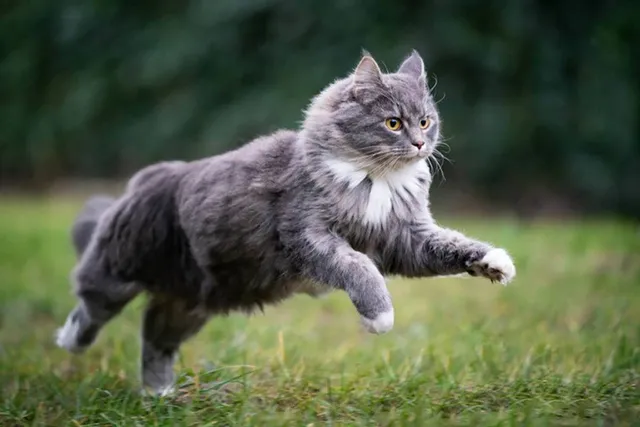
Mental and physical stimulation is just as important to cats as it is to dogs, and interacting and playing with your cat can help relieve stress and anxiety. Cats are suckers for wands and teasers, and these toys allow them to exercise natural hunting instincts. Other excellent toys are laser pointers, crinkly toys, interactive games, and puzzles—even cardboard boxes and the cores of toilet paper rolls are a cat’s favorite. Having said this, read your cat’s body language; if they appear stressed or scared by what you are doing, respect their feelings and stop what you are doing. An extremely overstimulated cat is unlikely to engage in play, so you’ll have to wait until they are ready.
5. Introduce New Things Slowly

Change can scare your cat and cause anxiety and overexcitement, especially if the change is sudden and your cat feels they have no way to avoid it. If possible, make changes to your house gradually. Always provide your cat with somewhere to go if they feel the need to retreat to an area where they feel more comfortable.
You can also allow your cat to investigate their new or changed surroundings under supervision, such as a newly renovated room. Cats love to sniff and explore things, and by allowing them to investigate, they can become acclimated to new smells, sights, and sounds if applicable. They can also spread their scent, which can help calm them down.
6. Keep Essentials Accessible

Your cat can become extremely agitated if they cannot get to their litter box, water, and any other essential items. Always keep your cat’s litter and water bowl in easily accessible areas, and in a quiet and private place that doesn't receive much foot traffic. When you feed them, do so in their safe space too.If you have one cat, you’ll need two litter boxes in different areas to give your cat options. The general rule is to have one litter box per cat, plus one extra.
7. Try Over-the-Counter (OTC) Calming Products

Some OTC products contain pheromones that can help calm an overexcited cat. Herbal remedies and supplements are also available without a prescription, along with anti-anxiety treats that may also be beneficial. However, further studies are needed to confirm their effectiveness.
Other products, such as calming collars, sprays, and wipes, may also help. However, we recommend consulting your vet before trying OTC calming products to ensure they are safe and effective for your cat.
8. Consider Anti-Anxiety Medications

Your vet may recommend anti-anxiety medications when nothing else has worked. This is especially true if your cat is stressed or overexcited daily or if anxiety is triggered repeatedly by the same stimuli. Your vet will work with you to choose an appropriate approach. Always follow your vet’s recommendation and dosage amounts to a tee. Some medications cannot be abruptly stopped, as doing so will cause even more problems, like sudden worsening of behavior.

Conclusion
Cats can become stressed and overexcited, just like humans and dogs. Luckily, there are a few ways to help calm your cat down naturally. However, if nothing works, it may be time to consult your veterinarian to devise an effective way to relieve your cat’s stress or overexcitement.
Remember to have your cat checked by your vet before implementing any tips mentioned above, and always follow your vet’s advice and recommendations.
Sources
Featured Image Credit: rock the stock, Shutterstock
Expert cat care, straight to your inbox
News, insights, and useful advice, delivered to you.

No spam — unsubscribe anytime.
By signing up, you agree to our Terms & Conditions and Privacy & Cookies Policy.
How useful was this post?
Click a star to rate. You can leave written feedback afterwards. (We read all feedback.)
Rachel Giordano is a Pensacola, Florida-based musician and writer. She lives with her partner and their two dogs, Sophie, a Boston Terrier, and Aero, a Border Collie/Sheltie mix. Rachel holds a Bachelor of Arts degree in communication and loves writing about all types of cat breeds. When she’s not writing about cats, she loves to write suspense/thriller novels. A musician by night and writer by day, she enjoys sharing her knowledge of the needs and requirements of our furry friends.