How to Safely Break up a Cat Fight: 6 Vet-Approved Tips



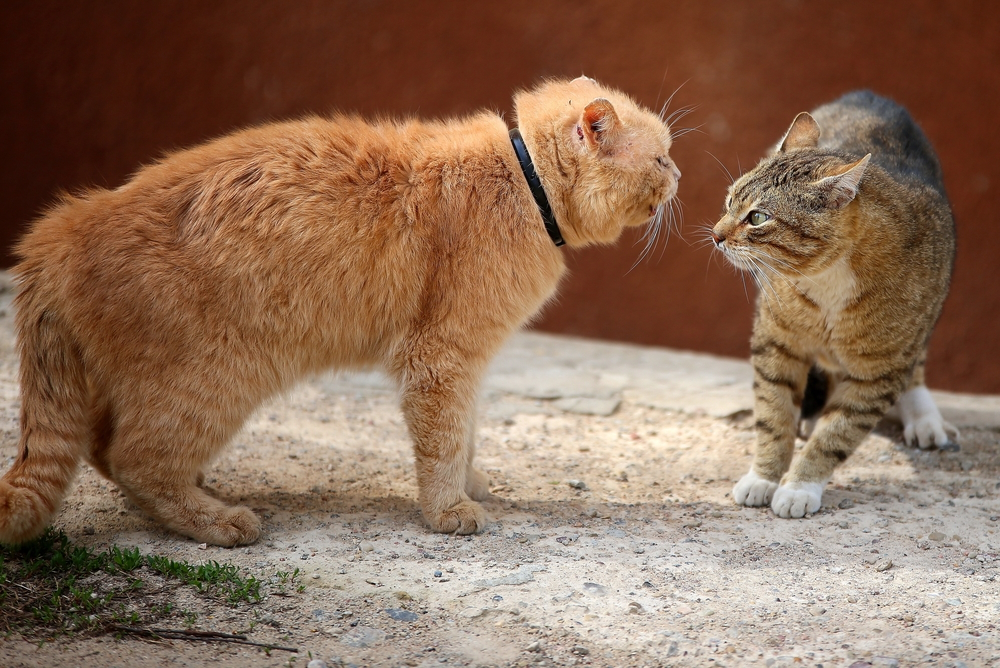
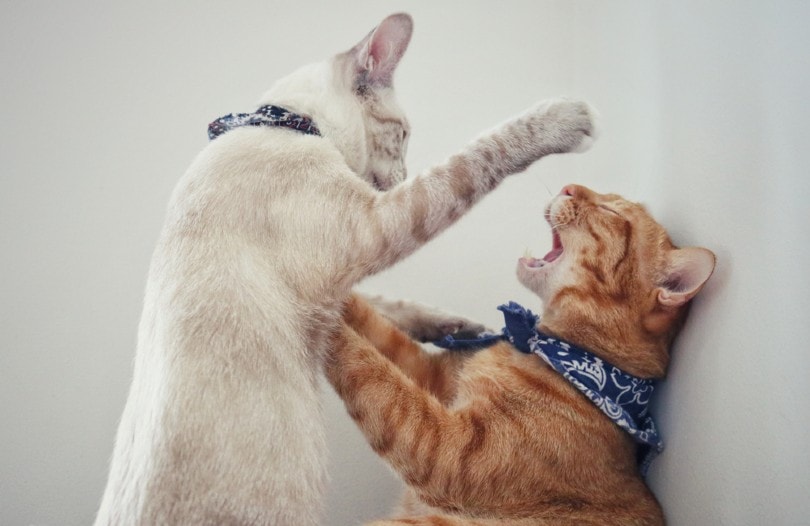
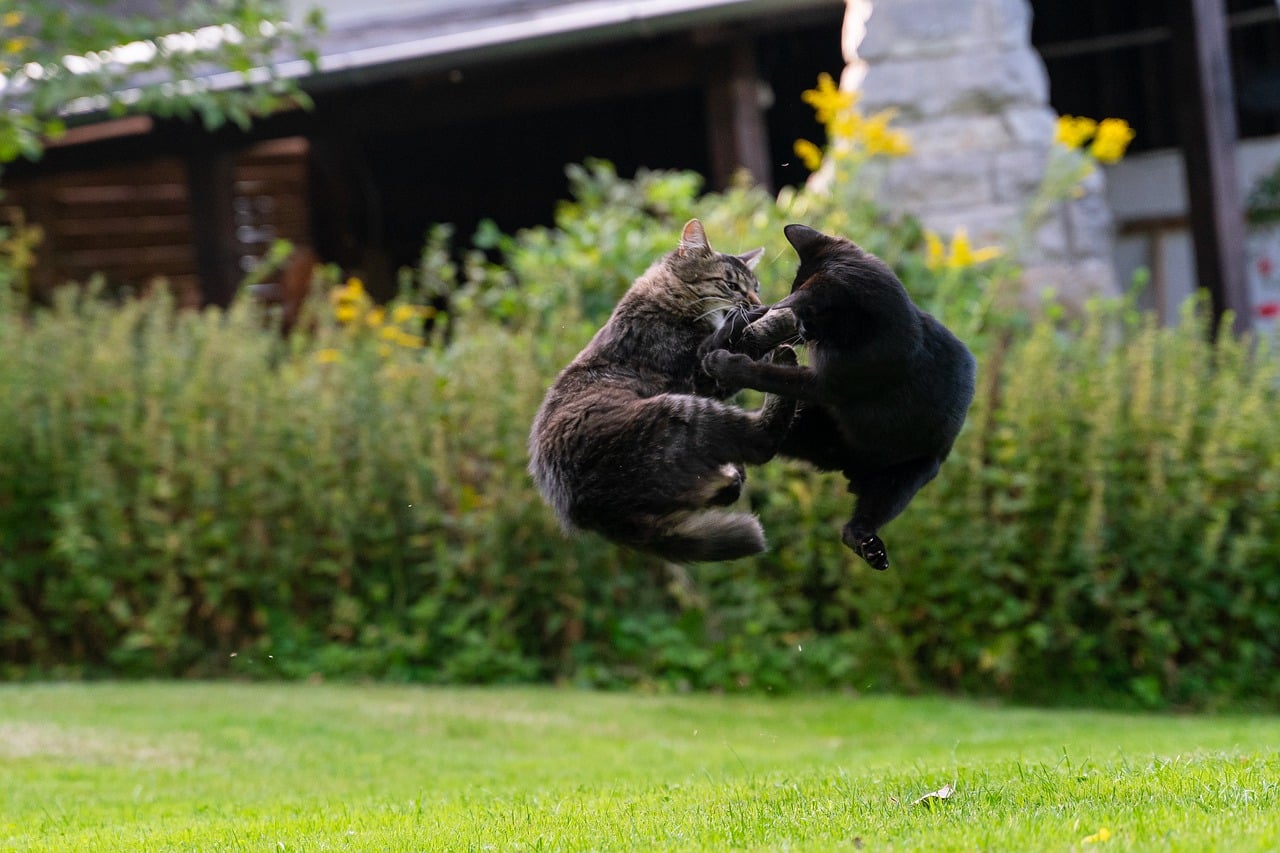
While many cats live in perfect harmony with feline companions, some have trouble getting along. Fighting between cats is relatively common and can range from intense games that get slightly out of hand to outright battle. Feline aggression can have several causes, including territoriality, lack of socialization, mate competition, and fear. Once cats start fighting, distraction is usually the best way to diffuse the situation. Keep reading for seven expert tips on safely breaking up a catfight.

The 6 Tips to Safely Break Up a Cat Fight
1. Get Ahead of the Situation; Prevention Would Be Ideal
It's sometimes possible to tell when cats are getting ready to face off. There are often situations when you know your cats are likely to become irritated with each other, such as if you have a kitten who habitually becomes over-enthusiastic when engaging with an older, more laid-back pet.
If you hear the tell-tale sounds of a fight developing, the best course of action is to stop the fight before it occurs. Distraction is often your best option at this stage. Finding a way to get their minds off each other and increase the distance between the cats when they are about to pounce can be achieved in different ways, but never offering a treat as this would reinforce the scenario.

2. Use Noise Distractions
Noise is a tried and true way to bring an end to catfights, as long as it is loud, unfamiliar, and unexpected. Clapping your hands, blowing a whistle, even banging a steel pot with a metal spoon. That football fan horn you have stored away could be the ultimate secret to breaking the scuffle.
3. Water Ambush
Most cats hate water but even if they do like it, it is the unexpected element that will do the trick. Giving the two combatants a squirt with a water bottle often puts an end to altercations. Squirting cats isn't usually a great way to convince kitties to stop doing things like hanging out on sofas, but it can be an appropriate choice for immediately ending a dangerous catfight and preventing injuries, infections, etc. It is a case of the benefits outweighing the risks.

4. Use a Barrier
Cats who won't move on in response to attempts at distraction sometimes need to be physically separated to prevent injuries. If you must physically break up a fight, grab a sofa cushion, a laundry basket, the cover of a large trash bin, the soft part of a broom, or whatever you have handy, and try to poke it between the cats to get some space between the two. Don't try to grab or physically separate fighting cats with your hands as you’ll likely have scratches and bites that may send you to the doctor's office.
5. The Invisibility Cloak
Another safe way to separate fighting cats is to use a towel or a blanket and throw it over them. The element of surprise and the lack of visibility will likely result in both cats running in opposite directions, and you can do this from a safe distance minimizing any chances of getting hurt.
6. Toss Them a Soft Object
If your cats are locked in an intense stare-down or gearing up for a full-on battle, tossing a soft object, like a plush toy, rolled-up sock, or crumpled paper ball, can be an effective way to break their focus. The goal isn’t to hit them but to land it nearby, creating just enough of a distraction to shift their attention. Cats are naturally curious, so an unexpected object appearing in their conflict zone might prompt them to pause and investigate rather than continue their showdown. This technique is particularly useful if you’re at a close distance and want to avoid getting caught in the crossfire. As a bonus, if the object doubles as a fun toy, they might end up chasing it instead!

Tips About What To Do After A Cat Fight
1. Give Cats Space to Cool Down
While it may be tempting to approach your pets after a fight, it's usually best to give them time to calm down before attempting to interact with them. Cats that have been behaving aggressively can turn on even their favorite people if they still need time and space to calm down. Kitties thwacking their tails with dilated pupils likely need a few more minutes to decompress before they are ready for interaction.
2. Keep Cats Separated
Give both cats time to cool down. Depending on your pets' history of fighting, you may need to keep the two apart for anywhere from a few days to a week or so. Cats that have been separated, even for short periods, do best when reintroduced to each other slowly to minimize aggression.
Cats that are getting to know each other often benefit from hanging out in separate parts of the house for just a bit longer if they’re having trouble getting along.
3. Don't Punish Your Cats
Don't punish your cats for fighting. It almost always makes the situation worse as it can increase stress which can contribute to aggression. It can also make your cats less likely to trust you and increase their sense of discomfort, leading to stressed-out cats and further behavioral issues. Ignoring unwanted antics is often the best course of action. Reward your cats when they behave reasonably, but don’t punish them if things don’t go as smoothly as you might wish.


Tips for Minimizing Conflict Between Cats
You can take a few basic steps to minimize conflict between cats, including providing enough toys and games to keep cats busy and sufficient resources to prevent competition.
Toys and Games
Cats often become aggressive when they're not receiving enough mental stimulation and physical activity. Bored cats often become stressed, which can lead to anxiety and aggression. Giving cats several toys to play with and activities to keep them busy goes a long way toward supporting mental health, which lays the foundation for a peaceful household. Don't forget to provide vertical spaces for your cats to explore—hanging out in high places is often calming to cats.
Resources
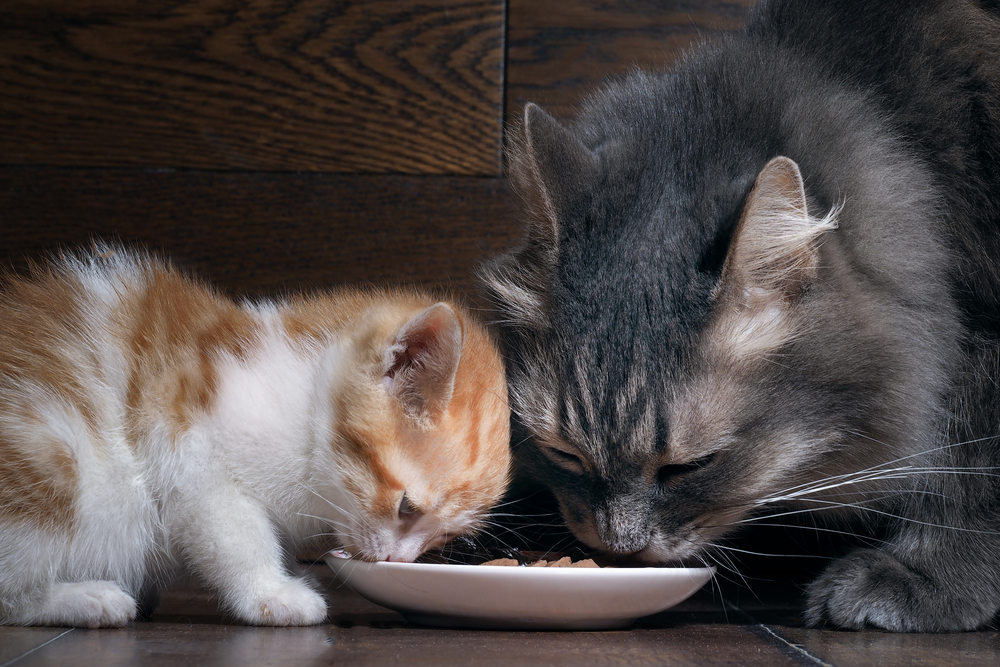
Cats sometimes become aggressive when competing for food or litter box access. Most experts recommend having one food and water set up per cat, at least one litter box per pet, and an extra for good measure, all placed in different locations. The additional litter box makes it impossible for dominant cats to limit access to all bathroom options at once, giving more submissive pets a chance to relieve themselves in peace.
Introductions
Slowly introducing new companions to the household often helps prevent territorial aggression from developing between cats. Allowing cats time to readjust to each other when one's been away from home can also help reduce conflict.
Start by keeping both cats apart to allow them to become accustomed to the other's presence. Switch the cats' beds and toys daily to expose them both to the other's scent. Next, separate your cats using a baby gate or other barrier, but allow them brief supervised glimpses of each other augmented by pleasant things like treats and special food to encourage the development of positive associations.
Supervised introductions should be short and pleasant, if your cats are already used to wearing them you might even consider using harnesses and leashes to keep cats under control the first few times they hang out together in the same room is helpful. End all interactions on a positive note before any bad behavior gets started. Take the process slowly and give your pets time to adjust. Ask a vet for some helpful tips anytime you struggle to deal with your cats fighting.
Conclusion
Watching two cats you love fight can be particularly scary, but the fights can also be dangerous. Fighting cats can injure themselves and others in your home who are around when the fur starts flying. The best way to stop a catfight is to take proactive steps to prevent the development of situations that commonly result in aggression.
If your cats fight, never physically grab one with your hands. Try distraction, and if that doesn't work, try using a large sofa cushion or other barrier to put space between the parties. Don't punish or scold your cats after fighting, and give them plenty of time to calm down before a controlled reintroduction.
Sources
Featured Image Credit: Mariya Ilmaz, Shutterstock

Expert cat care, straight to your inbox
Vet-reviewed advice, behavior tips, and the best of Catster. Free, and you can unsubscribe anytime.
By signing up, you agree to our Terms & Conditions and Privacy & Cookies Policy.
Lorre Luther is a writer who is firmly convinced that cats are smarter than humans. She left her law career in the United States and moved to the Netherlands to follow her dream of becoming a writer. Lorre currently lives in Rotterdam, she enjoys traveling and greatly appreciates the beauty of nature. Lorre has a spot for animals and admires the intelligence of cats.
Join the conversation
Ask a question, share your story, or send private feedback.