How Often Do Cats Pee? Vet-Verified Facts & When to Worry


In this article
Just like people, how often cats pee each day can vary. It depends mostly on how much water they consume, their age, diet, and the environmental temperature. Cats that eat wet food may pee more than cats that eat kibble, as they usually take in more moisture.
On average, a healthy adult cat will pee two to four times a day. However, different cats will have their own “normal.” If your cat usually pees five times a day and then suddenly starts peeing only twice, you should be concerned—even though it is in the range of “normal.”
We highly recommend keeping up with how much your cat is peeing, as it can hint at some underlying health problems. Cats are notoriously good at hiding their illnesses, so you often don’t get very many symptoms to go off of.
Important information:

Why Is My Cat Not Peeing?
If your cat is suddenly struggling to pee or not peeing at all, there is likely a serious underlying problem
If your cat hasn’t peed in 24 hours, you should be seriously concerned. An emergency trip to the vet is in order. This is a possible sign of a lower urinary tract obstruction, which can be deadly if not treated quickly. If your cat can’t urinate, it will put pressure not only on their bladder but also on their whole urinary system. This condition is usually manifested as various problems with their litter box, lethargy, vomiting, and lack of appetite. Sometimes the cat only stops peeing until the disease has progressed considerably.
This condition is most common in male cats, but it can occur in females as well.

Why Is My Cat Peeing in Small Amounts?
Sometimes, cats with lower urinary tract problems will pee but only in small amounts. They may not pee as frequently as they once did, or they may pee more frequently. There are a few causes for this situation. In most cases, it is caused by crystals, stones, or a plug in the urethra that are blocking the flow of urine. This is extremely troubling, even though the blockage is not complete.
Inflammation and infection can also cause urinary problems. Dehydration can also cause reduced peeing, especially if your cat isn’t visiting the litter box very often. In these cases, you will notice dark, concentrated urine, and your cat won’t have trouble urinating. Cats can become dehydrated if they stop eating and drinking and if they lose too much fluid mainly through diarrhea, vomit, or excessive urination. Cats should always have access to plenty of fresh water, even if you don’t see them drinking too often and even if they only eat wet food.
Cats don’t have a strong thirst mechanism and are silent drinkers, but still, they normally drink all they need if they are healthy. If your cat is regularly becoming dehydrated and they don’t have any digestive issues, it is likely caused by excessive water loss through their urine.
Kidney disease, diabetes mellitus, and hyperthyroidism are the three most common conditions that could cause excessive thirst and urination in your cat. Contact your vet if you suspect your cat is drinking more than usual. The sooner a health problem is diagnosed in your cat, the easier and more effective the treatment will be.
How Can I Tell If My Cat Is Not Peeing?
Most cats use a litterbox, so it is pretty easy to tell if they aren’t urinating. If you’re in a multi-cat household, things can be a bit more complicated, though. Sometimes, you may notice a decreased urine output but not know exactly which cat isn’t peeing as much.
In many cases, cats will show other signs of discomfort if they have a lower urinary tract problem. For instance, your feline may become lethargic, drink more, refuse to eat, lick their genitals, vocalize, hide, or appear uncomfortable. Some cats may be restless and become more clingy.
However, not all cats show obvious signs. Therefore, it is often important to keep an eye on the litter box so that you can determine who is coming and going. A camera is sometimes helpful for this purpose.
With that said, a urinary obstruction can be extremely serious. If you’ve noticed a decrease in urine output and one of your cats is acting weird, you should visit a vet right away. Urinary obstructions can be extremely serious and deadly if not treated quickly.

Is It Normal for a Cat to Not Pee All Day?
No, 24 hours without urinating is not normal for a cat. There are several things that can cause decreased urine output. It may be inflammation and discomfort, which can be caused by an infection. Dehydrated cats also don’t urinate as much for obvious reasons.
Dehydration itself can be caused by a lot of things. Sometimes, cats may simply not get enough moisture from water alone. Wet food may be necessary. However, dehydration can also be caused by underlying problems.
If your cat hasn’t peed all day, start by calling your vet’s office and explaining the situation. They can tell you how best to handle the situation, including possibly bringing the cat in right away.
May Also Interest You: 10 Surprising Facts About Cat Urination (Vet-Verified)

Can Lower Urinary Tract Problems Cause a Change in Urine Output?
Feline Lower Urinary Tract Disease (FLUTD), including but not exclusively, a UTI (Urinary Tract Infection), can cause all sorts of problems with urine output. In many cases, cats may avoid going to the bathroom because of discomfort. If it hurts to pee, many cats will avoid it for as long as possible.
However, FLUTD will also make the cat feel like they need to urinate even when they don’t really need to. Often, your cat will attempt to urinate frequently, but not much will actually come out. They may strain to urinate without passing anything at all.
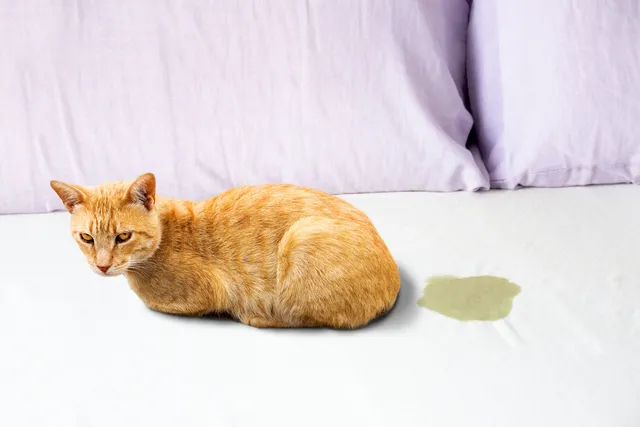
Most cats will urinate outside of the litter box when they suffer from FLUTD. This is due to a few factors. Firstly, cats will feel like they need to urinate more frequently, and sometimes this urge is so strong that they are unable to make it to the litter box. Secondly, some cats may hold their urine and then have accidents around the house.
Either way, cats aren’t urinating elsewhere because they’re bad. They’re simply urinating outside of the litter box because of the underlying health problem.

Can Stress Cause a Cat Not to Pee?
How often cats pee can be seriously affected by stress. For instance, if a cat is scared of the litter box or something around the litter box, they may avoid it for as long as possible. This can cause urinary problems, as the cat is not emptying their bladder often enough.
However, in most cases, your cat will not hold their urine for 24 hours just because they don’t want to pee. They will have an accident before they hold their urine for that long. Therefore, you shouldn’t just rule out your cat’s problems as stress-related without speaking to your vet first. If your cat hasn’t peed in 24 hours, it is still an emergency, even if you suspect that stress might be involved. Some seemingly normal changes can cause serious stress in your cats. For instance, changing your cat’s litter can make them avoid the box, even though it doesn’t seem like a very big change to you. The introduction of any change in routine can also cause stress. For instance, remodeling or bringing home a new family member can also cause all sorts of stress for a feline.
You can sometimes tell what is stressing out your cat by paying attention to when the behavior started. Figuring out the cause isn’t always helpful, though. Sometimes, you can’t change the source of your cat’s stress. Perhaps their old litter was discontinued, and you can’t exactly send babies back.
Either way, you need to work alongside your veterinarian or feline behaviorist to help your cat get through the difficult situation. Sometimes a pheromone spray or plug in can be highly beneficial.
Final Thoughts
Tracking how many times a day your cat pees a day is essential to monitor their health. There are several serious conditions that can mess with urinary output. One of the most serious is urinary obstruction, which involves the cat having trouble passing urine. As you might imagine, this can be extremely serious and even deadly. Immediate veterinary attention is important to ensure that the obstruction is cleared so that your cat can urinate properly.
A healthy adult cat will usually urinate between two to four times a day. However, there are normal cats on either side of this spectrum. It is important to note your cat’s normal so that you can notice any changes. A serious decrease or increase in output in your cat can indicate a problem—even if the urine output is technically normal.
Related Reads:
Why Is My Cat Peeing in the Laundry Basket? 8 Common Reasons
Does Cat Pee Glow Under a Black Light? Science-Based Facts & Tips
Featured Image Credit: nanniezwawa, Shutterstock
Expert cat care, straight to your inbox
News, insights, and useful advice, delivered to you.

No spam — unsubscribe anytime.
By signing up, you agree to our Terms & Conditions and Privacy & Cookies Policy.
How useful was this post?
Click a star to rate. You can leave written feedback afterwards. (We read all feedback.)
Christian started writing for a local newspaper as a teenager, and he's been involved in the publishing industry for most of his adult life. Combining his love of writing with a passion for animals, he is currently the Director of Editorial at Pangolia and the Editor-in-Chief at Catster.
Christian lives in the Philippines with his wife, son, and four rescue cats: Trixie, Chloe, Sparky, and Chopper.