Do Female Cats Have Periods? Heat Cycle Explained (Vet Answer)

In this article
If you own a female feline, you may find yourself asking “Do cats have periods?” The short answer to this question is no, female cats don't have periods in the same way humans do. Like most female mammals, cats do have a monthly cycle, although what they experience is very different from humans.
Menstruation is the monthly shedding of the uterine tissue, also known as a period in humans. Female cats don't get periods each month, however, they do go through a reproductive cycle to prepare their body for pregnancy. This cycle is caused by hormonal fluctuations, but there are some significant differences between cat and human reproductive cycles.
Since cats don’t have periods per se, we will discuss in depth the female cat's heat cycle, including how often they are “in heat” and the differences and similarities between cats and humans to help you understand your cat's estrus cycle.

What is Menstruation in Mammals?
Female humans have what we call menstrual cycles. This is on average a 28-day cycle. It starts on the first day of one period and ends on the first day of the next period. It involves a series of natural fluctuations in hormone levels which cause changes in the uterus and ovaries making a pregnancy possible.
In humans, each cycle involves rising levels of the hormone estrogen which causes the ovary to release an egg. While this is happening, the lining of the womb starts to thicken. In the second half of the cycle, the womb lining continues to develop ready to allow the egg to implant. If a pregnancy does not occur, the egg gets reabsorbed into the body. Levels of the hormones progesterone and estrogen fall, and the lining of the womb falls away leaving the body as a period. This is what causes the menstrual flow.
There are variations between different mammals. Some will have a similar cycle but will resorb the womb lining rather than shed it. Cats are among these mammals. Female cats have a thinner uterine lining during their cycle. If a pregnancy has not occurred, their bodies reabsorb the lining instead of shedding it. This means there is no visible external bleeding. Owners will not witness any signs such as discharge or blood spotting as they would in humans.
The Cat Heat Cycle

Let's explore how the female cat's reproductive system works. Cats have an estrus cycle. The key difference between cats and humans is that cats are induced ovulators. This means that their heat cycle is triggered by a male cat.
There are different stages to the feline cycle.
1. Proestrus
This is the first phase which lasts a couple of days. In this phase, the body prepares itself for ovulation. The hormone estrogen starts to rise. The female cat may start to rub against things and vocalize more. She will be attractive to male cats but will not allow mating just yet.
2. Estrus
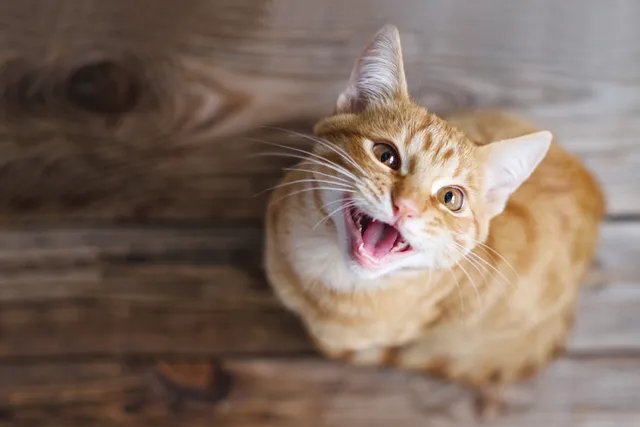
The female cat is now in heat. This is the active breeding stage and the cat is receptive to mating. This can last up to a week. The female cat will become very affectionate, rolling around and rubbing herself on things. She will call for a mate and can become very vocal.

3. Interestrus
The next stages depend on whether the cat has ovulated or not. Interestrus occurs if a cat has not ovulated. It can last up to 3 weeks. It ends when proestrus starts again.
4. Diestrus
This occurs if the cat has ovulated. As they are induced ovulators this happens when a male cat mates with the female.
5. Anestrus
This is a resting period between heat cycles. It can last for weeks or even months.
The duration and frequency of each stage of the cycle varies depending on the individual cat and their unique circumstances. Cats usually require 12 hours a day of daylight to maintain normal cyclicity. Cats are polyestrous breeders. This means they can go into heat multiple times a year. If a cat is not mated, they will keep cycling around, going into heat. This will only stop if they are mated, or if they get spayed.

Signs Your Cat is in Heat
There are a few telltale signs that your cat will display when they are in heat. Some may be physical and others behavioral.
These include:
Some of these signs may cause alarm to owners and they may think there is something wrong with their cat. If you have any concerns, it is always best to have your cat checked out by a vet.
Vaginal bleeding is never seen in a normal healthy cat when they are in heat. Some cats will experience a small amount of light or clear discharge which can be normal. If you do see bleeding from your cat's vagina, you need to take them to the vet as soon as possible. Bleeding can be a sign of a urinary tract infection, an injury to the vagina, or a potentially fatal infection such as pyometra.
Why Are Cats Induced Ovulators?
Cats have evolved over thousands of years as induced ovulators. This means that they will not release an egg unless they have been mated by a male cat. The evolutionary advantage of this is that it conserves resources. If a cat only releases an egg when there is a chance it will be fertilized, this saves a lot of energy that would otherwise be wasted.
Cats are seasonal breeders. This is also an energy-conserving strategy as it ensures they are most likely to be pregnant and give birth to kittens when there are abundant resources around in the warmer months of spring and summer. These evolutionary traits mean that the cat will avoid unnecessary energy expenditure associated with producing eggs and hunting for food that is sparse.

What to Do if Your Cat is in Heat
Lots of owners find it difficult to manage a cat that is in heat. They can be very demanding, and it is not possible to train them or control them as they are acting on instincts. First and foremost, they must be kept indoors and away from any other male cats that have not been neutered. If they are let outside, they will almost certainly mate with a male cat and become pregnant. Ensure they have lots of enrichment activities in their environment to keep them occupied. Give them lots of focused attention and play with them regularly. You can give them cat toys to play with. Puzzle toys and feeder toys can also help to keep their minds busy. Some synthetic pheromone diffuser toys can be used in the home that are thought to calm cats too. The only way to permanently prevent the signs of heat is to have your cat neutered.
Conclusion
Cats technically do not have periods the way humans do. They experience hormone fluctuations along with behavioral and physical changes, however, it is not the same process as when a woman has a period. When a female cat is in heat, this means they are fertile and will be mated by a male cat. The female cat's heat cycle has several stages, like a human's menstrual cycle, but there is no bleeding involved. If you see bleeding from your cat's vagina or the surrounding area, you need to take them to a vet as soon as possible. See Also:
Sources
Featured Image Credit: savitskaya iryna, Shutterstock
Expert cat care, straight to your inbox
News, insights, and useful advice, delivered to you.

No spam — unsubscribe anytime.
By signing up, you agree to our Terms & Conditions and Privacy & Cookies Policy.
How useful was this post?
Click a star to rate. You can leave written feedback afterwards. (We read all feedback.)
Dr. Emma Chandley, BVM MRCVS (Veterinarian)
Dr. Emma is an experienced vet who is happy to share her expertise and knowledge about cats with readers. Her passion is surgery but she will happily talk about anything animal-related. Dr. Chandley graduated from The Royal Vet College and since then she has worked in general practice in Great Britain. Dr Chandley has completed a postgraduate certificate in Small Animal Surgery and has also gained Advanced Practitioner status in the same discipline. She enjoys developing her skills in animal behavior, nutrition, and clinical pathology as well.