Is Caladium Toxic to Cats? Vet Approved Facts & Safety Tips


In this article
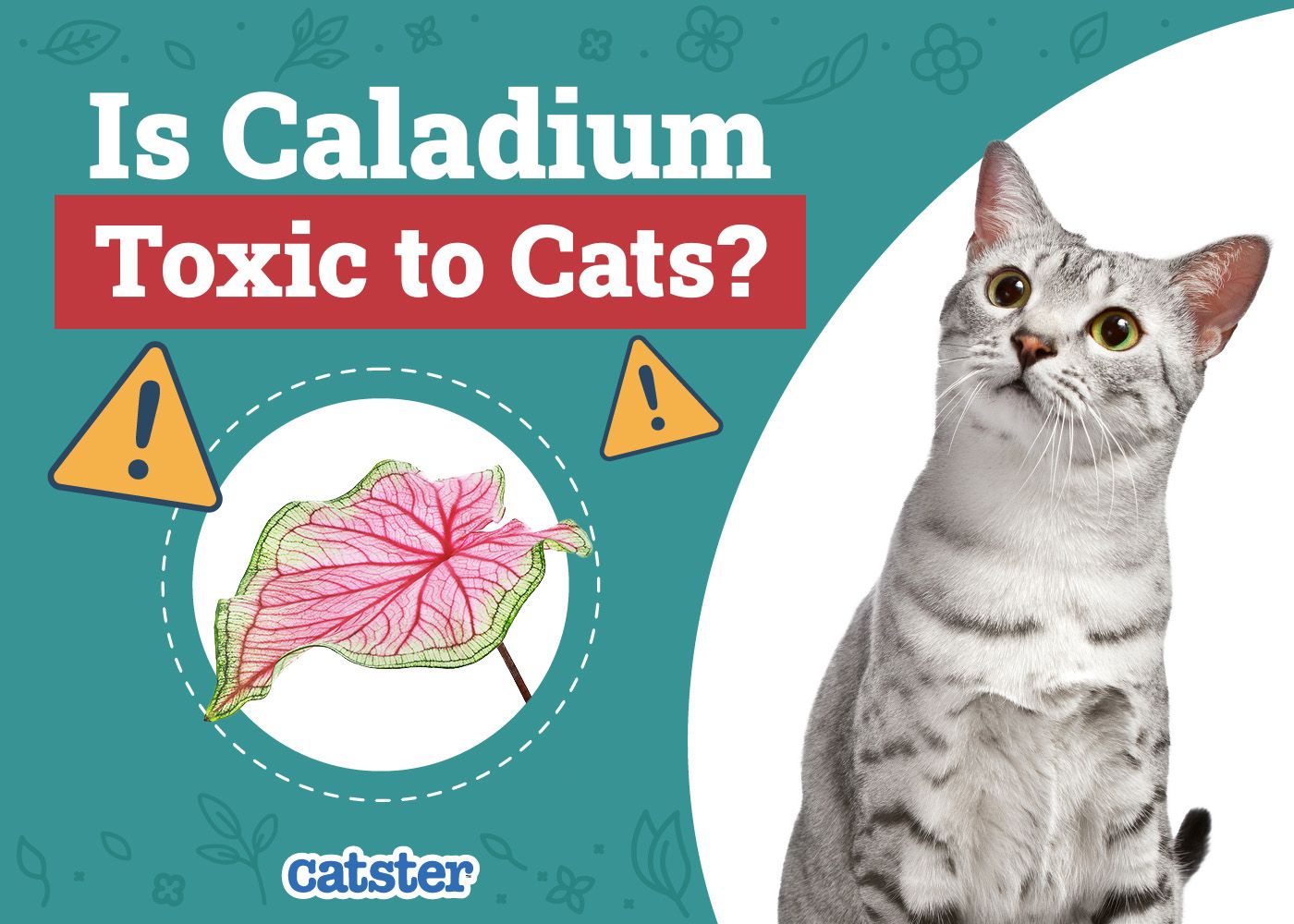
The pinkish-red and green heart-shaped leaves of the caladium plant make it a vibrant addition to any household. However, its pretty appearance is deceptive: Caladium is toxic to cats, dogs, horses, and humans1. Ingesting the plant can make your cat ill and can cause difficulty breathing in rare cases.
Read on to know more about why caladium is toxic to cats and the effects that it can have, so you can be better prepared if your cat eats the plant. There are also tips for how to keep your cat safe around caladium plants.

What Is Caladium?
Native to Central and South America, caladium are tropical plants loved for their bright colors. There are over a thousand cultivars of caladium. Along with the familiar pinkish-red and green leaves, there are white and green variations. Caladium is often used as an ornamental plant for the borders of plant boxes.
It’s not one of the easiest plants to care for due to its maintenance requirements. The soil needs to be kept moist but well-drained to avoid saturation. It’s also not the best plant for year-round variety in your flower garden because it doesn’t do well in winter.
Caladium is also known as Angel Wings, Candidum, Elephant’s Ears, Exposition, Fancy-Leaved Caladium, Heart of Jesus, Malanga, Mother-in-law, Pink Cloud, Seagull, Stoplight, and Texas Wonder.

What Parts of the Caladium Plant Are Toxic?
Like other plants in the Araceae family, caladium contains insoluble calcium oxalate crystals. These are released from the plant when it is damaged, and they can result in tissue penetration and oral and gastrointestinal discomfort. Cats are affected when they chew on or bite parts of the plant and ingest the sharp oxalate raphides.
Unfortunately for lovers of the caladium plant, there is no part of the flora that is safe for cats, as the leaves, stem, roots, and tubers all contain oxalate crystals. While the leaves and stems might contain a lower concentration of crystals than the tubers and roots, ingesting any part of the plant can cause your cat to become sick.
What Are the Signs of Caladium Plant Toxicity?
Many of the signs of caladium poisoning are similar to many other health conditions that may require attention from a veterinarian. For this reason, it can be difficult to determine whether your cat has eaten caladium or another toxic plant or is suffering from a different health condition entirely.
The signs of caladium toxicity include:
Depending on how much caladium your cat eats, their signs may range in severity from minor to more serious. Caladium toxicity can be fatal if it interferes with your cat’s ability to breathe and will need treatment by a licensed veterinarian. If you know or suspect that your cat has eaten caladium, remember to take a sample of the plant to a veterinarian to help them diagnose and treat the problem. Breathing problems are rare but can occur if there is swelling of the throat or tongue.
The 3 Tips to Keep Cats Away from Caladium Plants
Renowned for their curiosity, cats can be difficult to train or convince to do or not do something.
It is, however, possible to prevent your cat from getting up to mischief, even if it does take a bit of work. Here are a few tips to help you keep your cat away from caladium.
1. Use Citrus Spray or Deterrent Spray
Since caladium only causes poisoning when it’s ingested, it can be kept around the house provided that you take steps to prevent your cat from eating it. However, this can be easier said than done.
You can try a citrus spray to ward off your cat. Cats have a natural aversion to strong citrus smells and are likely to avoid them altogether. Citrus sprays can be made at home, and you can make sure it’s safe for your plants.
You have to keep in mind the drawbacks of both of these ideas, though. Both the citrus spray and the deterrent will wear off over time. You’ll need to keep refreshing the deterrent for the best results in keeping your cat away.

2. Don’t Keep Caladium Plants
Cats have a way of getting to places that we think that they can’t reach, especially if they’re curious about something. Unfortunately, this means that caladium plants that you’ve placed on a high shelf or kept locked away in another room might not be as out of reach as you intended. If your cat can still reach the plant, they’re at risk of eating it and suffering from poisoning.
In the end, the easiest and most reliable solution is to not keep caladium plants at all. This goes for other toxic plants too. No matter how pretty they are, toxic plants can cause a great deal of misery and suffering for pets. Some plant species can even be fatal.
The best way to keep your cat — and dog, if you have one — safe is to avoid toxic plants altogether. There are plenty of pretty non-toxic plants that you can keep in and around your home, or you could try plastic plants instead.
3. Shut the Door
Sometimes, keeping toxic plants out of reach just means shutting them in a room or container that your cat can’t get into. However, this does rely on you — and anyone you live with — remembering to keep the door or container shut at all times. You’ll also have to make sure you dispose of any cuttings from the toxic plant properly so you don’t accidentally drop them outside of your plant room and give your cat access that way.

Conclusion
Despite its colorful beauty, caladium isn’t as safe as it appears. This tropical plant makes a great decorative plant for your home, but it’s also toxic to cats. As part of the Araceae family, caladium contains insoluble calcium oxalate crystals that can cause gastrointestinal upset, vomiting, loss of appetite, and drooling. It can also interfere with your cat’s ability to breathe in serious cases.
If your cat is suffering from severe signs, you’ll need to get them treated by a veterinarian. To keep your pets safe, you should keep non-toxic or plastic plants instead.
Featured Image Credit: Andi WG, Shutterstock
Expert cat care, straight to your inbox
News, insights, and useful advice, delivered to you.

No spam — unsubscribe anytime.
By signing up, you agree to our Terms & Conditions and Privacy & Cookies Policy.
How useful was this post?
Click a star to rate. You can leave written feedback afterwards. (We read all feedback.)
Christian started writing for a local newspaper as a teenager, and he's been involved in the publishing industry for most of his adult life. Combining his love of writing with a passion for animals, he is currently the Director of Editorial at Pangolia and the Editor-in-Chief at Catster.
Christian lives in the Philippines with his wife, son, and four rescue cats: Trixie, Chloe, Sparky, and Chopper.