10 DIY Cat Feeding Stations You Can Create at Home (With Pictures)
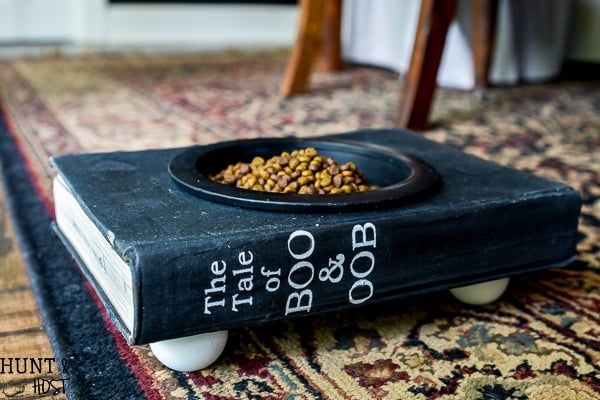
When feeding your cats, whether outdoor or indoor felines, it can get aggravating to keep other animals out of their food and even clean up after them when they become messy.
That’s why it’s a good idea to create feeding stations for your feline pals. Of course, if you’re on a budget, premade feeding stations can be well beyond your reach. Luckily, we have 10 amazing DIY feeding stations you can create at home with minimal materials and tools in the guide below.

The 10 DIY Feeding Stations
1. Plastic Feeding Bin Station (Outdoor) by Cats & Pats
| Materials: | Duct tape, large plastic box, lid, wood planks |
| Tools: | Box cutter, permanent marker, hairdryer, drill |
| Difficulty: | Easy |
If you have outdoor cats or find yourself feeding all the feral cats in the neighborhood, they may need outdoor feeding stations. You’ll need a feeding station that keeps the weather out and the food in, one with a cover so that it doesn’t rain or snow inside, and a simple drainage system should do the trick.
This feeding station is easy to construct, fits almost any budget, and takes little time to make. In fact, it shouldn’t take you more than an hour.
2. The Simplest DIY Wooden Pet Feeder by The Inspired Hive

| Materials: | Pine boards, wood stain, spray paint, pet food bowls, |
| Tools: | Jigsaw, brad nailer, circular saw |
| Difficulty: | Easy |
Sometimes all you need is a simple, easy-to-assemble wooden pet feeder. Since it’s an attractive design, it’ll look great in almost any kitchen. The wood stain and spray paint are added touches to make the feeder look all-natural.
In our opinion, it’s best to use stainless steel pet bowls, as they add to the look of the feeder and are easier to clean. They are also lightweight and easily fit into the holes once the pet feeder is complete.
3. Cardboard Slow Feeder
| Materials: | Cardboard box, empty toilet paper rolls, tape |
| Tools: | Scissors |
| Difficulty: | Easy |
Whether you have a greedy kitty that inhales their meals in one breath, or a bored cat that needs to spend some time off the couch, this practically free slow feeder tackles both problems in one project.
To start on this project, you'll need to save up empty toilet paper tubes. Once you have enough to fill your box, simply attach them to the inside of the box with some tape. Position the box upright to create a kitty “vending machine.” You'll probably want to keep it away from the water bowl, though, since it's crafted out of cardboard.
4. DIY Cat Feeder for Outside/Feral Cats
| Materials: | Large plastic storage box with lid, duct tape |
| Tools: | Scoring tool/cutting tool, hairdryer for softening plastic, gloves for protecting your hands (optional) |
| Difficulty: | Easy |
Using a plastic storage bin as an outdoor cat feeder isn't a new idea. However, we love how the additional duct tape covers the crude plastic edges and creates a “door” for the cat. Choose a box that's large enough to store a food and water dish plus the size of an average cat. That way, the feeding station also serves as a storm shelter for feral cats roaming outside.
5. IKEA Storage Shelf Dining Room for Cats
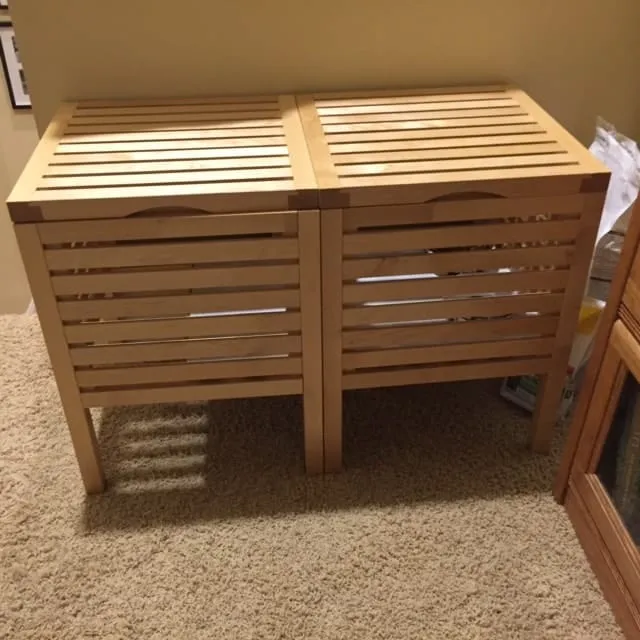
| Materials: | IKEA storage shelf (or similar thrifted furniture), two placemats, 2-inch brackets, dowel rods |
| Tools: | Handsaw, screwdriver, hardware from IKEA kit |
| Difficulty: | Intermediate |
Do you have a curious pup that's always digging their nose in the cat food? This idea was formed out of a desperate attempt to keep Fido away.
Leaving out the middle piece of the storage shelf, this tutorial joined two IKEA shelves to form a giant rectangle. After cutting out a cat-sized corner of the bottom piece with a handsaw, they inserted two placemats to keep the food from slipping between the cracks in the wood. The hole is just large enough for cats to enter and exit from underneath—but not so large that a dog can poke their head through. If you aren't using an IKEA kit, you may need to buy extra hardware such as nails and/or screws since they're usually included.
6. Storage Shelf Cat Feeding Station
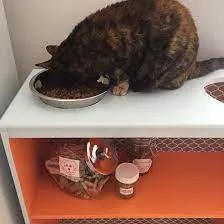
| Materials: | Stable shelf, roll of contact paper, scrap piece of carpet (approximately 12” x 12” or the width of the top of your shelf), oil-based primer, oil-based paint, |
| Tools: | Jigsaw, paintbrush, silicone caulk |
| Difficulty: | Easy |
This upcycled shelf takes pet furniture to a new level. By redecorating a secondhand shelf, you can have a stylish feeder for your cat that suits your style. Although the size of the shelf is up to you, you'll want it to be made out of a sturdy material such as wood and contain enough shelf space to accommodate your cats.
If you want to repaint the shelf, you'll want to do that before you begin. After that, it's pretty easy. You'll simply need to saw holes through the boards to create portals for your cats to travel between the shelves. Finally, attach accessories such as contact paper, feeding bowls, and a piece of carpet for scratching. You can even take this idea a step further by using an entertainment center to make the ultimate cat tree!
7. DIY Cat Food Dispenser
| Materials: | Empty soda bottle, empty quart milk jug (rectangular shape), duct tape (optional) |
| Tools: | Pen, paper, scissors, box cutter, sandpaper |
| Difficulty: | Easy |
This project saves plastic from the trash and helps your cat to slow down and enjoy their food. The feeder is gravity-powered, so more food flows onto the tray as your cat eats.
Using scissors and a box cutter, you'll cut the soda bottle in half and create a hull in the rectangular carton. Cut a circular hole into the carton so that the bottleneck can barely squeeze through. The edges of the feeder will be sharp since it's cut plastic. This tutorial suggests sanding the edges to keep your kitty safe, but you could also cover the exposed edges with duct tape if you prefer.
8. DIY Fun Feeder
| Materials: | Dowel rod, square piece of sanded wood, two rectangular boards, two triangular pieces of wood to mount the rectangular sides, plastic reusable water bottles or containers, wood glue |
| Tools: | Saw, screwdriver |
| Difficulty: | Moderate |
Be prepared for flying kibble with this exciting feeder! Once your cat learns to bat the feeder, the game is afoot. With reusable water bottles or containers as food dispensers, this is a low-budget project that looks a little nicer than cardboard or milk jug feeders.
The tutorial leaves us guessing about the specifics, but the video is easy to follow along. You'll need to determine how large you want your feeder in order to figure out the dimensions of the wood. Once your wood is cut, drill holes where the dowel rod can slide in between the two rectangular sides, which are secured by a glued piece of triangular wood. Drill a hole in the bottom lid of the water bottles or containers. This is where the food will come out. Drill two more holes in the sides of the container so that you can slip the dowel rod through. Attach the rod to the wooden feeding station, and add the food for your cat's eating pleasure.
9. Free Egg Carton Slow Feeder
| Materials: | Jumbo egg carton |
| Tools: | Scissors |
| Difficulty: | Easy |
This feeder is more of a cheat than a project. Any clean egg carton will work, but a jumbo egg carton with 18 holes works best. Simply cut the top off and serve. In the video, the feeder is placed vertically against a cardboard box, but you could also keep it on the ground as long as the holes aren't too deep for your cat.
10. DIY Recycled Book Food Bowl Holder
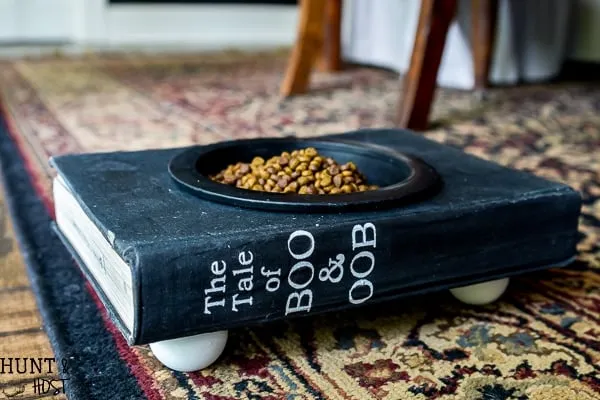
| Materials: | Old book, paint, stencils, four wooden balls with a flat edge for the feet |
| Tools: | Jigsaw, paintbrush, pencil, safety glasses, glue |
| Difficulty: | Moderate |
This upcycled feeder fits well in a mid-century modern or vintage-styled home. You'll want to select a thick book that'll fit the depth of your cat's food bowl without being seen from underneath.
If you don't want to display the particular book, you can paint over it first. In the tutorial, this cat mom painted a unique title on the spine personalized to her pet. How adorable! The feet on the bottom help to elevate your cat's bowl closer to their mouth, alleviating the need to strain their neck. Although it's not included in the tutorial, you might want to seal the book pages with a decoupage medium so that food crumbs don't slide between them and get them dirty.

Final Thoughts
Our pets can be messy creatures, and unfortunately, they lack the ability to clean up spilled food and water. Although you can purchase high-quality feeding stations online and at pet stores, a DIY project will save you money and provide the opportunity to show off your building skills. We hope your pet enjoys eating excellent food in a feeder constructed by their devoted owner.
Featured Image Credit: huntandhost
Expert cat care, straight to your inbox
News, insights, and useful advice, delivered to you.

No spam — unsubscribe anytime.
By signing up, you agree to our Terms & Conditions and Privacy & Cookies Policy.
How useful was this post?
Click a star to rate. You can leave written feedback afterwards. (We read all feedback.)

Brooke Norris is a freelance writer who lives with three cats and a dog. She has a B.S. in Media Studies from the University of North Georgia. Booke loves storytelling and spending time with her pets at their house in New Orleans, Louisiana. In her free time, she enjoys gardening, cooking, and brewing coffee.