Get

In Your Inbox

Catster is reader-supported. When you buy via links on our site, we may earn an affiliate commission at no cost to you. Learn more.

Can I Use Dog Dewormer on Cats? Vet Reviewed Facts

Share

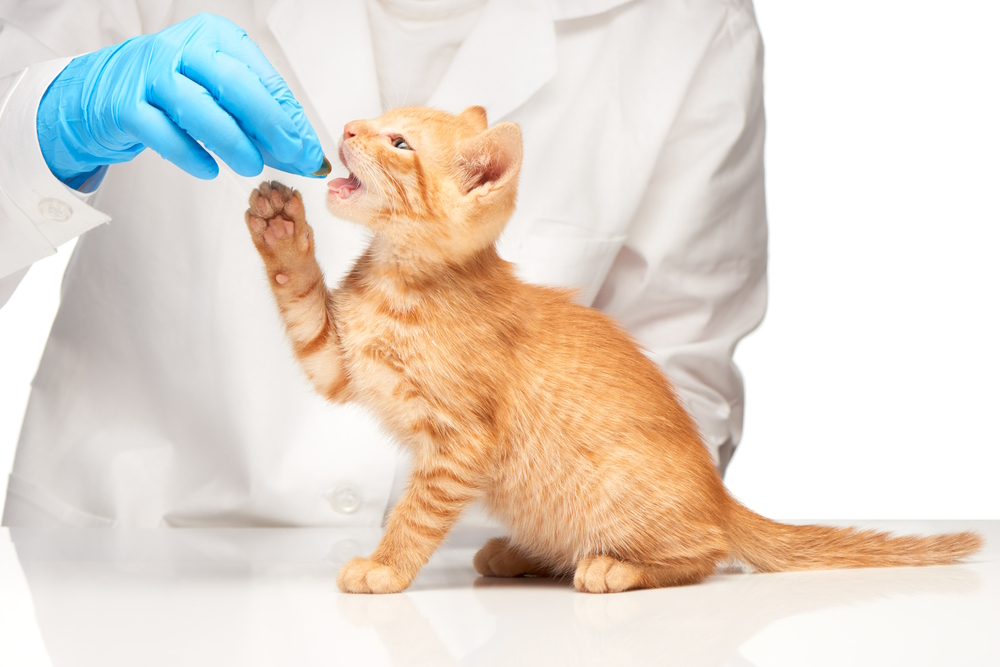
devon rex cat take medicine

Cats that have not received preventative treatment commonly contract worms, and although seeing the parasites in your cat’s vomit or stool is unpleasant and concerning, they are typically easy to treat. If you have a dog that recently had worms and have leftover dewormer medication, it’s natural to wonder if you can use it for your cat, too.

Some dewormers are safe to give to cats and dogs, but their dosages will differ. However, most dog dewormers aren’t suitable for cats, and vice versa. For that reason, it is recommended never to give dog dewormers to cats. Before giving your cat a dewormer, chat with a vet first.

Your cat should receive the dewormer best suited to their age, weight, and health condition. The medication should be given to your cat according to a vet’s instructions, which will differ from one pet to the other. Therefore, dewormers shouldn’t be shared between pets.

divider 3 paws

How Did My Cat Get Worms?

If your cat has worms, they’re not the exception since most cats contract worms at some point throughout their lives. Many kittens have worms because they are most vulnerable to parasites at such a young age. They can be born with them or get them from their mother’s milk.

Adult cats can also contract worms by coming in contact with the parasite’s eggs when walking through a contaminated area, sharing a litter box with an infected cat, touching or ingesting infected feces, or hunting and eating infected rodents. If a cat has walked through an infected area and the eggs or fecal particles get on their coat or paws, they can ingest them when they lick and groom themselves.

Although some worms are species-specific, others can infect your cats and dogs. Your cat can become infected by coming into contact with your dog’s poop as well as their fleas. If a flea from a dog jumps on your cat, hides in their coat, and gets ingested while grooming, they can develop a tapeworm infestation.

Cat with fleas
Photo Credit: Maja Marjanovic, Shutterstock

Are Worms Dangerous to Cats?

Several types of worms can infect your cat. Some cats may not show signs of having worms, while most will become sick. However, some species are life-threatening to cats. The severity of the worm infestation, as well as the health of a cat, can play a role in how sick they will become.

Intestinal worms are most dangerous to kittens because they can cause developmental issues, anemia, and intestinal obstructions, depending on the type of worms they have. Some worms, such as heartworms, threaten cats of all ages because they can cause damage to their heart and lungs.

Below are the types of worms and how they can affect your cat:

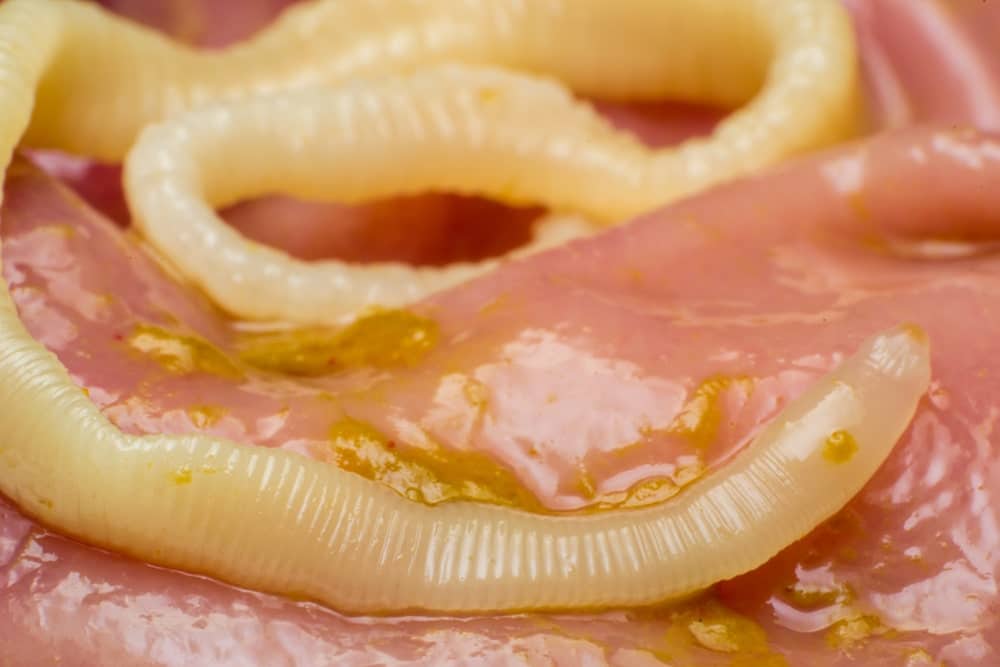
  • Roundworms: Can cause coughing, which can turn into pneumonia, vomiting, diarrhea, gas, an enlarged abdomen, weight loss, intestinal obstruction, and stunted growth.
  • Hookworms: May cause anemia, eczema, skin lesions, coughing, diarrhea with blood, weight loss, and poor appetite.
  • Whipworms: Can cause diarrhea with blood, weight loss, anemia, and dehydration.
  • Tapeworms: Can cause stunted growth, intestinal blockage, and digestive upset.
  • Lungworms: Can cause coughing, which can become pneumonia and lead to difficulty breathing.
  • Heartworms: Can cause coughing, rapid breathing, weight loss, vomiting, lethargy, seizures, and sudden death.
cats roundworms
Photo Credit: Todorean-Gabriel, Shutterstock

The Common Signs Among The Various Types of Worms

  • The presence of worms: Sometimes, you can see the worms or parts of the worms in your cat’s stool or vomit. You may also notice worms around their anus area.
  • A dull coat: Cats infested with worms often experience a change in their coat, where their once soft, silky, and shiny coat changes into a dull, dehydrated coat.
  • Pale gums: Anemia can cause your cat’s gums to become pale in color, whereas a healthy cat’s gums will be pink.
  • Digestive upset: Cats with worms often vomit and have diarrhea, which can have blood in it.
  • Weight loss: Although your cat might be eating more, they may still lose weight.

If you notice any of these signs in your cat, it’s essential to take them to the vet for an examination. The treatment is often straightforward, and the prognosis is typically good when treated early. However, if your cat doesn’t receive the care they need, they will suffer greatly, and it can even be fatal.

If you need to speak with a vet but can't get to one, head over to PangoVet. It's an online service where you can talk to a vet online and get the advice you need for your pet — all at an affordable price!

PangoVet_Mention-in-Content for PangoVet2 save money

Can I Get Worms from My Cat?

If your cat has worms, you or other members of your household may have contracted worms, too. The most common way humans get worms from their cats is by walking in or touching contaminated soil. Cats often poop outside in the soil and sandboxes. If your child plays in their sandbox or you spend time gardening or walking around barefoot, you’re at risk of contracting worms.

The larvae in your cat’s poop can survive for a very long time, and the more an infected cat poops in your environment, the higher your risk of contracting worms. If you’ve dewormed your cat, you’re still at risk of contracting worms from another cat that uses your garden or sandbox as a toilet. Remember always to wash your hands and feet when gardening or walking barefoot outside.

divider 3 paws

How To Kill & Prevent Worms in Cats

The best way to protect your cat and yourself from contracting worms is to get them dewormed at an early age and repeat the treatment as frequently as the veterinarian advises. Your kitten can receive the deworming treatment from around 6 to 8 weeks of age and will likely need to be dewormed at least twice.

As your kitten gets older, they won’t need to be dewormed as frequently, but we recommend that you deworm your cat once every 1–3 months, especially if you allow them to roam outdoors or spend time with other cats and pets. Indoor cats without much exposure to the outdoors can safely be dewormed once every 3 months.

You can also lower your cat’s risk of contracting worms by starting them on flea and tick treatment, regularly cleaning and sanitizing their litter box, frequently changing out their old litter for new litter, and picking up the poop in the yard and sandbox with a shovel and discarding it properly.

divider 3 paws

Conclusion

Dog dewormers aren’t safe for cats because the dosage requirements differ. A cat is given a dewormer suitable for their age, weight, and health condition. Worms can be passed through the feces or fleas of one infected cat to another and from an infected dog. Worms can make a cat very sick, but with the correct treatment, they usually make a full recovery.

To prevent your cat from getting sick from worms, make sure to deworm them frequently. Outdoor cats should be dewormed around once a month, and indoor cats should be dewormed once every 3 months.


Featured Image Credit: Veera, Shutterstock

Want content like this delivered to you?

Sign Up For Our Newsletter

News, insights, expert advice, and everything cat

* By submitting, you agree to our Terms & Conditions and Privacy & Cookies Policy.


How useful was this post?

Click on a star to rate (you can leave written feedback after clicking submit)

Help us improve Catster for pet parents!

Your feedback really matters.

What did you like about this post? Also how can we improve it?

Join the conversation

Leave a Reply

You’re very welcome to leave a comment or question. Please know that all comments must meet our community guidelines, and your email address will NOT be published. Let’s have a positive and constructive conversation.


Talk With A Vet Online

Peace of mind,
anywhere, anytime

Affordable vet advice

Why Chicken Bones Are More Dangerous for Cats Than Most Parents Realize

Chicken bones seem harmless enough, but for cats, they can cause serious damage quickly. Whether your cat swiped a piece off the counter...

Fantastic Pet Pantries and Where to Find Them

Let’s face it: times are really tough right now, and those of us in the 99% are struggling with the cost of just...

Ask Dr. Paola – Help! My Cat Refuses to Drink Water! (April 13, 2026)

Welcome to our “Ask Dr. Paola” series, where every Monday we bring expert advice straight from Dr. Paola Cuevas (MVZ) to help our...

Why Healthy Cats Still Vomit Sometimes (And How to Respond)

A cat that just vomited needs a specific kind of care, and the feeding decisions you make in the next few hours actually...

More related

Can Cats Eat Watermelon? Vet Approved Nutrition Facts & FAQ

During the hot summer months, a slice of watermelon always sounds good. While humans enjoy it and can get plenty of benefits from...

Wellness vs Blue Buffalo Cat Food: Our 2026 In-Depth Comparison

If you’ve spent time wandering around your pet food store, you might’ve noticed two brands that are a bit higher-end than normal: Wellness...

Are Savannah Cats Good Pets? Pros & Cons

Savannah cats are created by breeding domestic cats with wild African Serval cats. These felines are beautiful, but their “wild” side must be...

9 Best Cat Urine, Odor, & Stain Removers in the UK in 2026: Reviews & Top Picks

One of the few downsides of being a cat owner is dealing with cat urine, odors, and stains. Accidents happen, and when they...

Keep reading

I & Love & You Cat Food Review in 2026: Recalls, Pros & Cons

Review Summary I and Love and You cat food has been making waves in the pet food industry for the past several years. Their adorable packaging has likely caught your eye a few times. If you’re wondering what this brand...

I and Love You Cat Food Review

Cats Peeing on Shoes: 7 Vet Reviewed Reasons & How to Stop It

Nothing is worse than slipping your feet into a pool of cat pee—in your own shoe. If your cat has made a habit out of weeing into your Nikes, you’re looking for solutions. But before you can stop the problem,...

tabby-cat-pees-on-shoes

Do Cats Eat Squirrels? Is It Healthy for Them?

Cats are quirky animals, and you never know what they are going to do next. They don’t follow the pack or do what humans want them to do. So, even when we provide our kitties with an abundantly nutritional diet,...

squirrel-in-the-trees

Are Cat DNA Tests Accurate? How They Work & More (Vet Approved Guide)

Cats are an integral part of our lives. If we don’t own one ourselves, we might know somebody who does. We see cats on television shows and movies, and we even think of cats during Halloween and when certain superstitions...

cat blood test

How to Get Your Kitten to Like Water: 4 Vet-Reviewed Methods

A popular complaint among pet cat owners is that their cats don’t appreciate baths and are not cooperative when it comes to being given baths. Though there are many possible reasons that a cat may have an aversion towards baths,...

british shorthair cat peeps from the bathtub

Why Do Cats Like to Cuddle? 5 Vet-Verified Reasons

There’s arguably nothing better than a warm cat cuddling on your lap while you relax on the sofa. While cats have a reputation for being rather aloof and independent creatures—and some are somewhat deserving of that reputation—many cats defy the...

senior woman cuddling her cat

Can Cats Eat Lamb? Vet-Reviewed Pros & Cons

One of the most important things about caring for your feline is ensuring that your furry friend gets proper and adequate nutrition through a well-balanced diet. Cats are obligate carnivores, meaning they require meat in their meals in order to...

Can Cats Eat Lamb

3 Homemade Pumpkin Cat Treat Recipes To Enjoy This Fall

Cats are obligate carnivores, meaning they need a meat-based diet. That said, there’s nothing wrong with treating your furry friend to a few little treats now and again, and, if you’re feeling crafty, you can DIY your own cat treats...

Homemade Pumpkin Cat Treat Recipes To Enjoy This Fall

Love Cats? So Do We! Join the Catster Community

Stay informed with expert pet care insights delivered straight to your inbox! Discover professional guidance on animal behavior, feeding tips, trusted product picks, and much more.


Sign up for the Catster Email Newsletter

Stay informed with expert pet care insights delivered straight to your inbox! Discover professional guidance on animal behavior, feeding tips, trusted product picks, and much more.