Catster is reader-supported. When you buy via links on our site, we may earn an affiliate commission at no cost to you. Learn more.

Can Cats Eat Black & Green Olives? Vet-Verified Nutritional Science & Info


By Christian Adams · Reviewed & fact-checked by Dr. Luqman JavedVet Approved
Dr. Luqman Javed
Reviewed & Fact-Checked byDr. Luqman JavedDVM (Veterinarian)
Dr. Luqman (also known as Dr. Lucky) grew up with an immense passion for animals of all kinds. By becoming a veterinarian, he turned his childhood dream into reality. Now, his goals are focused on providing help to cats all around the world by helping to cat owners understand their feline friends better to ensure the best quality of life for them. His passions are wildlife, exotic pets, pet owner education, and animal welfare. He graduated with his DVM from the Universiti Putra Malaysia in 2020. He has worked with a variety of animal species and has decades of personal experience with keeping many different types of exotic pets, such as turtles, hamsters, freshwater fish, chickens, songbirds, and parrots (and he has extensive skills in training parrots, too).View authorThe information is current and up-to-date in accordance with the latest veterinarian research. Read about our vets
Share
olives-pixabay

If you have ever been snacking on a jar of olives, you may notice your cat curiously sniffing whatever you’re snacking on. This may cause you to wonder whether or not cats can eat black and green olives. Since olives are not toxic to cats, cats can technically eat black and green olives, but you should avoid feeding them to your cat for other reasons.

Whether your cat can eat olives requires quite a bit of explanation. To find out why you should not feed your cat olives, despite your cat's curiosity, keep reading. This article gives you a thorough overview of olive toxicity, risk factors, attractiveness to cats, and more.

divider cats oct 2024

Can Cats Eat Black & Green Olives?

If your cat has snuck one or two seedless black or green olives, do not fret. Olives are not poisonous or toxic to cats. As a result, cats can eat black and green olives without any adverse side effects, so long as they are eaten in moderation.

However, feeding your cat too many olives can lead to some digestive issues. Olives are often stored in preservatives, which can lead to an upset stomach if consumed in excess by your cat.

Likewise, olive seeds are not easily digested by cats and may be a choking hazard for some cats. They may also lead to obstruction issues along your cat’s digestive tract in some cases.

Therefore, though olives are not toxic for cats, there are some health concerns with their seeds and whatever they’re preserved in. This, coupled with the lack of meaningful nutrition in olives, means it’s best to not offer your cat any. Instead, your cat should be offered treats that are suitable for them.

If your pet is showing signs of an upset stomach, we suggest you speak to a vet.

Avoid Feeding Your Cats Olives

Even if you are keen on feeding your cat drained, seedless olives, you shouldn’t do so because they are nutritionally inappropriate for cats. Olives offer next to no protein and are high in fats. This results in your cat likely feeling satiated without acquiring sufficient amounts of other nutrients they need for proper growth, development, and maintenance.

divider 3 paws

Why Do Cats Like Olives?

If your cat gets a hold of an olive or two, you'll likely see them licking it uncontrollably. There is a good reason why. Green olives especially are highly attractive to cats. They contain chemicals called isoprenoid and pimentos. Both of these chemicals are very similar to an acid that is found in catnip.

In case you are unfamiliar with the effects of catnip on cats, it contains nepetalactone, a chemical that attracts cats. However, although most of the plant has nepetalactone, the active constituent (which cats react to) is nepetalic acid, a metabolic product of nepetalactone. Cats may respond to the acid in air concentrations of around 1:10.

Even though olives can be potentially dangerous to cats, olives can be a major attractant for them. For this reason, it’s important to ensure that you store your olives well away from your cat and understand that their interest in the olives isn’t due to their health benefits but rather the smell.

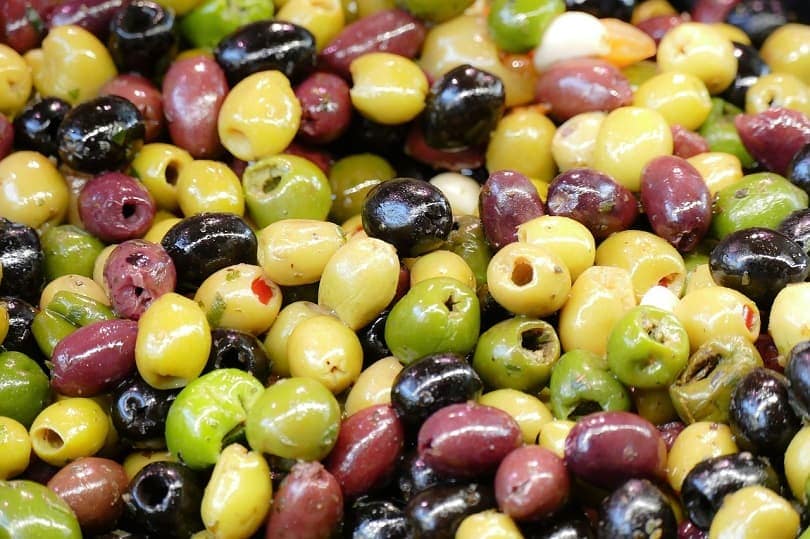
variety of olives in the market
Image Credit by: Peter H, Pixabay
divider 1 paws

Final Thoughts

Even though cats can have black and green olives, it is best to avoid feeding them to your furry friend. If your cat sneaks a bite, though, you usually don’t need to worry. The seeds and preservatives of olives do pose some health risks to cats. Because olives smell like catnip, it is natural for them to show an interest in olives. However, you should not cave into your cat’s demands for olive oil. Instead, you should offer your pet species-appropriate snacks instead.

Related Reads:

Sources

Featured Credit: michaelmep, Pixabay

Expert cat care, straight to your inbox

Vet-reviewed advice, behavior tips, and the best of Catster. Free, and you can unsubscribe anytime.

By signing up, you agree to our Terms & Conditions and Privacy & Cookies Policy.

Christian Adams
Authored by

Christian Adams

Join the conversation

Ask a question, share your story, or send private feedback.
Rate this post
Required to post. Only our editors see your rating.
Who should see this?

A human reviews every comment before it appears. Your email is never published.

Can Cats Have Olive Oil? Vet-Approved Nutritional Facts & FAQ

Can Cats Have Olive Oil? Vet-Approved Nutritional Facts & FAQ

The health benefits of olive oil for people are well-established. Evidence suggests it can improve cardiovascular health by lowering LDL, what is referred to a…

Chris Dinesen Rogers
By Chris Dinesen Rogers ·
Can Cats Eat Pesto? Vet-Approved Risks & Safe Alternatives

Can Cats Eat Pesto? Vet-Approved Risks & Safe Alternatives

Pesto is a household staple used in various foods, such as salad dressing, pizza, and chicken—the possibilities are limitless! If you’re a cat owner, you may h…

Rachel Giordano
By Rachel Giordano ·
What Foods Are Toxic to Cats? 16 Everyday Items (Vet Reviewed)

What Foods Are Toxic to Cats? 16 Everyday Items (Vet Reviewed)

Cats are different from dogs. Dogs will eat anything that touches the ground. But cats? They’re a bit pickier. Still, some cats are little garbage disposals an…

Cassidy Sutton
By Cassidy Sutton ·
Can Cats Eat Pickles? Vet-Approved Health Facts & Nutritional Advice

Can Cats Eat Pickles? Vet-Approved Health Facts & Nutritional Advice

Few things are more satisfying to us humans than the salty, vinegary crunch of a fresh pickle. Since we are often tempted to think that if we enjoy and benefit…

Christian Adams
By Christian Adams ·

Can Cats Eat Capers? Vet-Reviewed Facts & FAQ

Capers are known for adding a certain "pizazz" to many meals including pasta, salads, fish, and bagels. These small and savory flower buds have been around sin…

Christian Adams
By Christian Adams ·
Can Cats Eat Capers? Vet-Reviewed Facts & FAQ

Can Cats Eat Blackberries? Vet-Reviewed Facts & Safety Information

Unlike dogs, cats are extremely fussy eaters, so you don’t often have to worry about them chowing down on something they are not supposed to. Some cats will su…

Christian Adams
By Christian Adams ·
Can Cats Eat Blackberries? Vet-Reviewed Facts & Safety Information

Can Cats Eat Tomatoes? Vet-Approved Nutritional Science & Info

The tomato is a fruit that is widely used in the culinary arts. It is a member of the nightshade family and is believed to have originated in South America. Th…

Christian Adams
By Christian Adams ·
Can Cats Eat Tomatoes? Vet-Approved Nutritional Science & Info

16 Fruits & Vegetables That Cats Can Eat: Vet-Reviewed Facts & Tips

Cats are obligate carnivores by nature, so as long as their diets are well-balanced, like they would be in the wild, they don’t require any fruits or vegetable…

Rachael Gerkensmeyer
By Rachael Gerkensmeyer ·
16 Fruits & Vegetables That Cats Can Eat: Vet-Reviewed Facts & Tips

Can Cats Eat Caviar? Vet-Verified Benefits & Precautions

Have you ever wanted to give your cat an expensive treat, like caviar (raw fish eggs)? Before you open up the caviar jar, you want to make sure that it is safe…

Christian Adams
By Christian Adams ·
Can Cats Eat Caviar? Vet-Verified Benefits & Precautions

Can Cats Eat Collard Greens? Vet-Approved Nutrition Advice

Plain collard greens are perfectly fine for cats to eat. They provide a good source of fiber, along with nutrients and minerals. Cats cannot digest these green…

Kristin Hitchcock
By Kristin Hitchcock ·
Can Cats Eat Collard Greens? Vet-Approved Nutrition Advice

Can Cats Eat Tomato Sauce? Vet-Reviewed Nutrition & Safety Guide

It’s dinner time, and you’re serving up your signature dish of spaghetti with jarred tomato sauce because who has time to make tomato sauce from scratch? A dol…

Christian Adams
By Christian Adams ·
Can Cats Eat Tomato Sauce? Vet-Reviewed Nutrition & Safety Guide

Can Cats Eat Avocado? Vet-Verified Health Concerns & FAQ

Avocados have several nutritional benefits for humans; they are low in sugar and packed with healthy vitamins and minerals. They are considered great for heart…

Lorre Luther
By Lorre Luther ·
Can Cats Eat Avocado? Vet-Verified Health Concerns & FAQ

Love Cats? So Do We! Join the Catster Community

Stay informed with expert cat care insights delivered straight to your inbox! Discover professional guidance on feline behavior, feeding tips, trusted product picks, and much more.

You may opt-out at any time. View our Privacy Policy for more information.

The Catster site on a phone