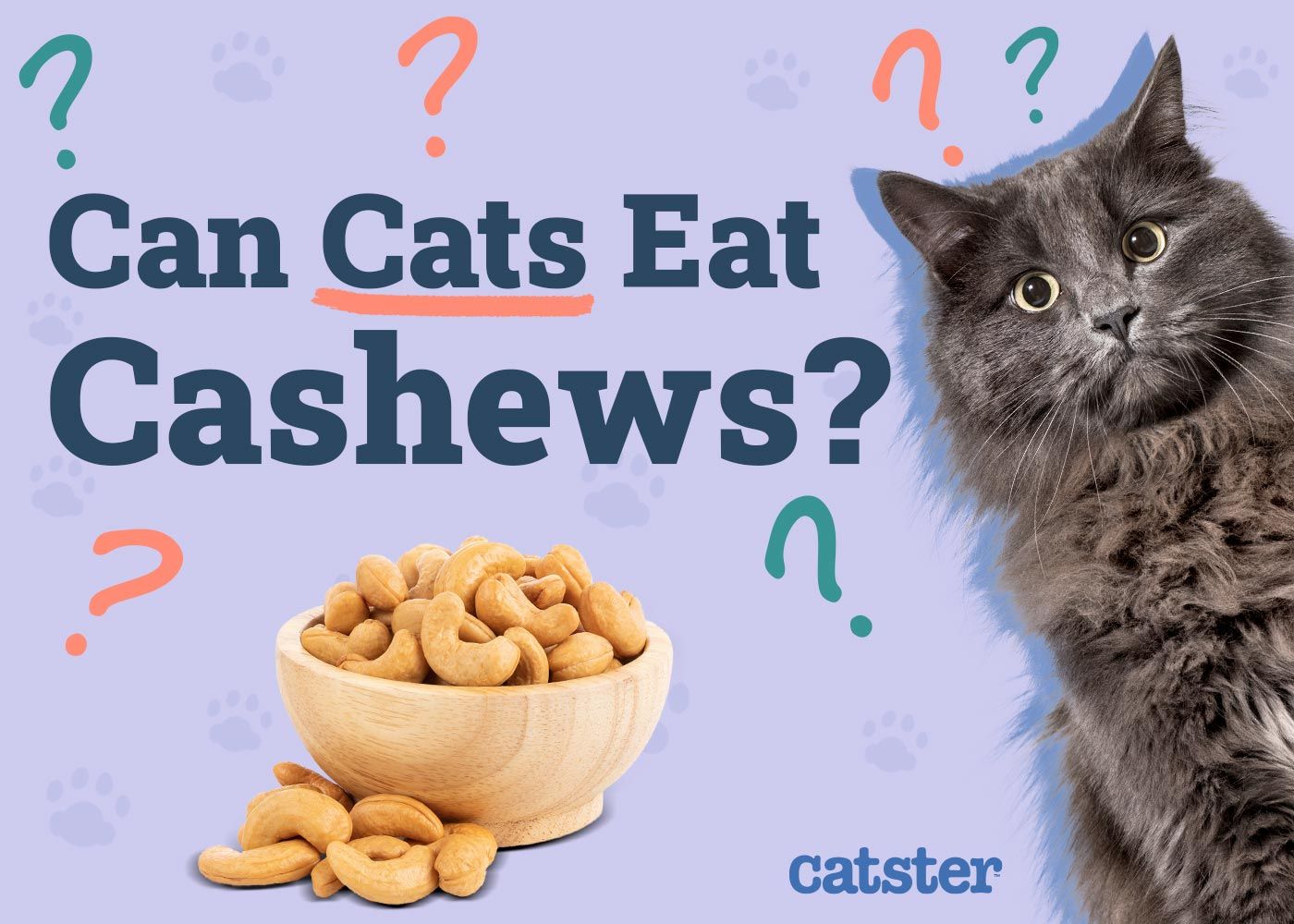
Can Cats Eat Cashews? Vet Approved Facts & FAQ


In this article
Cashews are small and delicious and can be the perfect snack. Humans love them, and they seem like a great treat for cats since they often seem interested in them. So, is it safe to let your cat try cashews?
Luckily, when it comes to cashews, they’re not toxic for cats, but that doesn’t mean that you should offer them to your kitty. Cashews aren’t very healthy for cats, and there are some risks that you need to be aware of. Some sites suggest raw cashews may actually be toxic to cats, but we haven’t found any evidence to confirm this.

Before changing your cat's diet or introducing new ingredients or supplements that they haven't eaten before, especially when it comes to human food, make sure to consult a veterinarian first. Every cat is different and requires an individual approach to nutrition, depending on their age, health, level of activity, and medical history.
What’s Unhealthy About Cashews for Cats?
Even though cashews aren’t toxic for your cat, they’re not a healthy choice. Let’s take a look at some of the ways that cashews can hurt your cat’s health.
1. Mold and other Contamination
Nuts are often contaminated with mold that may not be visible to the naked eye and may produce toxins called aflatoxins. These and other toxins can lead to severe gastrointestinal and neurological signs in cats that require veterinary attention. Cashews seem less affected than other types of nuts, but any discoloration or mold is a sign they need to be trashed.
Cashew nuts have a caustic liquid in the shell that protects the nut against insect attacks, but shelled kernels can still be affected by storage insects and rodents, which can transfer disease. The shell is hard and is unsuitable for cats to try and break, as they may damage and fracture their teeth. Also, if they swallow any piece of the shell or an overly large piece of the nut, it can lead to choking or gastrointestinal blockage.

2. High-Fat Content
In the wild, cats eat a diet that consists primarily of lean meats. They consume fat but not in the high amounts you find in cashews. Excess fat can lead to an upset stomach or obesity. Obesity is a serious problem for pets and humans. To help fight it, pets should be fed a diet corresponding to their life stage and activity level.
Cats aren’t even meant to eat plants in the wild. They’ll only rarely eat grass, which may anecdotally help with digestive issues, although the exact reason remains unknown. But other than that, their diet is almost entirely meat-based.
Cats aren’t good at digesting plant-based foods such as nuts. It can lead to an upset stomach with vomiting and diarrhea as a worst-case scenario.
3. Too High in Sodium
Even nuts without added salt are high in sodium. Cats’ metabolism and digestion are very different from ours, and so is their need for dietary sodium. For this reason, their bodies are not good at processing high amounts of it. When a cat eats a high concentration of sodium or does not have access to fresh water, it can cause dehydration.
Even if your cat accidentally ate one or two of these nuts, you’ll need to ensure they drink plenty of water to avoid becoming thirsty or dehydrated. However, salt poisoning from one or two cashews is very unlikely since it would take quite a few to reach the toxic dose of sodium for cats, based on the sodium content of one cashew.
It’s best to refrain from giving your cat any cashews; they will not benefit from them and may get an upset stomach. If there is mold, it will make your cat even sicker, and some sites claim that raw cashews may even be toxic to cats. We cannot find any research to confirm that, but you should err on the side of caution and speak to a vet.
4. Choking Hazard and Gastrointestinal Blockage
While a cashew might be very easy for us to eat, cats don’t have the same kind of teeth as we do, and there is a significant difference between the relative size of a cat’s mouth and ours compared to a cashew that make cats eating cashews a struggle.
In the wild, cats don’t eat vegetables, grains, starches, or nuts. They feed only on meat from other animals and have teeth suited to killing and eating meat, not nuts.
We think of cashews as being very small, but your cat isn’t nearly as large as you are. The little cashew is much larger to a cat, and if it’s a whole cashew, it can easily get lodged in your cat’s airway or at the back of their throat. If that happens, your cat may choke and could die if you don’t take immediate action.
If you want to feed your cat cashews anyway, make sure to serve them smaller pieces. Swallowing large pieces can lead to a blockage of the stomach or intestines and will need surgical intervention by either endoscopy or surgery.

Pancreatitis in Cats
If you regularly feed your cat cashews or other fatty foods (which we strongly discourage), some websites state that it could lead to pancreatitis. This is not scientifically correct. Researchers still don’t quite understand why inflammation occurs in the cat’s pancreas, and no clear cause has yet been identified.
However, it is commonly associated with inflammatory bowel disease and diabetes. Cats with pancreatitis may require advanced medical treatment, which can be costly and stressful. Some signs include vomiting, diarrhea, nausea, abdominal pain, appetite loss, and lethargy. It’s a severe problem that you can’t take care of on your own.
Are Cashews OK for Kittens?
If cashews aren’t toxic for cats, then is it ok to give a cashew to a kitten as a little treat?
NO.
While a small piece of cashew is unlikely to cause significant harm in most cats, kittens should avoid it. Adult cats have strong teeth adapted to tearing meat, but kittens have baby teeth that get replaced by permanent ones when they're around 6 to 7 months of age.
Baby teeth are fragile and can break. Kittens are smaller than adults, and a piece of cashew that a fully grown cat can easily chew on and swallow may lead to a tooth fracture or choking in kittens. It’s just not worth the risk. Kittens are tiny, and a cashew can become a choking hazard.
Even cashew milk can cause an adverse reaction in kittens. Since their digestive systems aren’t prepared for all the fat, they’ll likely get an upset stomach from cashew milk, though it won’t be fatal. Still, it’s recommended that you avoid feeding kittens any cashew-based foods or drinks.

Can I Give My Cat Cashew Milk?
Since cashews aren’t poisonous to cats based on the available evidence, it’s best to speak to a vet before giving yours a little cashew milk. However, you’ll still need to do so sparingly. Cashew milk is still very high in fat, which is not great for your cat.
They have difficulty digesting it since it’s not a natural part of their diet. Unless you want a cat with an upset stomach, cashew milk is best avoided or fed only as an occasional treat.
However, the nut milk doesn’t pose a choking hazard the way that whole cashews will. For that reason, cashew milk may be a preferable choice to whole cashews when you want to give your cat a little cashew-flavored treat. However, your cat can enjoy safer and more nutritious treats.
Conclusion
In the end, cashews aren’t healthy for your cat and should be avoided. They can be detrimental to your cat’s health if made a regular part of their diet or if they are contaminated with mold. Cashews are very high in fat, which cats may have a more challenging time digesting since no high-fat sources naturally occur in their diet.
The sodium content is also very high in cashews, but it is unlikely to cause issues unless a cat eats quite a few of the nuts. Finally, cashews can choke your cat, especially if left whole. After consulting with your vet, you may be able to use a little bit of cashew milk instead, which is lactose-free.
Sources
https://www.aspca.org/pet-care/animal-poison-control/people-foods-avoid-feeding-your-pets
https://www.fda.gov/food/laboratory-methods-food/mpm-v-10-nuts-and-nut-products-methods
https://vethelpdirect.com/vetblog/2022/12/08/how-much-fat-do-cats-actually-need-in-their-diet/
https://fdc.nal.usda.gov/fdc-app.html#/food-details/170162/nutrients
Expert cat care, straight to your inbox
News, insights, and useful advice, delivered to you.

No spam — unsubscribe anytime.
By signing up, you agree to our Terms & Conditions and Privacy & Cookies Policy.
How useful was this post?
Click a star to rate. You can leave written feedback afterwards. (We read all feedback.)
Christian started writing for a local newspaper as a teenager, and he's been involved in the publishing industry for most of his adult life. Combining his love of writing with a passion for animals, he is currently the Director of Editorial at Pangolia and the Editor-in-Chief at Catster.
Christian lives in the Philippines with his wife, son, and four rescue cats: Trixie, Chloe, Sparky, and Chopper.