Can Cats Drink Alkaline Water? Nutritional Facts & FAQ (Vet Answer)

While alkaline water is often promoted for its potential health benefits in people, there’s no scientific evidence showing that it offers any advantages for cats. In fact, a cat’s body is very good at maintaining its own internal pH balance, regardless of the type of water it drinks. For most healthy cats, drinking a small amount of alkaline water on occasion is not likely to cause harm, but there’s also no reason to seek it out.
In other words, a little bit of alkaline water isn’t going to hurt most cats. Instead, they would have to drink mostly alkaline water for it to matter much.
Cats do best with clean, fresh, potable water, meaning water that’s safe for humans to drink. Regular tap water is usually perfectly fine for your feline, as long as your local supply meets safety standards. If your cat prefers filtered water or if you’re in an area with water quality concerns, using a basic filter is a good idea, but there’s no need to change the water’s pH. What matters most is that your cat drinks enough water each day to stay well hydrated.

What pH of Water Should Cats Drink?
Cats don’t need alkaline water. Their bodies are very effective at maintaining the proper internal pH balance, regardless of the type of water they drink. For healthy cats, the best option is simply clean, fresh, potable water, meaning water that’s safe for people to drink.
Most drinking water naturally falls within a pH range of about 6.5 to 8.5, which is perfectly suitable for cats. Alkaline water, on the other hand, typically has a pH between 8 and 9.5. While this higher pH isn’t toxic, there’s no veterinary evidence that it provides any health benefit, and cats don’t need it for hydration or digestion.
In the real world, the pH of the water your cat drinks may vary slightly from day to day, depending on your local supply or filtration method—and that’s completely fine. What matters most is that the water is safe, clean, and appealing enough to encourage your cat to drink regularly. Cats that stay well hydrated are less likely to develop urinary or kidney problems, which is far more important than the exact pH of their water.

What Happens if a Cat Drinks Alkaline Water?
If your cat drinks a small amount of alkaline water, it’s unlikely to cause any harm. The feline digestive system is designed to handle minor variations in water composition. Even when the water is slightly more alkaline than normal, a cat’s stomach acid remains highly acidic with a pH around 1 to 2 during digestion, so it quickly neutralizes the water without affecting nutrient breakdown.
That said, making alkaline water your cat’s regular or only source of hydration can cause potential problems, particularly for cats with urinary or kidney conditions. One concern is that alkaline water can raise the pH of a cat’s urine, making it less acidic. While this might sound harmless, urine that becomes too alkaline increases the risk of forming struvite crystals, which can lead to discomfort or, in severe cases, urinary blockages. These blockages are especially dangerous for male cats, whose urethras are narrower and more easily obstructed.
Another issue is that alkaline water may interfere with prescription diets formulated to manage urinary or kidney health. These veterinary diets are carefully balanced to maintain the correct urinary pH and mineral concentration. Consistently giving alkaline water can alter that balance and reduce the diet’s effectiveness. Since cats already have relatively delicate kidneys, especially as they age, altering water pH without a medical reason can add unnecessary stress to the urinary system.
There’s also no scientific evidence that alkaline water provides any health benefits for cats. It doesn’t improve hydration, digestion, or kidney function compared to regular potable water. Occasional sips are not a cause for concern in a healthy cat, but long-term use offers no advantage and may create avoidable risks for those with existing urinary or kidney problems.
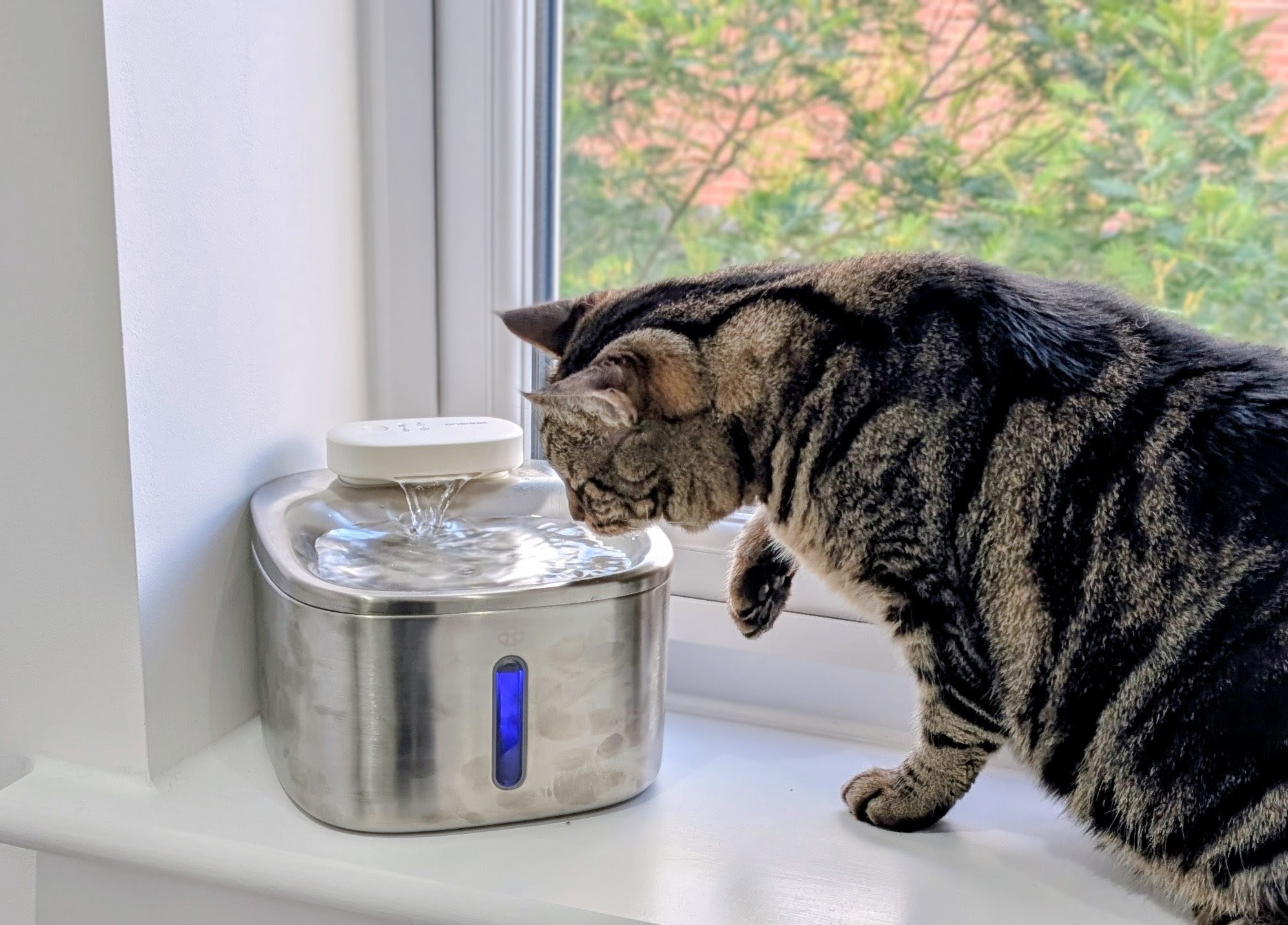
Ultimately, plain, fresh, safe water is best. Encourage your cat to drink by keeping the water bowl clean, offering multiple drinking spots, or trying a pet fountain. The key to urinary and kidney health isn’t the pH of the water; it’s ensuring your cat stays well hydrated every single day.


Is Tap Water Okay for Cats?
Your tap water is excellent for cats unless you live in an area with a boil water warning. It is a common misconception that bottled water is cleaner than tap water. As long as your home’s pipes are well cared for, the tap water you get from your faucet is probably the same as that from a bottle. Most cats can drink tap water safely when it meets local potability standards; bottled water is not required unless taste or odor reduces your cat’s intake.
The CDC states that the United States tap water is extremely safe—one of the safest water systems in the world. All public water systems undergo regular testing and fall within the EPA’s safe range. Bottled water is held to the same standards. Therefore, while many companies may claim that bottled water is cleaner, it typically isn’t the case.
As long as the water is safe for you to drink, it is safe for your feline. In many cases, tap water is the best option for your cat since it doesn’t contain any pH differences and is as close to natural water as possible.

What Kind of Water Should Cats Drink?
Preferably, you want your cat’s water as clean as possible. Water with additives or alkaline water isn’t suitable. Offer fresh, clean, palatable water; additives are usually unnecessary and may discourage drinking in some cats.

Conclusion
While alkaline water may benefit people, you should avoid giving it to your feline regularly. There is no proven benefit to alkaline water in cats, and plain potable water is appropriate.
Therefore, it is best to avoid alkaline water. Instead, your cat needs water at a pH of around 6-7, though slightly more plain water is fine. You want to give them water that has not had its pH changed for the most part. Rather than targeting a specific pH, provide fresh water your cat likes to drink, for example, from wide bowls or moving water from fountains.
Typically, tap water is excellent. It is the cheapest (and often the safest) option there is. As long as you can consume tap water, your feline can drink it. Choose the source your cat prefers to maximize intake; tap, filtered, or bottled are all acceptable when potable.
Cats rarely need their water adjusted. However, if your cat has health problems, be sure to talk to a vet about their water. Sometimes, minerals in the water can affect cats with specific conditions, but altering pH is rarely necessary. Veterinary treatment plans for urinary or kidney disease focus more on dietary management and increasing hydration than on modifying water pH.
See Also:
Featured Image Credit: Food Impressions, Shutterstock
Expert cat care, straight to your inbox
News, insights, and useful advice, delivered to you.

No spam — unsubscribe anytime.
By signing up, you agree to our Terms & Conditions and Privacy & Cookies Policy.
How useful was this post?
Click a star to rate. You can leave written feedback afterwards. (We read all feedback.)
Dr. Paola Cuevas MVZ (Veterinarian)
Dr. Paola Cuevas is the Senior In-House Veterinarian at Pangolia, the parent company of Catster. She has over 18 years of experience as a veterinarian and animal behaviorist. Paola's focus is on preventive medicine and animal welfare. Paola has a large range of skills in from diagnostic imaging to nutrition and clinical pathology. Paola enjoys sharing her extensive knowledge of animal training with our Catster readers and is always happy to answer reader questions as our in-house veterinarian.