Can Cats & Dogs Mate? Vet-Verified Sexual Anatomy Facts



In this article
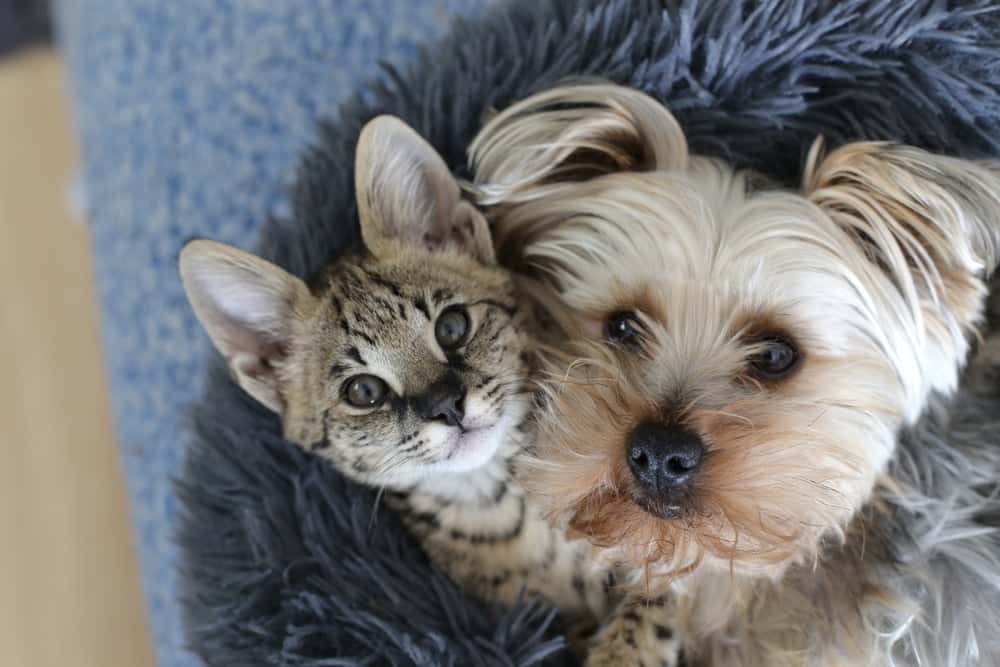
Before we dig into this subject, let’s set the record straight: Cats and dogs cannot mate. Even if they appear to be trying to, they are too biologically different to be compatible in this way.
Most pet owners worry about whether their pets will get along with one another: Will they fight? Will my cat feel pushed out? Will my dog get sad if I introduce a cat?
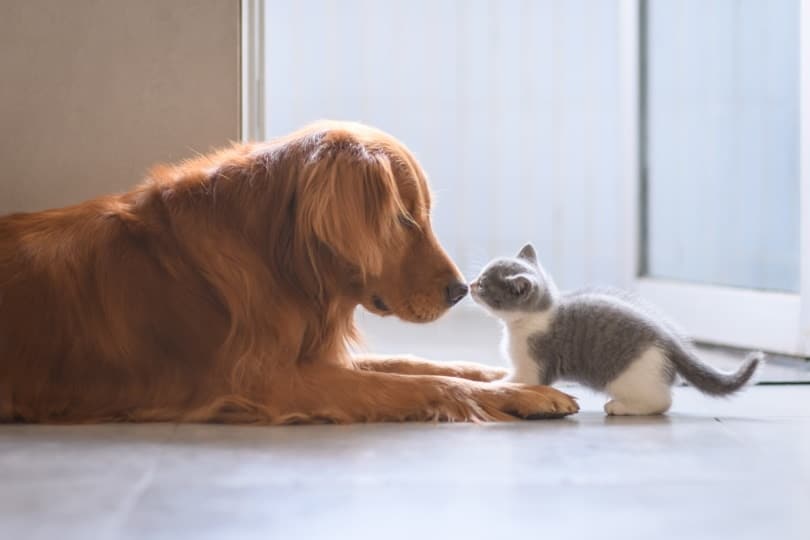
But what happens when your cat and dog become close instead? For those who own a cat and a dog, observing their overly friendly behavior may spur a whole bunch of different questions. In this post, we cover all the answers!

What Happens If a Dog and Cat Mount Each Other?
Just because cats and dogs can’t mate, that doesn’t mean a dog won’t try to hump a cat and vice versa. The good news is that regardless of whether your cat and dog are fixed, if you’ve caught one of your pets mounting the other, you’re not about to get a surprise litter of kuppies or pittens.
To answer this question, nothing biological will happen if either your cat or dog mounts the other—except maybe embarrassment, an awkward moment, or an annoyed animal, that is! That said, a large dog can definitely injure your cat if they attempt to hump.
Cats and dogs are entirely different species, with too many differences for them to be able to procreate. Let’s look at a few of these differences.

Incompatible DNA
Although some interspecies mating is possible between animals that share similar DNA, as is the case with horses and donkeys or wolves and dogs, this isn’t the case with cats and dogs.
For a start, while dogs have 39 pairs of chromosomes, cats only have 19 pairs. Having the same number of chromosomes does not guarantee that you can create a hybrid offspring, of course. For example, chimpanzees and potatoes share the same chromosome number, and clearly, they cannot procreate together.
That said, a donkey has 62 chromosomes, while a horse has 64. A mule, which is the offspring of a horse and a donkey, has 63 chromosomes. As this demonstrates, a close chromosome number between the breeding pair (along with similar genetic nuclear matter) makes it more likely that they can produce offspring.
Different Anatomy
Female cats and dogs have different ways of communicating their periods of sexual activity, and it’s unlikely that males from species other than their own will recognize or act on the signals that the females give.
Male cats have a barbed penis—designed to adhere to a female cat during mating—that female dogs physically can’t accommodate. On top of this, a dog’s sperm will not fertilize a cat’s egg, just like a cat's sperm cannot fertilize a dog’s egg.
In addition to all of this, the two species have incompatible heat cycles. While female dogs will ovulate at a specific part of their heat cycle (this can happen before or after they mate), female cats will only ovulate after mating has happened.
Why Do Cats and Dogs Try to Mate?
So, if cats and dogs can’t mate, why do they try? Cats and dogs have different reasons for mounting one another. Let’s take a look at each individually.
Why Is My Dog Humping My Cat?
Most dog owners know that humping is a part of their pet’s instinctive behavior and that they've been doing it since they were puppies. But mounting behavior is not always sexually motivated.
- Excitement: Dogs might hump their favorite toy, human, or even a cat, just because they are overexcited.
- Displacement behavior: If your dog is anxious or stressed, they might be humping in an attempt to comfort themselves.
- Mounting during play: Humping could just be another play habit for your dog, especially if they’re young.
- Boredom: Your dog’s mounting behavior could just be a way of getting your attention. Remember that negative attention is better than no attention as far as your dog is concerned. Try redirecting their focus with a toy or activity, preferably before they mount the cat.
- Dominance: Mounting by itself is not usually a display of dominance, but if your dog displays other aggressive or dominant behavior—such as direct staring and high posture—it could be that they are trying to establish themselves as a more dominant member of the pack.

Why Is My Cat Humping My Dog?
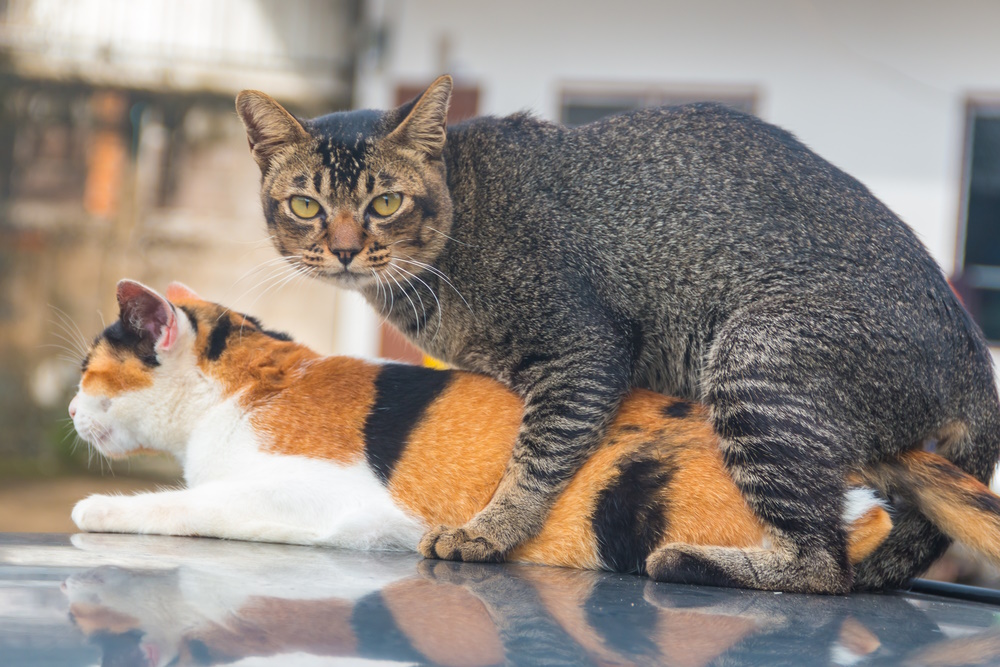
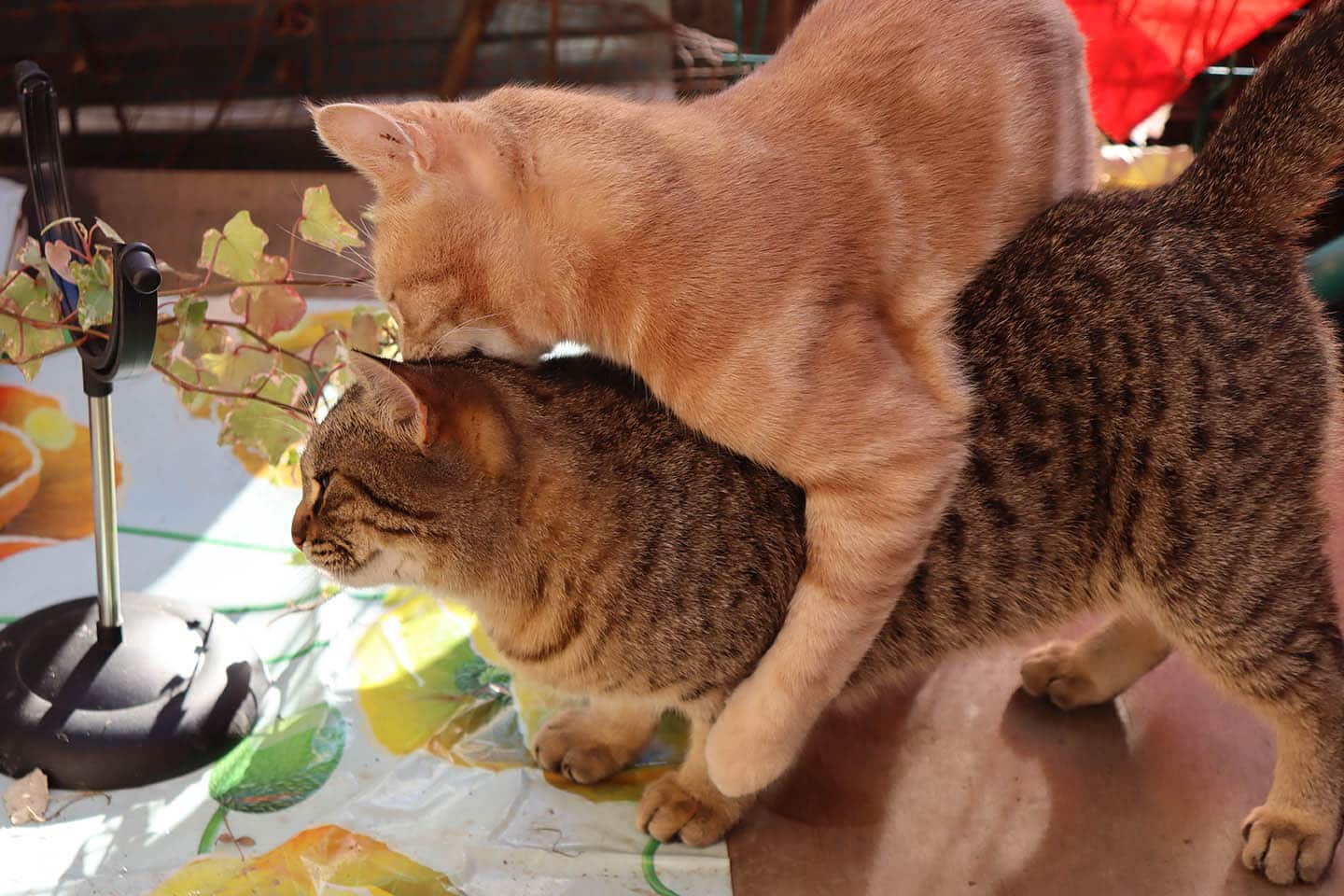
Male cats may sometimes mount other male cats to assert their dominance, but it’s unlikely they would mount a dog or a member of another species for the same reason. If your cat is humping your dog, it’s likely motivated by one of the following:
- Boredom: Your cat’s humping behavior could be down to boredom, especially if they know from past experience that this behavior will garner the attention they crave. Regular play sessions throughout the day may help with this.
- Stress or anxiety: If you spot a pattern or a trigger for this behavior, you may find that your cat is humping in an effort to relieve stress or anxiety. If you do manage to pinpoint a trigger, you can try to distract your cat with toys or play before they get the chance to mount your dog.
- Redirected sexual behavior: If your male cat is unneutered, the mounting behavior is likely motivated by hormones. Getting your cat neutered may not completely eliminate this humping behavior, especially if they're an adult cat, but it should help to reduce it. Additionally, getting your cat neutered will eliminate the chance of testicular cancer and prostate problems and generally lead to a longer and healthier life for your feline friend.
Conclusion
Cats and dogs can’t mate, even if we sometimes spot them mounting each other. Mounting behavior is completely normal and instinctive for dogs. It’s unlikely that cats, other dogs, and people would take kindly to this action, however, so it may be a good idea to train your dog—using positive reinforcement—to stop when you command them to.
Unneutered cats sometimes display mounting behavior, but it’s usually down to boredom, stress, or anxiety rather than being sexually motivated. Look out for signs—such as dilated pupils and pawing—that your cat is about to display this behavior, then separate them from your dog and seek the advice of a cat trainer or your veterinarian.
If your cat is unneutered, it’s highly recommended that you get them fixed. Studies show that on average, neutered male cats live 62% longer lives than their unneutered counterparts!
See Also:
Sources
Featured Image Credit: Kashaeva Irina, Shutterstock

Expert cat care, straight to your inbox
Vet-reviewed advice, behavior tips, and the best of Catster. Free, and you can unsubscribe anytime.
By signing up, you agree to our Terms & Conditions and Privacy & Cookies Policy.
Christian started writing for a local newspaper as a teenager, and he's been involved in the publishing industry for most of his adult life. Combining his love of writing with a passion for animals, he is currently the Director of Editorial at Pangolia and the Editor-in-Chief at Catster.
Christian lives in the Philippines with his wife, son, and four rescue cats: Trixie, Chloe, Sparky, and Chopper.
Join the conversation
Ask a question, share your story, or send private feedback.