Is It True That Cat Allergies Are Genetic? Vet-Approved Prevention Tips & FAQ



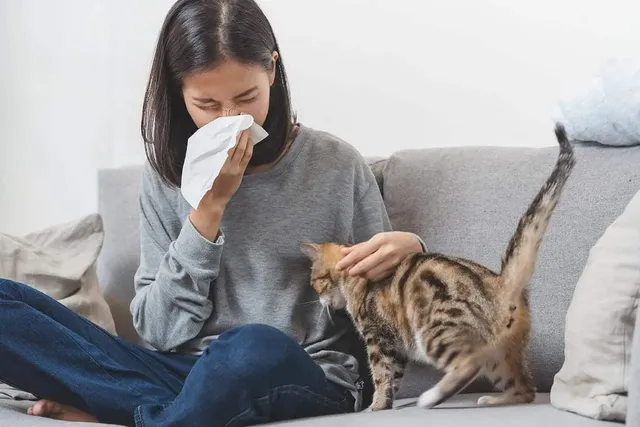
If you are allergic to cats, the symptoms can be difficult to manage if you have cats. You may even wonder how your condition might impact your future children. Are they doomed to a life of dealing with cat allergies like you’ve been? There’s good news and bad news for you, so let’s talk about the genetic component of allergies to cats.

Are Cat Allergies Genetic?
Technically, allergies to cats are not genetic. People are not born with allergies to cats, so it’s uncommon for babies and small children to exhibit cat allergies. However, people can be born with a genetic predisposition to develop allergies to cats.
This means that if you have an allergy to cats, it’s possible for your children to inherit the gene linked to this susceptibility, potentially leading to cat allergies developing at some point. If you and your partner both have allergies to cats, it’s extremely likely for your children to be highly susceptible to developing cat allergies.

How Can I Prevent Cat Allergies?
Like with all allergies, the more exposure you have to an allergen, the more likely you are to eventually develop a full-blown allergy. The signs often start small and continue to worsen with continued exposure. If your goal is to be around cats without developing an allergy, there is no guaranteed way to prevent an allergy from developing if you are genetically predisposed to cat allergies.
To reduce the likelihood of developing an allergy to cats, though, you do have some options. By keeping some areas of your home free of cat dander, fur, urine, and saliva, you’ll be able to give your immune system a break instead of being continuously inundated with cat allergies. You should also focus on simple interventions, like hand washing after handling your cat. If your cat sits on your lap, it’s a good idea to change your clothes afterward. Also, avoid letting your cat lick you, as these can all introduce allergens to your body.
HEPA air filters are ideal for minimizing the allergens circulating in your home, reducing your chances of developing cat allergies or experiencing severe allergy symptoms if you already have a cat allergy. These filters can capture fine particles from the air and be used as part of a central ventilation system or in individual areas to reduce allergens. Removing the carpets and washing the linens in your home regularly can help reduce circulating allergens in the home.
Can I Do Anything With My Cat to Reduce Allergens?
There is no such thing as a hypoallergenic cat, no matter what a breeder, rescue, or person on the internet might try to tell you. Even hairless cats produce dander and saliva, which contain allergen proteins. However, you can help reduce the allergens present on your cat through routine grooming and keeping their bedding and toys clean, washing them regularly to remove allergens. Even a daily wipe down with a pet-friendly bath wipe can help reduce allergens on your cat.
There is now a food on the market that has shown promise in reducing the allergens produced by the felines that eat it. This food has been shown to reduce allergens produced by a cat by up to 47% within 3 weeks (but it also requires frequently bathing your cat and remains controversial), which can be a huge relief for people suffering from cat allergies. You can talk to your vet to see if they think this option might be appropriate for you and your kitty.
In Conclusion
Cat allergies are not directly genetic, but there is a genetic link to developing allergies to cats. By taking early interventions to reduce exposure to cat allergens, you can reduce the likelihood of yourself or your kids developing allergies to cats. There are multiple easy things you can do in your daily life to reduce the cat allergens in your home, like more frequent laundry and handwashing.
If you are suffering from cat allergies, you should talk to your personal doctor or an allergist to discuss your options. Even if you are able to limit the allergens that your cat is shedding in your home, you still may need to take medication or have treatments to reduce the reaction your immune system has when exposed to cat allergens.
Featured Image By: LightField Studios, Shutterstock
Expert cat care, straight to your inbox
News, insights, and useful advice, delivered to you.

No spam — unsubscribe anytime.
By signing up, you agree to our Terms & Conditions and Privacy & Cookies Policy.
How useful was this post?
Click a star to rate. You can leave written feedback afterwards. (We read all feedback.)
Brooke Billingsley, a former veterinary assistant for nine years, became a nurse in 2013. She lives in Arkansas with her boyfriend of five years, surrounded by her beloved pets: three dogs, two cats, five fish, and two snails. Brooke has a soft spot for special needs animals, caring for a three-legged senior dog and a widely known cat with acromegaly and cerebellar hypoplasia. She has developed a keen interest in fish keeping and is always learning how to provide the best environment for her aquatic pets. In addition to her passion for animals, Brooke enjoys gardening and maintains a vegetable garden during the summer. She stays active with yoga and received her 200-hour yoga teacher certification in 2020. Brooke also hosts a podcast that delves into folklore and myth, dedicating her spare time to research and writing. She embraces the philosophy that every day is an opportunity for learning and growth, continually working to acquire new skills and knowledge.