Get

In Your Inbox

Catster is reader-supported. When you buy via links on our site, we may earn an affiliate commission at no cost to you. Learn more.

How to Tell if Your Cat Is Underweight: Vet-Reviewed Signs to Look For

Skinny cat

Feeding your cat a healthy diet that will ensure they stay at an appropriate weight is crucial. However, you might be doing exactly that, but your cat is still shedding the pounds. If you suspect your cat is losing weight despite no changes in your routine, consult your vet immediately. There are some things you can do at home first to either confirm your suspicions or alleviate your fears.

We’ll go through those together, what signs to look for, and what may be causing the sudden drop in weight.

divider single cat paw oct 2024

How to Tell Your Cat Is Underweight

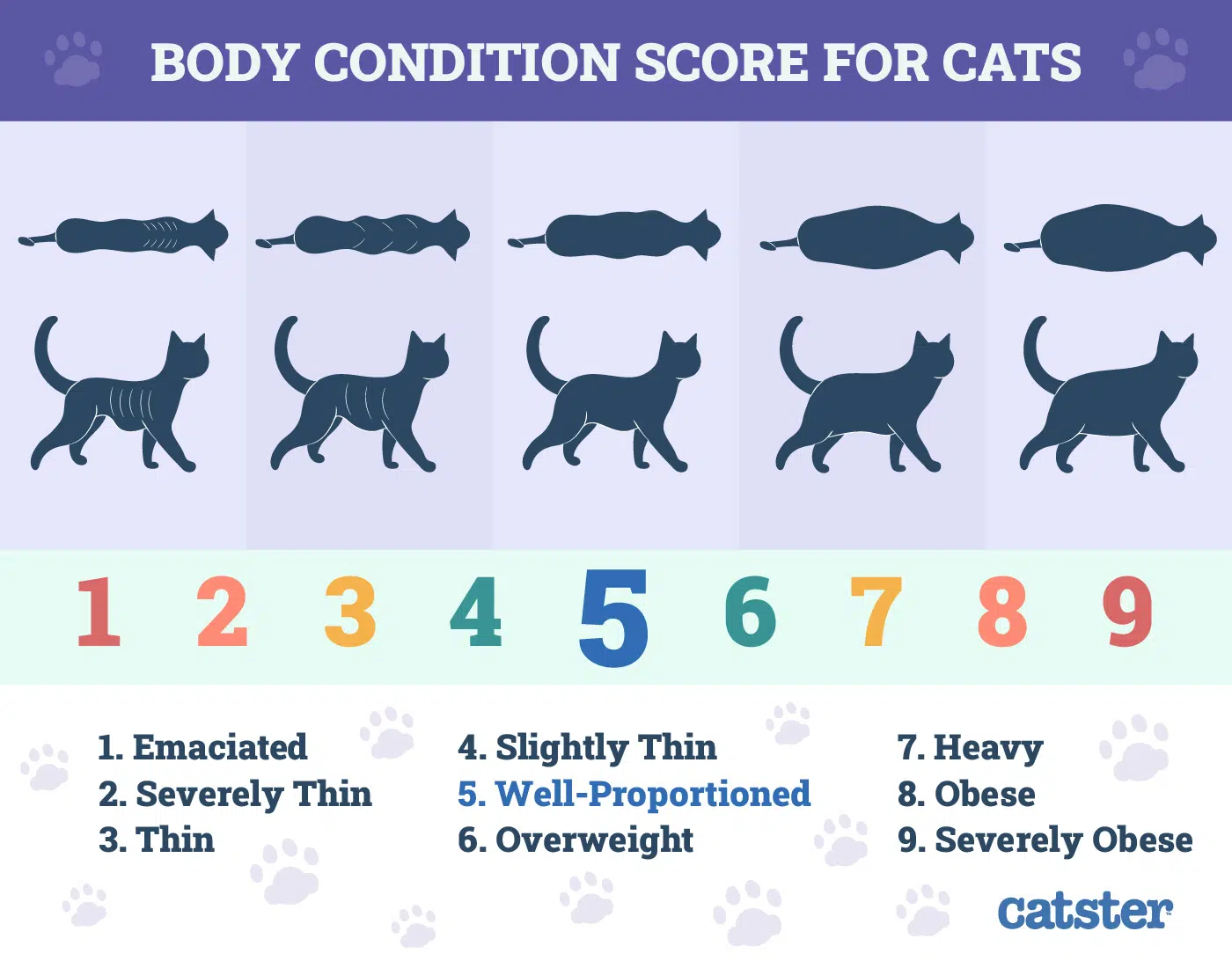
Cat Body Condition Score Healthy Weight
You are free to use this image but we do require you to link back to Catster.com for credit

Figuring out if your cat is underweight can be a challenge, but don’t worry; we’re not asking you to try and wrestle your kitty onto a set of scales. There are two things you can do at home.

The first is the Body Condition Score, which vets use to evaluate a pet’s weight and is like BMI for humans. You can find a chart at your vet or online from organizations like the American Animal Hospital Association and the World Small Animal Veterinary Community.

The second thing you can do is the Hand Test. Feel your cat’s ribs, which you’ll find behind their front legs. Their weight is perfect if they feel like the back of your hand. If their ribs resemble your knuckles, your cat is skinny. If their ribs feel like your palm, they’re potentially overweight.

These at-home tests are a way to determine whether or not your next stop is the vet. If you can feel a pronounced ribcage or spine, a vet can do a more thorough exam and determine the cause of the weight loss.

Another helpful tool is calculating the amount of calories your cat needs, our calculator below can help you determine how much food your cat needs based on things like their current BCS, age, weight and activity level.

The exact amount of calories an individual animal needs to maintain a healthy weight is variable and influenced by many factors including genetics, age, breed, and activity level. This tool is meant to be used only as a guideline for healthy individuals and does not substitute veterinary advice 

Causes of Weight Loss

skinny cat
Image Credit by: Aun25, Shutterstock

There are two main reasons for a skinny cat: they’re using more energy than they’re taking in or aren’t eating enough.

A cat can lose its appetite for several reasons, including stress, nausea, dental disease, organ dysfunction, or other reasons. Weight loss can be age-related, as a decline in organ function and muscle mass is more common in senior cats.

Where Do I Start?

Monitor your cat’s eating, and ensure they finish their food. Does your cat seem hungry after it’s eaten? Different food brands have feeding requirements based on age, size, and activity level, so double-check that you’re following these correctly.

If you have more than one feline, ensure one cat isn’t hogging all of the food and leaving the other with a rumbly tummy. Separating cats into different rooms to eat is a solution if your cats are becoming a little competitive during mealtimes.

Signs of Weight Loss

While a skinny cat doesn’t necessarily mean a medical emergency, one that stops eating must be examined by a vet.

Cats that don’t eat for days can develop fatty liver syndrome, a life-threatening condition also known as hepatic lipidosis. Arguably, rapid weight loss is easier to spot than gradual weight loss, so you’re not just looking out for a cat that stops eating altogether. These are signs to look out for if you suspect your cat is losing weight:

  • Bad breath
  • Diarrhea
  • Drooling
  • Eating more/less
  • Lethargy
  • Loss of muscle, especially around the back legs and spine
  • Peeing or drinking more than usual
  • Poor coat condition
  • Very vocal/more demanding than usual
  • Vomiting

Seek veterinary advice if you’re concerned about your cat’s weight and well being.

If you need to speak with a vet but can't get to one, head over to PangoVet. It's an online service where you can talk to a vet online and get the advice you need for your pet — all at an affordable price!

Preventative wellness PGV mention keep cat healthy Preventative wellness PGV mention keep cat healthy mobile

divider 3 paws

3 Ways to Help Your Cat Gain Weight

Once your vet has ruled out any underlying health conditions, you can try these tips to help your cat get back to a healthy weight.

1. Change Up Your Routine

Hungry cat near empty bowl
Image Credit by: Crazy nook, Shutterstock

It could be that your cat just needs more food. You could add more meals, or maybe your cat would like the option of choosing when to eat. You could allow your cat to “graze” instead of eating larger meals throughout the day.


2. Change Their Food

Has your cat started a new diet recently? Maybe it doesn’t agree with them. Try a different brand or flavor or change protein sources, which would also rule out if food sensitivities or allergies are what’s causing your cat’s weight problem. Your vet will be able to help with choosing a diet.

If your cat eats kibble, try adding water or unsalted chicken broth to their food to make it more appealing. Heating food in the microwave can also make it smell better, which may entice a curious cat to eat. If you change your pet’s diet, consult your vet for advice.


3. The Environment

As we already mentioned, if you have multiple cats, try feeding them in separate rooms in case one cat is stopping another from eating everything it wants.

Examine the room with the food bowls and see if anything is preventing your cat from enjoying its meal. Maybe their bowl is next to something loud, like a fan or a furnace. Try changing where you feed them to see if this solves the problem.

divider cat paws 2 oct 2024

Final Thoughts

If you suspect your cat is underweight, you must contact your vet as soon as possible. The weight loss could be related to the environment, cat food, or a health condition. Whatever it is, you can devise a plan with your vet on how to tackle this problem together and get your cat back to a healthier weight!


Featured Image Credit by: Poto69, Shutterstock

Want content like this delivered to you?

Sign Up For Our Newsletter

News, insights, expert advice, and everything cat

* By submitting, you agree to our Terms & Conditions and Privacy & Cookies Policy.


How useful was this post?

Click on a star to rate (you can leave written feedback after clicking submit)

Help us improve Catster for pet parents!

Your feedback really matters.

What did you like about this post? Also how can we improve it?

Join the conversation

Leave a Reply

You’re very welcome to leave a comment or question. Please know that all comments must meet our community guidelines, and your email address will NOT be published. Let’s have a positive and constructive conversation.


Talk With A Vet Online

Peace of mind,
anywhere, anytime

Affordable vet advice

How to Trim Cat Nails at Home: Vet-Approved Steps, Tips, & Advice

Grooming your cat is an important part of being a responsible pet owner, and nail trimming is a step that should not be...

300 British Cat Names: Great Ideas for Your Noble Cat

If you’re looking for something sleek and elegant for your feline, British cat names are the way to go. They often have a...

How to Clean Cat Eye Boogers? Vet-Approved Step-by-Step Guide

A thin layer of tears protects a cat’s eyeball, protecting the eye from any irritants or foreign bodies to keep vision clear. The...

10 Ways to Give Your Cat Vertical Space (With Pictures)

Having access to vertical space is an instinctive need for cats passed down by their wild ancestors who perched in high places to...

More related

Why Do Cats Suck Their Tails? 7 Vet-Reviewed Reasons

Tail-sucking is a confusing yet somewhat common feline behavior regardless of their age. Still, suckling is usually associated with nursing kittens, so it...

What Houseplants Are Poisonous to Cats? 15 Vet-Verified Toxic Types

Wondering what plant to get that won’t upset your cat? We’ve got you covered. This post lists 15 common houseplants that should be...

Can My Cat Take My Dog’s Flea or Worm Medicine? (Vet Answer)

Dogs and cats are plagued with similar parasites, including fleas, ticks, and certain worms. So, is it safe to assume that preventative options...

Can a Cat With Feline Leukemia Live With Other Cats? Vet-Reviewed Facts & FAQ

Feline leukemia, or FeLV, is a virus that is the second leading cause of death in cats. It’s a serious condition that must...

Keep reading

If I Have Asthma, Can I Have a Cat? Vet-Reviewed Facts & FAQ

Asthma is a respiratory condition that affects millions of people in the United States. For people with asthma, having a cat may seem out of the question. But is it? While cats can aggravate asthma symptoms, they don’t have to....

Inhaler for asthma patient

How to Keep a Barn Cat From Running Away: 7 Easy Tips

If you’ve ever lived on a farm, chances are you’ve had a few barn cats keeping tabs on the property, whether you meant to have them or not. Barn cats are feral or semi-feral animals skilled at controlling the vermin...

a feral barn cat relaxing in the shade

Why Do Cats Like Laundry Baskets So Much? Vet-Verified Reasons & Safety Tips

Finding your cat in a laundry basket isn’t an uncommon experience for cat owners. But why do cats like laundry baskets so much? There are several reasons that your cat may love laundry baskets, and they’re often related to the...

a maine coon cat in a laundry basket

Cat Pedicures: What’s Involved? Vet-Approved Facts & Explanation

Our kitties might need a little extra love in the nail department. These lethal murder mittens can do quite a lot of damage. If you’ve shared your home with a feline, you know just how much it can impact your...

Cat in a veterinary clinic hairdresser cutting nails

Is Alstroemeria Toxic to Cats? Vet-Approved Advice

If your cat just ate some of your Peruvian Lily or rubbed on the petals you may be panicking. Although The ASPCA lists Peruvian Lily, also known as Alstroemeria, as safe for cats, dogs, and even horses, it is listed...

Catster_Is Alstroemeria Toxic to Cats

Triumph Cat Food Review of 2026: Recalls, Pros & Cons

Review Summary Triumph brand cat food has earned an above-average rating compared to other brands that we have reviewed. Our rating is based on product quality, packaging, price, taste, shelf life, etc. Triumph cat food is made in the United...

Triumph Cat Food Review

Do Cats Cry When They’re Sad? Vet Approved Facts & Care Tips

Ask any cat owner if they believe that their cat is capable of feeling emotions, and you’ll likely be met with a resounding yes. Anyone who’s spent time around cats can quickly realize that our feline friends are indeed capable...

crying-cat_Shutterstock_arvitalyaart

Can Cats Eat Worms (Earthworms)? Vet Approved Facts & Safety Tips

Cats are carnivores by nature, and they’ll chase after and hunt any animal they can when they’re outside. This includes even the smallest, most unlikely of prey, such as earthworms! Cats are opportunistic hunters who’ll eat any small creature if...

Can Cats Eat Worms (Earthworms)

Love Cats? So Do We! Join the Catster Community

Stay informed with expert pet care insights delivered straight to your inbox! Discover professional guidance on animal behavior, feeding tips, trusted product picks, and much more.


Sign up for the Catster Email Newsletter

Stay informed with expert pet care insights delivered straight to your inbox! Discover professional guidance on animal behavior, feeding tips, trusted product picks, and much more.