Get

In Your Inbox

Catster is reader-supported. When you buy via links on our site, we may earn an affiliate commission at no cost to you. Learn more.

How Often Should I Change Cat Litter? 5 Things to Consider (Vet-Reviewed)

man-cleaning-litter-box

Cats are fastidious animals that greatly appreciate fresh, clean litter. If the litter isn’t up to their standards, they may just do their business somewhere else—like your floor, which is why it’s important to keep up with litter box maintenance. That said, just how often should cat litter be changed?

As a general rule, you’ll want to scoopy daily, then change the litter and thoroughly clean the box about once per week, but this can vary based on multiple factors like the type of litter, how many cats you have, and your cat’s bathroom habits. We’ll take a closer look at these factors to help you gauge how often a litter change may be necessary.

divider single cat paw oct 2024

The 5 Things to Consider When Changing Your Cat’s Litter

1. Type of Litter

Some types of litter—like non-clumping clay-based litter—tend to get stinky pretty quickly, whereas others stay fresh for longer. High-quality clumping litter and silicone (crystal) litter tend to fare well because they’re more absorbent. Clumping litter is especially convenient because you simply scoop out the clumps, leaving the clean litter behind, meaning it’s easier to keep the box fresh.

In addition, some litters are formulated to contain odor-neutralizing agents like baking soda, and this can also contribute to the litter’s longevity. With these kinds of litters, you might get away with changing it out only once a week or even less frequently if you maintain it well with regular scooping and cat litter deodorizers, which may help it last longer. Other, less absorbent types may need to be changed every other day.

wheat-cat-litter-in-box
Image Credit: Andriy Blokhin, Shutterstock

2. Number of Cats

Naturally, the more cats you have, the quicker the litter box is going to get smelly and the more often it will need to be changed. You can help combat this by providing multiple litter boxes so everything doesn’t accumulate in one single box. The general rule of thumb is to have one litter box for every cat, plus one extra. There are also cat litter types specially designed for multiple-cat households, so you might want to give these a try.


3. Your Cat’s Bathroom Habits

A healthy adult cat on a high-quality food formula should only head for the litter box a few times per day (though individual needs can vary somewhat). However, if your cat has a health condition that causes them to pee more often (like a UTI, for example) or experiences issues like diarrhea, being diligent about litter maintenance is even more important than usual.

Certain medications may also affect your cat’s frequency, as could their age. Kittens go to the bathroom more often than healthy adult cats.

Cat looking in the litter box
Image Credit: Oleg Opryshko, Shutterstock

4. Intact vs Neutered

There is no getting around it. Intact male cats’ pee smells worse than a neutered cat’s pee does. If you live in a house containing even one unneutered male, the smell can quickly become overpowering. You can speak to a vet for more information on neutering.

If you need to speak with a vet but can't get to one, head over to PangoVet. It's an online service where you can talk to a vet online and get the advice you need for your pet — all at an affordable price!

PangoVet_Mention-in-Content for PangoVet2 save money

5. How Much Litter There Is

The litter should be deep enough for your cat to dig in and cover their poop. If it is too shallow, the absorbency will be affected, and it will start to smell in no time.

divider cats oct 2024

How to Clean a Litter Box

Spot cleaning your cat’s litter box every day (removing clumps or feces) goes a long way to making sure it stays fresh smelling for longer. However, it’s important to give the box a good clean when you change out the litter, whether that be once per week or more.

Simply emptying the litter box isn’t enough to keep smells at bay because the odor compounds linger. Luckily, cleaning a litter box is really easy. All you need to do is empty out the old litter, then wash the box out with water and a mild soap. Avoid using bleach or cleaning products containing strong chemicals as these can be risky for cats.

You can let the box soak for a while if it is especially smelly. Then, empty out the water, rinse to get rid of all the soap, and wipe the box down with a dry cloth. Replace the litter in the clean, dry box. If you like, you can sprinkle some litter deodorizer or a little baking soda on the bottom of the box before putting the litter in—this may help it last longer.

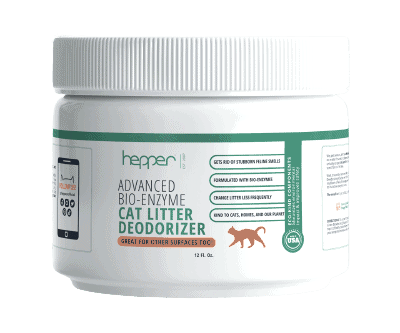
Cleaning up after our pets is not the most enjoyable part of owning them. Despite keeping a clean litterbox, cat odors and stains may still exist around the house. Sometimes, even the best litter box setup needs extra help. If you're tired of dealing with bad smells from litter boxes, Hepper Advanced Bio-Enzyme Pet Stain & Odor Eliminator Spray can help with the worst pet stains and smells. Additionally, the Advanced Bio-Enzyme Cat Litter Deodorizer neutralizes odors upon contact.

Our Favorite Products

Image Product Details
Best Enzyme Cleaner Hepper Advanced Bio-Enzyme Pet Stain & Odor Eliminator Spray Hepper Advanced Bio-Enzyme Pet Stain & Odor Eliminator Spray
  • Works on multiple surfaces
  • Gentle yet effective
  • Lifts stains & set-in odors
  • Best Litter Additive Advanced Bio-Enzyme Cat Litter Deodorizer Advanced Bio-Enzyme Cat Litter Deodorizer
  • Neutralizes odor within cat litter
  • Cat-safe
  • Unscented
  • At Catster, we’ve admired Hepper for many years and decided to take a controlling ownership interest so that we could benefit from the outstanding designs of this cool cat company!

    divider cat faces oct 2024

    Conclusion

    Some litter needs to be changed every other day whereas other types can last for a week or more with proper maintenance routines. If you’re concerned because your cat’s “deposits” are smellier than usual or they seem to be going to the bathroom more regularly, please check this out with a vet.


    Featured Image Credit: New Africa, Shutterstock

    Want content like this delivered to you?

    Sign Up For Our Newsletter

    News, insights, expert advice, and everything cat

    * By submitting, you agree to our Terms & Conditions and Privacy & Cookies Policy.

    How useful was this post?

    Click on a star to rate (you can leave written feedback after clicking submit)

    Help us improve Catster for pet parents!

    Your feedback really matters.

    What did you like about this post? Also how can we improve it?

    Join the conversation

    Leave a Reply

    You’re very welcome to leave a comment or question. Please know that all comments must meet our community guidelines, and your email address will NOT be published. Let’s have a positive and constructive conversation.

    Talk With A Vet Online

    Peace of mind,
    anywhere, anytime

    Affordable vet advice

    How to Open a Cat Café in 2025 (10 Crucial Steps)

    Are you thinking about opening a cat café? While the cafes are becoming more popular with entrepreneurs and those who frequent them, it...

    Can Cats Eat Rice Krispies? Vet Approved Facts & FAQ

    Rice Krispies are a beloved breakfast cereal made from puffed rice. Kids love this sweet food for its fun popping sound. Some may...

    Should You Let Your Cat Outside? Pros & Cons of Indoor & Outdoor Cats

    To let or not to let your cat outside—that is the question. For some cat parents, this is never a quandary, as their...

    Inbred Cats: Vet-Verified Signs, Ethics, Problems & FAQ

    Inbreeding has been, historically, common practice in domesticated animals. Breeders have made a point of breeding closely related animals in order to acquire...

    More related

    Is Tea Tree Oil Poisonous to Cats? Vet Reviewed Risks & FAQ

    Tea tree oil is often used for its antibacterial and antimicrobial properties but it should never be used on cats. Holistic health practitioners...

    Heart Disease in Cats: Our Vet Explains the Signs, Causes & Treatment

    Heart disease in cats does not define a single illness, but rather multiple conditions with different levels of severity. Some heart diseases are...

    Do Cats Know Their Names? Our Vet Answers

    So, you’re curious if your cat really knows their name. Well, do they? It’s a good question because we put so much thought...

    Russian White Cat Breed: Info, Pictures, Temperament & Traits

    The Russian White Cat comes from the Russian Blue, which is an old cat breed that has been around since the 1860s. It...

    Keep reading

    Can Cats Eat Pastrami? Health Advice & Alternatives

    We come back to our plate to find that our precious kitty has helped themselves to our pastrami sandwich, and we have no idea whether it’s toxic to them. Unfortunately, this happens often to cat parents. It feels nearly impossible...

    Can Cats Eat Pastrami

    10 Fascinating Vet-Reviewed Facts About Polydactyl Cats (With Pictures)

    Polydactylism is when an animal has a higher-than-usual number of fingers and toes. It is actually surprisingly common in some animals, including cats. While cats usually have five toes on each of their front feet and four toes on their...

    cute little paws of a polydactyl cat

    Can Cats Eat Persimmons? Vet-Approved Advice & Benefits

    Have you ever considered feeding your cat some exotic fruit? Perhaps you have some persimmons in your fridge and want to give your cat a taste. Filled with nutritional benefits, persimmons aren’t toxic to cats. In small amounts and infrequent...

    Can Cats Eat Persimmons

    How to Keep Cats Warm in Winter: 7 Vet-Approved Methods

    If you own a cat, you might be wondering if they easily get cold. You may have observed them hiding under a blanket, sitting by a heater, or snuggling up with you to stay warm. If you would like to...

    Devon Rex kitten on a white fluffy blanket

    What Causes Sudden Fever in Cats? Our Vet Explains Causes, Signs & FAQ

    One of the most frustrating things we face as pet owners is when our furry family members don’t feel well, especially when we don’t know why. Fevers can be especially difficult to diagnose and treat because there often isn’t an...

    digital thermometer showing a cat has a fever

    Why Do Cats Rub Their Face on Corners? 5 Vet-Verified Reasons

    Cats often engage in behaviors that leave us feeling puzzled or confused. Even though we might find them to be strange, many of these behaviors are normal for cats. New cat owners may be surprised by just how much their...

    Tricolor ginger white and back cat rubbing his cheek against the garden corner table

    How Often Should You Wash a Cat’s Food & Water Bowls? Vet-Approved Advice

    Keeping your cat’s food and water bowls as clean as possible is important. Cleaning them regularly can reduce the risk of dangerous bacterial contamination, which can lead to health issues for your pet. But how often should you be washing...

    Washing animal food bowls under the tap in the kitchen sink.

    Why Does My Cat Wink at Me? 3 Vet-Verified Reasons for This Behavior

    If you are like most cat owners, you are regularly surprised by your cat’s behavior. Cats are rarely predictable, at least until they get old and set in their ways. One quirky thing that some cats seem to do is...

    A photo of a lazy Cat winking at the camera