Why Does My Cat Sit on My Face? 7 Common Reasons & FAQ (Vet Reviewed)


In this article
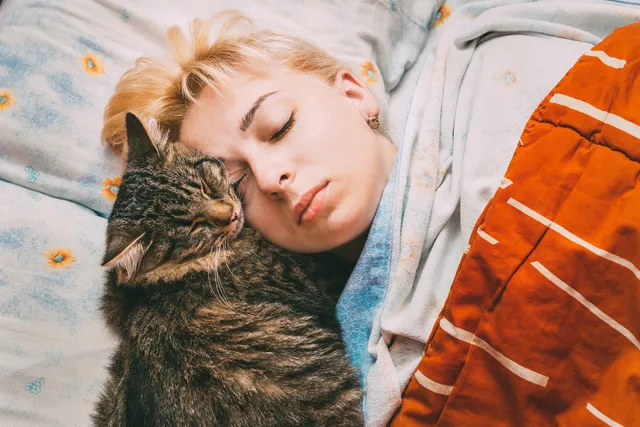
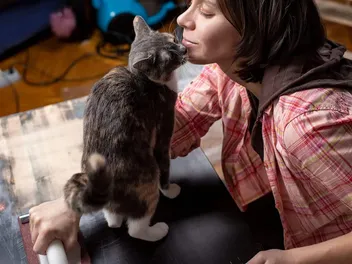
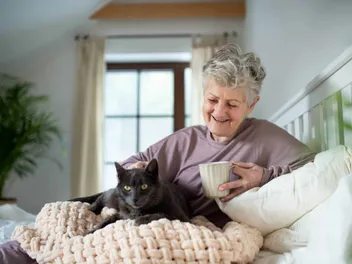
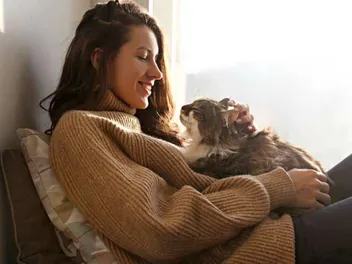
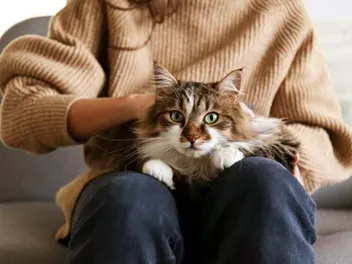
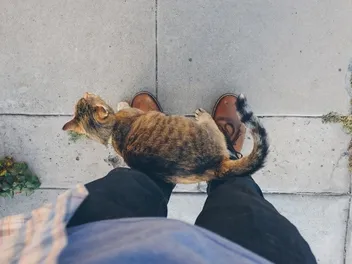
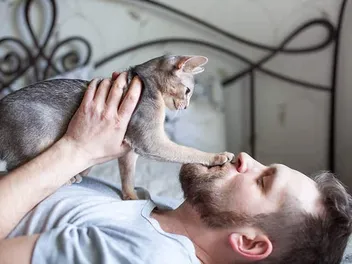
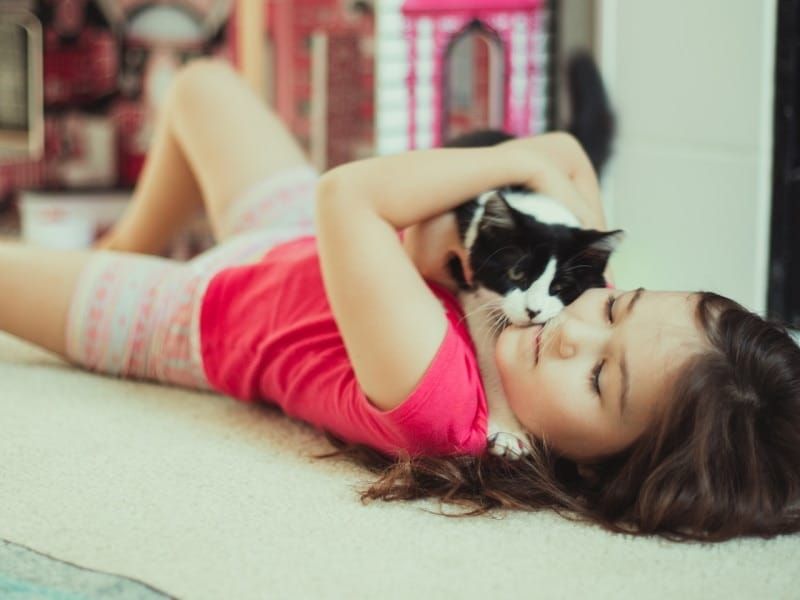
Cats sometimes behave in ways that baffle even the most seasoned cat parent—one of these is choosing our face or head to sit and sleep on even though there’s plenty of room on the bed or couch and they’ve got their own luxury cat condo downstairs. It turns out that there are a few common reasons why your cat may sit on your face, head, or neck, and they all come down to instinct and the need to feel secure.
In this post, we’ll explore seven common reasons why some cats choose their human’s face as a cushion and what this says about your relationship with your cat.

The 7 Reasons Why Cats Sit on Humans' Faces
1. They Seek Body Contact & Warm Temperature
We’ll kick off with the most basic reason your cat might snuggle up on your face—that it’s starting to get cold out and they want to warm up. Cats are naturally drawn to warm spots , they also enjoy direct body contact. So, since your head is, usually the only part that is not covered with blankets, it makes sense that they’d choose this area to drape themselves over while you (attempt to) sleep.

2. They’re Seeking Protection
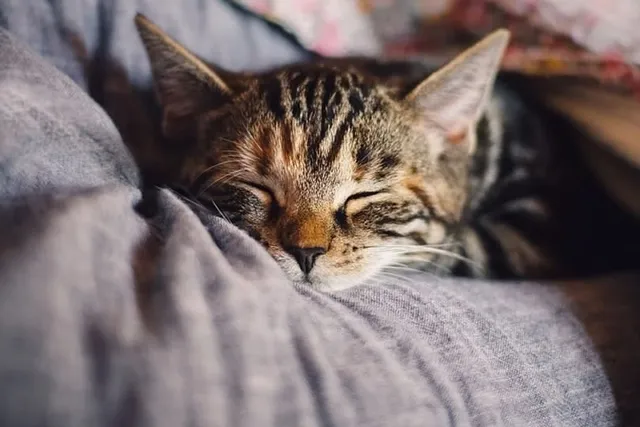
In the wild, cats are most vulnerable when they’re sleeping, and the domestic cats we know and love have not lost their instinct for self-preservation. As the person your cat trusts the most, they may sit or sleep on your face, head, or any other part of your body as a way to feel secure and safe while they’re snoozing.
3. Your Scent Is Comforting
Going back to the fact that cats like to feel secure while they sleep or chill out, your familiar scent can be very comforting to them. It’s also possible that they enjoy the scent and the feelings or sensations of your hair. So, if you frequently wake up with a face full of fur, this could very well be one of the reasons!

4. You Are “Territory”
Cats view you as part of their territory and, as such, by sitting on your head and face, they’re depositing their scent on you and enjoying the comfort of your familiar scent. It’s all part of your cat feeling safe and secure.
5. You Move About a Lot
According to Marilyn Krieger, a cat behavior consultant, cats become attuned to our sleep habits—including how soundly we sleep. If they’ve chosen your head or face as their pillow, it might be because they’ve figured out that you move around a lot at night and want to avoid interruptions to their own sleep!

6. They Want to Groom You
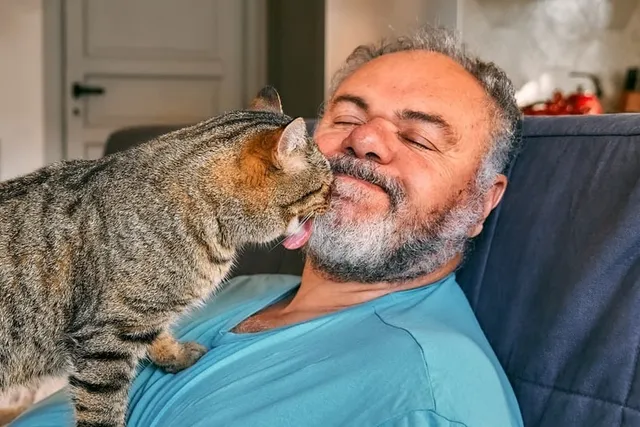
It’s not uncommon for cats to groom their humans to show affection, bond, ask for attention, deposit their scent, or signal to you that they don’t feel well. Some cats have a special affinity for face and hair grooming in particular, so being close to your face allows them to groom away to their heart’s content.
7. Your Cat Enjoys Your Company
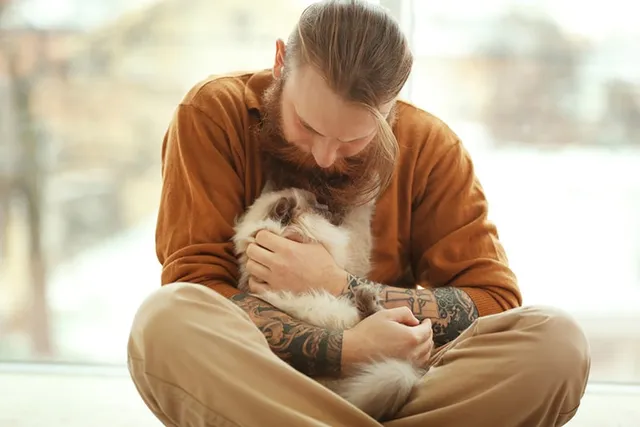
Let’s face it—if your cat didn’t like you and wanted to spend time with you, they wouldn’t sit so close to you. Sitting on your head and face means they trust you and like you enough to want to be near you. Basking in your glorious warmth and scent are two great bonuses!

My Cats Never Sit on Me – Does This Mean They Don’t Like Me?
Not at all! Whether or not your cat will sit on you or with you usually comes down to their personality. While some cats are never out of your lap, some cats are more independent and prefer to sit near you rather than on you. Cats show affection in various ways—not just by sitting on you. They may also:
- Head bunt you
- Rub against your legs
- Sit next to you
- Blink their eyes slowly at you
- Roll on their back to display trust
- Purr when you’re around
- Vocalize with chirps and chatters
- Come to greet you when you get home
- Hold their tail up
How Can I Stop My Cat from Sitting on My Face?
As cute as it is that your cat enjoys spending time so close to you, it can be a bit uncomfortable—especially if your cat is super big, is suffocating you with their mass of long fur, or you have trouble sleeping because of their positioning. Oh—and not to mention the snoring. Yep, some cats do snore, and some do it so loudly that it sounds like the roof is caving in.
If your cat is still a kitten, it’s easier to stop the behavior before it becomes a habit. Each time your kitten tries to sit on your face, remove them and place them where you want them to sit or sleep to teach them where is out of bounds. You can also try using treats as a reward when your kitten settles on your lap instead of your face or head. With adult cats, it can be a little harder.
You can try getting your cat a super cozy cat bed, putting it next to your bed, and encouraging them to spend time in it rather than on you. For example, at night, you could place a warm pack designed for pets or a fluffy hot water bottle that’s nice and warm inside the bed to make it extra cozy. Just make sure the heat pack or hot water bottle is at a safe temperature—avoid boiling water.
As the famous saying goes, “cats be cats” and will do as cats do. Sometimes, even the most luxurious, softest bed in the world won’t tempt them away from where they want to be, so there’s no guarantee your encouragement will work, but it’s worth a try!
Conclusion
Whatever reason is behind your cat’s decision to claim your face as their happy place, you can take it as a good sign that they trust you and like being with you.
Cats reap several benefits from sleeping or sitting on your head, face, and neck—not least the warmth and your comforting, familiar scent. If it bothers you, though, you can always try encouraging your cat out of the behavior by tempting them with their own cozy bed.
See Also:
Sources
Featured Image Credit: Alex Kviatkouski, Pexels
Expert cat care, straight to your inbox
News, insights, and useful advice, delivered to you.

No spam — unsubscribe anytime.
By signing up, you agree to our Terms & Conditions and Privacy & Cookies Policy.
How useful was this post?
Click a star to rate. You can leave written feedback afterwards. (We read all feedback.)
Kit Copson is a freelance writer and lifelong animal lover with a strong interest in animal welfare. She has parented various furry beings over the years and is currently a proud cat mom of two—one very chilled (unless hungry) Siamese and a skittish but adorable Domestic Shorthair—and dog mom of one—an adopted Bichon Poodle cross. When not writing about or spending time with animals, Kit can be found doodling in her sketchpad, reading, or more often than not, drinking tea.