Get

In Your Inbox

Catster is reader-supported. When you buy via links on our site, we may earn an affiliate commission at no cost to you. Learn more.

Why Does My Cat Like to Be up High? 5 Vet-Verified Reasons

Share

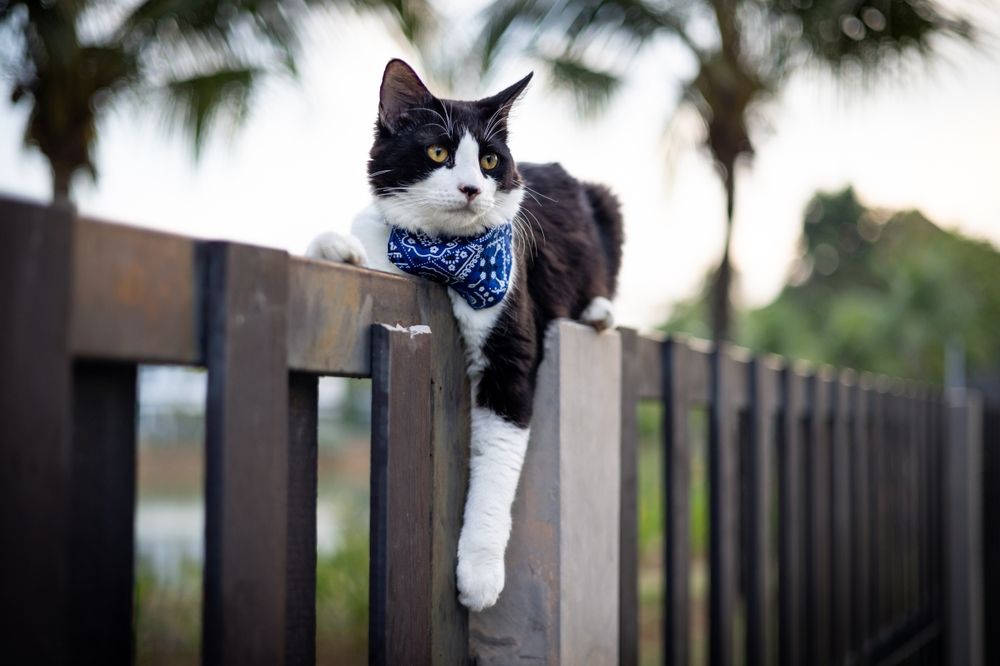
Tuxedo cat on the fence

As a cat owner, you know that when you look for your feline pal, you must look up most of the time. Above the kitchen sink, in the window, on top of the fridge, or even on the top shelf of the closet that you didn’t think the cat could get into are common places where you can find your feline friend.

Have you ever wondered why your cats like to be in high places? There are a few reasons cats prefer to be up high looking down on the world, and we’ll discuss them below.

divider cat paws oct 2024

Top 5 Reasons Why Your Cat Likes to Be up High

1. It Helps the Cat Feel Secure

Although cats are predators, they’re also prey for larger animals. In the wild, being in a high place helps the cat to keep an eye on any danger below it. If your cat is constantly climbing things to perch on, they are probably doing it to feel secure in their surroundings.

Remember, your cat is a sensitive creature, and it doesn’t take much for them to feel like they are being threatened. Anything from being in a new environment to dealing with children can bother your cat and make them feel anxious.

When stress or fear of potential threats affects your pet, they may seek out the comfort and security of a high place.

Besides, being in a high place allows them to have a better perspective of everything that is going on in their territory or immediate surroundings while still staying out of reach.

longhaired red cat relaxing on the shelf
Image Credit: naskami, Shutterstock

2. It Cements the Cat’s Status

Believe it or not, just as executives flaunt their status with coworkers by securing the best office in their company, cats cement their position by securing the top of the cat tree or tower. To put it another way, the cat with the highest spot in the house is the most dominant of your cats.

This is especially true if you have multiple cats in your home, so watch to make sure they aren’t fighting over the highest spots to be on the safe side.


3. It’s the Cat’s Instinct

You may know that domestic cats display many of the instincts of their ancestors. This means that your cat has the instinct to stay up high and hidden to stalk their proverbial prey and prevent an attack from a potential predator.

Staying up high was a reliable technique for cats in the wild to stay safe from coyotes, wolves, foxes, removed 2 words and more. Domestic cats, even those never allowed outside, have retained those survival instincts and like to be up high to protect themselves from possible harm.

You may find your cat jumping up high when they wish to be alone and even when the family dog won’t allow them some personal space.

Cat sitting on cat shelf
Image Credit: Konstantin39, Shutterstock

4. To Help the Cat Sleep Better

You wouldn’t think that where a cat sleeps would affect how well they sleep, but it does. When your cat sleeps on a chair in the living room, they may experience too much noise and commotion. This can be a stressor for your cat, and they may seek a more appealing location.

Curling up somewhere high and away from the rest of your house will help the cat sleep deeply, peacefully, and without worrying about someone waking them up at every turn.


5. It Regulates the Cat’s Body Heat

Some cats have a lot of fur, and others are practically bald, but when winter rolls in, felines of all coat types seem to feel the chill. Many pet owners are surprised that their cats can feel the cold just as they do. As you probably know, heat rises, so many cats climb onto something high to reach the heat while they sleep.

This helps them to stay warm in the winter months. By the same token, you might find your cat sleeping on the floor more often in the summer season to take advantage of the cooler air down there.

Cat sits on a shelf
Image Credit: Vladfotograf, Shutterstock

divider cat faces oct 2024

How Can I Give My Cat More Vertical Space?

Now that you know why your cat constantly seeks high spots to rest, sit, or sleep in your home, you might want to know a few ways to give the cat more vertical space. Here are a few of our favorite ideas.

  • Clear off the top of your fridge so it can be a safe, warm spot for your feline.
  • Purchase a high-quality cat hammock for your furry friend. There are windowsill and wall-mounted options, so choose the one that works best for your feline. If you’re on a budget or don’t want to go that fancy with a cat hammock, there are quite a few DIY options you can build.
  • One simple solution is to purchase a new set of shelves. Place them with space between them and at different elevations so your cat has different levels. This is also a great way to help your cat get in exercise and playtime.
  • Invest in a high-quality cat tree or cat tower. They are the perfect product for cats that love to be up high. Most cat trees are designed with hidey holes, toys, scratching posts, and beds. There are also DIY options for towers and trees if you feel creative.

If you are looking for a way for your cat to get above it all, these tips will certainly get you started. Remember, whether it is routine day-to-day traffic or the family is running in and out for the holidays, cats need the option to get away from it all, and getting to a high spot is often their way of doing it.

Alternatively, if you want to surprise your cat with something cool, check out the Hepper Hi-Lo Cat Scratcher. It's not just a scratcher; it's a piece of modern furniture that your cat can play on. It's got a curvy design that's perfect for stretching and moving, and it's built tough with strong birch plywood and thick B-flute cardboard. You can adjust it to three different heights, which keeps cats entertained. Plus, it won't break the bank! Our cats love it, and we do too.

Hepper Hi-Lo Cardboard Cat Scratcher with Real...
  • Premium Materials - Hepper's cardboard scratcher is made with dense, B-flute cardboard, and a metal...
  • High, Low and Lower - A single cat scratch pad won't keep your cat engaged. 3 unique positions keeps...
  • Activates Muscles - The Hi Lo isn't just a cat nail file to stop the chief cat couch scratcher. The...

At Catster, we’ve admired Hepper for many years, and decided to take a controlling ownership interest, so that we could benefit from the outstanding designs of this cool cat company!

divider single cat paw oct 2024

Conclusion

Whether it is because the cat is stressed or trying to stay warm in the middle of a frigid winter season, you need to have elevated spaces where your cat can be healthy, happy, and stress-free. Try out some of our tips for creating vertical areas in your home, and see how well your cat reacts. Do you have other methods that have helped your cat enjoy its elevated viewpoint?

Related Reads:


Featured Image Credit: Holger Kleine, Shutterstock

Want content like this delivered to you?

Sign Up For Our Newsletter

News, insights, expert advice, and everything cat

* By submitting, you agree to our Terms & Conditions and Privacy & Cookies Policy.


How useful was this post?

Click on a star to rate (you can leave written feedback after clicking submit)

Help us improve Catster for pet parents!

Your feedback really matters.

What did you like about this post? Also how can we improve it?

Join the conversation

Leave a Reply

You’re very welcome to leave a comment or question. Please know that all comments must meet our community guidelines, and your email address will NOT be published. Let’s have a positive and constructive conversation.


Talk With A Vet Online

Peace of mind,
anywhere, anytime

Affordable vet advice

Ask Dr. Paola – Help! My Momma Cat Is Very Thin! (May 18, 2026)

Welcome to our “Ask Dr. Paola” series, where every Monday we bring expert advice straight from Dr. Paola Cuevas (MVZ) to help our...

The Cat Biting Mistakes Most Owners Make (And What Works Instead)

Cat bites sent more than 400,000 people to emergency rooms in the US each year.1 Not scratches. Bites. And the reason they’re so...

Do Cats Cause Schizophrenia? Scientists Find a Link – Here’s What It Means

Being a fierce advocate (and occasional recipient of) mental health support and awareness, the term ‘crazy’ is not one I like to fling...

One in 100 Cats Gets Diabetes – Here’s How to Catch It Early

One in every 100 cats develops diabetes.1 That’s not a rare, unlucky condition reserved for cats with obvious health problems. It’s common enough...

More related

Does Baby Powder Kill Fleas on Cats? Vet-Reviewed Facts & Safety Explored

Fleas are cats’ most common skin parasite. They not only cause skin problems but can also transmit diseases to you and your cat....

What Is the Worst Cat Litter? 5 Types to Stay Away From

You can find so many different kinds of cat litter these days. They can come in pretty packaging or have appealing buzzwords. However,...

17 Australian Cat Statistics & Facts All Cat Lovers Should Know (2026 Update)

Note: This article’s statistics come from third-party sources and do not represent the opinions of this website. Cats were introduced to Australia in...

Can Cats Eat Lamb? Vet-Reviewed Pros & Cons

One of the most important things about caring for your feline is ensuring that your furry friend gets proper and adequate nutrition through...

Keep reading

How to Trim Kitten Nails in 4 Simple Steps: Vet-Approved Advice

As a pet parent, you’ve seen your new kitten sharpening their claws on everything from the carpet to the couch more than once. Not only that, but kitten’s claws are incredibly sharp, and if you don’t do something about them,...

kitten nails trimming

Can Cats Eat Cottage Cheese? Vet-Verified Nutrition Facts

We know that cats can be picky eaters, but cheese seems to be one treat that is universally loved. So, can cats eat cottage cheese? Yes, you can feed cottage cheese to your cat, but only in moderation. Some vets...

Can Cats Eat Cottage Cheese

Does Heat Kill Fleas on Cats? Here’s What Science Says

If your cat has fleas, they can be a nuisance and are incredibly difficult to get rid of without flea treatments. But these treatments can be expensive, so many pet owners are left wondering how to treat fleas on their...

Cat with fleas

Do Cats Have Good Memory? Vet Approved Feline Memory Facts

Living with a cat is sure to create many fond memories. While we can recall these fun and enjoyable memories, it’s not clear if cats also can. Cats are intelligent animals that have a good sense of memory, but it’s...

cat resting with owner on sofa at home

Smalls vs Nom Nom: Pros, Cons & Facts (2026 Update)

Disclaimer: Nom Nom has discontinued its fresh cat food recipe and is no longer taking orders. Nom Nom hopes to return to providing fresh food to cats in the future when they have more readily available high-quality ingredients. We have...

Smalls VS Nom Nom

How To Choose A Kitten From a Litter: 6 Vet-Verified Traits To Look For

Adopting a kitten is a life-changing event. The young cat you bring home today will hopefully be with you for the next 15–20 years. Selecting a cat that’s right for you and your home is therefore of the utmost importance....

tabby mother cat feeding her kittens

Orijen Cat Food Review of 2026: Recalls, Pros & Cons

Review Summary As you probably guessed, “Orijen” is a play on “origin”—meaning, the food harkens back to the origins of a cat’s diet. As a result, the manufacturer strives to create biologically-appropriate offerings for your cat. That means plenty of...

Orijen Cat Food Review

Do Cats Have Bones in Their Tails? Feline Anatomy Explained (Vet Verified)

A cat’s tail is a fascinating and finely tuned structure adapted for survival in the wild, and yes, it has bones. These are called caudal vertebrae. Long-tailed cats can have anywhere from 19 to 23 bones in their tails. Short-tailed...

tail of a cat on vintage background

Love Cats? So Do We! Join the Catster Community

Stay informed with expert pet care insights delivered straight to your inbox! Discover professional guidance on animal behavior, feeding tips, trusted product picks, and much more.


Sign up for the Catster Email Newsletter

Stay informed with expert pet care insights delivered straight to your inbox! Discover professional guidance on animal behavior, feeding tips, trusted product picks, and much more.