Get

In Your Inbox

Catster is reader-supported. When you buy via links on our site, we may earn an affiliate commission at no cost to you. Learn more.

White Scottish Fold Cat: Info, Pictures, Facts & History
Share

white scottish fold cat

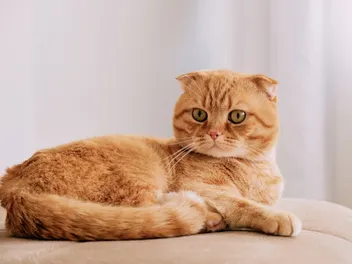
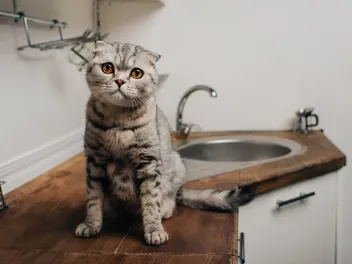
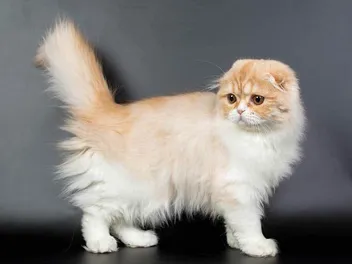
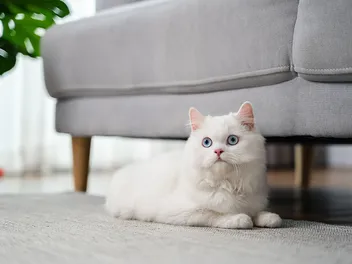
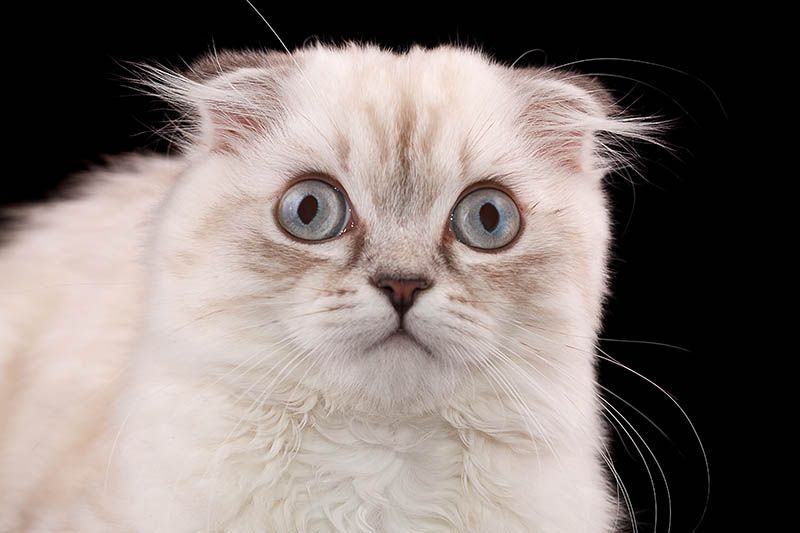
The White Scottish Fold is a unique breed that is popular for their distinctive and charming physical traits. Most have folded ears, rounded faces, big eyes, and thick tails, making them irresistibly cute. These huggable characteristics, along with their sweet and loving personalities, make them sought-after pets.

Breed Overview

Height:

7 – 10 inches

Weight:

6 – 13 pounds

Lifespan:

11 – 15 years

Colors:

Black, white, red, blue, silver, fawn, chocolate, lilac

Suitable for:

Families with children, families with dogs, apartment living

Temperament:

Friendly, social, and docile

The history of this breed is fascinating, as every Scottish Fold bred today can be traced back to just one cat. Read on to learn more about this striking and remarkable feline.

White Scottish Fold Cat Characteristics

Energy
+
A high-energy cat needs a lot of physical and mental stimulation to keep healthy and happy, while a low-energy cat needs minimal physical activity, but still needs mental stimulation. When choosing a cat, It’s important to ensure their energy levels match your lifestyle.
Trainability
+
Cats that are easy-to-train are more willing and skilled at quickly learning prompts and actions with minimal training. Harder-to-train cats are usually more stubborn or aloof and require a bit more patience and practice.
Health
+
Certain cat breeds are more prone to various genetic health problems, and some more than others. This doesn’t mean that every cat in those breeds will have these issues, but they do have an increased risk, so it’s important to understand and prepare for any additional needs they may require.
Lifespan
+
Due to their size or potential genetic health issues of a specific breed, some cats have shorter lifespans than others. Proper nutrition, exercise, mental stimulation, and hygiene also play an important role in your cat’s lifespan and quality of life.
Sociability
+
Some cat breeds are more social than others, both towards humans and other cats and animals. Cats that are more social have a tendency to rub up on strangers for scratches or jump on laps for cuddles, while cats that are less social shy away, hide, are more cautious, and even potentially aggressive. No matter the breed or gender, it’s important to socialize your cat and expose them to many different situations.

divider 3 paws

The Earliest Records of White Scottish Folds in History

The original Scottish Fold was born in Perthshire, Scotland, in 1961. She was a white barn cat named Susie who was born with unique ears that folded over due to a natural mutation. She was then bred with domestic cats and British Shorthair cats. The Scottish Fold was then registered with the Governing Council of Cat Fancy, and more of the unique cats were bred with the help of geneticist Rob Turner.

Out of 76 kittens, 42 had folded ears, and it was concluded that Scottish Folds would result if one parent provided the gene for straight ears and the other provided the gene for folded ears. Every Scottish Fold can trace their ancestry back to Susie.

white scottish fold cat sitting
Image by: Oleksandr Volchanskyi, Shutterstock

How the White Scottish Fold Gained Popularity

Concerns about possible deafness, ear infections, and ear mites kept the breed from gaining acceptance in the United Kingdom, but by the 1970s, Scottish Folds were being successfully bred in the United States, and they have since become a popular breed around the world.

While the Scottish Fold was established as a breed by the British, they have never been as popular in the U.K. as they are in the U.S. Americans fell in love with this breed and developed it into the beautiful cat that they are today. Well-known celebrities are also fans of Scottish Folds: Taylor Swift owns a white Scottish fold named Meredith.

Formal Recognition of White Scottish Folds

Susie’s owners moved to North America after the governing council barred the Scottish Fold as a registered breed due to genetic concerns. There, they were welcomed by all North American cat associations, and Scottish Folds were recognized by the end of the 1970s.

The Cat Fanciers Association only took 10 years to accept the registration of the new Scottish Fold. They were a champion breed in America by 1978.

divider 2 cats

Top 4 Unique Facts About the White Scottish Fold

1. Scottish Folds Are Not Born With Folded Ears

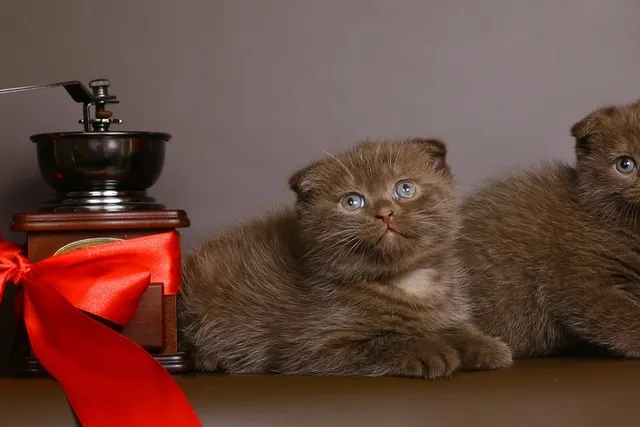
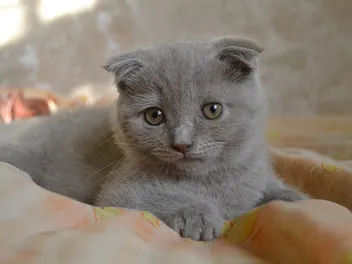
These adorable cats are known for their folded ears, but they are not born that way. White Scottish Fold kittens are born with straight ears that gradually droop at 3–4 weeks of age. Some Scottish Folds’ ears will not fold but will be straight and pointed. This depends on whether the cat was born with the dominant gene.

scottish fold white kitten
Image by: Volchanskyi, Shutterstock

2. Scottish Folds Sit Like Humans

These quirky cats have some cute and charming traits; sitting like a human is one of them. Scottish Fold owners affectionately refer to this as “The Buddha Sit,” and when they hear a noise, they will frequently sit up prairie-dog style to improve their viewpoint.


3. Scottish Folds Have Three Types of Folds in Their Ears

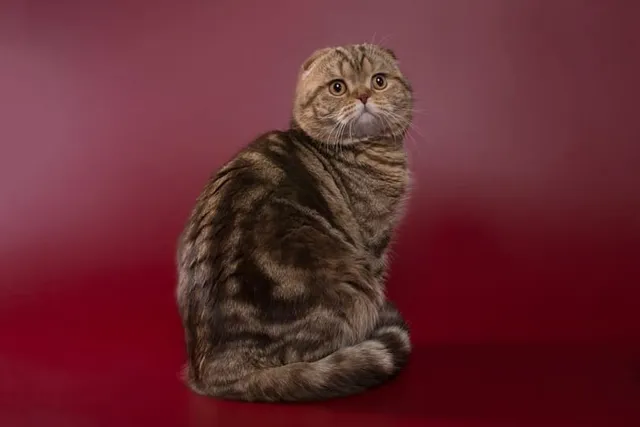
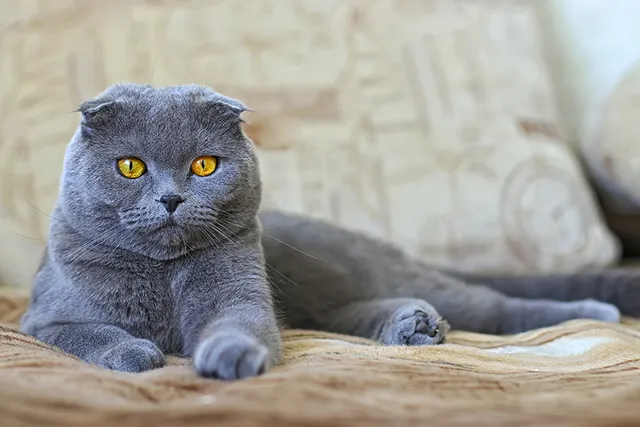
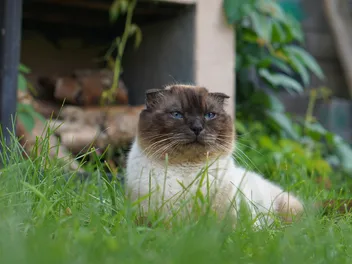
A Scottish Fold can have three types of ear folds: single, double, and triple. A single fold is a small fold that involves only the tips of the ears. A double-fold bends more notably, with approximately half of the ear bending downward. A triple-fold ear lies flat against the head, giving the head a rounder appearance.

White Scottish fold
Image by: nat Hongkham, Shutterstock

4. Scottish Folds Are Never Bred Together

Due to ethical concerns, Scottish Fold cats are never bred together because the kittens may be born with degenerative issues. They are most commonly bred with either American or British Shorthairs.

divider 3 paws

Does the White Scottish Fold Make a Good Pet?

Scottish Folds are typically peaceful and charming and will get along well with other pets in the family, and they won’t be alarmed by noisy and affectionate children. They are naturally loving and develop strong attachments to their owners but don’t demand attention. Because of their small size, they are well-suited pets for apartment living.

While they are also playful, their tails must be handled with care, as some of them are known to develop a stiffness that can cause pain if not handled gently. Grooming most Scottish Folds is as simple as brushing and combing the fur once a week to remove loose hair and dead skin cells. Their ear folds do not make them more susceptible to mites or ear infections.

White Scottish Folds are highly sought-after due to their distinct coat color, and the kittens typically cost significantly more than more common colors.

divider 1 paws

In Conclusion

The White Scottish Fold is a popular companion due to their sweet looks and personality. A lot goes into breeding these felines, and their road to recognition took heaps of effort and dedication from committed breeders. What is truly fascinating is that every Scottish Fold can be traced back to a white barn cat named Susie. These unique felines live long, healthy lives and are loved by many.

You might also be interested in: 


Featured Image Credit: Hetman Bohdan, Shutterstock

Want content like this delivered to you?

Sign Up For Our Newsletter

News, insights, expert advice, and everything cat

* By submitting, you agree to our Terms & Conditions and Privacy & Cookies Policy.


How useful was this post?

Click on a star to rate (you can leave written feedback after clicking submit)

Help us improve Catster for pet parents!

Your feedback really matters.

What did you like about this post? Also how can we improve it?

Join the conversation

Leave a Reply

You’re very welcome to leave a comment or question. Please know that all comments must meet our community guidelines, and your email address will NOT be published. Let’s have a positive and constructive conversation.


Catster's Digital Magazine is Back!

Vet-approved health & behavior advice

Real cat stories & community features

Weird Cat Behaviors That Actually Make Perfect Sense

We have been sharing our lives with cats for thousands of years, yet we still find ourselves genuinely stumped by what they get...

The Dream of Talking to Cats Just Got Closer to Becoming a Reality

If you’ve ever wished your cat could simply tell you what they wanted, you’re not alone. From the meow that wakes you before...

Kizzy: The Feline Princess With a Purpose

We were first introduced to Miss Kizzy after she won a licky-treat challenge hosted by Professor Fluffovich, our resident feline research specialist. While...

Chatting With Sally About Mission Meow & Helping Cat Rescue Organizations Collaborate | Chatty Cattys, Episode 24

In this episode of Catster’s podcast, Chatty Cattys, Nicole and Dr. Karyn sit down with Sally Williams, the founder of Mission Meow, for...

More related

11 Signs to Look for When Inspecting a Cat Boarding Facility (Vet Reviewed)

It can be nerve-wracking to leave your cat when you go out of town, especially if your cat is going to stay somewhere...

What is the Cost of a Cat X-Ray in 2026? Complete Price Guide

One of the top concerns most people have concerning their pets is the cost of pet care, especially unexpected expenses. If your cat...

What’s the Cost of Cat Insulin in 2026? Vet-Reviewed Price Guide & FAQ

Our feline friends can develop diabetes, and like us, they might require insulin. If your cat has been diagnosed with this disease, you’re...

Acana vs. Orijen Cat Food: Our 2026 In-Depth Comparison

If you take your cat’s health seriously, you may have thought about investing in a premium cat food brand to feed to them....

Keep reading

Can Cats Eat Cabbage? Vet-Reviewed Health and Nutrition Advice

With all of the health benefits that cabbage is said to have, you may wonder if it is safe to give some to your cats. Cats are obligate carnivores and thrive on a complete and balanced source of animal protein...

Can Cats Eat Cabbage

Sheba Cat Food Review of 2026: Recalls, Pros & Cons

Sheba Cat Food Review Summary Mars Inc. manufactures Sheba cat food, along with more than 40 other pet food brands. Sheba products are produced in the United States, except the Meaty Tender Stick Sheba cat treats, which are produced in...

Sheba Cat Food Review

Is Your Cat Winking, or in Pain? 4 Eye Problems Every Owner Should Know

Think your cat is just winking at you in a mysterious, adorable way? Think again! If your furry friend keeps one eye closed most of the time, it might be more than a quirky habit. It could signal an underlying...

A photo of a lazy Cat winking at the camera

How to Keep Your Cat’s Nails Healthy in 5 Vet-Approved Steps

As a responsible cat owner, you’re well aware of the importance of caring for your kitty’s sharp little claws—not only for their health but also to spare your furniture! While our feline companions know how to keep their fur in...

cat paws when sitting on the table

Giardia in Cats: Causes, Signs & Care (Vet-Approved Facts & FAQ)

One of the most distressing experiences as a cat parent is suspecting or learning that your cat is unwell in some way. To add to your woes, medical terminology can sometimes be hard to process, especially when you’re under duress....

Sick cat, IV, dehydration, dropper

Kitten Food vs Cat Food: What’s the Difference? Vet-Reviewed Facts

Kittens and cats may be the same species but have very different needs. With the world of pet ownership comes a load of questions, and pet food is often the main thing cat owners get stuck on when deciding what’s...

kitten VS Cat Food

9 Best Cat Foods for Smelly Poop in 2026: Reviews & Top Picks

If you’re being chased out of the room every time your cat uses the litter box, it may not be their cat litter to blame but their food. What your cat eats directly affects what their stool smells like. Some...

top view of a cream maine coon cat eating dry and wet pet food from feeding dish

E. Coli Infection in Cats: Vet Approved Signs, Causes & Care

E. coli, or Escherichia coli, is a bacterium that sits in most living mammals’ digestive tracts. It can be found in human and animal urine and feces. It’s usually a commensal organism, part of the normal bacterial flora of the...

sick orange cat

Love Cats? So Do We! Join the Catster Community

Stay informed with expert pet care insights delivered straight to your inbox! Discover professional guidance on animal behavior, feeding tips, trusted product picks, and much more.


Sign up for the Catster Email Newsletter

Stay informed with expert pet care insights delivered straight to your inbox! Discover professional guidance on animal behavior, feeding tips, trusted product picks, and much more.