Bengal vs. Savannah Cat: What’s the Difference? (With Pictures)

In this article
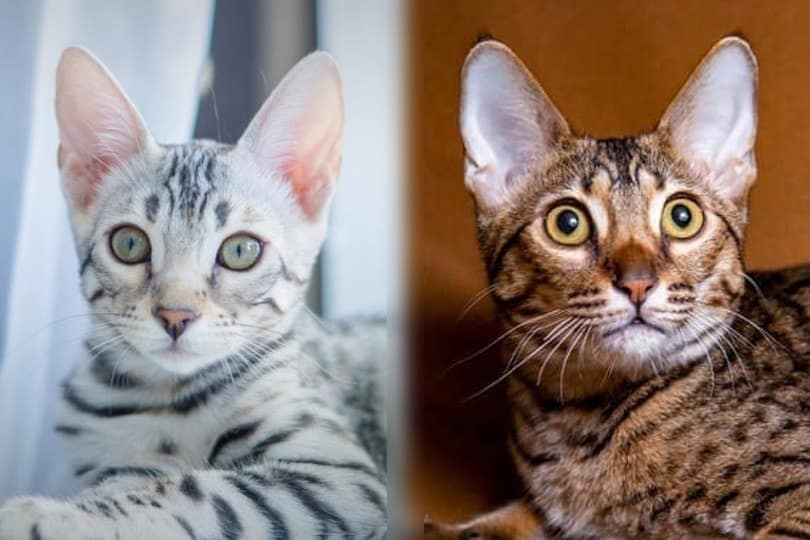
Bengal and Savannah cats are both very similar. They are both the result of breeding a domestic cat with a wild cat. Because they aren’t domestic cats, they may act and look very different from your average feline.
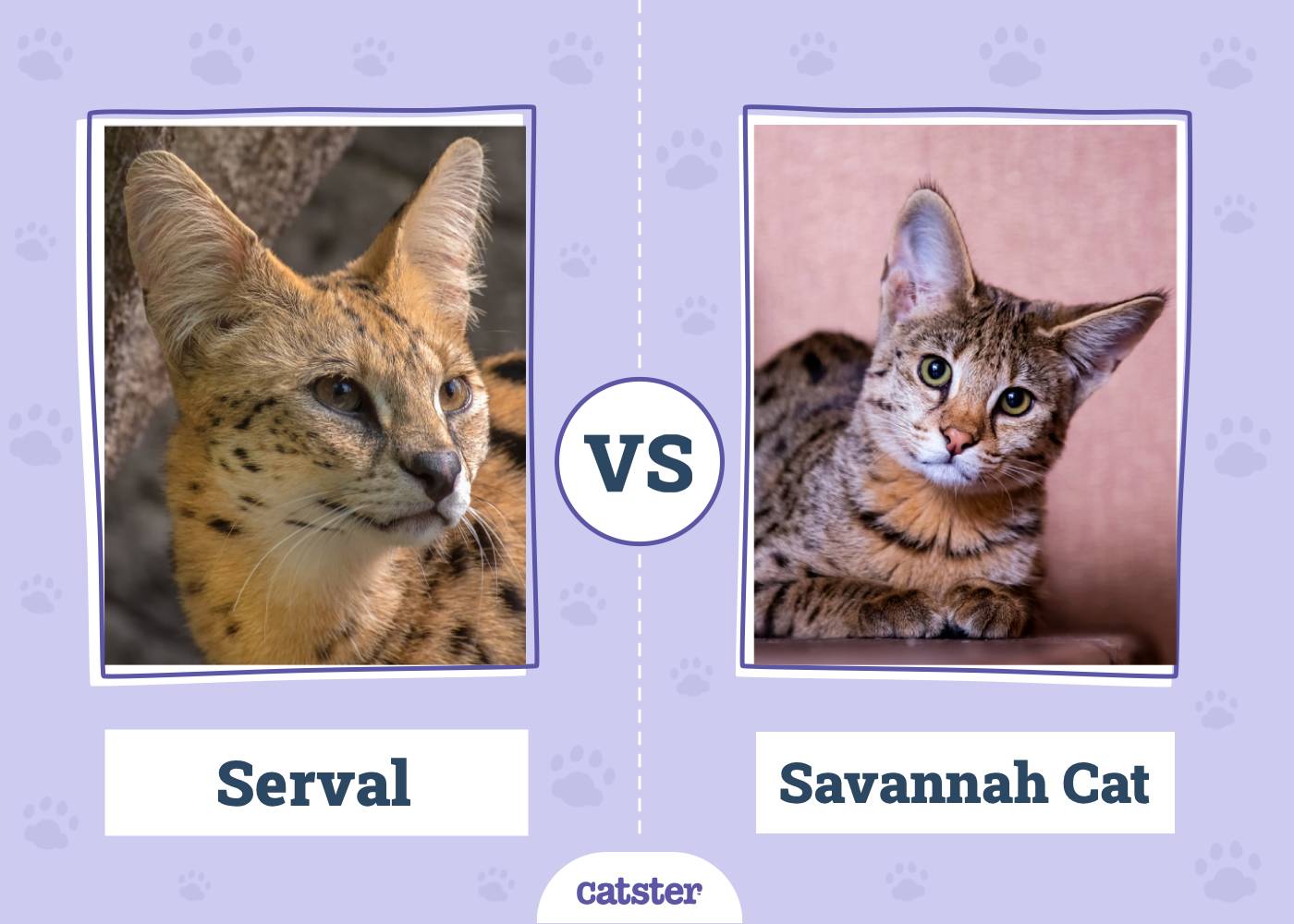
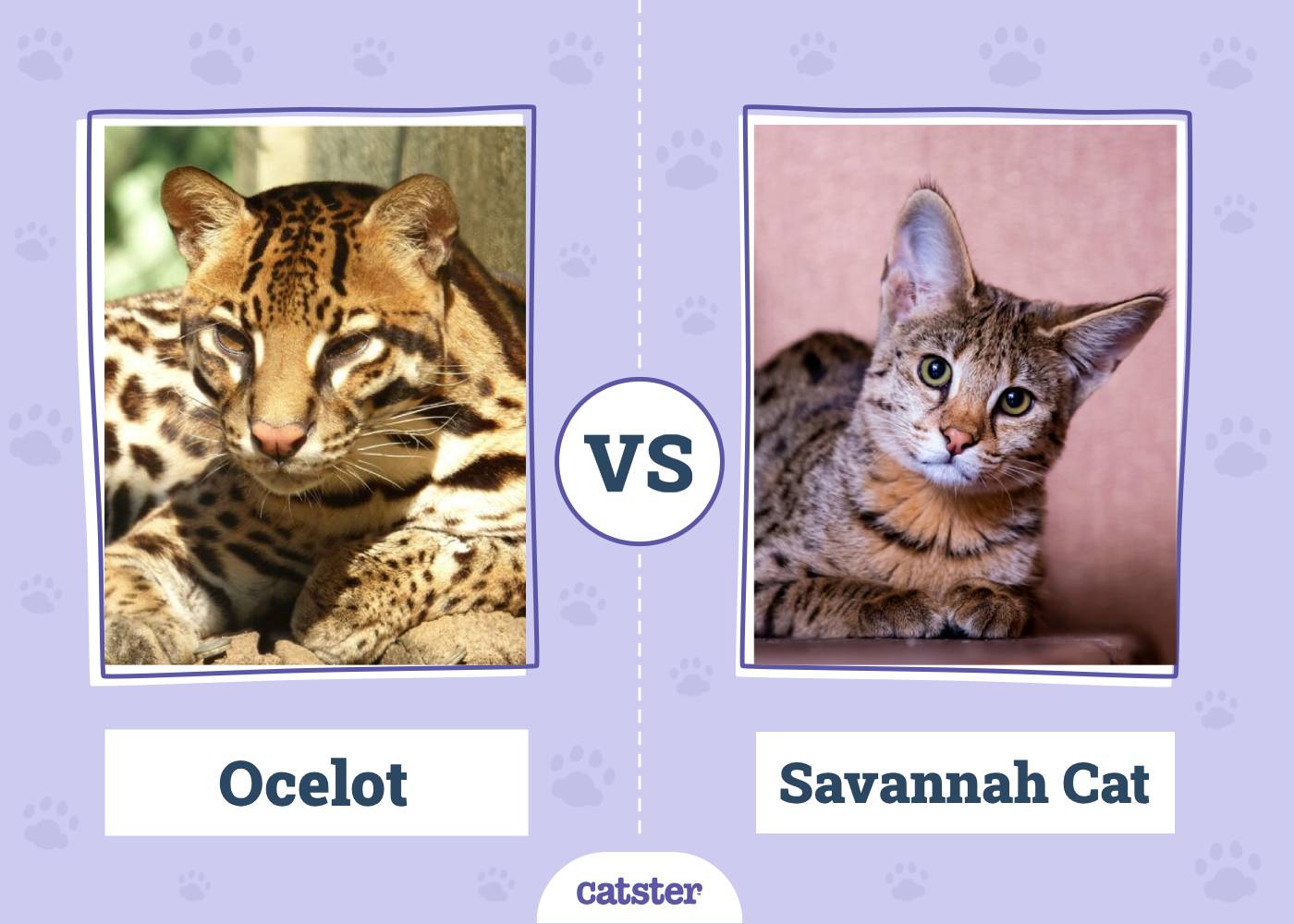
However, despite being bred similarly, these cats are quite different. Firstly, a Bengal is a mix between a domestic cat and an Asian leopard cat. A Savannah is a mix between a domestic cat and a Serval. This difference in parentage leaves a significant mark on their personality, temperament, and maintenance needs.

Visual Differences

At A Glance

Bengal Cat Overview

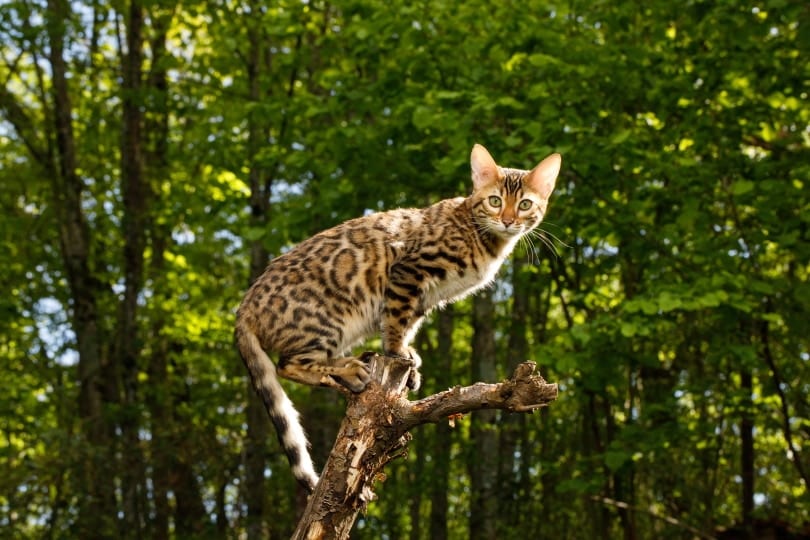
Bengal cats are a mix between a domestic cat of some sort and a wild Asian Leopard cat. These cats have a glamorous and unique coat. They are best known for this unusual coat, making them look very different from their domestic cousins.
Not all Bengals have a wild parent, however. Today, many Bengals are bred with other Bengals, several generations removed from the wild ancestor. Because of this, Bengals tend to be more consistent in temperament and behavior. These cats were first accepted by the TICA in 1983 and allowed to compete in shows starting in 1991. They are a somewhat newer breed.
Appearance
Bengals have long, athletic bodies and very high cheekbones. Their eyes are large and rounded. Asian leopard cats, which the Bengals are descended from, are somewhat smaller. For this reason, Bengals tend to be smaller. They are a similar size to an average housecat. They are a bit longer than the average domestic cat, but they tend to weigh the same.
There are even some domestic cats, like the Maine Coon, that are larger than a Bengal. They are quite a bit more compact than some cats as well. They are very stocky and muscular.
Maintenance
Bengals have short, thick coats. They require a quick, weekly brushing. This helps remove dead hair and distribute healthy skin oils. However, they don’t shed very much at all. They do an excellent job of keeping themselves clean, so you don’t need to bathe them often.
They do need their teeth cleaned. Periodontal disease is a huge problem and is very common in domestic cats. As you might expect, maintenance is better than treatment.
Their nails will need to be trimmed every few weeks, and you should check their ears weekly. They should not need their ears cleaned. However, some cats get a build-up of dirt and debris, leading to ear infections and similar problems.

Temperament
Bengals are extremely active. They take after their wild parentage in this regard. They are confident and brilliant. They will get into things. Nothing escapes their notice, and their climbing abilities can get them into trouble. These cats can be very talkative and noisy. They will let you know what they want when they want it!
Because of their intelligence, they like to play games and are rather good at learning tricks. They do require quite a bit of mental stimulation and playtime. When bored, they can get a bit destructive. They can also develop some strange habits, like turning light switches on and off.
Unlike most cats, Bengals are quite fond of water—they like to play in the tub and may stroll into the shower with you. You will have to protect your aquarium and fish as they will likely attempt to fish them out.
Suitable for:
Bengals are best for people who want a wildcat-like, exotic-looking feline. They are not large and do not act terribly different from your average housecat. They are active and very reliant on their people, so you will need quite a bit of time on your hands to take care of them properly.
Savannah Cat Overview

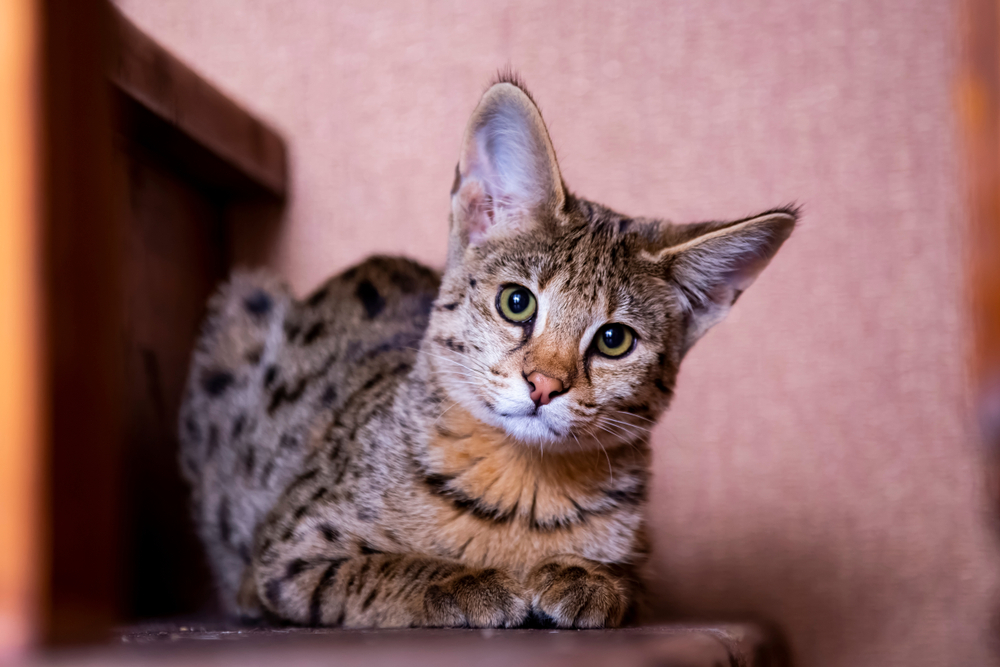
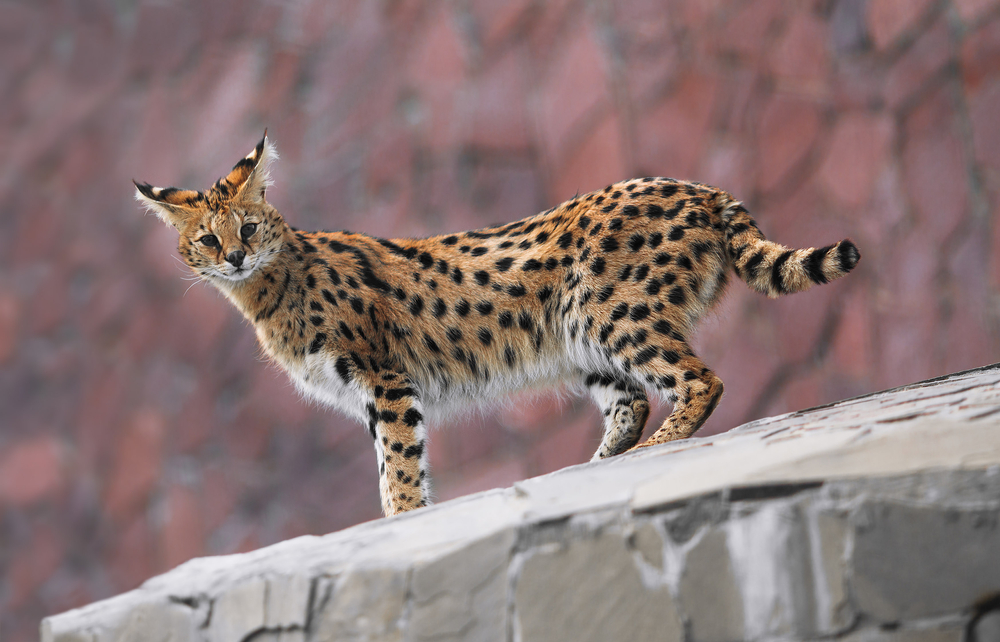
The Savannah cat is a mix between a serval and a domestic cat. They look relatively wild and are quite a bit larger than the usual housecat—they are very exotic-looking, which is part of their appeal. This relatively niche breed began gaining popularity in the 1990s. The International Cat Association recognized them as a registered breed in 2001, making them a fairly new breed. Because of this, they are also a bit rarer and can be challenging to find.
Appearance
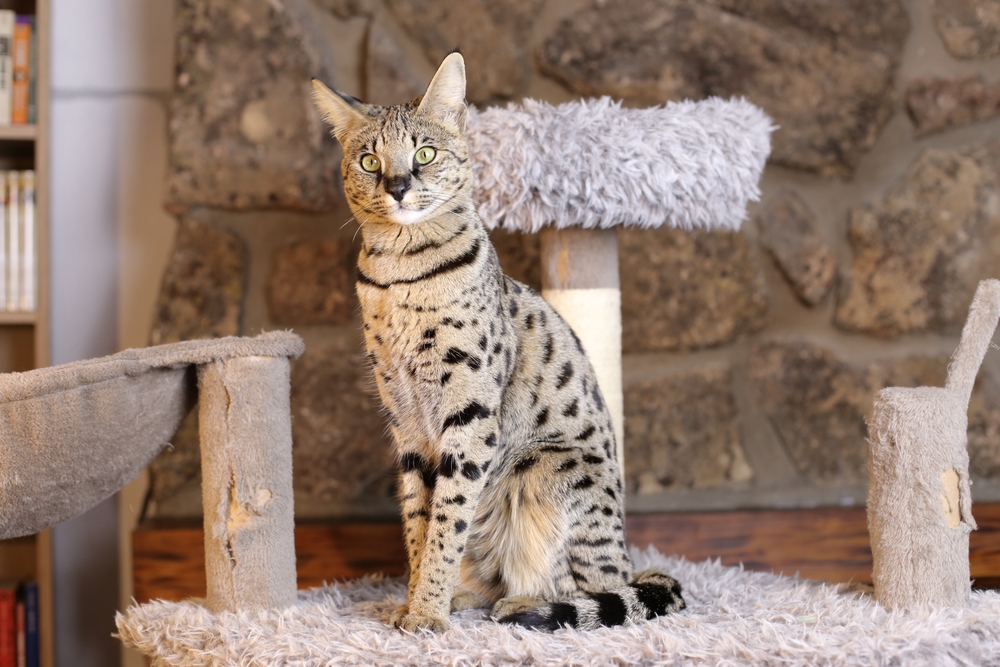
The Savannah’s tail is exceptionally long, which adds to their tall, striking appearance. Savannah cats vary widely in size depending on their generation, meaning how closely related they are to the serval. Early-generation Savannahs (such as F1 and F2 cats) are typically much taller and heavier than the average housecat, while later-generation Savannahs are more moderately sized and may be closer in weight to athletic domestic breeds, though they often still appear larger due to their long legs.
Size can also vary based on sex and individual genetics. F1 males are usually the largest and most serval-like, with longer legs, larger ears, and a more exotic look. Because hybrid breeding involves natural variation, cats from the same litter can differ noticeably in size and build.
The Savannah is very long and lean. They are tall and long for their weight, which gives them fantastic climbing abilities. Their eyes start as blue when they are kittens, but they do darken to green or brown as they get older.
Maintenance
The Savannah’s coat is straightforward to care for. They need to be brushed weekly at the most to clear out the dead hairs and debris. However, that’s about it. They do an excellent job of keeping themselves clean, so they don’t need much help.
Savannah cats need regular nail trims, as their nails tend to grow quickly. Some individuals may require trimming more often than the average housecat. Routine dental care, including regular tooth brushing, is also important for maintaining good oral health.
These felines prefer to be up high where possible. They will usually prefer to be on the counter, as opposed to on the floor. Investing in lots of cat trees and climbing structures is necessary. They can leap approximately 8 feet into the air so that they can find the top of nearly any surface.

Temperament
Savannah cats are fairly “dog-like.” They will follow their owners around the house and are quite loyal. You can even train them to walk on a leash and to fetch—just like a dog. A Savannah’s overall temperament can vary widely. Exposure and socialization are likely critical factors in their friendliness. Some cats will run up and greet newcomers at the door, while others will run and hide. If you expose your cat to many different people as a young feline, they will likely be more friendly.
These cats are inquisitive, which often means that they will get into things. They can figure out how to open cabinets and doors—some even like to play with light switches.
Sometimes, these cats will enjoy the water. This is especially true if they are introduced to water as kittens. This can make water bowls somewhat complicated, as many cats will attempt to play in the water. As intelligent cats, they can learn tricks just like dogs. They can be walked on a harness, and most take exceptionally well to tricks. They are still relatively independent, however, especially as adults.
Suitable for:
Savannahs are beautiful, active cats. They are incredibly exotic but require a bit of care. While they don’t need to be brushed or anything of that sort, you do have to cat-proof your house. It is in your best interest to train them as well. Socialization is important.
Overall, these cats are great if you’re looking for an exotic animal. However, you do need extra time to take care of them.
Which Breed is Right for You?
Both Bengals and Savannahs are a mix between a wild feline and a domestic cat. Because of this, they have some unique requirements and personalities. If you’re looking for an exotic cat that still acts like a regular housecat, a Bengal is likely your best option. However, if you’re looking for an exotic personality as well, choose a Savannah.
Either way, you need plenty of extra time and attention to take care of either of these cats properly—they are not for the faint of heart!
You might also like:
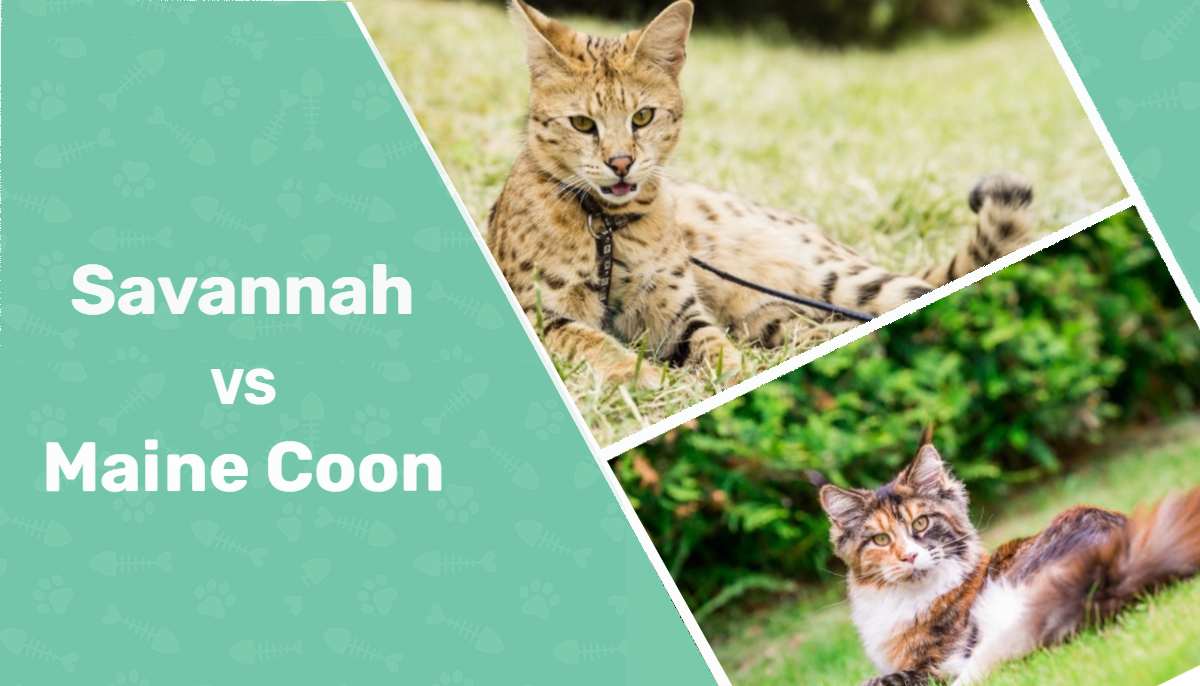
Savannah Cat Vs. Maine Coon: What’s The Difference? (With Pictures)
Bengal Savannah Cat Mix: Info, Pictures, Temperament & Traits
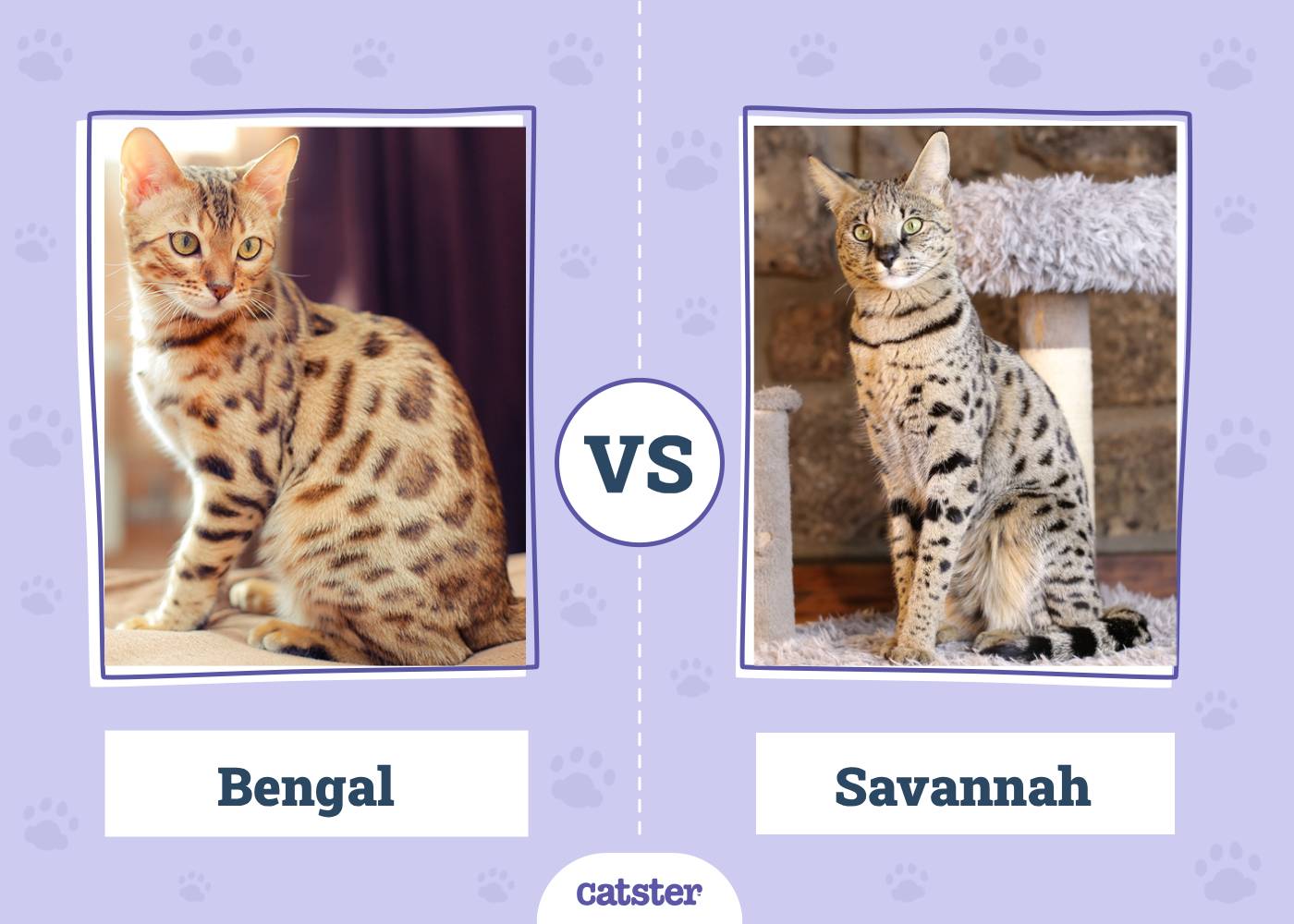
Featured Image Credit: Left - Shvaygert Ekaterina, Shutterstock | Right - AJR_photo, Shutterstock

Expert cat care, straight to your inbox
Vet-reviewed advice, behavior tips, and the best of Catster. Free, and you can unsubscribe anytime.
By signing up, you agree to our Terms & Conditions and Privacy & Cookies Policy.
Christian started writing for a local newspaper as a teenager, and he's been involved in the publishing industry for most of his adult life. Combining his love of writing with a passion for animals, he is currently the Director of Editorial at Pangolia and the Editor-in-Chief at Catster.
Christian lives in the Philippines with his wife, son, and four rescue cats: Trixie, Chloe, Sparky, and Chopper.
Join the conversation
Ask a question, share your story, or send private feedback.