Get

In Your Inbox

Catster is reader-supported. When you buy via links on our site, we may earn an affiliate commission at no cost to you. Learn more.

Why Does My Cat Lick Food But Not Eat? (Vet Answer)
Share

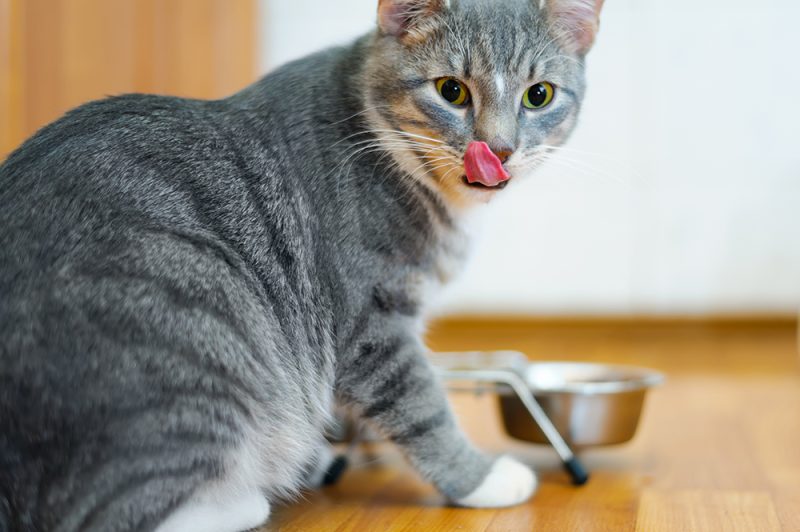
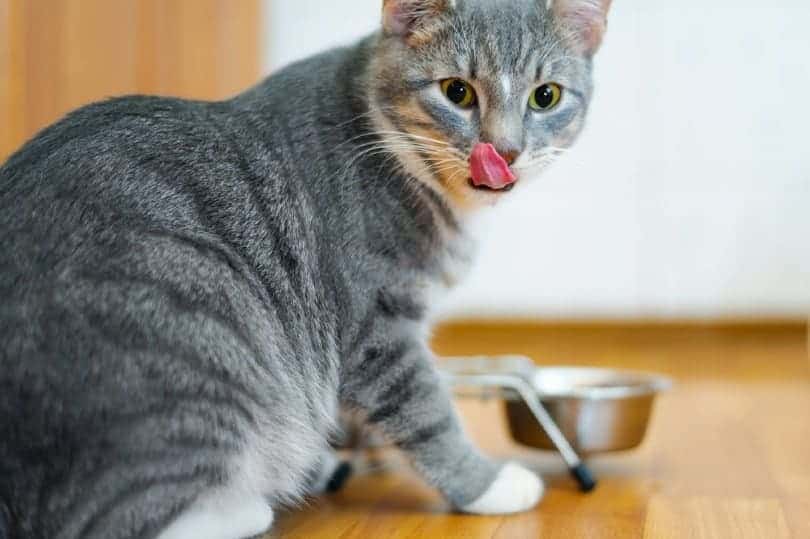
grey cat licking lips after eating cat food from bowl inside on floor

You spend what feels like hours trying to pick a cat food that you think they’ll like—online shopping, reading reviews, maybe picking up a few tasty looking cans in the store, as well. Will they like dry or wet? Chunks, shreds, or pate? Large kibble or small?

But, you get home, and start to offer up all the new, tasty treats. Much to your dismay, your cat may sniff or lick their new food, without actually eating it. What drives this behavior? What does your cat not like about the new food? Or is something more going on?

Read on to learn more about what it means when your cat licks food, but does not eat it.

divider 2 cats

Picking a Cat Food

woman with a push cart in grocery buying cat food
Image Credit: LADO, Shutterstock

There are a variety of factors to consider when choosing a cat food.

First, any medical considerations should be accommodated. This might mean various life stages (kitten, adult, senior), or breed-specific foods. Dietary intolerances, such as food allergies, are another consideration, as can be kidney disease.

For healthy cats, picking a food that is of high quality and from a reputable brand are strong primary considerations. Next, whether your cat will eat wet or dry food is important to consider, as both have potential benefits. For dry foods, things such as kibble size, shape, and flavor are important. For wet food, similarly, the composition of the food (chunks, gravy, pate, broth) matters, as do protein type and flavor. Cats are far more likely to lick a gravy-based wet food that has chunks and leave behind the chunks. Possibly because it is easier, or possibly because they may not like what the chunks are made of!

Licking But Not Eating: Possible Causes

Cats might lick their food, but not eat it for a variety of reasons, including the following:

  • They don’t like the taste
  • They don’t like the texture
  • They don’t like the size of the meat chunks
  • They are nauseous (stomach upset, chronic kidney disease, pancreatitis, etc.)
  • They have gastrointestinal (GI) pain
  • They have dental pain or problems
  • They have facial pain or problems
  • They aren’t hungry
  • Neurological problems
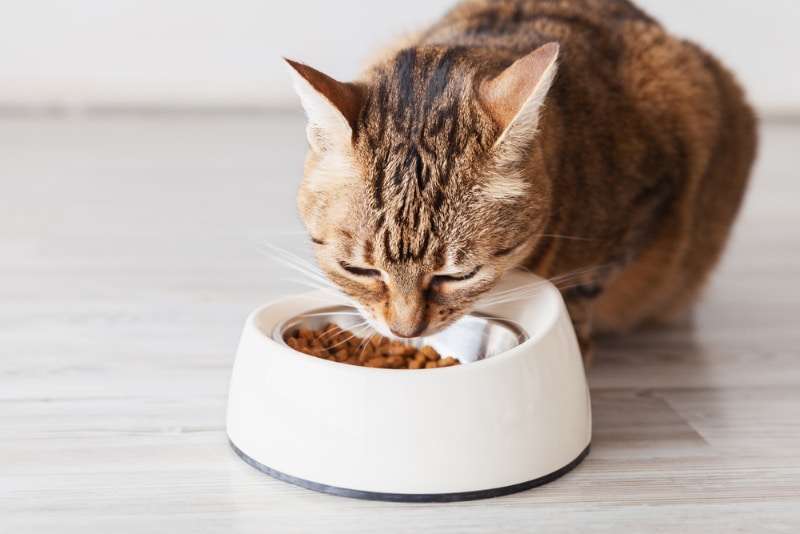
American shorthair cat eating
Image Credit: Apicha Bas, Shutterstock

Dry Food or Wet Food

The answer is: it depends. This is a tricky question that might not have an easy answer. Water content in food is hugely important for cats, and wet food has a higher water content. However, some cats may prefer dry food and refuse wet food altogether. There is annectdotal evidence that dry food may help with some dental issues, as well. For now, a combination of both wet and dry food is a good route to go with for your cat.

divider 2 cats

Frequently Asked Questions (FAQs)

Why did my cat stop eating a food they previously liked?

Great question! Sometimes cats will stop eating a food they previously had no issues with. This can often be a sign of something more serious occurring. So, when in doubt, contact your vet.

More commonly, this can be associated with dental disease, which may cause pain or difficulty in chewing. Issues that cause GI upset or nausea can also cause a cat to loose their appetite, including chronic kidney disease, and pancreatitis. Other times, a cat may simply change their preference for their food.

My cat won’t eat wet food at all. Why is that?

Some cats have strong food preferences, and if they didn’t learn to like the texture of wet food in their formative kitten period, they may not like wet food as an adult. Sometimes, it is impossible to train them otherwise!

However, there are a few tips worth trying:
  • Microwave or heat the wet food slightly, so it is lukewarm. This will often improve the flavor and enhance the smell.
  • Kibble or dry food can moistened with water or cat milk, to a cereal consistency. This may slowly introduce the concept of different textures to a cat that is otherwise unfamiliar with them.

How long can canned food sit out if my cat doesn’t eat it right away?

The length of time that canned food can sit out depends on multiple factors, such as whether it is indoors or outdoors, the ambient temperature, and whether it is in direct sunlight or not, amongst others. As a rule of thumb, if you would not eat your food after leaving it out for that period, it is probably time to ditch the food and start fresh!

divider 2 cats

Conclusion

A variety of reasons can cause cats to lick their food but not eat it. While it may simply be a matter of their food preference, such behavior can sometimes be indicative of more serious medical issues. So, if ever in doubt, do not hesitate to reach out to your veterinarian for medical help.


Featured Image Credit: mik ulyannikov, Shutterstock

Want content like this delivered to you?

Sign Up For Our Newsletter

News, insights, expert advice, and everything cat

* By submitting, you agree to our Terms & Conditions and Privacy & Cookies Policy.


How useful was this post?

Click on a star to rate (you can leave written feedback after clicking submit)

Help us improve Catster for pet parents!

Your feedback really matters.

What did you like about this post? Also how can we improve it?

Join the conversation

2 Responses

  1. Microwaving destroys any nutrients there may have been. What suggest something that destroys the best ingredients??? Microwaving is commonly considered to be a huge no no for reheating/cooking. Look into it.

    1. Hey Carla, that is a super common belief, and it makes total sense why it feels like a "no-no"; the idea of "nuking" food sounds aggressive! However, the science of cooking actually tells a different story.
      All cooking methods, whether you are boiling, baking, or frying, destroy some heat-sensitive nutrients (like Vitamin C and certain B vitamins) simply because heat alters molecular structures. The main drivers of nutrient loss are actually long exposure to heat and leaching into water.
      Because microwaves work by vibrating water molecules to heat food rapidly from the inside out, they cook food much faster and require little to no added water. Because of this speed and efficiency, studies from organizations like Harvard Medical School and the FDA show that microwaving actually preserves heat-sensitive nutrients better than boiling or baking.
      When it comes to pet food, the real issue with microwaving isn't nutrient destruction; it's hot spots. Microwaves heat unevenly, which can leave a hidden pocket of scalding hot food that can burn a pet's mouth. If you ever use a microwave to take the chill off refrigerator-cold wet food, the golden rules are to do it for only 5 to 10 seconds, use a microwave-safe ceramic or glass dish (never plastic or foil), and stir it thoroughly to distribute the heat evenly.

Leave a Reply

You’re very welcome to leave a comment or question. Please know that all comments must meet our community guidelines, and your email address will NOT be published. Let’s have a positive and constructive conversation.


Catster's Digital Magazine is Back!

Vet-approved health & behavior advice

Real cat stories & community features

Chatting About Big Cat Tourism, Lion Hunting, and Learning From Our Mistakes | Chatty Cattys, Episode 26

In this episode of Catster’s Chatty Cattys podcast, Nicole and Dr. Karyn dive into the dark side of big cat tourism and the...

Why Cats Sit by the Door (But Don’t Go Through It)

Door-sitting is one of those quirky little habits that almost every cat owner experiences at some point. You know how it goes: a...

Six Legs Are Better Than Three – How A Tripod Dog and Kitten Found Friendship Through Recovery

Sometimes the most meaningful friendships begin in the most unexpected places. At a Maryland veterinary hospital operated by Last Chance Animal Rescue, two...

The Original Space Invaders – Why Zero Respect for Personal Boundaries Is a Good Thing

Cats have a reputation for being independent, and in many ways they are. But anyone who has tried to work at a laptop...

More related

Is Ajax Dish Soap Safe for Cats? Recommendations & Alternatives

Dish soap as a grooming tool is not new to the world of at-home pet grooming. It’s often touted as a quick at-home...

Colorado Hemp Honey Review 2026: A Detailed Look

More and more cat owners are beginning to understand the benefits CBD can offer their cats. Not only does this natural compound work...

Persian Kittens For Sale in Illinois: Breeders List 2026

Excited Cats advocates for adopting before shopping, though we fully understand there are many reasons for seeking a breeder. So, we encourage it...

Cat Stereotypes: Vet-Reviewed Myths & Facts on Color-Based Personalities

As cat owners, we’ve all heard theories about “tortitude”, friendly tabbies, and mischievous tuxedo cats, but just how true are these cat coat...

Keep reading

What’s the Maximum Height a Cat Can Fall from & Survive? Vet-Reviewed Science & Info

Everyone has heard that cats have nine lives, but the real secret of felines is that they rarely have to use more than one. Their incredible agility has led many to believe that cats almost always land on their feet...

cream-colored-maine-coon-cat-jumping-over-the-couch_Nils-Jacobi_shutterestock

9 Best Cat Foods for Maine Coon in 2026: Reviews & Top Picks

Maine Coon cats are the big, handsome fluffballs of the cat world. They have great personalities; however, the Maine Coon’s coat is thick and requires upkeep. These cats are naturally large, but that doesn’t mean they should be overweight or...

maine coon cat finished eating

Can Cats Eat Mint Ice Cream? Vet-Reviewed Health Facts

It’s funny that cats are often portrayed lapping at saucers of cream or a dish of milk, because the fact is, cats shouldn’t have dairy. While kittens can handle milk, most cats begin to become lactose intolerant after they reach...

Can Cats Eat Mint Ice Cream

Can Cats Eat Canned Chicken? Vet-Reviewed Info to Know

Everyone knows that cats are obligate carnivores. In other words, they evolved to eat meat entirely. They don’t typically eat anything else, though they can stomach some other foods. For this reason, giving them canned chicken may seem like a...

Can Cats Eat Canned Chicken

Is Ivy Toxic to Cats? Vet-Reviewed Houseplants Examined

Plants can make for a wonderful addition to any home or yard. Not only do they add to the aesthetic, but they also come with other benefits, such as increasing oxygen and humidity and even cleansing the air around us....

Catster_Is Ivy Toxic to Cats

Triumph Cat Food Review of 2026: Recalls, Pros & Cons

Review Summary Triumph brand cat food has earned an above-average rating compared to other brands that we have reviewed. Our rating is based on product quality, packaging, price, taste, shelf life, etc. Triumph cat food is made in the United...

Triumph Cat Food Review

Why Is My Cat Purring All the Time? 5 Vet-Reviewed Reasons

In popular media, cats are depicted as quirky for their independent nature, hilarious dislike for water, and their ability to slide underneath even the narrowest door opening. Another thing that’s synonymous with our furry felines is their ability to purr....

woman holding and stroking a cat purring

How to Tell If My Cat Has Ear Mites: 5 Vet-Reviewed Signs To Look For

Ear mites are small parasitic creatures that can cause significant damage to cats’ ears. Left untreated, ear mites can lead to a serious infection and even deafness in cats. If you suspect that your cat has ear mites, take them...

kitten with ear mites

Love Cats? So Do We! Join the Catster Community

Stay informed with expert pet care insights delivered straight to your inbox! Discover professional guidance on animal behavior, feeding tips, trusted product picks, and much more.


Sign up for the Catster Email Newsletter

Stay informed with expert pet care insights delivered straight to your inbox! Discover professional guidance on animal behavior, feeding tips, trusted product picks, and much more.