Low Blood Pressure in Cats: Our Vet Explains the Signs, Causes, Treatments & FAQ

In this article
Low blood pressure occurs less commonly in cats than high blood pressure does. Causes may include blood loss, severe infection, heart disease, or even side effects from medications. Cats with low blood pressure may have pale gums, weakness, behavioral changes, or a lower-than-normal body temperature (hypothermia). Correctly treating low blood pressure involves determining the underlying cause.

What Is Low Blood Pressure in Cats?
Low blood pressure, also known as hypotension, is when blood pressure is lower than normal. When blood pressure is low, there is decreased blood perfusion to organs, tissues, and cells. This may lead to organ failure due to decreased delivery of oxygen to major organs.
A cat’s blood pressure is measured similarly to that in humans. The normal blood pressure in humans is 120/80 mm Hg. The top number, known as the systolic pressure, measures the pressure in the artery wall while the heart is contracting. The bottom number, known as the diastolic pressure, measures the pressure in the artery wall when the heart is relaxed.
In cats, the systolic pressure is more important and reliable than the diastolic pressure. Normal systolic blood pressure in a cat is less than 150 mm Hg. However, a systolic blood pressure measuring 100 mm Hg or less is considered hypotensive in cats.

What Are the Signs of Low Blood Pressure in Cats?
Signs of low blood pressure in cats may include:
Cats with an overactive immune response to an infection, known as sepsis, or with systemic inflammatory response syndrome may have a slower-than-normal heart rate, known as bradycardia instead of tachycardia. This is commonly seen in cats with shock.
What Are the Causes of Low Blood Pressure in Cats?
Causes of low blood pressure in cats may include:
How Is Low Blood Pressure in Cats Diagnosed?
Low blood pressure is typically diagnosed through physical exam findings, including blood pressure readings of 100 mm Hg or less. Cats with low blood pressure may have pale gums, weakness, increased capillary refill time, cool extremities, and hypothermia. Normal cats typically have a resting heart rate of 160 to 200 beats per minute. Heart rates above or below this range may indicate tachycardia or bradycardia.
Diagnostic testing, such as blood work, urinalysis, radiographs, and ultrasound, may help determine the causes of low blood pressure after your cat has been stabilized by your veterinarian. Monitoring equipment like an ECG may be used to diagnose heart arrhythmias.

How Is Low Blood Pressure Treated in Cats?
When it comes to caring for a cat with low blood pressure, the goals of treatment are to restore blood pressure, blood volume, and oxygen delivery to cells, tissues, and organs as soon as possible. Treatment may depend on the underlying cause(s) of the low blood pressure.
- Cats may be given IV fluids if they are in shock (only after primary heart disease has been ruled out).
- Cats should be warmed if they are hypothermic. The normal body temperature of a cat is within the range of 99°F to 102.5°F.
- Cats with hemorrhage or a bleeding disorder may need a blood transfusion to replace the blood loss.
- Treatment with medications known as vasopressors may help increase blood pressure. Vasopressors include dopamine, norepinephrine, vasopressin, or dobutamine.
- Cats with heart disease may need supplemental oxygenation and diuretics.
- Antibiotics may be prescribed for cats with severe infections.
Frequently Asked Questions
What Is the Normal Blood Pressure Range for Cats?
The normal blood pressure range is less than 150 mm Hg, typically 120 to 140 mm Hg.
What Blood Pressure Reading Indicates That My Cat May Have Low Blood Pressure?
Systolic blood pressure readings of 100 mm Hg or less may indicate that your cat is hypotensive.
How Is Blood Pressure Measured in Cats?
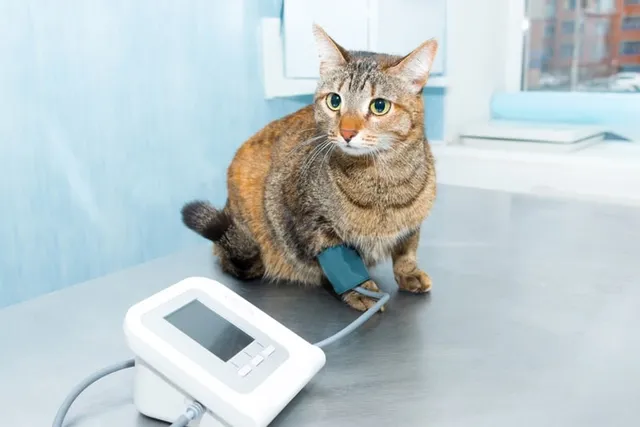
Blood pressure is measured indirectly using a sphygmomanometer or Doppler ultrasound. It can also be measured directly by placing a catheter in an artery that is then connected to a pressure transducer.
Conclusion
Low blood pressure can be a potentially serious complication in cats. It can only be effectively treated once the underlying cause(s) have been determined. Treatment goals are to restore blood pressure, blood volume, and oxygen delivery to the cells of the body.
Sources
Featured Image Credit: Julia Cherk, Shutterstock
Expert cat care, straight to your inbox
News, insights, and useful advice, delivered to you.

No spam — unsubscribe anytime.
By signing up, you agree to our Terms & Conditions and Privacy & Cookies Policy.
How useful was this post?
Click a star to rate. You can leave written feedback afterwards. (We read all feedback.)
Dr. Stacie Grannum DVM (Veterinarian)
Dr. Stacie Grannum was born and raised in Arizona. When she was five, an encounter with a tiny animal changed her life forever. A baby bird fell high from its nest, and Dr. Grannum diligently cared for it. Sadly, despite her attempts to save the little birds life, the little bird did not survive. From this heartbreaking loss came a new ambition, carving the path that Dr. Grannum followed. She knew that she wanted to pursue a career in veterinary medicine. She worked hard toward that goal and dedicated her time to pursuing her dream.
Today, her focus is on pet health, particularly wellness and preventive medicine. She also enjoys writing about pet health and is eager to share her knowledge with other pet lovers.
In 2014, Dr. Grannum earned her Doctor of Veterinary Medicine Degree from Colorado State University.