How to Keep a Cat From Running Out the Door: Our Vet Answers

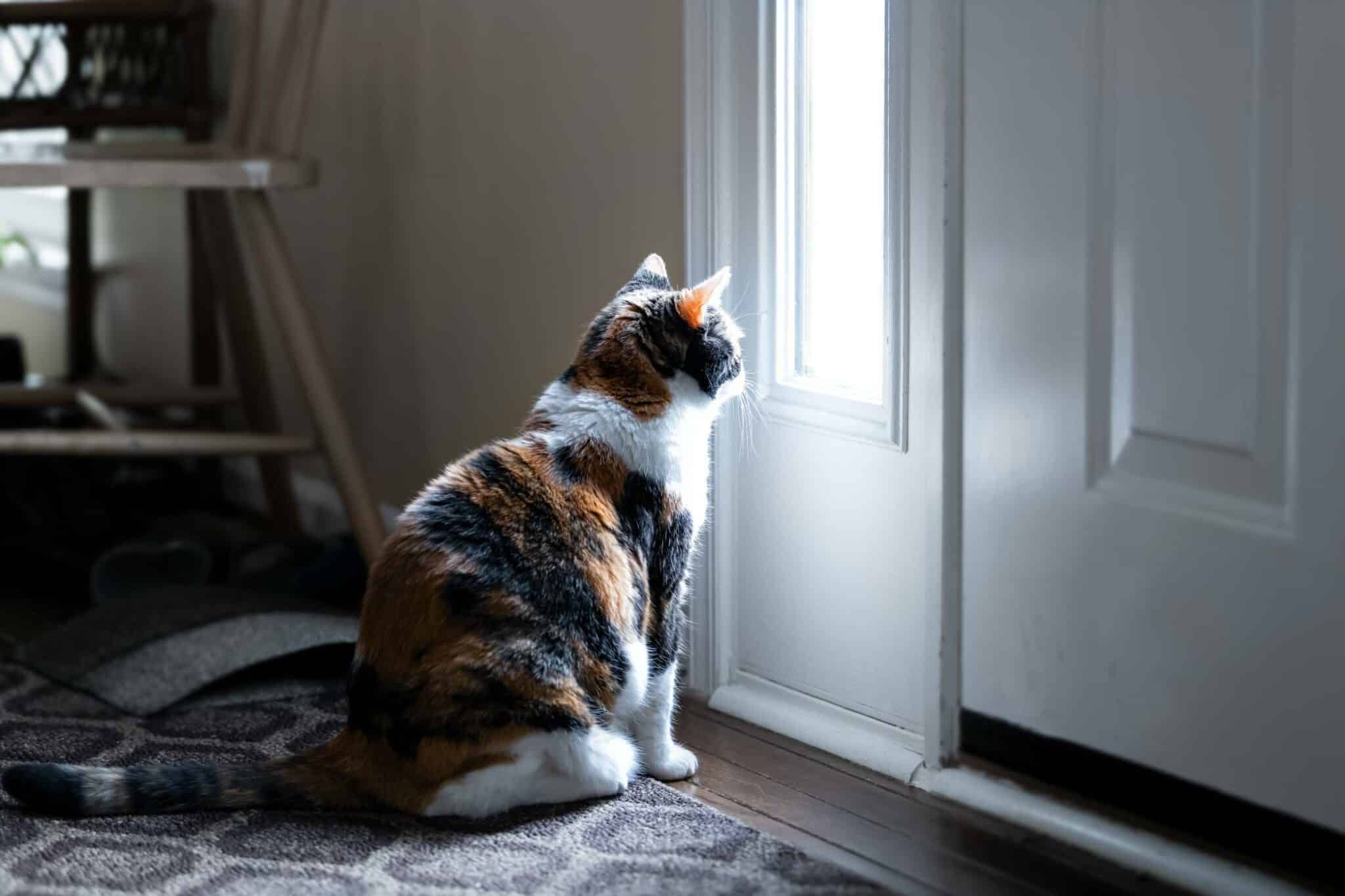
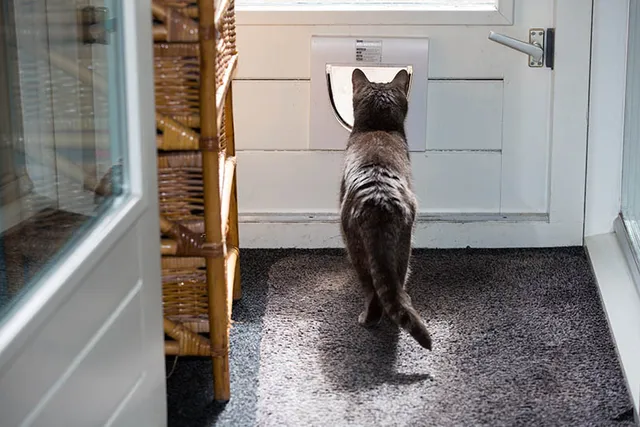
As a cat owner, you’ve undoubtedly experienced escape attempts from your pet. Whether it’s trying to dart out the front door or attempting to get into a room in the house that is off-limits, cats are not shy about trying to break through door boundaries that are in place for their own safety and our comfort and/or convenience. There are many reasons for them doing so, such as wanting to explore and feeling the need to seek out nature.
Sometimes, cats will try to run through doorways out of curiosity, due to stress, or because they are afraid of something or someone. Whatever the reason, there are a few things that you can do to keep your cat from running out your front door (or through other doorways in your home that they shouldn’t go through).
A Quick Note:

The 5 Methods to Keep a Cat From Running Out the Door
1. Make Neutering a Priority

| Resources: | A licensed veterinarian |
Though many people assume the term “neutering” is only something done in males, it is not a sex-specific procedure in veterinary literature. This procedure is also referred to as a spay surgery (for females) or a castration surgery (for males). It is a short procedure which removes the reproductive organs of the animal: the ovaries and uterus in a female, and the testicles in males. Other terms include an ovariohysterectomy (in females) or an orchiectomy (in males).
Having your cat neutered is an effective way to keep them from wanting to get outside and look for mates. If they are not trying to reproduce, they won’t feel an urge to get outside and sniff out possible partners. Instead, they’ll be more inclined to continue snuggling on the couch with you.
Neutering your pet does more than curb escaping behavior; it also offers other benefits, such as lower incidences of certain cancers in both sexes. In addition, it can help curb other unwanted behaviors in some cases too, such as spraying or yowling.
2. Make the Indoors Interesting

| Resources: | Your creativity |
Contrary to popular belief, cats aren’t inherently lazy animals that just sleep and eat all the time. Cats are inquisitive and explorative by nature. If your cat’s indoor environment is boring, they might simply be tempted to explore everytime the door opens because the outdoors might just seem more appealing.
Of course, our pet cats do not know that roaming has its risks as well. After all, they can get lost, injured, or contract an illness if they go outside, and that’s not even factoring in the weather they have to deal with. Therefore, keeping the indoors enticing and interesting for your cat with multiple scratching posts, toys, mazes, puzzles, and of course, interactions with your pet can make your cat more interested in staying indoors at times.
Looking for toys that will cater to the many needs of your cat? The Hepper Hi-lo Cat Scratcher is one of our favorite cat products, and it will encourage your cat to get active. Its clever three-angle design offers multiple ways for your cat to climb, stretch, and exercise. Made of a sturdy plywood base and a replacement cardboard insert, this scratcher is an option that cats can enjoy for years to come. If your cat requires a little encouragement for self-play, the Hepper Catnip Mice Toy Set is a fantastic choice for their instinctual needs. Made with natural, bite-resistant hessian fabric and filled with organic catnip. Cats can satisfy their natural prey instincts while getting the physical activity they need to thrive.
| Image | Product | Details | |
|---|---|---|---|

|
Hepper Hi-Lo Cat Scratcher |
|
Check Price |

|
Hepper Catnip Mice Toy Set |
|
Check Price |
At Catster, we've admired Hepper for many years, and decided to take a controlling ownership interest so that we could benefit from the outstanding designs of this cool cat company!
3. Leash Train Your Cat

| Resources: | A cat harness & leash |
Though unsupervised roaming can be dangerous for your cat (and the local fauna), it is important to realize that this doesn’t necessarily mean you should deprive your cat of the enrichment associated with roaming unsupervised. A cat that bolts out the door is definitely undesired. However, leash training your cat is an approach that allows you to take your cat outdoors safely.
Leash training may also curb bolting behavior; if a cat learns that they’re frequently taken outdoors on a leash, they will likely not be interested in escaping all the time.
4. Utilize a Catio

| Resources: | Catio (DIY, custom, or ready-made) |
Another way to prevent your cat from bolting out the door is to offer them the same exposure to the outside by placing them in a cat patio, also known as a “catio.” This allows your cat to enjoy the outdoors while also offering them safety in your absence.
With a catio, your cat can curb their curiosity about the outdoors without the need to bolt out the door every time they see you open it.
5. Create Distractions

If you want to get out of your front door or through one in your home that you don’t want your cat going through, you can try distracting them from the doorway right before you make your personal escape. The distraction must last longer than just a couple of seconds, so throwing a toy in the opposite direction likely will not work.
However, certain toys can provide enough distraction. For example, a puzzle toy will keep your kitty busy for several minutes, if not longer, while you make your way through the door that you don’t want them getting through. Depending on your cat’s preference, you can also place a cardboard box in the living room, or even fill a toilet paper core with treats, tape the ends, and toss it out for fun and games.
Another alternative is to offer your cat their next meal before you are about to leave. A cat that’s busy eating might not notice you making your way out the door. However, this should only be done when you know you’ll be back before the leftovers begin to spoil.
What to Do if Your Cat Does Get Outside

If your cat lives strictly or predominantly indoors or if you must keep your cat indoors for a period of time, you should have a plan of what to do if they end up getting outside despite your efforts to keep them in.
Here are tips and techniques to consider:
Conclusion
Even the happiest indoor cat may still try to run out the door when given the chance. It's more of an instinctive behavior than a definite sign your cat is not happy at home. However, most cat owners feel discouraged by their cats desperately trying to escape.
That’s why it is important to take the proper precautions to keep your cat secure in your home and to do necessary procedures (such as microchipping or sterilization) to reduce the urge to escape.
See Also:
Featured Image Credit: Andriy Blokhin, Shutterstock
Expert cat care, straight to your inbox
News, insights, and useful advice, delivered to you.

No spam — unsubscribe anytime.
By signing up, you agree to our Terms & Conditions and Privacy & Cookies Policy.
How useful was this post?
Click a star to rate. You can leave written feedback afterwards. (We read all feedback.)
Dr. Luqman Javed DVM (Veterinarian)
Dr. Luqman (also known as Dr. Lucky) grew up with an immense passion for animals of all kinds. By becoming a veterinarian, he turned his childhood dream into reality. Now, his goals are focused on providing help to cats all around the world by helping to cat owners understand their feline friends better to ensure the best quality of life for them. His passions are wildlife, exotic pets, pet owner education, and animal welfare. He graduated with his DVM from the Universiti Putra Malaysia in 2020. He has worked with a variety of animal species and has decades of personal experience with keeping many different types of exotic pets, such as turtles, hamsters, freshwater fish, chickens, songbirds, and parrots (and he has extensive skills in training parrots, too).