Is There a Home Remedy for a Cat With a Fever? Our Vet Explains
In this article
If your cat has a fever, you may be wondering if there is a remedy you can use to help treat it at home. No human medications are safe for cats, and treating a cat with a fever on your own or with over-the-counter human medications can actually cause more harm and even death in our feline friends.
If there are unsafe home remedies for your cat’s fever, what steps should you take? Read on to find out how to identify when your cat has a fever, understand what may be causing it, and how it can be treated appropriately!

What Is a Fever?
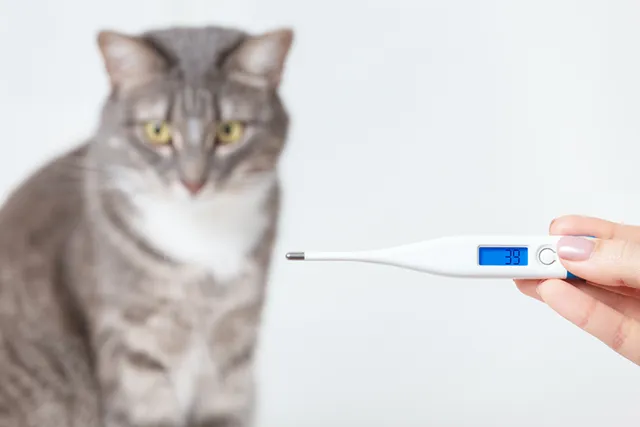
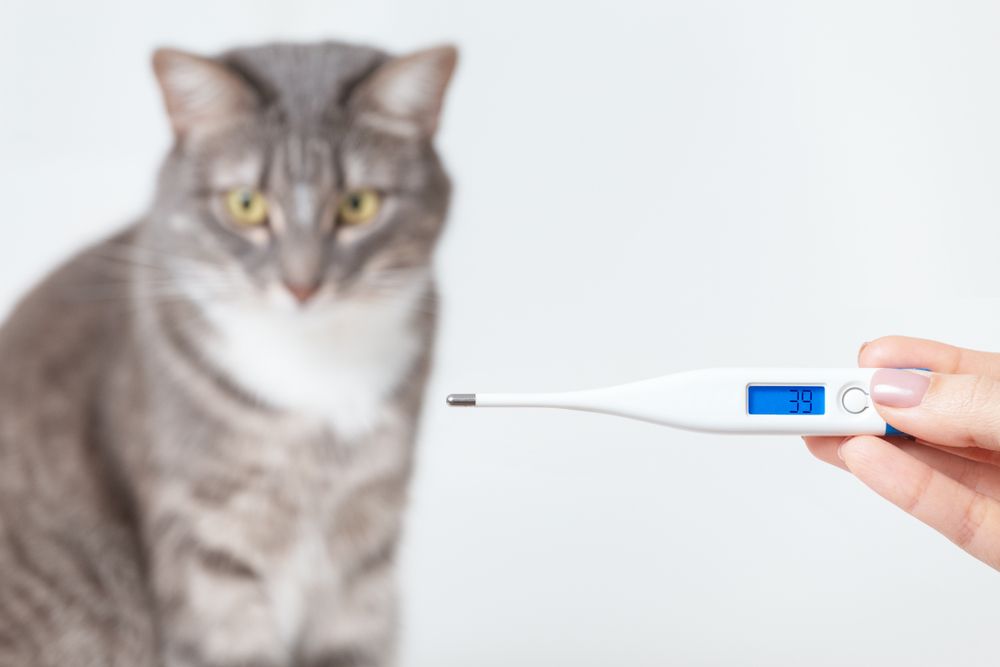
Pyrexia and febrile are medical terms for fever, which signify that the body temperature is higher than normal. A normal temperature for a cat is typically 100 to 102.5 degrees Fahrenheit (38.1–39.2 degrees Celsius). A fever that is up to 103 degrees Fahrenheit (F) can be due to stress or a low-grade fever, but when a temperature is at 104 degrees F or above, this is significant and important to pay attention to. The term, fever of unknown origin (FUO), is used to describe a high fever that lasts over a longer period of time with an unknown cause.
In the body, temperature is controlled and regulated by a portion of the brain called the hypothalamus, which acts like a home’s thermostat. When a fever is seen, it is expected to be a protective response by the body due to either an infectious or non-infectious cause. At higher temperatures, bacteria cannot divide as quickly, and the immune system can be more successful.
While some fevers may be mild and go away on their own, other times, a fever may indicate a very ill cat that needs medical intervention. If a fever is present at all, contact your veterinarian for advice. Alternatively, if at any point the fever is at 104 degrees F or above and/or the cat in question is showing other signs of serious illness (such as difficulty breathing, continual vomiting, extreme lethargy), the cat should be examined by a veterinarian right away.
Signs of a Fever in Cats
Cats can be elusive creatures, often hiding both signs of illness and themselves when they're not feeling well.Some commonly seen secondary signs of a fever might be:
- Hiding
- Lethargy
- Not wanting to eat or drink
- Body feeling warmer to the touch than normal
- High heart rate
- Increased breathing
- Shivering
- Dehydration, which can be observed with dry gums, sunken-in eyes, and tenting of the skin on the scruff of the cat’s neck
- Additional signs may also be present based on the specific cause of the fever, such as vomiting, sneezing, eye or nose discharge, swollen abdomen, limping, wounds with swelling or pus, etc.
If your cat is showing any of these signs, they need to be seen by a vet. Cats are masters at masking illness, so if they have a fever, it is a sure sign that something is wrong.
Obtaining a Cat’s Temperature
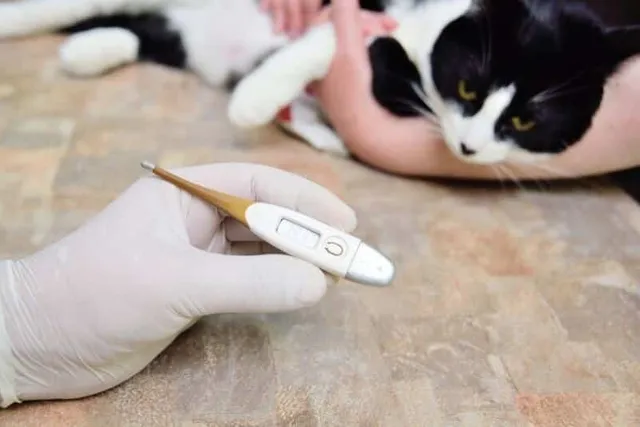
At home, obtaining an accurate temperature on a cat is best done with a rectal digital thermometer. Be sure your cat will allow you to safely obtain their temperature without them or you getting hurt; if not, it’s probably best to leave it to the veterinary clinic. The probe or tip of the thermometer should be lubricated (such as with a lubricant gel or petroleum jelly) and can then be placed into the rectum about an inch.
If a cat is fighting or the thermometer will not go in easily, then it’s time to stop trying. When the thermometer is finished reading, read the temperature and record. Be sure to clean the thermometer well and label it “cat-use-only” for the future!
If you don’t have, or want to use, a thermometer, one indication of fever in cats is warm ears. If the ambient (surrounding area) temperature is mild/cool and your cat’s ears are warm/hot, it’s very likely that they have a fever. This is because when a cat’s body temperature rises, the capillaries in the ears dilate to help lose heat to the environment. On a hot day, or for a cat enjoying some sunbathing, this becomes a much less reliable method.

Causes of Fever in a Cat
The causes of a fever can be extremely varied, and there is a laundry list of potential reasons. With that being said, an infectious cause is usually the most common reason, and in cats specifically, a viral infectious cause is the most common culprit. Some of the more broad categories with some individualized examples are listed below.
- Excitement, stress, or anxiety
- Infectious agent of some kind with examples including:
- Inflammatory diseases like hepatic lipidosis, cirrhosis, inflammatory bowel disease, or blunt trauma
- Medications/drugs and toxins such as tetracyclines or heavy metals
- Vaccines
- Endocrine and metabolic diseases such as hyperthyroidism
- Immune-mediated diseases like with immune-mediated hemolytic anemia or polyarthritis
- Certain types of cancer such as leukemia or lymphoma
- Heat stroke
Diagnosing a Cat Fever
If a cat is feeling ill, a visit with a veterinarian will begin with a thorough history and may include some detailed questions such as your cat’s travel history, vaccination status, current medications, and your cat’s lifestyle such as indoor vs. outdoor cat. Next will be a complete physical exam with the veterinarian looking for clues as to the cause of the fever. The history coupled with the exam findings will likely help dictate the next steps.
Some lab work that may be recommended could include bloodwork to evaluate the information on the cells in the blood, bloodwork to look at internal organ function, an FIV/FeLV test, urinalysis, urine or blood cultures, and imaging such as with X-rays or ultrasound. If the cause is still not identified, further targeted work-up may be needed and can run the gamut; some of these tests might include a fecal exam, serologic testing for infectious diseases, biopsies, more advanced imaging such as computed tomography (CT) or magnetic resonance imaging (MRI), a cerebral spinal fluid (CSF) tap, etc.
Treating a Cat Fever
For people, common at-home treatment of a fever often begins with rest, fluids, and medication to help bring down the body’s temperature. Unfortunately for our cats, we can’t force them to drink, and over-the-counter fever-reducing medications that people often use can make cats more ill and sometimes even prove to be fatal. These include medications such as acetaminophen (ex: Tylenol), ibuprofen (ex: Advil, Motrin B), or aspirin. Do NOT give these or any other medication to your cat without the direction of a veterinarian. The safest home remedy you can provide for a cat with a fever is to provide a comfortable, quiet place to rest and strongly encouraging food and water consumption. But as discussed, one should not attempt to treat their cat’s fever on their own at home.
If a veterinarian can determine the cause of the cat’s fever, the treatment will be tailored to resolve that specific ailment or disease. For example, if a cat has a bacterial infection, antibiotics would be utilized. If a fungal infection is found, antifungals would be used for treatment. If pyometra (infection of the uterus) is the cause, surgery and antibiotics will be needed.
In many cases, supportive care may also prove to be helpful. Intravenous fluids can many times help bring down body temperature as well as treat dehydration. Nutrition support is key as a febrile individual requires a high number of calories while sick; some cats may even need a feeding tube. If the fever is high enough, topical cooling with monitoring such as with fans or using isopropyl alcohol on specific areas can be helpful. Cat-safe antipyretic (medication to reduce a fever) treatment may or may not be used depending on several factors, including whether certain medical conditions are present or whether the fever is life-threatening and long-lasting.

Holistic Treatment for Cats
While we do not recommend using home remedies to treat your cat’s fever without first speaking to your vet, if you are interested in exploring some natural remedies for less acute problems, such as arthritis, stress, and preventive health, you can check out our articles on Holistic Cat Care and Traditional Chinese Medicine.

Conclusion
While it can be stressful to witness your beloved feline ill with a fever, medical testing, care, and treatment are best performed by your cat’s doctor. Home remedies or treatment at home without the direction of your cat’s vet is not recommended, and in many cases, may further harm your cat.
If you have any concerns, contacting your cat’s veterinarian is as easy as making a simple phone call!
Related Reads:
Sources
Featured Image Credit: frantic00, Shutterstock

Expert cat care, straight to your inbox
Vet-reviewed advice, behavior tips, and the best of Catster. Free, and you can unsubscribe anytime.
By signing up, you agree to our Terms & Conditions and Privacy & Cookies Policy.
Dr. Rachel Ellison DVM (Veterinarian)
Dr. Rachel Ellison lives on a mountain in Utah with her husband, daughter, and son, as well as their animal menagerie— a Bernese Mountain Dog, a Bengal/Siamese mix, and an orange tabby cat, as well as numerous chickens. During her free time, she enjoys being with those she loves, cooking and baking, reading, hiking, sharing her knowledge about cats, and exploring nature and the world around her.
Join the conversation
Ask a question, share your story, or send private feedback.