Cerebellar Hypoplasia in Cats: Our Vet Explains the Causes, Signs & Treatments

In this article
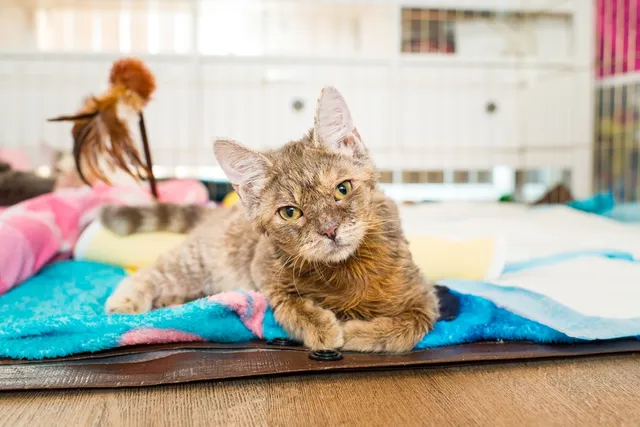
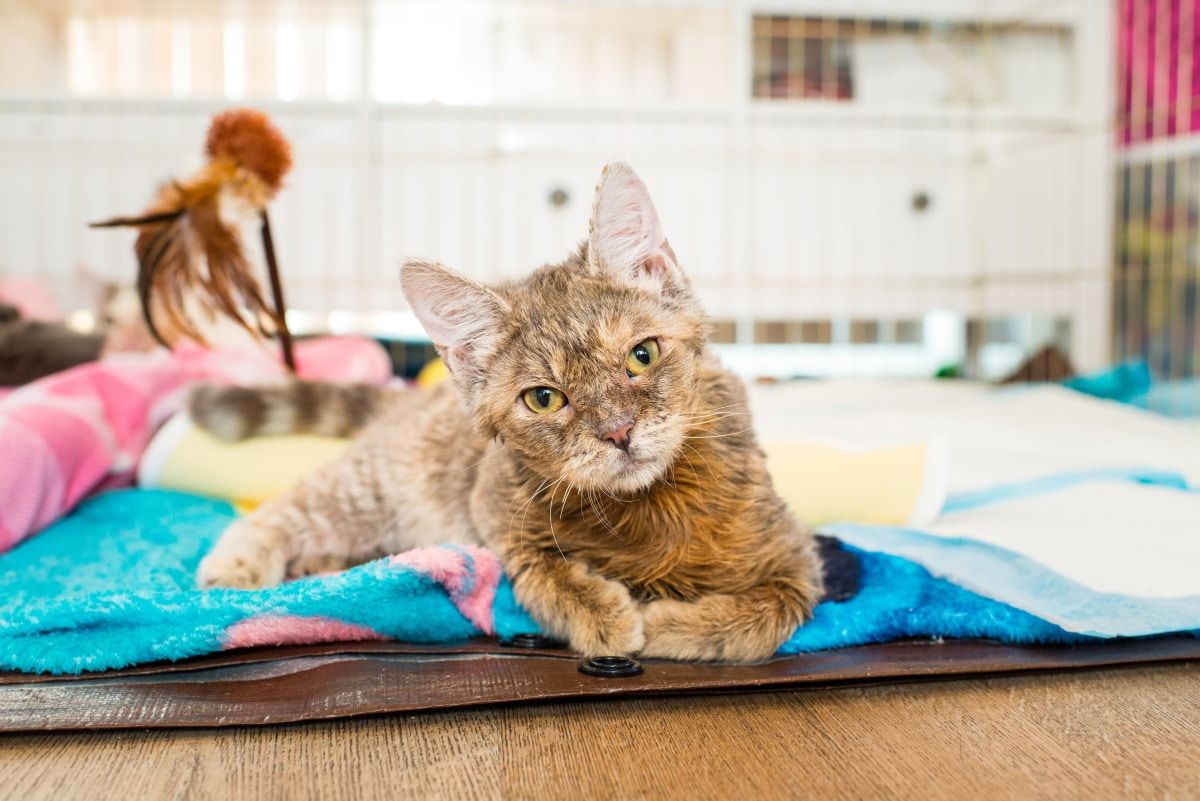
Cerebellar hypoplasia is a neurologic disease that occurs when a cat’s cerebellum is underdeveloped. This happens in utero and permanently affects a cat’s movements and coordination. Because of this, the disease can also be referred to as “wobbly cat syndrome” or “spastic cat syndrome” based on their uncoordinated movements.
So as a curious friend to felines everywhere, what are some things you should know? Keep on reading below to discover more about this fascinating, yet often preventable disease.

What is Cerebellar Hypoplasia?
So, what exactly is the cerebellum and where is it located? The cerebellum is the part of your cat’s brain that is, among other things, responsible for posture, movement coordination, and balance. It is located at the bottom back of the brain, at the base of the skull, just below the cerebrum, and just above where the spinal cord connects to the skull.
The cerebellum, which is Latin for “little brain” can also be referred to as the hindbrain.

Signs of Cerebellar Hypoplasia in Cats
Signs that can be observed in a cat with a cerebellar hypoplasia could include:
If your pet is showing these signs, we suggest you speak to a vet.
Causes of Cerebellar Hypoplasia
Cerebellar hypoplasia is most commonly caused by the feline panleukopenia virus (feline distemper virus). When a pregnant cat is exposed to or infected with the virus, her kittens in utero also have the potential to become infected as the virus attacks rapidly dividing cells, which includes the cerebellum.
In a litter of kittens where this occurs, some in the litter may be affected at varying degrees, while others may not be at all. Other less common conditions that could cause this disease in kittens include severe malnourishment during pregnancy, trauma while the cerebellum is forming, or other diseases that may cause inflammation in the brain.
For those who have an underdeveloped cerebellum, they will be born with this disease but may not show apparent signs until they start to stand or walk, usually around 2–3 weeks of age. Affected kittens will be affected throughout the remainder of their lives.

Diagnosis of Cerebellar Hypoplasia
A veterinarian will typically tentatively and presumptively diagnose cerebellar hypoplasia based on history and observation of the clinical signs. Lab work to rule out other diseases may also be recommended.
In some cases, advanced imaging such as magnetic resonance imaging (MRI) and computed tomography (CT) will show a smaller than normal cerebellum which also provides evidence for the disease. The diagnosis is confirmed after death via necropsy (a veterinary autopsy).
Treatment
Unfortunately for cats that have this disease, there is no cure. But the good news is with a little help from their loved ones, these affected cats often live happy healthy lives despite their diagnosis! Some lifestyle modifications that may be needed include a lower litterbox, partitioning off stairs, wide-based ramps to help them reach a higher elevation such as to a couch, traction on hard or slippery floors, stable and wide-based food and water bowl, etc.
Additionally, unless on a supervised leash, affected cats should be indoor-only cats as the dangers of outside (other animals, cars, etc.) can be too much for their uncoordinated selves to handle.

Prognosis
Overall, the life expectancy for mild to moderately affected cats can be the same as a non-affected one. These incredibly cute and cuddly kittens grow into cats that make fabulous pets, which makes the prognosis for most cases with this disease a good one! However, if a kitten is severely affected, so much so that they cannot eat or be house-trained even with some help, euthanasia may be the most humane and realistic option.
Misconceptions & Prevention Tips:
Some facts to dispel common misconceptions about this disease:
To help prevent the disease from occurring, routine vaccination of a female cat prior to pregnancy with a distemper vaccine can prevent kittens from developing cerebellar hypoplasia. If an unvaccinated cat becomes pregnant, consulting with your veterinarian on the pros vs cons and timing of the vaccine is key, because if a pregnant cat is either exposed to the virus or is vaccinated with a modified-live distemper vaccine during or shortly after pregnancy, it can also potentially cause the kitten(s) to become affected.
Additionally, if kittens become infected with the virus within a couple of weeks after birth, they may also be at risk as the cerebellum still has rapidly dividing cells 2 weeks after birth. As you can see, having a cat vaccinated at the correct time has many benefits.

Conclusion
Cerebellar hypoplasia is a neurological disease that affects a cat's movements and coordination due to having an underdeveloped cerebellum. But, with a little help modifying their environment, most mild to moderately affected cats can have a normal lifespan and can make great companions, in spite of their diagnosis.
Sources
https://journals.sagepub.com/doi/full/10.1016/j.jfms.2009.03.003
https://veterinarypartner.vin.com/default.aspx?pid=19239&id=4952907
https://www.webmd.com/pets/cats/what-is-feline-cerebellar-hypoplasia
https://www.petmd.com/cat/conditions/neurological/c_ct_cerebellar_hypoplasia
https://vcahospitals.com/know-your-pet/cerebellar-hypoplasia-in-cats
Featured Image Credit: Casey Elise Christopher, Shutterstock
Expert cat care, straight to your inbox
News, insights, and useful advice, delivered to you.

No spam — unsubscribe anytime.
By signing up, you agree to our Terms & Conditions and Privacy & Cookies Policy.
How useful was this post?
Click a star to rate. You can leave written feedback afterwards. (We read all feedback.)
Dr. Rachel Ellison DVM (Veterinarian)
Dr. Rachel Ellison lives on a mountain in Utah with her husband, daughter, and son, as well as their animal menagerie— a Bernese Mountain Dog, a Bengal/Siamese mix, and an orange tabby cat, as well as numerous chickens. During her free time, she enjoys being with those she loves, cooking and baking, reading, hiking, sharing her knowledge about cats, and exploring nature and the world around her.