Ask Dr. Paola - Vomit, Joint Pain & Begging (January 27, 2025)

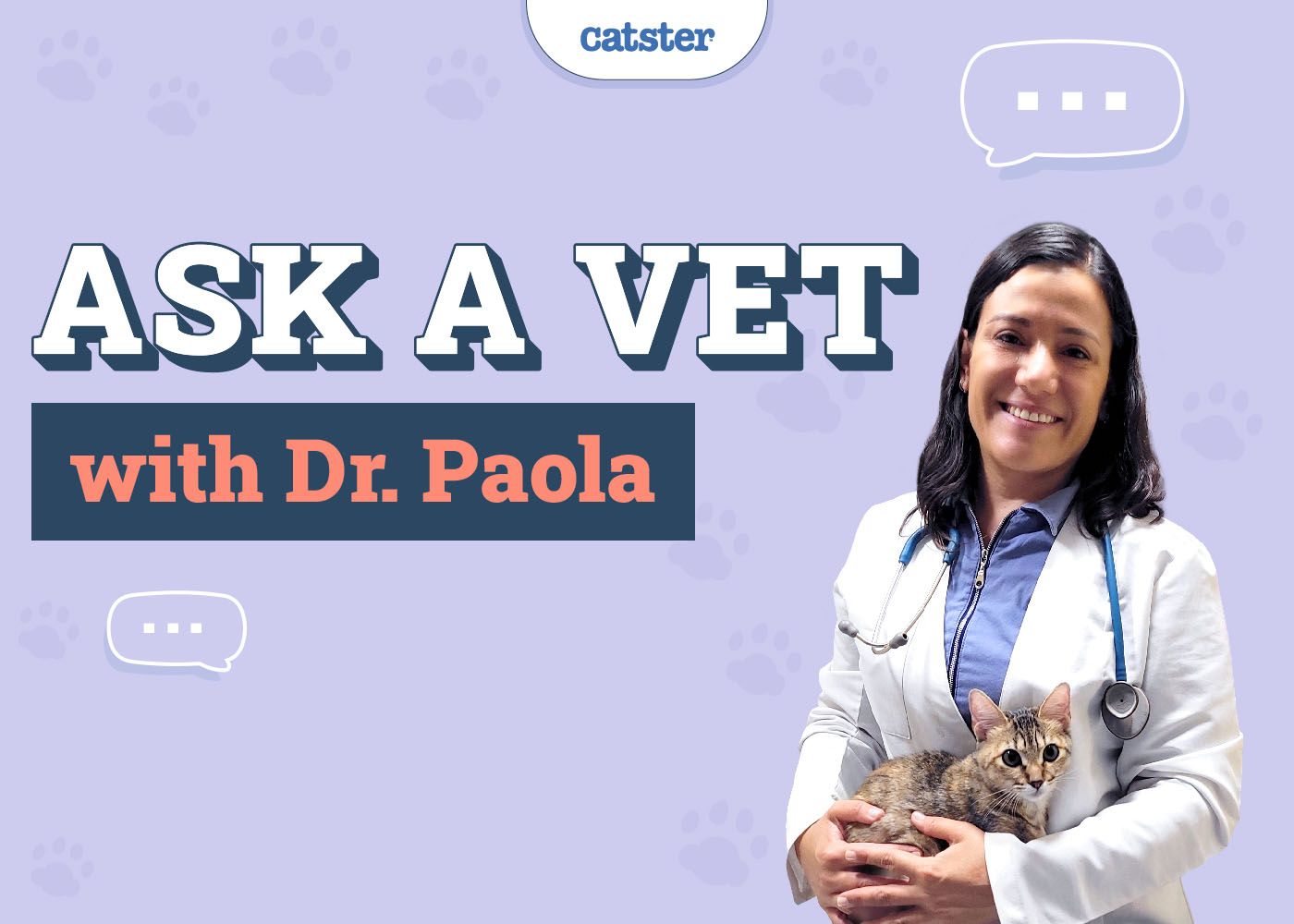
Welcome to our "Ask Dr. Paola" series, where every Monday we bring expert advice straight from Dr. Paola Cuevas (MVZ) to help our readers better understand their cat's health and well-being.
Whether you're a new pet parent or a seasoned cat lover, Dr. Paola is here to provide answers to your most pressing questions. From nutrition tips and preventive care to troubleshooting common behavioral issues, Dr. Paola is ready to offer insights that will keep your kitty happy, healthy, and feline fine. Stay tuned for expert guidance on a range of topics that matter most to you and your cat, so you can make informed decisions and provide the best possible care for your furry companion.
Have a question? Send it in here!

Help! My Cats Vomit A lot!
“Dear Dr. Paola,
I have 2 male littermates that turn 12 this year. They have always vomited a lot. Even after trying different foods. We took one (Jake) to the vet for observation and they found no issues. Now Jake shows no real appetite and projectile vomits a ton of liquid every day. Any idea what might be going on with him? The brother vomits some but has a huge appetite. What should we do next?" - Donna
Hi Donna, Thank you for reaching out about Jake and his brother. Vomiting is concerning, especially when it becomes frequent or is accompanied by changes in appetite, as you're seeing with Jake’s brother. Chronic vomiting in cats can be caused by many issues ranging from mild food intolerances to more serious conditions like inflammatory bowel disease (IBD), food allergies, pancreatitis, or even gastrointestinal lymphoma, particularly as they age.
Since Jake is now projectile vomiting daily and has lost his appetite, this is dangerous and could be indicating an emergency such as a blockage. While the previous vet visit didn’t reveal issues, the escalation of signs means Jake likely needs further diagnostic testing. I would recommend a recheck with your veterinarian as soon as possible. Bloodwork, abdominal imaging (like X-rays or ultrasound), and possibly endoscopy or biopsies may be necessary to identify the problem. In the meantime, trying to keep Jake hydrated is important, as excessive vomiting can lead to dehydration.
His brother's continued appetite but occasional vomiting may indicate a milder or related issue, so it’s worth mentioning both cats’ histories when you visit the vet. I understand this can be frustrating, and stressful, but with timely intervention, many conditions can be managed effectively. Don’t wait.
Best wishes! Dr. Paola


Help! My Cat Has Osteochondrolysplasia!
"Dear Dr. Paola,
I am wondering how long the disease osteochondrolysplasia continues to get worse. I have a female 7-year-old Tabby, Lillian, with the disease that affects her ankles and paws. She can get around with very little pain. Will this get worse or travel to other parts as she gets older or is it over because she is older?" - Gail
Hi Gail, Thank you for reaching out about Lillian. Osteochondrodysplasia is a progressive condition that often affects the joints, particularly in the ankles and paws. Think of her joints like hinges on a frequently used gate. Over time, they can wear down and become stiff, especially if they are not cared for properly. The good news is that since Lillian is already seven and experiencing minimal pain, her condition may be progressing more slowly than in some other cases. While it doesn’t typically spread to other parts of the body, the affected joints may continue to show gradual wear and tear as she ages.
The progression can vary depending on her activity level, overall health, and weight. If she stays active and comfortable, her quality of life can remain quite good with a few thoughtful adjustments. Making sure she maintains a healthy weight is crucial because even a little extra weight adds unnecessary strain to her joints, much like carrying a heavy backpack on a long walk. Providing her with a comfortable environment, such as soft bedding or easy access to her favorite spots, can help her move around without discomfort.
It is also important to watch for any signs that her discomfort is increasing, take note for example if she hesitates to jump, her daily activity seems to be reduced, or if the is any swelling around her joints. These are all signs that her joints need extra attention. If you notice changes, talk to your vet about how to keep her pain-free. Joint supplements or other treatments could make a big difference. If you are unsure whether her signs require immediate care, you can always schedule a call with our veterinarians via our tele-triage service, PangoVet, where they can help guide your next steps.
One more thing Gail; I just wanted to let you know that we know you really care for Lillian, we recognize your case from a previous comment in one of our posts about the disease. Thank you for that! With your love, attention, and proactive care, she has a winning advantage in continuing to enjoy her golden years comfortably and happily by your side.
Sincerely, Dr. Paola


Help! My Cats Are Begging for Scraps!
“Dear Dr. Paola,
Can cats eat food scraps? My two, Ginny and George, really try their hardest to get into our food scraps bucket and our garbage cans. We don’t allow them to do it but their begging and trying makes me a little crazy. It’s mostly vegetable scraps, too, so we are always confused when they try. They are indoor/outdoor cats, so I don’t know what they eat during the day, but we have nice wet food for them, though they still really seem to want our scraps." – Petey
Hi Petey, it sounds like Ginny and George are keeping you on your toes! Their interest in food scraps and garbage is actually quite common among curious cats, even when they’re well-fed. While it can be frustrating, this behavior is learned and often driven by curiosity, instincts, or the tempting smells of human food.
Even if the scraps are mostly vegetable-based, cats can be drawn by the scent and the possibility of a treat. Since finding food is a self-reinforcing behavior if they were successful once, they will keep trying. However, it’s not a safe habit to allow. Cats are obligate carnivores, meaning their bodies are designed to process animal-based proteins rather than plant matter. Beyond being nutritionally inappropriate, many human foods, like onions, and garlic, are toxic to them. Even harmless-seeming items could upset their stomachs and fatty scraps will also contribute to obesity or other health issues.
Other risks of searching through scraps or garbage include ingesting something indigestible or sharp, which could cause choking or an intestinal blockage, as well as exposure to moldy or spoiled food, which will make them sick. Even if they are just exploring, the potential for harm makes prevention essential. To address this, securing your scraps and garbage cans with tight-fitting lids or storing them in inaccessible areas (like inside a cabinet) is important. You could also try offering them some safe alternatives like interactive feeders or puzzle toys can redirect their energy and provide mental stimulation, which may reduce their fascination with your scraps.
Since Ginny and George are indoor-outdoor cats, they may also be hunting or scavenging outside, which could reinforce their learned habits and influence their dietary intake. Ensuring their meals are nutritionally complete and satisfying can help reduce their interest in other food sources. If their behavior persists, consulting a veterinarian could be helpful to rule out any underlying issues, like nutritional deficiencies or parasites. With consistent boundaries, engaging activities, and a bit of patience, you can help them stay safe and discourage this curious habit, at least when they are inside. Good luck!
This article is a part of our weekly Ask Dr. Paola series
Expert cat care, straight to your inbox
News, insights, and useful advice, delivered to you.

No spam — unsubscribe anytime.
By signing up, you agree to our Terms & Conditions and Privacy & Cookies Policy.
How useful was this post?
Click a star to rate. You can leave written feedback afterwards. (We read all feedback.)
Dr. Paola Cuevas MVZ (Veterinarian)
Dr. Paola Cuevas is the Senior In-House Veterinarian at Pangolia, the parent company of Catster. She has over 18 years of experience as a veterinarian and animal behaviorist. Paola's focus is on preventive medicine and animal welfare. Paola has a large range of skills in from diagnostic imaging to nutrition and clinical pathology. Paola enjoys sharing her extensive knowledge of animal training with our Catster readers and is always happy to answer reader questions as our in-house veterinarian.