Ask Dr. Paola – Food Changes, Diabetes & Rescue Cats (December 15, 2025)

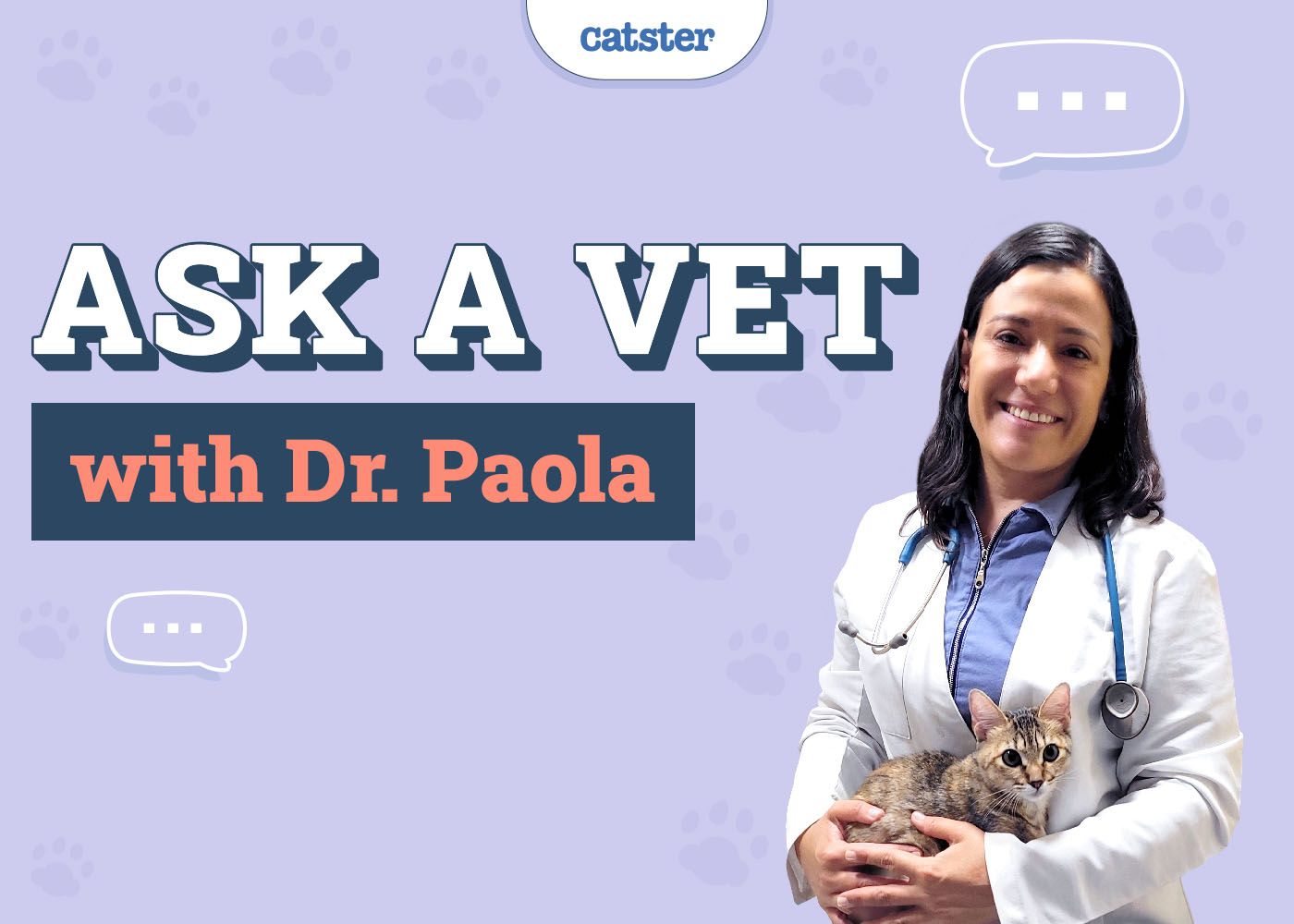
Welcome to our "Ask Dr. Paola" series, where every Monday we bring expert advice straight from Dr. Paola Cuevas (MVZ) to help our readers better understand their cat's health and well-being.
Whether you're a new pet parent or a seasoned cat lover, Dr. Paola is here to provide answers to your most pressing questions. From nutrition tips and preventive care to troubleshooting common behavioral issues, Dr. Paola is ready to offer insights that will keep your kitty happy, healthy, and feline fine. Stay tuned for expert guidance on a range of topics that matter most to you and your cat, so you can make informed decisions and provide the best possible care for your furry companion.
Have a question? Send it in here!

Help! How Do I Get My Cat to Eat a New Food!
"The food we were feeding our kitty, Joey, changed the formula. They added fish to a chicken pate. Our little girl has a problem with fish. How do we get her to eat a new food?"- Linda
Hey James,
I am sorry you and Joey are dealing with this. When a cat has difficulty with a particular ingredient, even a small change in the formula can feel disruptive because scent and routine play such a strong role in how they relate to their food. A very gradual transition usually works best. Mixing a tiny amount of the new diet with her familiar one, then increasing the proportion slowly over several days, allows her palate and digestive system to adapt. Lightly warming the food or adding a small splash of the liquid from her old formula can make the aroma more inviting and often helps spark interest.
If Joey refuses the mixed bowl, offering the new diet separately while keeping her usual food available can relieve pressure and give her space to explore at her own pace. Many cats approach new foods more confidently when they feel they have a choice. The phrase “problem with fish” can mean several things, from a simple digestive intolerance to a true adverse food reaction, and each possibility points us in a different direction. Since a bit more information is needed to guide you effectively, I encourage you to connect with us one-on-one at Pangovet. We can sort through the details together and help you shape a plan that supports Joey’s comfort and restores her mealtime confidence.
Best,
- Dr. Paola

Help! My Cat Might Be Diabetic!
"I want to try berberine for a possible diabetic. In humans, it acts just about like metformin and is less toxic, so I would like to avoid drugs for this rescue by using it. I realize there is a lack of research due to a probable lack of interest and possible revenue." - Betty
Hi Betty,
I truly appreciate your thoughtful approach to helping this rescue, especially when you hope to choose what feels like a natural option. In human medicine, berberine has attracted interest for its glucose-lowering effects, but as you mentioned, research in cats is limited or non-existent. The feline liver processes compounds differently, and without controlled studies, we cannot predict how berberine is absorbed, how long it persists in the body, or whether it interacts with other conditions. This turns its use into guesswork, much like trying to navigate a dark room without knowing where the furniture is placed, and the risks can outweigh the hoped-for benefits.
In contrast, feline diabetes is well studied and very treatable when addressed early. Obtaining proper diagnostics allows us to confirm whether diabetes is truly present and to tailor a plan that protects the cat from complications such as ketoacidosis. Metformin is generally not used in cats because their disease responds far more reliably to insulin therapy along with nutritional management that supports glucose regulation. In fact, many cats living with Type 2 diabetes have a real chance of remission when they receive the right nutritional support. It is one of the most encouraging aspects of this condition because the body often responds beautifully when we align diet with natural feline metabolism.
Kind regards,
- Dr. Paola

Help! What Do I Feed My Rescue Cat?
"Hi Dr. Paola,
I have a 2-year-old dachshund. I feed her all dry food because she will not eat any canned. Ruby is a rescue cat from a shelter. She is constantly hungry and begs constantly, like she's hungry. What is the best high-protein dry food I should feed? She looks good but seems hungry. The vet says she's a good weight. "- Cheryl
Hi Cheryl,
Some young adult cats act as if they are always on the lookout for their next meal, even when their weight and examination are normal. This persistent hunger often appears when a diet is not fully meeting their natural carnivore metabolism. Cats rely heavily on protein and moisture to feel content. Dry food is energy-dense yet not always as satisfying, so many will behave as though they are never quite finished eating, much like how we might feel after filling up on crackers instead of a balanced meal.
Since Ruby prefers dry food, selecting a formula with a higher level of animal-based protein and controlled carbohydrates can help her feel more comfortably full. Diets that list a specific meat source as the primary ingredient and keep starch levels modest tend to offer better satiety. You might also find that slow feeders, puzzle bowls, or dividing her daily portion into several smaller meals give her a sense of structure that eases the begging. If her hunger becomes stronger or you start noticing changes in her drinking or litter box habits, you are always welcome to connect with us at Pangovet. We can help you sort through what you are observing, explore next steps, and brainstorm what may be contributing. With her recent checkup looking good, adjusting her diet is a good place to start, and we are here to support you as Ruby finds her rhythm. I hope this helps!
- Dr. Paola
This article is a part of our weekly Ask Dr. Paola series
Expert cat care, straight to your inbox
News, insights, and useful advice, delivered to you.

No spam — unsubscribe anytime.
By signing up, you agree to our Terms & Conditions and Privacy & Cookies Policy.
How useful was this post?
Click a star to rate. You can leave written feedback afterwards. (We read all feedback.)
Dr. Paola Cuevas MVZ (Veterinarian)
Dr. Paola Cuevas is the Senior In-House Veterinarian at Pangolia, the parent company of Catster. She has over 18 years of experience as a veterinarian and animal behaviorist. Paola's focus is on preventive medicine and animal welfare. Paola has a large range of skills in from diagnostic imaging to nutrition and clinical pathology. Paola enjoys sharing her extensive knowledge of animal training with our Catster readers and is always happy to answer reader questions as our in-house veterinarian.