What Happens if I Give My Cat Too Much Insulin? (Vet Answer)

In this article
Your cat was recently diagnosed with diabetes mellitus, and you have to give insulin injections every day. Today, you realized that you and your spouse both gave an evening dose of your cat's insulin. What do you do? Your cat needs to be seen by your vet right away because this could result in stress hyperglycemia.

What to Do if Your Cat Gets Too Much Insulin
If you definitely gave too much insulin or think that you might have, stop, take a deep breath, and call your veterinarian's office. If your veterinarian isn't open or isn't available, check for the nearest veterinary emergency hospital. If your regular vet doesn't have overnight care, you may have to go to an animal ER anyway.
If you can't get to your veterinarian immediately, the office might suggest you rub a sugary substance, such as Karo syrup, on your cat's gums.1
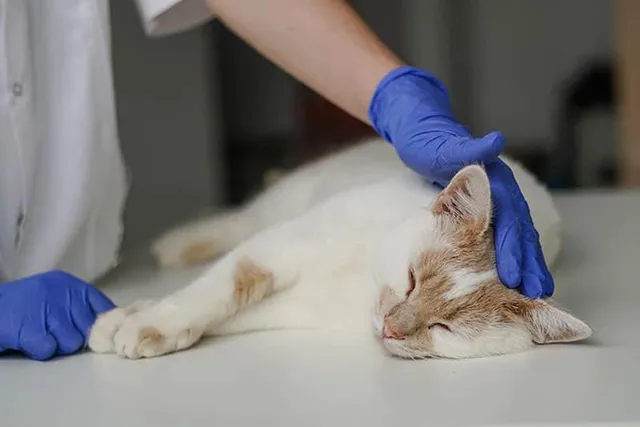
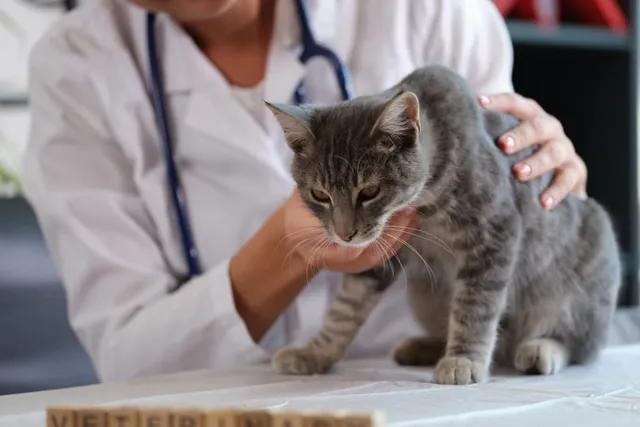
At the veterinarian's office, your cat will likely need blood work to perform a spot blood sugar check to see where it is. Your veterinarian will likely need to place an intravenous (IV) catheter and give your cat a dextrose solution.
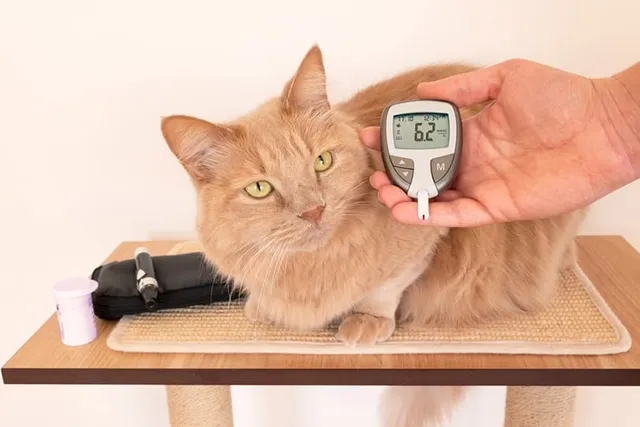
Your kitty might need fluid therapy and supportive care, depending on how much insulin they received and how low their blood sugar level goes. They'll likely need several blood sugar readings to monitor their glucose levels. If your cat has a blood glucose monitor placed, like a Freestyle Libre, so that you can monitor their levels at home, bring the monitor with you to help your vet team monitor your cat's level.

Signs of Hypoglycemia in Cats
If you're unsure if your cat received too much insulin and you have a monitor at home, perform a spot check to see where the level is. Doing so at home should give a more accurate reading than in the vet's office because cats can have stress hyperglycemia, where stress spikes their blood sugar level up.
Signs of low blood sugar in cats include:
Your cat can develop hypoglycemia even if it hasn't received a second dose or more insulin than was prescribed. If it's lost weight, switched foods, or has other health issues, its calculated dose could be more than it needs.
Treating Diabetes in Cats
Diabetes is a fairly common condition in cats. The Cornell Feline Health Center estimates that 1 in 100 to 1 in 500 cats will develop diabetes. Insulin is a hormone used to regulate blood sugar levels, acting as a key to moving glucose in the bloodstream (a simple sugar) into the cells to be used as an energy source.
The most common way to treat diabetes in cats has been insulin injections. There are several different insulin products, and they may be short-acting, intermediate, and long-acting insulin. Your cat might need injections every 12 to 24 hours.
There are newer oral medications that have recently come out to treat diabetes in cats, such as Bexacat.
Factors That Influence Diabetes in Cats
Diet
Cats are obligate carnivores, and their bodies are not designed to eat a lot of carbohydrates. Unfortunately, the mainstay of many of our cat's diets is dry kibble, which tends to be full of carbohydrates. Feeding your cat quality canned food is usually better than feeding kibble and will often yield better glycemic control.
Weight
Overweight cats are more likely to become diabetic. A veterinarian can help you develop a weight loss plan to help your cat lose weight. As your cat loses weight, it will likely need less insulin.
Exercise
More active cats are usually less likely to be overweight. Physical inactivity is also associated with diabetes.
Other Factors
Male cats are more likely to become diabetic. Your vet may utilize medications that increase the likelihood of diabetes, such as steroids. These medications may be used for conditions such as autoimmune issues and asthma.

Preventing an Insulin Overdose in Cats
One of the best ways to prevent an insulin overdose in your cat is to keep a log of it. You can record when insulin was given each day. If you have a glucometer at home, you can also track your cat's activity, appetite, and blood sugar level.
Consider having one person responsible for administering insulin. If a limited number of people are in charge of giving your cat insulin, you're less likely to double up administering it. Make sure your cat eats its food before administering insulin. If your cat isn't eating normally, contact your veterinarian for guidance. The veterinarian might recommend a physical exam for your kitty to check for underlying issues or suggest a lower dose of insulin.
Insulin comes in two main concentrations: 40 units per milliliter and 100 units per milliliter. Syringes are also of different sizes. Make sure you double-check the dosage you are giving and the syringe each time you get a new prescription. If your veterinary team or pharmacy switched up syringes, it's easy to make a mistake in dosing.
Frequently Asked Questions (FAQ)
How long does an insulin overdose last?
The duration of an insulin overdose can depend on several factors, particularly the type of insulin and how your cat was acting when your veterinary team intervened. In most cases, longer-acting insulin will take longer to get over than short-acting. If your cat was relatively asymptomatic, it should be back to normal quickly, but if it's having significant issues such as seizures, it may take several days to recover, if at all.
How much is too much insulin for a cat?
Your veterinarian will need to prescribe insulin for your cat. The dosage calculations vary slightly depending on the type of insulin used, but the typical starting range is 0.25 to 0.5 units per kilogram of body weight every 12 hours.

Conclusion
If you think your cat might have received an overdose of insulin, contact your veterinarian immediately or a local veterinary emergency facility. Your cat will likely need supportive care and dextrose supplementation until they stabilize.
Sources
Featured Image Credit: Jane Nadezhina, Shutterstock
Expert cat care, straight to your inbox
News, insights, and useful advice, delivered to you.

No spam — unsubscribe anytime.
By signing up, you agree to our Terms & Conditions and Privacy & Cookies Policy.
How useful was this post?
Click a star to rate. You can leave written feedback afterwards. (We read all feedback.)
Dr. Samantha Devine DVM (Veterinarian)
Samantha Devine is a practicing veterinarian who loves to share her experience with animal species and their health. Whether it's a guinea pig question or a pressing matter about something your cat ingested, she strives to provide clear answers. She is passionate about preventative care and firmly believes in the old adage, "An ounce of prevention is worth a pound of cure."
Dr. Devine has been practicing veterinary medicine for over 12 years and has spent a great deal of that time writing online to educate pet owners. In addition to general practice small animal medicine, she has worked with horses. zoo animals and aquatic species. She enjoys all aspects of preventative medicine, from nutrition to vaccines.
Dr. Devine received her degree from the Virginia Maryland Regional College of Veterinary Medicine.