15 Vet-Approved Reasons to Keep Your Cats Indoors


In this article
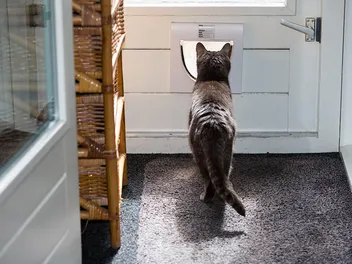
Keeping your cat indoors, outdoors, or a mixture of the two may seem a no-brainer to some pet owners. It’s often a cultural thing. People living in rural areas may associate felines with pest control. It may depend on other demographics, including the caregivers’ age, the animal’s age, and the perception of the risks of outdoor access. Some preconceived notions keep cats outdoors despite the risks.
Many reasons to keep your kitty indoors involve the well-being of your pet. Life is a risk. However, adding the unknowns of being outside wreaks havoc with the survival odds. Others affect you on several fronts, worthy of consideration. Finally, we must look at the big picture. When you let your pet outdoors, your cat doesn’t live in a vacuum. The concerns are valid, so here are 15 reasons to keep your cats indoors.

The 15 Reasons to Keep Your Cats Indoors
1. Less Exposure to Internal and External Parasites
Pets living indoors are often protected from the nasties that live outside. That includes internal and external parasites. We’re talking about hookworms and roundworms that can affect members of your family. It also involves fleas that can infest your home. Keeping your kitty inside won’t protect them from everything. However, it lessens the chances of bringing home unwanted visitors.
2. Less Likely to Get Hit
The obvious reason for keeping your cat inside is to prevent your pet from being hit. That’s especially true if you live in a suburban or urban area. Sometimes, animals don’t get the opportunity to hone their street smarts and avoid roads and traffic. Drivers are probably more aware of large species like deer and cows, which can do more damage to their vehicles. However, it’s a roll of the dice we prefer to ignore.

3. Predator Avoidance
Coyotes, foxes, and weasels won’t hesitate to take a cat that doesn’t have the experience to know better. Raptors, such as eagles, hawks, and owls, will scoop up a small kitty without the know-how to look up for threats. We’re not just talking about coyotes and raptors. We’re also including the two-legged variety. Sadly, some people don’t like cats and won’t hesitate to put the pedal to the metal.
4. Less Likely to Get Lost or Stolen
Cats rely on their sense of smell to navigate their world, whether it’s finding prey, recognizing their caregivers, or finding their way home. They have roughly 40 times the number of olfactory receptors that people have 1. Despite their good homing instinct, our felines can and do get lost. About 15% of cat owners will lose their pets in a 5 year period 2. Sadly, they’re less likely to have ID than our canine companions.
5. Less Risk of Territorial Conflicts
The African Wild Cat (Felis silvestris lybica) is the ancestor of our feline companions. This animal is usually solitary, with ranges they mark and protect. Your pet will likely do the same thing with other neighborhood cats. Keeping your kitty inside prevents the two from meeting, leading to risky and harmful conflicts.
6. More Time With Your Kitty
Keeping your cat inside will give you more time with your pet. They will figure out the household schedule and adjust it to spend more time with you. They’ll take advantage of the downtime to sleep when there’s less activity and noise. Instead of being outside, they’ll have more time to be with you, even if they’re snoozing while you’re awake.

7. More Opportunities to Bond With Your Cat
It’s not just about the extra time with an indoor pet. It’s also about how you use it. You’ll have more opportunities to bond with your cat. You can create routines that will provide mental stimulation. The interactions can build trust between you and your kitty. You can spend time training your pet and curbing unwanted behavior to make your relationship more mutually satisfying.
8. Heads Up for Health Issues
Getting to know your cat and their routines better will increase your awareness about potential health issues. Felines often hide health issues. Your extra time together will give you the knowledge to quickly recognize when something is wrong. Prevention is always the best treatment. However, early detection is second on that list.
9. Lower Veterinary Care Costs
The lower risk of conflicts and exposure to parasites and diseases can lower your veterinary costs. Preventative care is particularly important for cats with outdoor access. Felines should keep up to date with their vaccinations including feline leukemia virus (FeLV), feline rhinotracheitis virus, feline calicivirus and rabies. Follow your vet’s advice on the correct vaccination schedule for your pet.
10. Longer Lifespan
The takeaway from the previous entries is a longer lifespan. Keeping your cat inside lowers the risk of many preventable causes of injury and disease. A healthier lifestyle means less stress from the treatment some conditions require. Remember that felines don’t like change because it disrupts the flight pattern. You can ensure your kitty gets a nutritious diet to meet their dietary needs.

11. Effects on Wild Feline Populations
Science has found that wild and domestic cat populations didn’t interbreed for centuries during their coexistence. However, that has changed in recent years. The Scottish Wildcat is another subspecies of our feline companion’s ancestor. Scientists have tried to restore wild populations in the country. An unforeseen barrier is the amount of domestic cat DNA in their wild counterparts.
Interbreeding has diluted the wild species’ DNA. The result is a loss of diversity and possible extinction of the Scottish Wildcat. Fortunately, captive wild populations may offer a solution to this dilemma. However, the point is that domestic cats can have a deleterious effect on wild felines. The potential exists that our pets may affect other species.
12. The Problem of Rabid Cats
You likely think of wild animals as transmitting rabies. According to the Centers for Disease Control and Prevention (CDC), raccoons, skunks, bats and foxes are the wild species most likely to have the disease. Contact with infected bats causes the most human deaths. Nevertheless, rabid cats outnumbered rabid dogs by over fourfold in 2017.
Two factors play a role. People may get their pups vaccinated more than felines. However, the latter might have more unsupervised time outdoors, increasing their exposure risk. People may not view feral cats as much of a threat as stray dogs, which can also affect how the governments manage the two populations.
13. Domino Effect of Increasing Insect Pest Populations
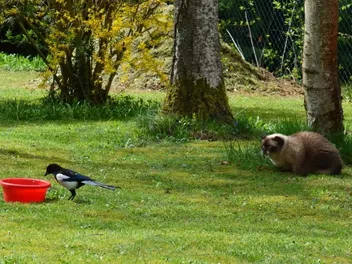
Scientists have called cats perfect from an evolutionary perspective. They excel as predators. However, that isn’t a skill without consequences. Felines may be successful hunters, yet they also kill animals that feed on pest populations, such as birds. You may think that big cats, snakes, or crocodiles kill the most people. That infamous stat actually belongs to mosquitoes which are responsible for 725,000 human deaths a year.

14. Increased Scavenging and Rodents
Domestic cats don’t always eat their prey. They may not even kill them but leave them for dead—and scavengers like rats. Rodents also spread disease or are carriers for parasites that cause them. Felines with outdoor access can exacerbate this problem with ineffectual predation. It can also encourage other animals, such as raccoons and skunks, to get close to human dwellings.
15. Less Risk to Wildlife
We talk about pet ownership being a responsibility. That also applies to your cat’s impact on the wildlife. According to the American Bird Conservancy, felines take roughly 2.4 billion birds yearly. The Polish Academy of Sciences has even gone so far as to declare them “an invasive alien species.”
Studies have shown that domestic cats have contributed to the extinction of 63 species of mammals, reptiles and birds worldwide.
Placing the blame on humans is warranted. After all, cats are just being cats when they hunt. They’re hardwired for it. The problem is pet owners putting wildlife in harm’s way by letting their feline companions outdoors. Remember that birds have many roles in the ecosystem, from predators of disease-carrying mosquitoes to seed dispersers to pollinators.
The Needs of Indoor Cats
Many pet owners cite a cat’s need for mental stimulation as a reason they let them go outside. Felines probably influence this thinking with their closeness to their wild side. It’s true that your kitty needs enrichment for their well-being. However, it’s also your responsibility to provide it. That means daily playtime and interaction. Interactive toys can challenge your pet mentally. Cat trees and scratching posts also help keep your cat active and happy.
However, one of the most important factors is time with you. A toy can’t offer the same interactive experience you can provide. That underscores the role you must play when you choose to invite a cat into your life. Living outside may be more interesting, but it comes at a high risk and cost.
Looking for toys that will cater to the many needs of your cat? The Hepper Hi-lo Cat Scratcher is one of our favorite cat products, and it will encourage your cat to get active. Its clever three-angle design offers multiple ways for your cat to climb, stretch, and exercise. Made of a sturdy plywood base and a replacement cardboard insert, this scratcher is an option that cats can enjoy for years to come. If your cat requires a little encouragement for self-play, the Hepper Catnip Mice Toy Set is a fantastic choice for their instinctual needs. Made with natural, bite-resistant hessian fabric and filled with organic catnip. Cats can satisfy their natural prey instincts while getting the physical activity they need to thrive.
| Image | Product | Details | |
|---|---|---|---|

|
Hepper Hi-Lo Cat Scratcher |
|
Check Price |

|
Hepper Catnip Mice Toy Set |
|
Check Price |
At Catster, we've admired Hepper for many years, and decided to take a controlling ownership interest so that we could benefit from the outstanding designs of this cool cat company!
Conclusion
Owning a cat means many decisions. One of the most critical ones is whether to let your pet go outdoors. It may seem logical to give your kitty time outside. However, today’s world presents threats to your cat’s safety and well-being. They can also affect your feline companion’s quality of life. The better option is to keep your pet inside your home. However, that comes with added responsibility you must assume.
See also:
Sources
Featured Image Credit: Olezzo, Shutterstock
Expert cat care, straight to your inbox
News, insights, and useful advice, delivered to you.

No spam — unsubscribe anytime.
By signing up, you agree to our Terms & Conditions and Privacy & Cookies Policy.
How useful was this post?
Click a star to rate. You can leave written feedback afterwards. (We read all feedback.)
Chris has been a science-focused pet writer since 2009, specializing in health and the environment. She lives with her husband Norm and three amazing cats in the land of 10,000 lakes. When she's not writing about cats, Chris also enjoys boating and sampling wine. She has her WSET 1 and 2 certifications and is currently pursuing her Certified Wine Specialist Award (CSW).