Do Cats Get Seasonal Allergies? Signs & Treatments

In this article
Many of us welcome that time of year when the days start to get longer and the temperature gets warmer. For allergy sufferers, though, it is the time of year they dread. Dust stirred up by spring cleaning, high pollen counts, and freshly mown grass can be torture when you suffer from hay fever, and you might wonder if cats suffer from similar problems.
Can cats have seasonal allergies like humans? Cats do suffer from seasonal allergies, but the signs tend to look a bit different from our own.
Let’s take a look at how seasonal allergies affect our feline friends, what to look out for, and how you can make their lives a lot more comfortable.

What Do Seasonal Allergies Look Like in Cats?
For humans who experience seasonal allergies, hay fever is the most common complaint. While blocked sinuses, itchy eyes, and runny noses are the bane of many people's springtime, our cats are more commonly plagued by red, itchy skin.
Cats don’t often experience the respiratory signs of seasonal allergies, but those with weakened immune systems can be affected by them. Cats that are susceptible to this form of seasonal allergy will often display signs like nasal congestion or weepy eyes throughout the year, with flare-ups during allergy season.
For the majority of cats affected by seasonal allergies, the signs are mostly on the skin. Much like eczema in humans, the feline immune reaction to allergens in the environment causes dermatitis, with redness, itching (pruritus), scabs, and pustules, resulting in some pretty miserable cats.

Why Does This Happen?
Cats generally experience allergies in three areas: skin, gastrointestinal tract, and respiratory system/sinuses, with skin disease (dermatitis) being the most common.
Feline allergic dermatitis is primarily the result of a condition called atopy, which is where the immune system has a heightened sensitivity to environmental allergens (pollen, dust, mold), and produces a more exaggerated response. For example, a non-atopic cat might walk through a field of freshly cut grass and experience mild pruritus for a few hours. A cat with atopy will walk through that very same field and experience severe pruritus, raised pustules, and red, sore skin for days or even weeks. In many cases, the inflamed and broken skin becomes further damaged from scratching, licking, and chewing, opening it up to infection, which makes the whole problem much worse.
Cats with atopy may also have food allergies, which, until the problem is diagnosed, can result in an itchy cat all year round. They are also usually more sensitive to fleas, with a condition known as flea allergy dermatitis, so flea control is super important.

What Are the Signs of Seasonal Allergies in Cats?
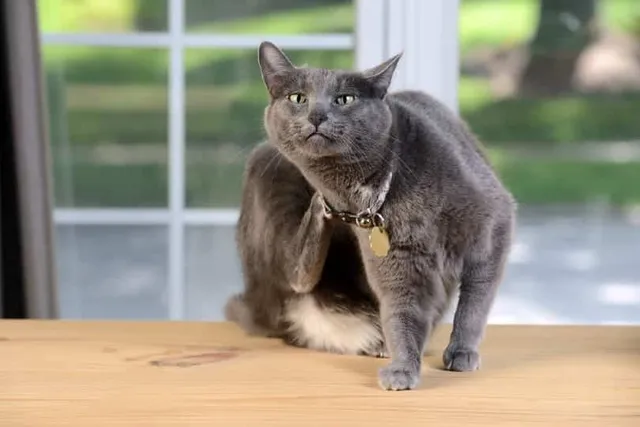
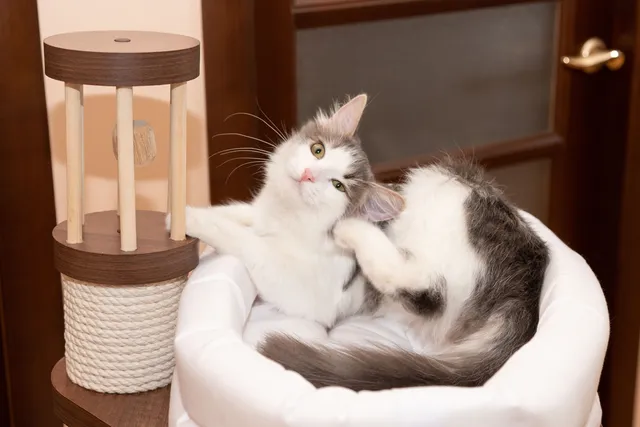
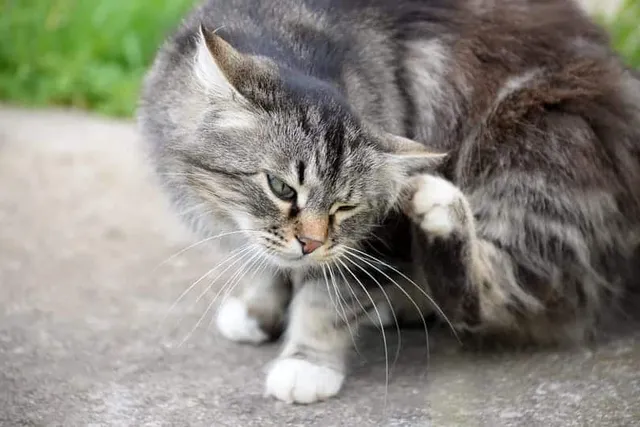
In most cases, the first we know about our cat’s allergies is when they are scratching like mad. Our first thought is fleas, but when we’ve performed a thorough combing and given them a flea treatment and they’re still itchy, we start scratching our heads.
There are certain places where cats with seasonal allergies seem to be most itchy, including the ears, feet, and tummy, but the areas that often appear the worst are the places they can more easily reach with their claws, teeth, and tongue. Initially, you might see areas that appear pink and bumpy, but as time goes on and your cat scratches that itch, you will likely see bald patches, scabs, bleeding and raw skin, and pus (pyoderma).
It is also important to be aware that cats who have asthma may also experience more severe signs during these warmer months, as this condition can be triggered and exacerbated by environmental allergens.

Why Do Only Some Cats Get Seasonal Allergies?
Just like with humans, some individuals are just more sensitive to allergens than others, and it is believed that there is a genetic component to atopy. Although cats with atopy can, and often do, experience signs of pruritus all year, their heightened sensitivity means that things will be far worse during times when pollen counts are high.
When exposed to an allergen, the immune system of cats with atopic dermatitis produces an excessive amount of immunoglobulin E (IgE), which triggers a release of histamine in the skin, resulting in severe pruritus. In this way, the body’s normal response to foreign material becomes much more harmful than the material itself.
What Are the Treatment Options for Seasonal Allergies in Cats?
In the past, the primary method of managing seasonal allergies in cats was using the corticosteroid drug prednisolone to suppress the immune reaction. While this method of treatment can be highly effective, the adverse effects it has on the liver, adrenal glands, and immune system mean that its long-term use is problematic. For cats in particular, higher doses of steroids have also been known to increase the risk of developing diabetes.
More targeted immune-modulating medications (e.g., cyclosporine) are also used to tackle feline allergies, but these are quite expensive and also carry a risk of causing side effects.
Cats that have undergone allergy testing to identify the specific allergens they are sensitive to can be treated with injections that desensitize the immune system. Unfortunately, treatments such as Cytopoint injections and Apoquel, which have been highly effective in managing atopic dermatitis in dogs, have been neither licensed for nor found to be useful in treating cats.
Some antihistamines can be useful in helping to treat your cat’s clinical signs but are usually not very effective when used as the only form of treatment.

How Can I Help Manage My Cat’s Seasonal Allergies?
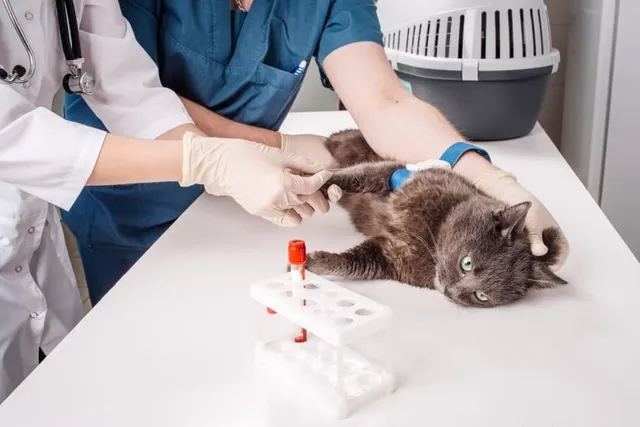
If you think your cat might be suffering from seasonal allergies—or any allergies, for that matter—it’s worth making an appointment with your vet.
It is important to ensure that your cat is free of any infection or other issues that could be complicating matters, but they can also help you formulate the best management plan for you and your cat. There are also quite a few things that you can do at home to help reduce the allergen load for your cat (and for you!), as well as stop them from damaging their skin.
- Food: Feeding a hypoallergenic diet can also help in reducing their allergen load, therefore minimizing circulating IgE levels.
- Supplements: Look for supplements that contain the essential fatty acid (EFA) omega-3, which can help bolster your cat’s skin health.
- Claws: Keep your kitty’s claws trimmed short to help minimize any damage caused when scratching.
- Cone of shame: If your cat is doing a lot of scratching of their face and ears, an Elizabethan collar can prevent serious damage.
- Clean, clean, clean: Be fastidious about vacuum cleaning, and make sure your vacuum uses a HEPA filter. Speaking of filters, using an air purifier in the house can make a huge difference.
- Stay inside: If your cat goes outdoors, even using a catio, keep them inside during times of peak allergen levels.
- Care when washing: Wash bedding and blankets weekly using a non-bio detergent for sensitive skin.
Final Thoughts
Spring and summer can be a tough time for allergy sufferers, and while people might be reaching for the Kleenex, the allergic cat will be scratching whatever they can reach. Cats can certainly get seasonal allergies, but theirs are more likely to look like eczema than hay fever. If you’ve noticed that your cat seems to be suffering in the warmer months, whether it’s from a runny nose and eyes, or a serious case of pruritus, get in touch with your vet so you can work out the best way to provide your feline with relief.
Sources
Featured Image Credit: Olgaalisa, Shutterstock
Expert cat care, straight to your inbox
News, insights, and useful advice, delivered to you.

No spam — unsubscribe anytime.
By signing up, you agree to our Terms & Conditions and Privacy & Cookies Policy.
How useful was this post?
Click a star to rate. You can leave written feedback afterwards. (We read all feedback.)
Dr. Karyn Kanowski BVSc MRCVS (Veterinarian)
Dr. Karyn comes from Queensland, Australia, and has lived in the UK for the past 10 years. In 2010, she graduated from The University of Queensland School of Veterinary Science and also has a Bachelor’s degree in Zoology. She is passionate about using evidence, experience, and owner collaboration to provide the best solutions for pets, and believes in making reliable information about animal health accessible to all. Dr. Karyn shares her home with five cats, four dogs, and one husband. When she is not in the scrubs, she spends her time writing, gardening, and cleaning up pet hair!