Can Cats Eat Cherries? Vet-Reviewed Risks & Precautions


In this article
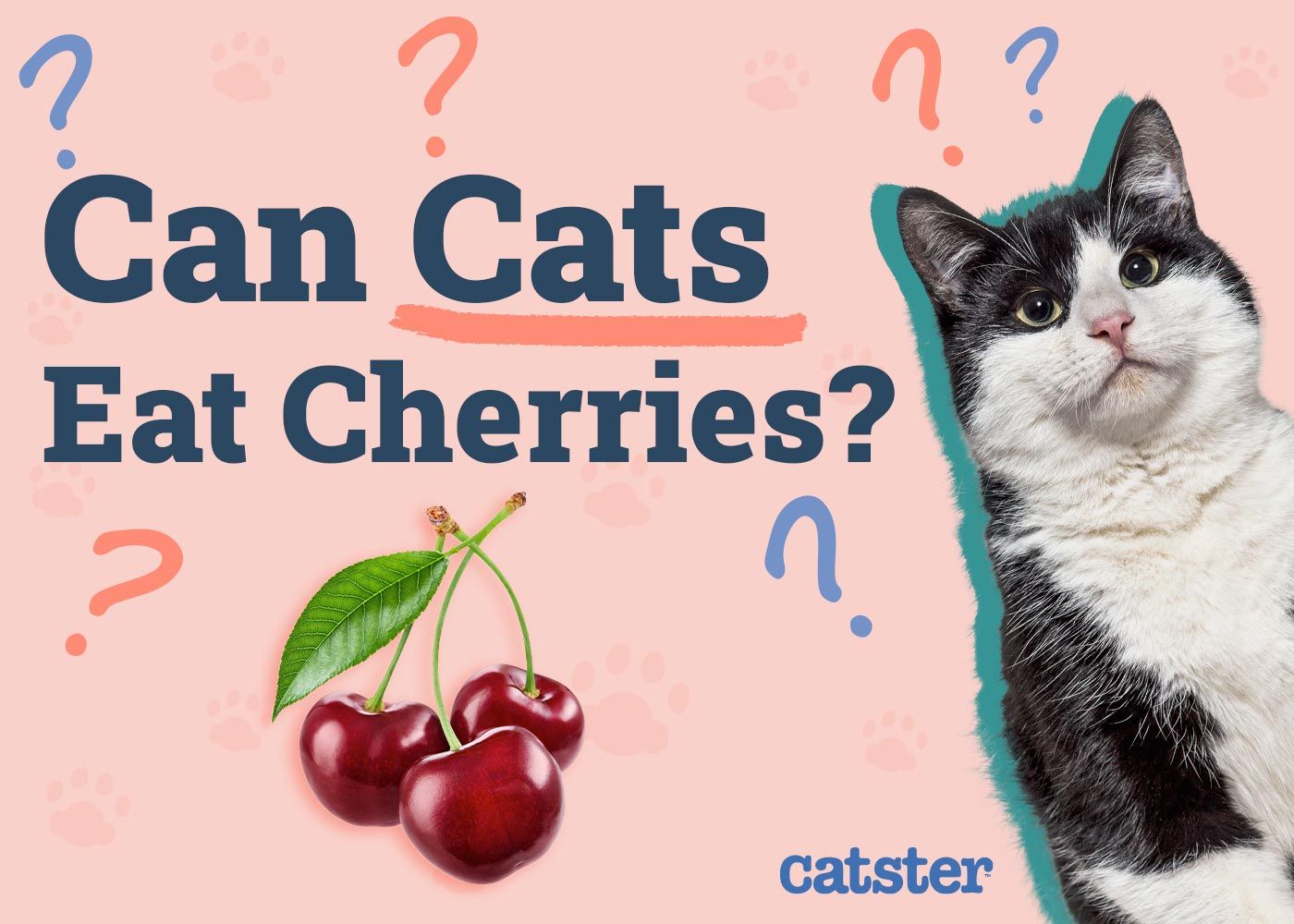
Cherries are a perennial favorite for late summertime, and for good reason. They’re tasty and come in both tart and sweet varieties. They can be eaten alone or used as an ingredient to bring out flavors in sweet and savory dishes. Due to their popularity, you may have wondered if cats can eat cherries. It’s definitely possible that at some point, a cherry will roll off the kitchen counter into the waiting paws of your cat. So, are cherries safe for cats? The short answer is no, cherries are considered toxic for cats, and you will find out the reason why below!

Can Cats Eat Cherries?
Surprisingly, cherries are bad for cats as they have some very toxic properties that are quite dangerous for felines.1 The stems, leaves, and pits all contain cyanogenic glycosides, which convert to cyanide in the digestive tract and can lead to poisoning. Cherry pits may also pose a risk for intestinal obstruction, especially in large quantities. This not only increases the risk of cyanide poisoning but is also a medical emergency that often requires emergency surgery to correct. Cyanogenic glycosides are released when the pits are broken by being chewed on.
Signs of cyanide poisoning in cats include dilated pupils, panting, difficulty breathing, diarrhea, vomiting, and dark red mucous membranes. If left untreated, cyanide poisoning can lead to shock and death. If you think your cat may have consumed cherries or cherry pits, stems, or leaves, it is a medical emergency, and you should either contact a pet poison control hotline or a veterinarian.

Can Cats Eat Pitted Cherries?
Yes, theoretically cats can have cherries without the pit, but you should first speak to a vet before considering this. If a vet gives you and your cat a green light, exercise extreme caution to ensure your cat is only receiving fruit and not any pieces of pits, stems, or leaves. The meat of the fruit itself is not considered toxic to cats, but we feel it’s just not worth the risk.
Fresh pitted cherries may be low in calories and are a good source of vitamins, minerals, potassium, and antioxidants, but they are still not something cats should really be eating. They are unlikely to reap any benefits from them, and the risk of accidental ingestion of pits, leaves, and stems is present. They may also lead to a stomach upset.
Can Cats Eat Pitted Jarred and Canned Cherries?
If you’re wondering if cats can eat cherries from a can or jar, the answer is no. Jarred and canned cherries should not be offered to cats due to their high levels of sugar, artificial sweeteners, and other additives that do not have any nutritional benefits for your cat, and they may even be harmful, depending on the exact compound and their amount. There is also a risk of small pieces of pits and stems being left behind since these cherries are typically processed by machines and are often not double-checked by humans to ensure the small pieces have all been removed. If you’ve ever found a piece of a pit in an olive from a jar, you know that sometimes these pieces do get missed and left behind.

Are Cherries Good for Cats?
While cherries do have some health benefits for humans, they cannot be extrapolated to our feline companions, and there are safer foods you can offer your cat. The risk of cyanide poisoning from the non-edible parts of the cherry is extremely high and can lead to signs of poisoning or a stomach upset in your pet. Because cherries are toxic to cats it is advisable not to serve them any due to the risk.
What Fruits Are Safe for My Cat?
There are multiple fruits that are much safer for your cat and that are also dense in nutrients. However, fruits are not a normal part of a cat’s diet, and they should not be having them regularly due to high sugar content. Fruit does not contain the essential ingredients cats need to thrive. They should only be offered based on advice from a vet, as cats with diabetes and digestive issues should stay away from excess carbs.
Complete and balanced cat food contains very little carbs and is based on a high-quality animal protein source and a moderate amount of fat. Most healthy cats may, however, have small amounts of safe fruits as rare treats, but they are still unlikely to reap many significant benefits from them.
Apples are a safe option for cats, although you should always remove the seeds before offering them to your cat due to the cyanogenic compound they contain, much like the pits, stems, and leaves of cherries. Bananas may be safe as well, but they are way too rich in calories and sugar. Blueberries, cranberries, and strawberries are a great, safe option for your cat. Melon, like seeded watermelon, is also an option due to its low calorie density and high water content.

In Conclusion
While the meat of cherries may be considered safe for cats, the stems, leaves, and pits can be extremely toxic and dangerous. For the sake of your cat’s health and safety, it’s best to avoid giving cherries to your cat at all. It’s possible for you to miss a small piece of pit, stem, or leaf when offering cherries to your cat, which can inadvertently lead to health issues in your cat.
If you do choose to give cherries to your cat knowing the risks, do so only after consulting with a veterinarian. In that case, you should only offer fully pitted, fresh cherries. Make sure to double-check that you have removed all parts of the cherry that may be dangerous to your cat. The fruit itself has very limited health benefits for cats, and they will receive all the necessary vitamins and minerals from their normal diet and healthy treats with a much lower risk of danger to your cat.
Featured Image Credit: Pixabay
Expert cat care, straight to your inbox
News, insights, and useful advice, delivered to you.

No spam — unsubscribe anytime.
By signing up, you agree to our Terms & Conditions and Privacy & Cookies Policy.
How useful was this post?
Click a star to rate. You can leave written feedback afterwards. (We read all feedback.)
Brooke Billingsley, a former veterinary assistant for nine years, became a nurse in 2013. She lives in Arkansas with her boyfriend of five years, surrounded by her beloved pets: three dogs, two cats, five fish, and two snails. Brooke has a soft spot for special needs animals, caring for a three-legged senior dog and a widely known cat with acromegaly and cerebellar hypoplasia. She has developed a keen interest in fish keeping and is always learning how to provide the best environment for her aquatic pets. In addition to her passion for animals, Brooke enjoys gardening and maintains a vegetable garden during the summer. She stays active with yoga and received her 200-hour yoga teacher certification in 2020. Brooke also hosts a podcast that delves into folklore and myth, dedicating her spare time to research and writing. She embraces the philosophy that every day is an opportunity for learning and growth, continually working to acquire new skills and knowledge.