How to Get Cat Smell Out of the House: 10 Effective & Easy Ways


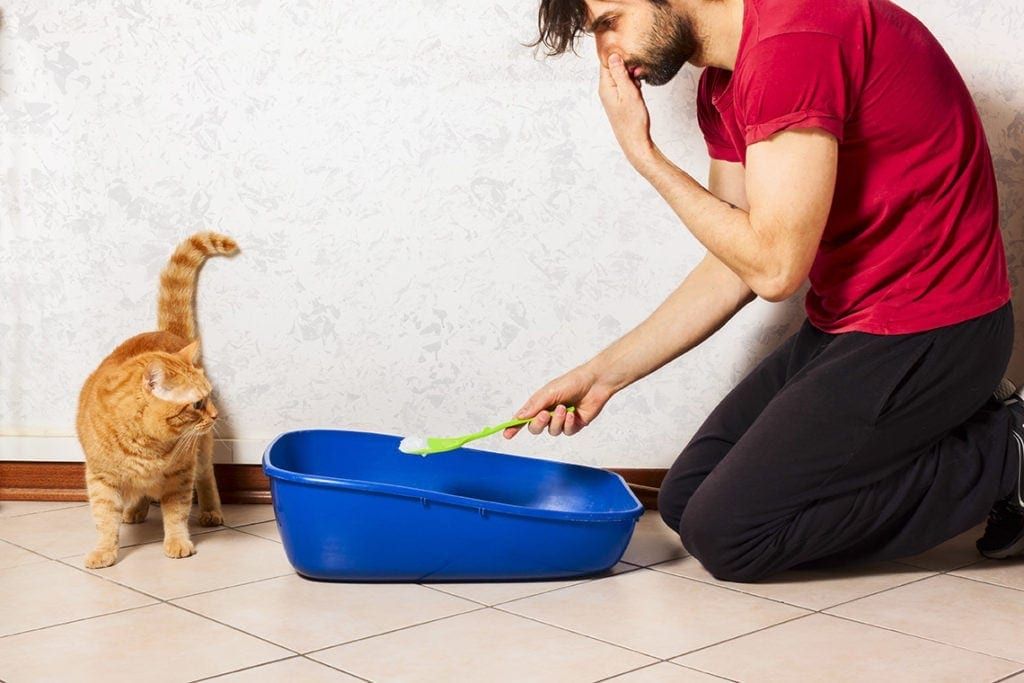
Even if you can’t see cats wandering around, you can recognize a cat house by the smell. Whether it’s everyday dander or random urine spots, cats have a way of making a home their own with a unique aroma. But as comforting as it may be for them, the odor is rarely anything other than off-putting for everyone else.
Cats can be persistent, but their odors aren’t impossible to manage. Keep your home as fresh and clean as ever by following these 10 easy ways to get cat smell out of the house.

The 10 Ways to Get Cat Smell Out of the House
1. Clean Urine and Poop Stains with Enzyme Cleaner - Most Effective

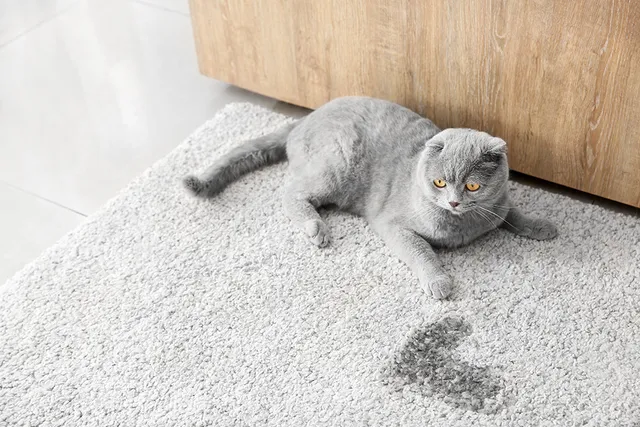
Despite a cat’s fastidious hygiene habits, accidents outside the litter box aren’t uncommon. Some cats spray on walls when stressed, and others might pee on the carpet because they don’t like their litter. No matter the reason, any urine stain needs an immediate fix, or the odor will encourage your cat to keep peeing there.
Given a cat’s superior sense of smell, you must remove every trace of urine to prevent them from detecting it. Doing so will also reduce the chance of the smell coming back later. Embedded uric acid crystals will reactivate when moist, meaning old pee stains can stink up the house whenever it gets extra humid.
Enzyme cleaners use targeted active bacteria and enzymes to catalyze the deterioration of various urine, feces, and vomit compounds. After converting to water, CO2, and other breakdown products, the waste can harmlessly evaporate away, leaving no trace of a stain.
Unlike some cleaners that only mask the smell or partially clean urine, enzyme cleaners keep working until the odor-causing elements are gone. Enzyme cleaners are as effective as they are easy to use. You’ll spray the area, let the solution sit, and blot dry.
They’re color-safe and eco-friendly and typically don’t need rinsing after application. You can usually saturate the spot for intense staining and leave it for several hours to work through the waste. Enzymatic sprays are usable on most hard and soft materials, and they’re generally health-safe around people and pets.
2. Dust and Vacuum Frequently
Urine might be the most frustrating way cats leave their scent behind, but waste isn't all that contributes to a general cat smell. Even if your pet shows perfect potty habits, you may still notice a stale, acrid cat odor throughout the house from the hair, fur, and dander they’ve left across its surfaces.
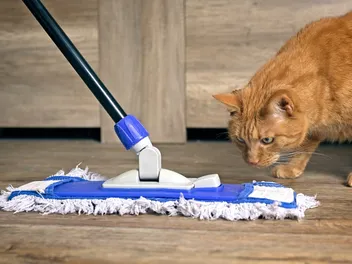
Increasing your dusting, sweeping, and vacuuming routine will clear this debris and the smell that comes with it. Start with high surfaces, such as window and door trim, ceiling fans, and bookshelves, and finish by sweeping and vacuuming the floor. Depending on your cat’s shedding habits, you may need to dust and vacuum two to four times weekly.
3. Set Up an Air Purifier
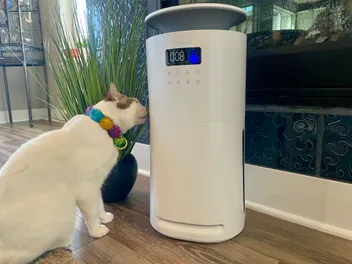
An air purifier pairs perfectly with a practical dusting and vacuuming routine to eliminate cat smells from a room. Dusting and vacuuming pick up dust from fabrics, carpets, and hard surfaces, while an air purifier catches any free-floating debris. Air purifiers are an all-around odor solution, handling pet smells and nearly any other scent that might appear in a room.
Most air purifiers use multi-stage filters to clean the air, drawing room air on one end and blowing out odor-free air on the other. HEPA filters in these small appliances remove airborne contaminants as small as 0.3 microns, including dust, mold spores, and bacteria.
Behind that, an activated carbon filter adsorbs odor molecules with its massive surface area. Using one automated unit, you can effortlessly remove cat odors and the materials causing them to fill the room with fresher, healthier air.
4. Clean the Litter Box Frequently

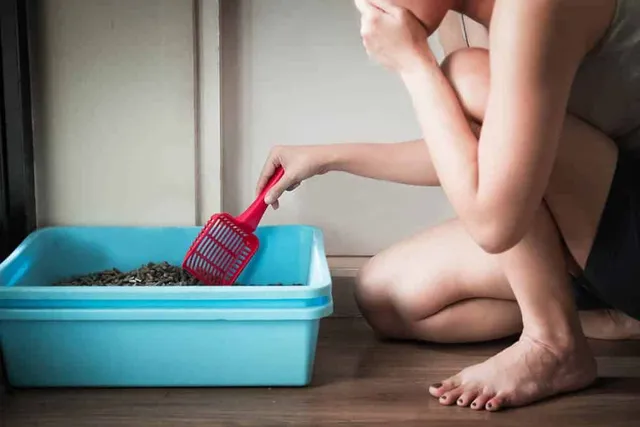
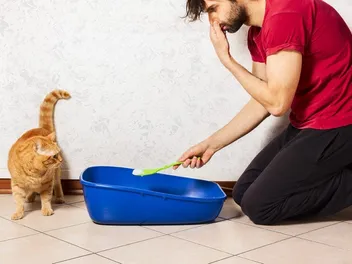
Disciplined litter box cleaning habits should be a priority when you’re trying to eliminate everyday cat smells. Urine and feces are the top ways cats can quickly impart their scent, so keeping their toilet area clean will substantially reduce odors throughout the home.
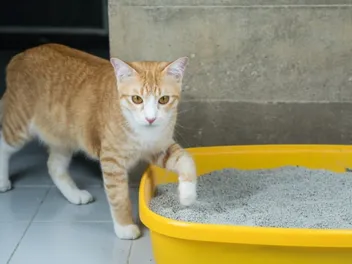
Scoop your cat’s litter box at least once daily, ensuring you replace the litter to keep it 2–3 inches deep. You should clean the box every 1–2 weeks when you do a total litter change. Use soap and water solution and let it dry well. If you want to disinfect it you can use a 16 Oz spray bottle, fill it up with 1.5 cups of water add 2 tablespoons of bleach. Spray this solution over the surfaces and allow at least 5 minutes of contact time before rinsing it well, and allow it to dry. Just a note, some cats dislike the scent which might discourage them from using their litterbox so make sure it is well rinsed and dry. Bleach eventually evaporates.
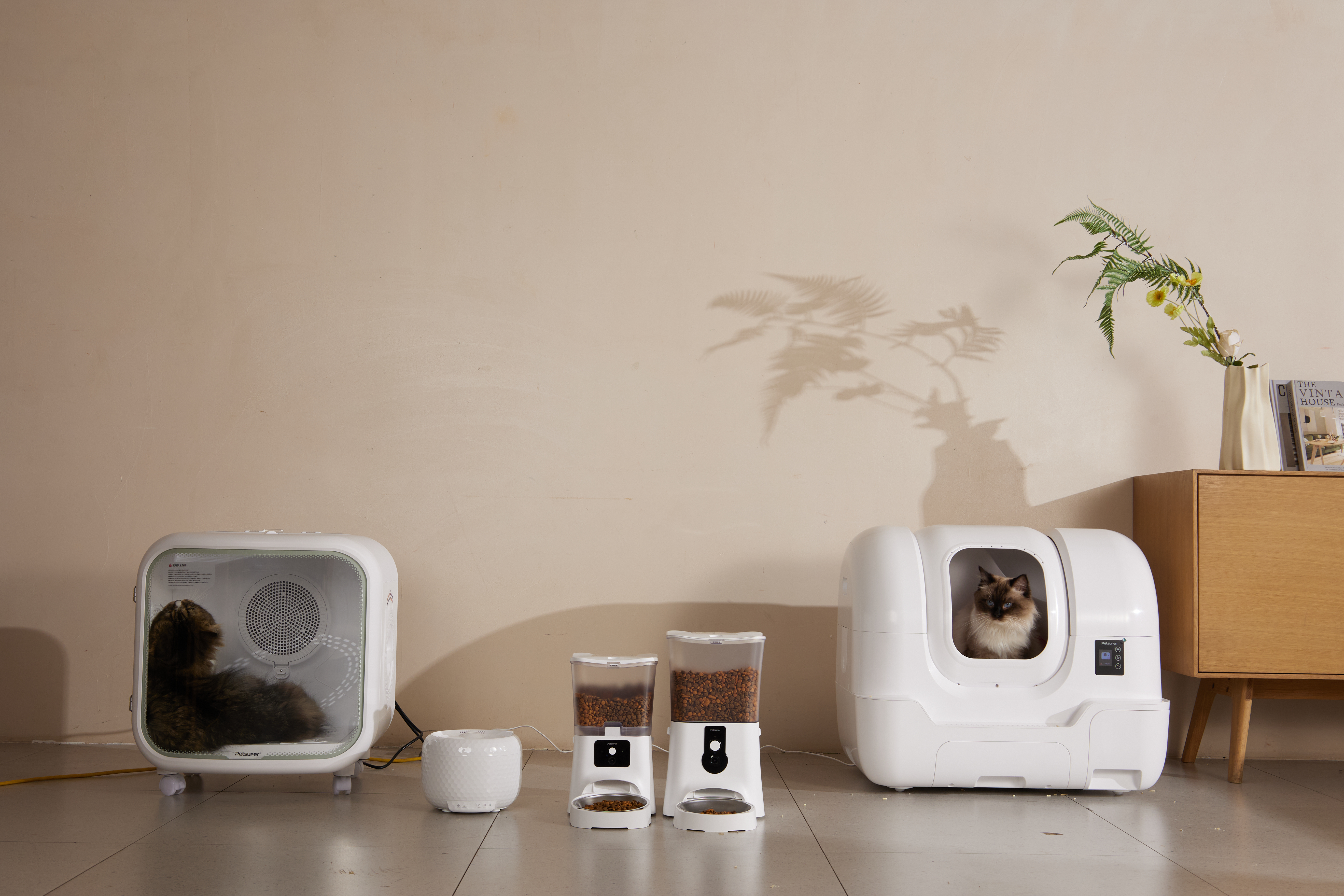
You can also invest in a low-cost Litter Genie to reduce smells between cleanings or splurge on a self-cleaning box that filters waste into a separate compartment.
5. Groom Your Cat More
With shedding causing much of the general cat odor, taking control of it is one of the easiest ways to get the smell out of the house. Increasing your cleaning frequency may be difficult to avoid, but you can significantly reduce the amount of hair and dander around the home by grooming your cat more often.
How Often to Groom Your Cat
Brush your cat as often as necessary in an easy-to-clean place. Longer-haired cats may need brushing at least once daily. Grooming will only become more frequent during the fall and spring shedding periods.
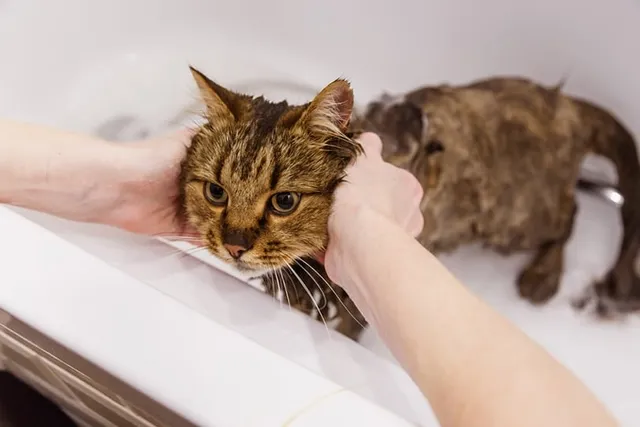
An extra bath can also help when shedding gets out of hand, though you don’t want to bathe your cat too much, as it may cause skin irritation. If your cat doesn't need a full-blown wash, having a pack of cat wipes on hand is a gentler and more convenient way of handling random coat-cleaning opportunities.
With better coat-brushing habits and the right tools, you’ll stimulate the skin, distribute the body’s natural oils, and remove dead hair to keep your cat’s coat and skin as healthy and odor-free as possible.
Make teeth-brushing part of the cat’s grooming routine every 1–2 days to keep their mouth healthy and reduce the risk of periodontal disease and bad breath.

6. Change Your HVAC Filters Frequently
Your HVAC system is an enormous air circulation system, with replaceable filters greatly affecting its efficiency. Dirty filters restrict suction from the blower, causing the system to work harder and longer to cool and heat the home. And as it’s making your utility bills rise, that buildup can also cause foul cat odors to recirculate.
Changing your HVAC filters every 90 days is the recommended schedule to keep odors and allergens to a minimum and make your system run efficiently. But it can vary for pet owners.
If you have a heavy-shedding Ragdoll, you may have to change your filters once every 2 months to keep up with the extra hair they suck in. You can also install odor-reducing filters to improve the air your system returns to the room.
7. Wash Your Cat’s Bedding Regularly

Cats impart substantial amounts of hair, dander, dirt, saliva, and body oils over their mattresses and blankets as they sleep, making them hotbeds for odors. Washing your cat’s bedding at least once weekly will remove much of the odor-causing soil and bacteria to keep them smelling their best.
Washability should also be a focal point when buying bedding, as machine-friendly materials are always easier to maintain.
8. Vacuum and Wash Your Cat’s Play Equipment
Cat trees and climbing shelves will quickly pick up your cat’s odor in their plush fabric and fiber-covered surfaces, especially as your cat uses them as scratching posts and lounging spots. While you’re cleaning your pet’s bedding, don’t forget to vacuum their play equipment thoroughly to extract smelly fur and dander.
Although they can sometimes be too damaging to try on upholstered furniture and carpets, a pet hair scraper might make sense on a cat tree. The inexpensive hand tool efficiently pulls up deeply dug-in hair and fur that vacuums may not budge. They’re fun to use and practical for a smaller area like cat play equipment, making it easier to keep cat odors down.
9. Sprinkle Baking Soda on the Carpet

Carpeting is a trap for dirt, cat hair, dander, and all the smells that come with them. While regular vacuuming and rug shampooing are essential to any pet owner’s cleaning routine, you can quickly remove the cat odor by sprinkling baking soda on the carpet.
Baking soda can neutralize basic and acidic odor molecules. When you spread it across your rug, it can pick up any foul cat smells embedded in the fibers. After letting the baking soda sit for a few hours, you can vacuum it up, ideally using a wet-dry vac with a HEPA filter that won't get damaged from the fine particles.
10. Keep Your Cat Happy and Healthy
Reacting to nasty odors in the home is often necessary with cats. But one of the simplest ways of managing many of the worst pet smells is to prevent them from occurring in the first place.
A high-quality diet, routine grooming, frequent vet visits, and daily bonding and playtime are crucial in avoiding many health issues that cause inappropriate elimination, excessive shedding, and other sources of cat odors. With quality enrichment in the home and a caring approach, you can reduce stress and encourage better habits to keep your cat active, content, and odor-free.
Don't forget to check out our favorite cleaning spray:

- ADVANCED ENZYMATIC CLEANER - Penetrates the most stubborn smells and stains at the deepest molecular levels to dissolve any pet mess you encounter and lift it away at the source.
- FOR ANY MESS, ON ANY SURFACE - This pet odor eliminator cleans your carpets, floors, furniture, fabrics, and more. Whether it's urine, feces, vomit, or drool, you can erase all foul spots and smells!
- FRESH, NATURAL ODOR - Our unique formulation doesn't rely on dangerous or unpleasant chemical fragrances to get the job done. We eradicate smells and stains, not just cover them up.
At Catster, we’ve admired Hepper for many years and decided to take a controlling ownership interest so that we could benefit from the outstanding products of this cool cat company!

Final Thoughts
Cat smells can be easy to prevent and remove, and the entire household will be glad you put in the minor effort needed to improve the atmosphere. A clean-smelling house makes a healthy home that you’ll be happy to open to others. With a few simple cleaning steps and dedication to your cat’s health, you can help everyone in the home breathe a little easier.
See also:
Sources
Featured Image Credit: xamnesiacx84, Shutterstock
Expert cat care, straight to your inbox
News, insights, and useful advice, delivered to you.

No spam — unsubscribe anytime.
By signing up, you agree to our Terms & Conditions and Privacy & Cookies Policy.
How useful was this post?
Click a star to rate. You can leave written feedback afterwards. (We read all feedback.)
Christian started writing for a local newspaper as a teenager, and he's been involved in the publishing industry for most of his adult life. Combining his love of writing with a passion for animals, he is currently the Director of Editorial at Pangolia and the Editor-in-Chief at Catster.
Christian lives in the Philippines with his wife, son, and four rescue cats: Trixie, Chloe, Sparky, and Chopper.