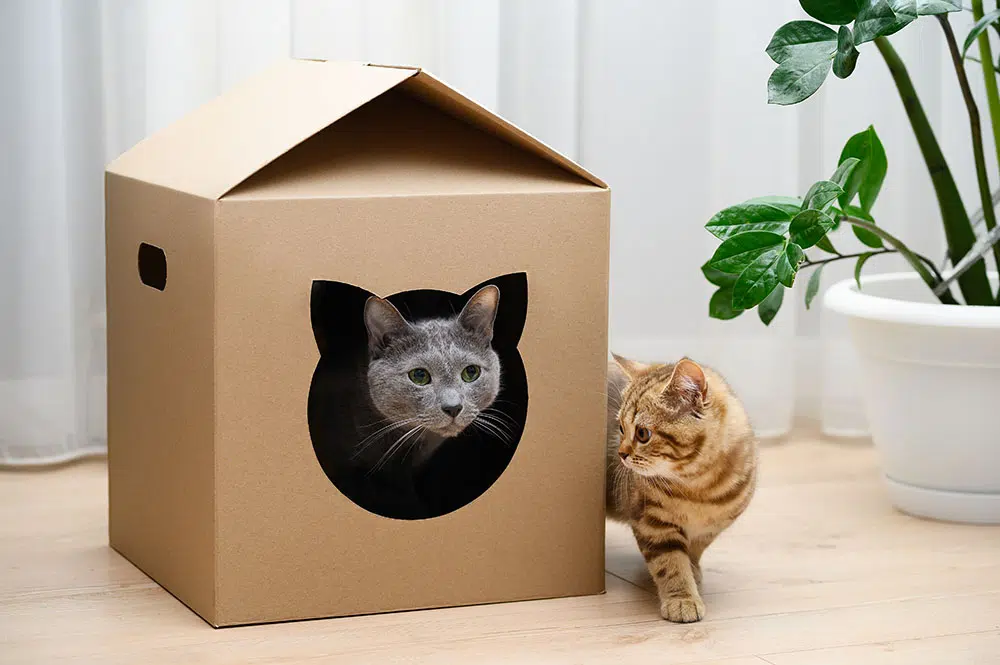
The holidays may be a magical time for us, but they can be a dangerous time for our kitties. There are many holiday health hazards for cats, and many of them are things that we wouldn’t even think of as a concern. To keep your cat safe throughout the holiday season, let’s talk about some of the most common holiday dangers for cats and how you can keep your cat safe from them.

The 12 Holiday Hazards for Cats
1. Visitors
The holidays are a time for family and friends, so you likely will have visitors coming to your home, whether they’re there for a few hours or a few days. Unfortunately, visitors can be a major hazard for cats. Friends and family who don’t have pets may not remember to close doors securely or may leave them open when bringing items in and out of the house. They may also not know what foods and toys are safe for your cat.
When you’re expecting holiday visitors, you need to set clear rules about your home and cat for them. Visitors may put your cat in harm’s way without even realizing it, so help them keep your cat safe.

2. Ribbon and Tinsel
During the holiday season, ribbons, tinsel, garland, and other long, stringy objects are commonly used in gift wrapping and holiday decorations. Cats often find these types of things irresistible as well, since they can be very fun to chase, bat, and chew. String and ribbon-type items can be extremely dangerous for cats, though.
Cats can become tangled in these items leading to injuries, or they can consume them. If consumed, string-like objects can cause severe intestinal damage that can sometimes lead to the death of tissue within the digestive tract. What can happen is that one end of the string becomes anchored in the digestive tract, while the other end is moved onwards by the normal movements of the intestines. As the string is pulled tight the surrounding intestines are bunched up and the string creates a cheese-wire effect, cutting through the intestines. If left untreated, intestinal foreign bodies can be deadly for your cat.
3. Electrical Cords
The holidays are often filled with lights and fun decorations you only pull out once per year. Oftentimes, these things need electrical cords to power them. Electrical cords can be fun for cats to chew on or swat around. Electrical burns in the mouth aren’t uncommon for cats that chew on cords, and in some cases, cats can even be severely electrocuted.
If your cat is showing interest in the new electrical cords around the house, you will need to hide or cover them the best you can to keep your cat away from them. Bitter spray and other topical deterrents can also help, but make sure not to spray them in a way that will allow them to drip into an outlet.
4. Fire
Candles commonly make an appearance throughout the holidays, whether it’s to make Christmas dinner extra fancy or make your house smell like the holidays. Fireplaces are also commonly used throughout the colder months of the year.
All open flames, including candles and gas stove burners, should only be used with direct supervision and without allowing your cat near to get them. Sometimes, cats will accidentally catch themselves on fire by getting too close to open flames. They also may burn their paws in an attempt to play with the flame.
Fireplaces should be protected with a grate and, if possible, a fireplace door as well. These items can get hot enough to burn your cat, so make sure to discourage your cat from spending time too close to the fireplace.

5. Cold Weather
The indoors aren’t the only dangerous place for your cat during the holidays. Cats that live outdoors or that spend time outdoors are at a significant risk of injury, illness, and death from the cold temperatures. They can develop frostbite, especially on their paws and face, and they can simply fail to find a warm enough place to sleep, leading to freezing to death. Outdoor cats should always be provided with a safe, warm, insulated place to stay, inside of a shed or garage, if not inside of your home.
In search of warmth, it’s not uncommon for cats to get inside the hood of vehicles to get near the warm motor. Injuries from people starting their car without realizing there’s a cat under the hood are relatively common for outdoor cats during the holiday season. Make sure to knock on the hood of your car and wait a few seconds to allow any hidden animals to escape before you start it.
6. Christmas Trees
The appeal of a tree in the middle of the house may be too much for your cat to ignore. Christmas trees are novel, fun, and covered in dangly objects, making them the perfect thing for a cat to want to play with.
Unsecured Christmas trees can be knocked over by playful cats, though, which can lead to injuries for your cat, as well as a risk of broken glass from ornaments. You should also avoid letting your cat chew on or eat any part of your real Christmas tree. Pine tree sap is mildly toxic to cats and can lead to irritation of the mouth and nausea, vomiting, and diarrhea if consumed.
7. Toxic Plants
Christmas trees aren’t the only flora that poses a risk to your cat during the holidays. There are many plants commonly brought into homes around the holidays that can range from mildly toxic to deadly for cats. Poinsettias and holly are likely the most well-known toxic holiday plants. Thankfully, they are only mildly toxic to cats.
However, lilies and amaryllis are also common holiday plants, and lilies are also commonly found in flower arrangements. Both of these plants are extremely toxic to cats and can lead to serious illness and even death if your cat comes into contact with the pollen of these plants or consumes any part of the plant. Certain species of mistletoe can also be deadly for cats and should be avoided entirely.

8. Toxic Foods
The holidays are often considered a time to eat foods we normally don’t eat. Lots of chocolates and other sweets are brought into our homes. Dark chocolate, baking chocolate, and cocoa powder can all be deadly for cats and dogs alike, though. Other common holiday foods that can be dangerous for cats include onions, garlic, shallots, chives, alcohol, caffeine, peppermint oil, oregano, and marjoram.
You should also keep in mind that xylitol, which is commonly used as a replacement sweetener in sugar-free items, is not typically considered toxic to cats, but there is a risk associated with letting your cat consume xylitol since this ingredient can be deadly for dogs. If your cat accidently ate something they shouldn’t you should immediately contact a vet.
If you need to speak with a vet but can't get to one, head over to PangoVet. It's an online service where you can talk to a vet online and get the advice you need for your pet — all at an affordable price!

9. Table Scraps
Holiday foods don’t have to be toxic to your cat to pose a health risk! Cats are often offered table scraps during the holidays. While food is usually given as a small bite here and there, these rich, fatty foods can really take a toll on your cat’s body, aside from the usual weight gain.
In some cases, your cat may end up with an upset stomach for a day or two. In more severe cases, your cat may need veterinary care at a hospital. Avoid offering your cat fried foods, poultry skin, pies and cakes, fatty red meat, and foods containing dairy.
You should also not give your cat any bones, whether cooked or raw. Bones pose a major risk of choking, intestinal obstruction, and intestinal perforation. If it’s important to you to share the holiday meal with your kitty, then consider getting them a cat-safe holiday meal from a commercial pet food line. You can also offer very small bites of unseasoned turkey or chicken that have been boiled, roasted or baked without oils and salt.
10. Glass Ornaments and Décor
Holiday décor really brings the holiday to life for many people, but there are a lot of hazards when it comes to delicate décor items. Glass ornaments and figurines are especially at high risk of being broken, especially if they’re within reach of your cat. A broken glass object can lead to your cat getting bits of glass stuck in their paws. In rare cases, your cat may even consume pieces of broken glass, which can lead to a serious medical emergency.
Keep glass décor away from your cat and if anything is broken, get your cat out of the room, and thoroughly clean the space, making sure to get even tiny slivers of glass.

11. Plastic
There is a ton of plastic that will show up at your house around the holidays. From food packaging to shipping materials, your cat might take an interest in the new and interesting plastic around your house. Cats, like small children, can end up suffocating inside plastic bags. They can also consume pieces of plastic, leading to an intestinal obstruction. Food packaging that has remnants of food on it can allow your cat to eat things they shouldn’t, leading to stomach upset or even toxicity.
12. Loud Noises
Loud noises aren’t necessarily a health concern on their own for your cat. However, loud noises can be a major source of stress for your cat. Cats that are highly stressed are at an increased risk of developing stress-induced health problems, including urinary problems. They also may become extremely fearful, especially during loud noises like fireworks and Christmas poppers.
A fearful cat may bolt directly into danger without even realizing it. Open doors and windows offer the perfect escape route for a scared cat, which can allow them to go missing or become injured or killed outside. Your cat may also simply decide to hide and refuse to come out, even to eat or use their litter box. Ensure your cat has a quiet, safe space to go when they need to decompress from holiday stress.
Conclusion
While the holidays can be a wonderful time for you and your cat, you should always keep in mind that the health and well-being of your cat is a top priority. Plan your holiday décor and visitors around the needs of your cat, and always make sure visitors are educated in advance about the ways they can keep your cat safe. If your cat gets into anything they shouldn’t, including food, glass, plastic, and electrical cords, then you should get them to a vet for a thorough evaluation.
Featured Image Credit: Anna Mente, Shutterstock
 The 12 Holiday Hazards for Cats