Do You Get Too Attached to the Feral Cats in Your Care?
The relationships we form with feral cats can be quite intriguing. How do we help them without getting too attached to them?
Ferals don't always fare too well in some areas, especially if there are many predators. If you are curious about what it takes to take care of feral cats this article will be very insightful. Do you need to cultivate a certain distance? Do you need to save your all-out-kind-of-love for your domestic cat companions?

We spoke to Becky Robinson, president and co-founder of Alley Cat Allies, about how to care for ferals and what makes a good feral cat caretaker.
Catster: For the feral cat caretaker, how is the relationship with a feral cat different from the relationship with a domesticated or pet cat?
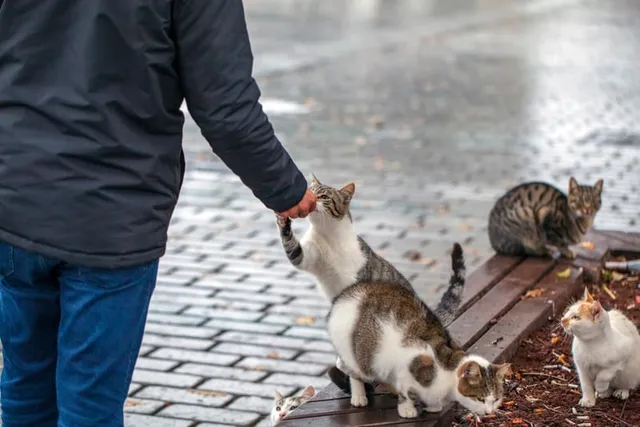
Alley Cat Allies: Relationships between caregivers and cats often mirror relationships between people and their house cats, but there are some key differences. Firstly, feral cats can't be touched or held. They are not socialized, as are house cats. However, over time feral cats get to know and trust the caregiver and a close bond develops, all the more rewarding because it takes time to build that trust -- sometimes even months or years. Some feral cats can be petted while they are eating. But we advise to not attempt to pick them up - or to place them in a carrier. The cats will not tolerate this. Caregivers have to keep in mind that feral cats belong outdoors and that although they may bond with people, the large majority will never be adoptable.
What qualities make a good feral cat caretaker, in your opinion? What do feral cats need from us most?
Feral cats need us to let them live out their lives -- most of them are surviving without caregivers. They do quite well on their own. But in many parts of the country where cats live in farming communities, residential and even business areas, there are people who improve these cats' lives by seeing that they are sterilized and vaccinated. Spaying and neutering as well as vaccinations is perhaps the best thing we can do for cats.

A good caregiver needs to have these qualities:
Acceptance that the cat belongs outside and is content and that it does not belong indoors.
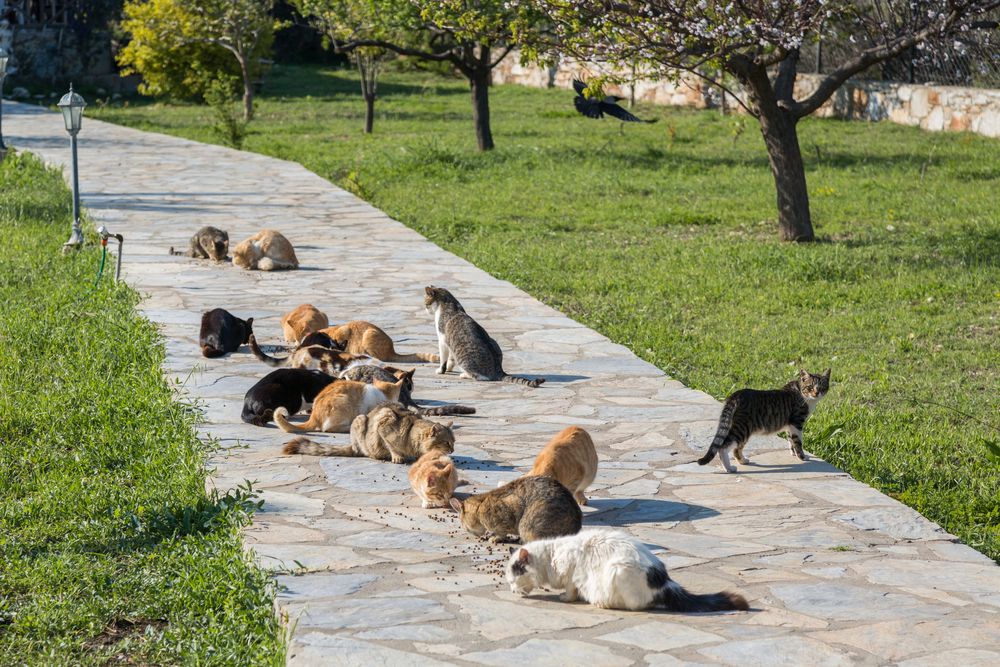
A commitment to seeing that the cats are safely "integrated" into the neighborhood. In addition to carrying out Trap-Neuter-Return, the first and foremost act to help them, caregivers feed on a regular schedule, often creating a shelter for them so the cats have their own place to bed down.
A willingness to advocate for cats and educate other people about the needs of feral cats. People interested in community service make good caregivers because they are willing to knock on doors, dispel myths, and help others learn.
An understanding that our neighborhoods are homes to many species, including cats, and that they are part of the community. They have lived among us for thousands of years.
What are ways you've seen caretakers deal with the issue of attachment or not getting attached to ferals? Is it an issue? How have you seen or heard this play out?
Just like cats bond with their caregivers, caregivers bond with the cats, too -- it goes both ways. Good caregivers are aware that the needs of outdoor cats are different from the needs of indoor cats, and that feral cats belong outdoors. That's where they want to be.
Good caregivers also take responsibility for the cats and ensure that the cats are taken care of, even when they are not around, or if they are on vacation or moving out of an area.
If a person wanted to help feral cats in their neighborhood, what are the simple and effective first steps to take to make a difference?
There are many ways a person can help feral cats. Getting educated about Trap-Neuter-Return is a great first step. A wealth of information on TNR can be found at www.alleycat.org. Those who want to help feral cats should also get in touch with pounds and shelters in their communities and ask if they have a TNR program in place, and encourage those who don't have a program to launch TNR. Check out blueprints for building humane communities at Alley Cat Allies' National Feral Cat Day website.
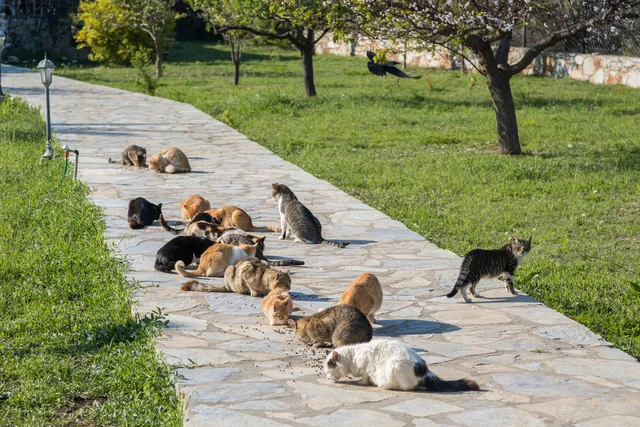
During TNR, a caregiver humanely traps a cat, transports him to a veterinarian where he would be neutered, vaccinated, and eartipped, and then the caregiver transports the cat back to his colony where he will continue to live. TNR also benefits the community because it stops undesirable behaviors like yowling, spraying and fighting. Not only does the health of the cats improve, but TNR also stabilizes the feral cat population because there are no more kittens. Neighbors are welcoming of a colony especially when they know the birthrate has stopped and the colony is not growing.

Contacting local legislators and policymakers to educate them on feral cats and TNR can also get the ball rolling on protecting the lives of feral cats in your area.
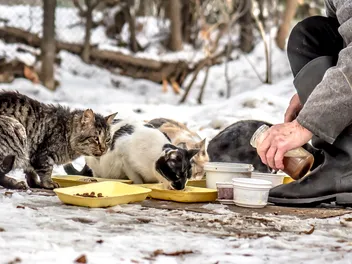
Feeding feral cats is another way to help. Feeding can be a simple, once-a-day practice. The feral cats in the colony will also need clean water every day.
Finally, we encourage all cat lovers to participate in National Feral Cat Day on October 16. On this day each year, hundreds of individuals and organizations host TNR events and advocacy programs to spread awareness in their community about the benefits of TNR. Those interested in hosting an event or getting involved in this year's event can visit the National Feral Cat Day website.
So, there you have it, readers. It's really pretty simple. The best way to help feral cats? Realize that their needs are necessarily different from your domestic cat. Come to the relationship with different expectations, and provide these cats with what they need -- spay, neuter, vaccinate, feed, and do TNR where this makes sense. Maybe next time a feral cat wanders by my house, I'll be able to get a little less "attached" and still help her.
Do you help feral cats in your neighborhood? How has that experience been for you? How is the relationship different than the one you share with your domesticated cats? Please share in the comments!
Featured Imqge Credit: Murat An, Shutterstock
Expert cat care, straight to your inbox
News, insights, and useful advice, delivered to you.

No spam — unsubscribe anytime.
By signing up, you agree to our Terms & Conditions and Privacy & Cookies Policy.
How useful was this post?
Click a star to rate. You can leave written feedback afterwards. (We read all feedback.)

Catster is a cat magazine and cat website where cat lovers come together and get expert advice about cat behavior, cat health and cat news.