Do Feral Cats Remember Their Caretakers? Vet-Verified Facts & Info

In this article
Cats are known to form strong bonds with their caregivers, often recognizing their favorite people by voice, scent, and routine. But what about feral cats who, by definition, aren't terribly comfortable around people? Do they form bonds with and miss their caretakers as well?
Many caretakers of community cats that have long-term contact with the animals report that they are recognized and allowed increasing levels of contact over time, so yes, feral cats can remember their caretakers, especially if the interaction is consistent and respectful over time. While they don’t form the same kind of close bonds as socialized cats, many ferals recognize familiar people, particularly those who feed and care for them regularly. In this article, we’ll explore how feral cats form these associations, what influences their memory and trust, and how early socialization plays a role, especially in kittens.

What's the Difference Between Feral and Stray Cats?
Feral and stray cats essentially live outdoors and care for their own needs, but there are significant differences between how the two generally end up living in the wild and their acceptance of human contact. Feral and stray cats are sometimes referred to as community cats.

Feral Cats
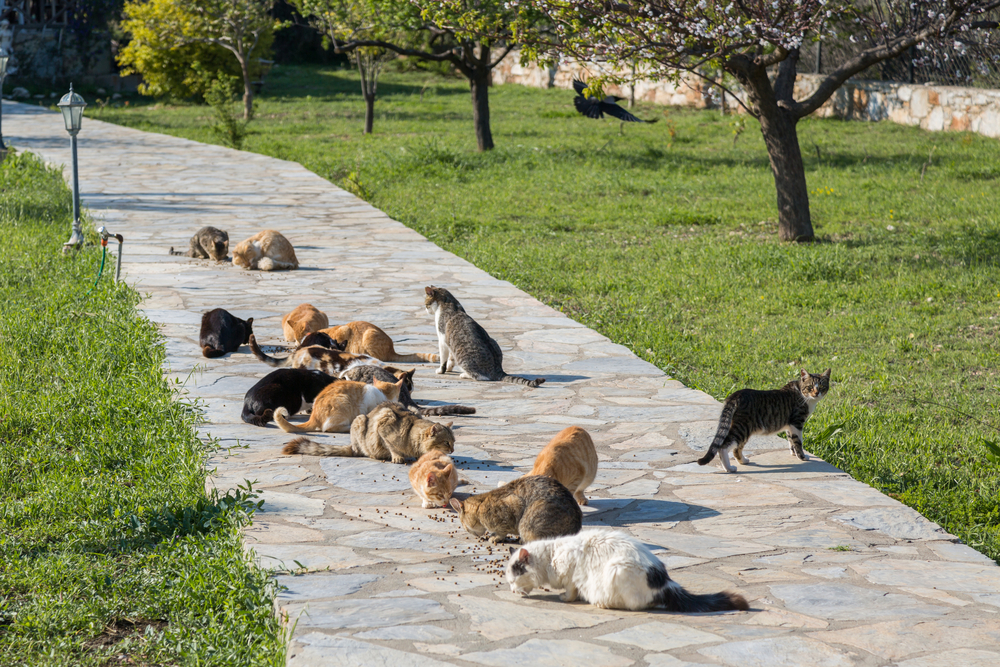
Feral cats generally live on their own without much human contact. Most are born to feral mothers and live their entire lives outdoors and take care of their own needs. They never become socialized to accept the presence of people, so they’re frequently happiest when left to their own devices.
They usually go out of their way to avoid people and are often unwilling to let strangers touch or approach them. Most really can't live comfortably indoors around humans, even with lots of patience and loving care. Kittens born to feral mothers can often be socialized and adopted into human families, but feral cats tend to adopt more wild animal traits with each successive generation.
Stray Cats
Stray cats live in the wild without human help, much like feral cats, but they’re more willing to engage with people. They're often pets who once had human companions but who were either left to their own devices or somehow managed to get lost and couldn't find their way home.
Stray cats sometimes struggle at first when adapting to the life of an outdoor cat, and many begin to behave more like feral cats over time. Stray cats that haven't been on their own for too long are sometimes willing to accept help from people and can be enticed to become companions again.

How Can You Tell the Difference Between Feral and Stray Cats?
Community cat behavior isn't cut and dry; it's more like a continuum with feral cats on one end and abandoned or lost pets on the other.
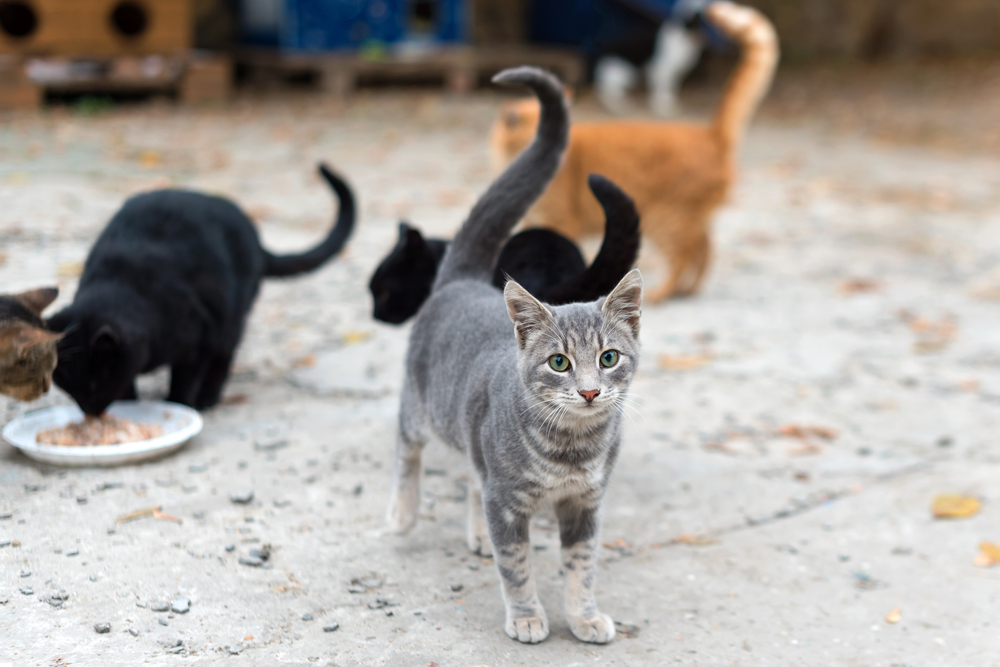
Feral cats do everything possible to avoid people and rarely come near homes and cars of their own accord. Many live in colonies and are highly unlikely to approach people. Feral cats are often ear-tipped to let community caregivers know they've been spayed or neutered.
Stray cats often approach people and hang out around homes and porches. They live by themselves but are less fearful of humans. Many meow and show signs of affection if you speak to them.
What Is Socialization?
Socialization is the process through which kittens master the essentials of being cats. It’s when kittens learn how to play and communicate with other cats and how to feel comfortable in situations they're likely to encounter later in life as companion animals. Socialization involves allowing kittens to engage with different people and animals under controlled circumstances when they're little to reduce the number of unknown situations that can pop up and cause stress later in life.
Mother cats take the lead in teaching kittens to groom themselves, while litter mates help little cats learn how to play well with others. Experiencing loving human contact during socialization allows kittens to become accustomed to being around people and being held, petted, and groomed.

What's the Optimal Period for Kitten Socialization?
Kittens soak up information about new experiences and interactions when they're between 2 - 7 weeks old, but many stay open to learning new things until they're about 2 or 3 months old. Because feral kittens don't have contact with humans during this important period of development, they grow into adults who typically remain fearful of humans their entire lives and are almost always happiest living with as little contact with people as possible.
It's essential for kittens to feel safe and comfortable when encountering new people and situations during socialization to avoid developing fears that can cause challenges later in life. The process generally works best when accompanied by treats, praise, love, and respect for kittens' limits.
Conclusion
Feral cats haven't really been socialized to accept human contact, and they largely remain fearful around people, but they're likely able to recognize and remember caretakers who feed and care for them.
Some become comfortable around regular caretakers over time, which can result in cats being okay with specific people hanging out and giving them a bit of love and affection. Because cats generally remember people they associate with positive feelings and events, feral ones likely remember their caretakers with fondness.
Sources
https://www.researchgate.net/publication/336000804_Attachment_bonds_between_domestic_cats_and_humans
https://www.nationalgeographic.com/animals/article/your-cat-can-recognize-your-voice
https://link.springer.com/article/10.1007/s10071-022-01674-w
https://phys.org/news/2017-01-cat-ways-similar-humans-dogs.html
https://www.petmd.com/cat/care/evr_ct_misunderstood_feral_cat
Featured Image Credit: IMG Stock Studio, Shutterstock

Expert cat care, straight to your inbox
Vet-reviewed advice, behavior tips, and the best of Catster. Free, and you can unsubscribe anytime.
By signing up, you agree to our Terms & Conditions and Privacy & Cookies Policy.
Lorre Luther is a writer who is firmly convinced that cats are smarter than humans. She left her law career in the United States and moved to the Netherlands to follow her dream of becoming a writer. Lorre currently lives in Rotterdam, she enjoys traveling and greatly appreciates the beauty of nature. Lorre has a spot for animals and admires the intelligence of cats.
Join the conversation
Ask a question, share your story, or send private feedback.