Do Cats Like the Dark? Vet-Verified Vision Facts (With Infograph)


In this article
All cat parents know that their adorable feline turns into a formidable predator when night comes. Frantic runs all over the house at 3 a.m. are part of the habits of cats since they are miniature hunters that excel especially at night hunting. So, it's normal to think that cats prefer the dark and have amazing night vision, but do cats like the dark? The answer to this question comes in two parts: Yes, cats love the dark, so you don't need to leave the light on for them. But no, they don't have superhero-like night vision. Cats do not need light at night to orient themselves, but they are fond of dark places to doze and spy on their potential prey, even if that’s just your legs.
Let's take a closer look at what science knows and if cats prefer the dark.

Why Do Cats Like the Dark?
Cats are crepuscular creatures, which means they are especially active at dusk and dawn. Therefore, cats prefer the dark to hunt. This is also one of the reasons that cats sleep so much during the day and late at night. What better than a dark place to hide and prepare for your next ambush?
But most importantly, cats prefer low-light or dark places because the structure of their retina differs from that of humans.

How Do Cats See in the Dark?
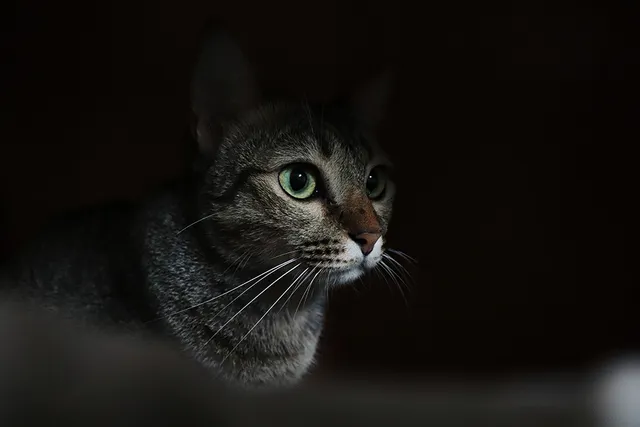
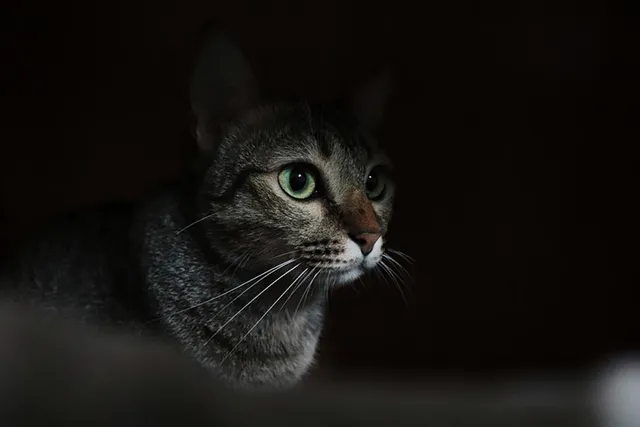
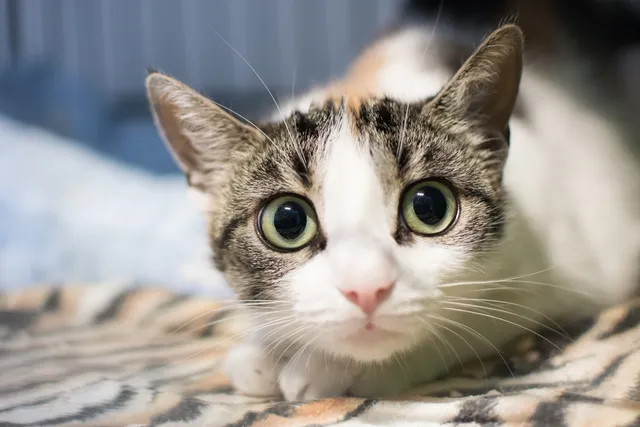
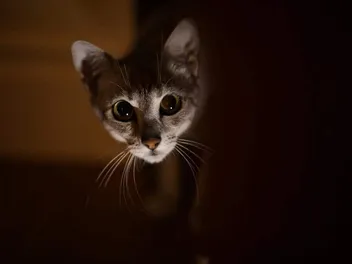
If you've ever looked closely at a cat's eyes, you've noticed that they look very different from your own. For one thing, cats' pupils are just small slits most of the time. During the day, cats need to limit the amount of light that gets into their sensitive eyes. Once it starts to get dark, their pupils dilate and become very round, which makes them all the cuter.
Interestingly, what makes cats so adorable is also one of the many things that make them excellent night hunters. Cats' dilated pupils, combined with curved corneas and a wide field of vision, explain why they can see well at night. In fact, a cat's pupil can increase up to 300 times1 its size, while a human's pupil increases only 15 times.
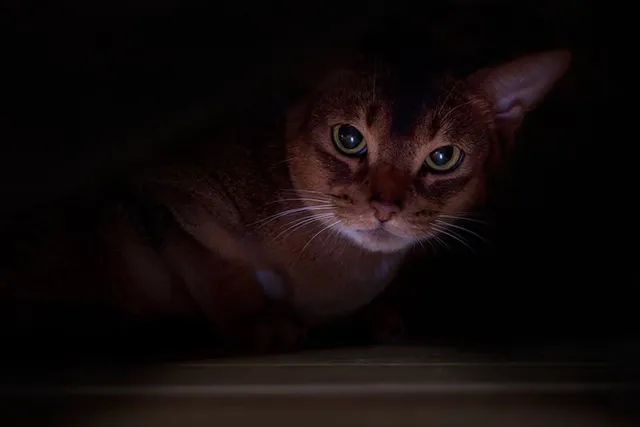
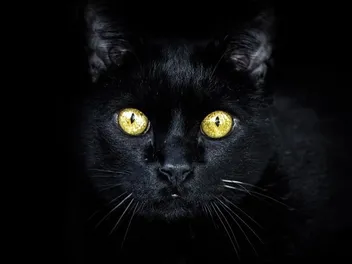
Besides the dilated pupils enabling more light to enter the retinas, cats’ eyes have a mirror-like structure called the tapetum lucidum that helps them maximize the efficacy of entering light by reflecting it2. In other words, the light gets recycled. This structure is why your cat’s eyes seem to glow or reflect light at night.
Another important characteristic is that a cat's retinas have more rods than cones. Rods are photoreceptor cells that work in low levels of light, though they do not help with color vision. Cones are photoreceptor cells that are used to “see” color but require well-lit conditions. A cat’s retinas have more rods but fewer cones than a human’s retinas. With all these unique characteristics, cats can see better in the dark than humans. However, the visual acuity of cats decreases when their pupils are dilated: they distinguish fewer details of objects and therefore, see less clearly.

Can Cats See Without Light?
No. Despite their mystical allure, cats, unfortunately, do not have supernatural abilities. Cats' eyes need a certain level of light to function. However, cats see much better in low-light conditions than humans, because they only need 1/6 of the ambient light that human eyes need.
So, while cats don't have an owl's spectacular night vision, they still have eyes designed to see well in the dark. They can also rely on their other heightened senses when their eyesight isn't enough.

Should You Leave a Light On for Your Cat at Night?
You now know that even though cats like the dark, they can't see in total darkness. Indeed, they need a minimum of light to be able to move at night. So, you’re probably wondering if you should leave a light on for your kitty at night: The answer is simply no.
If it's because you're afraid your furry friend will get lost in the dark, don't worry. Residual light from windows and other parts of the house is usually enough for cats to see in the dark.
Besides, cats don't just rely on their vision to get around in the dark. Indeed, like most night hunters, felines cannot always trust their eyes to orient themselves. Therefore, they must appeal to their other senses, which are extremely sensitive and enable them to create a complete picture of their nocturnal environment.
Here's how cats' other senses guide them in the dark:
In What Situation Should You Leave a Light On?
If your cat is particularly active at night (like most kittens that haven't yet adopted their human’s routine), you can leave a dim light on for safety reasons. This will prevent any untoward incidents, such as accidentally tripping or stepping on your cat in the middle of the night!
Top 5 Tips for Keeping Your Cat Safe at Night
Besides keeping on a dim light at night for added safety, there are a few things you can do to keep your cat safe (and asleep!) at night, especially if they’re a new kitten.
1. Establish a Night Routine and Stick to It.
Cats are like little kids:They adapt better to fixed schedules. Kittens can see in the dark so it’s important to teach them to sleep at the right time, you need to follow a routine. If possible, go to bed at around the same time every night. This will help your cat get used to your routine and will be more likely to get up and go to bed with you.

2. Turn Off the Lights at a Specific Time.
When it gets dark, it tells cats it's time to calm down and go to bed. However, remember that cats love to hunt at night, so just because it's dark, that isn't enough to keep them in bed all night!
3. Change Your Cat’s Feeding Schedule.
The time a cat eats has a big effect on their sleeping hours. Often, if a cat is particularly restless in the evening or early in the morning, it is simply that they are hungry. If you can change the times you feed your cat and the way you do it, you may have more peaceful nights.

4. Mimic Their Natural Behavior
In the wild, cats have to burn energy to hunt for their prey. After eating, they will then rest and digest. If you incorporate vigorous playtime followed by dinner just before bedtime, you and your cat are more likely to have restful sleep.
5. Use a Calming Cat Spray or Diffuser.
These products are specially formulated to soothe anxious cats and reduce hyperactivity, which is especially helpful if your cat has a habit of running around at night. Try Nature's Miracle Just For Cats Calming Spray, which offers great value for the money.
Final Thoughts
So, why do cats like the dark? They are creatures well adapted to hunting at night, though their night vision isn't as spectacular as that of Catwoman. Their eyes have adapted to make the most out of minimal light. The good news is that our feline friends can use their other senses to navigate in total darkness, so you don't have to leave a nightlight near their litter box. In fact, you are the one who could benefit from dim lighting at night, especially if you're craving a snack and your kitty is waiting for the perfect moment to attack your leg on the first step of the stairs!
You might also like:
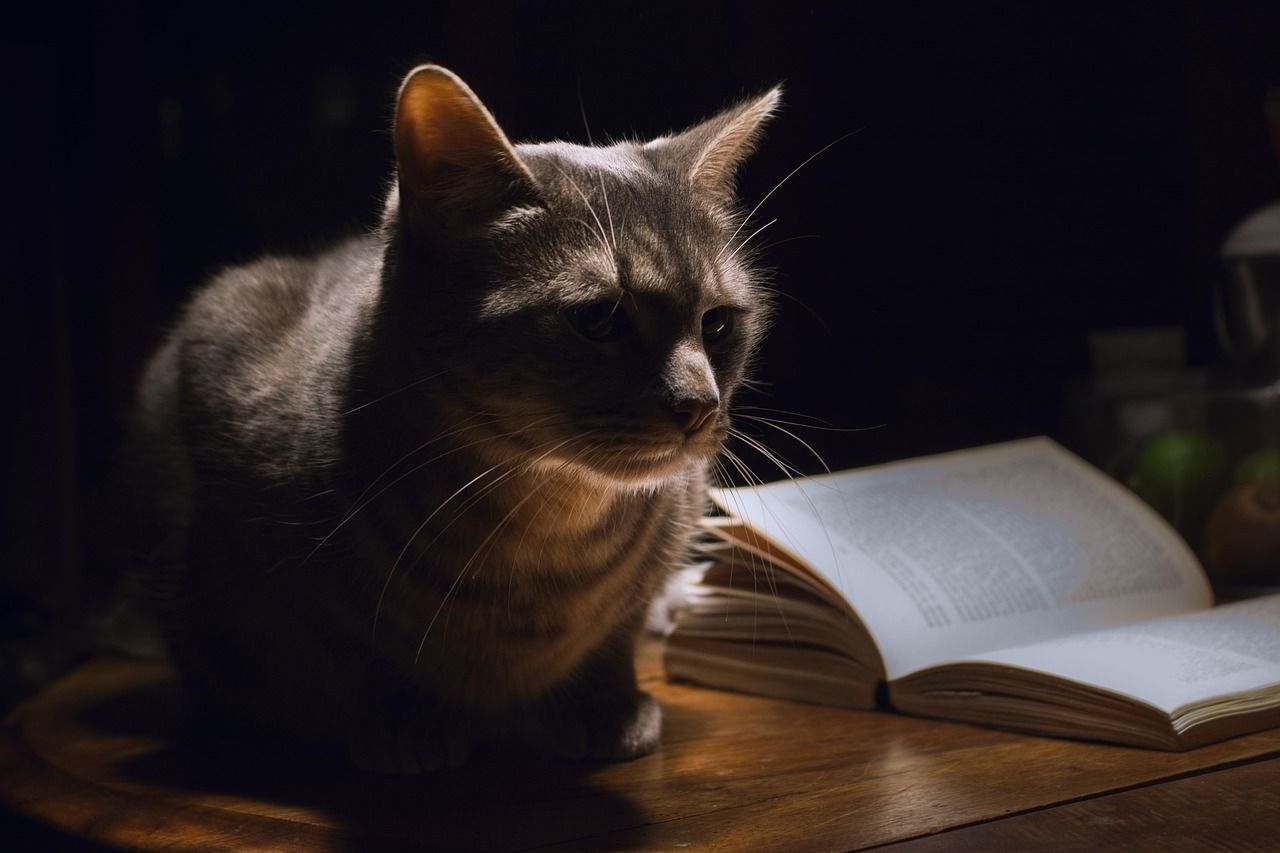
Featured Image By: mariavp, Pixabay
Expert cat care, straight to your inbox
News, insights, and useful advice, delivered to you.

No spam — unsubscribe anytime.
By signing up, you agree to our Terms & Conditions and Privacy & Cookies Policy.
How useful was this post?
Click a star to rate. You can leave written feedback afterwards. (We read all feedback.)
Genevieve is both a biologist and a science writer, driven by her deep love for capuchin monkeys, pumas, and kangaroos. Her dedication to wildlife has taken her across the globe, from Bolivia and Guatemala to Canada and Australia, working and volunteering at various rehabilitation centers. As a Canadian living in Argentina, Genevieve starts her days with horses and cows greeting her from the plains outside her home office. She is the proud parent of three rescued dogs—Lemmy, Nala, and Pochi—and an energetic kitten named Furiosa. The opportunity to share her passion and expertise in animal care brings her great satisfaction.